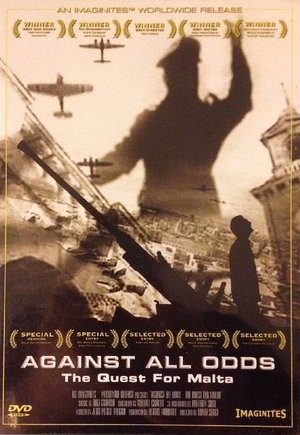
Against All Odds: The Quest For Malta(2007)
This historical documentary addresses a subject typically given short shrift in discussions of World War II: the role of Malta in pivotal Second World War battles. The program argues that because of the island's key location - sandwiched, as it is, in-between Southern Europe and Northern Africa - it inevitably impeded Axis and Allied reinforcement deliveries time and again. As a result, the Maltese people found themselves caught in the middle of a crossfire when they had virtually nothing to do with the war itself, and suffered immensely for their geographic placement. In telling this seldom-heard story, the program draws on first-person interviews, CGI animations, and dramatic recreations.
Movie: Against All Odds: The Quest For Malta
Video Trailer Against All Odds: The Quest For Malta
All 1 videos
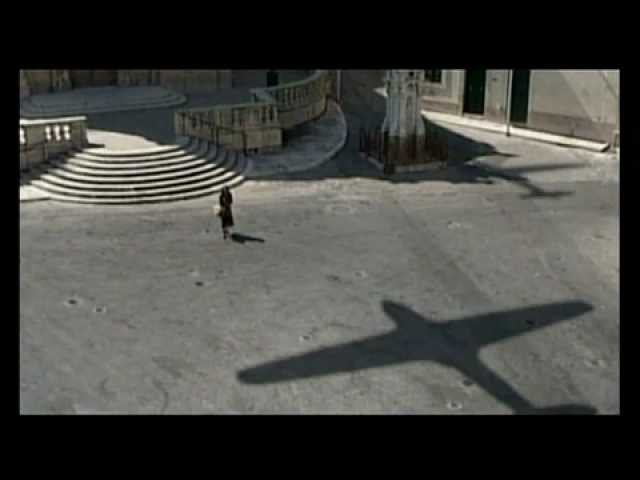
Against All Odds - The Quest for Malta - Trailer
Recommendations Movies
A Walk in the Sun(en)
In the 1943 invasion of Italy, one American platoon lands, digs in, then makes its way inland to attempt to take a fortified farmhouse, as tension and casualties mount.
The Sea Wolves(en)
A German spy is passing on information about the location of Allied ships in the neutral harbor of Goa, India, with catastrophic results. Unable to undertake a full military operation in the Portuguese stronghold, English intelligence brings out of retirement a crew of geriatric ex-soldiers, veterans from World War I, using their age as cover. These old soldiers are asked to take to the seas and pull off an unlikely undercover mission.
Tobruk(en)
In September 1942, the German Afrika Korps under Rommel have successfully pushed the Allies back into Egypt. A counter-attack is planned, for which the fuel dumps at Tobruk are a critical impediment. In order to aid the attack, a group of British commandos and German Jews make their way undercover through 800 miles of desert, to destroy the fuel dumps starving the Germans of fuel.
The Desert Fox: The Story of Rommel(en)
The life and career of Erwin Rommel and his involvement in the plot to assassinate Hitler.
Why We Fight: Prelude to War(en)
Prelude to War was the first film of Frank Capra's Why We Fight propaganda film series, commissioned by the Pentagon and George C. Marshall. It was made to convince American troops of the necessity of combating the Axis Powers during World War II. This film examines the differences between democratic and fascist states.

The Cruel Sea(en)
At the start of World War II, Cmdr. Ericson is assigned to convoy escort HMS Compass Rose with inexperienced officers and men just out of training. The winter seas make life miserable enough, but the men must also harden themselves to rescuing survivors of U-Boat attacks, while seldom able to strike back. Traumatic events afloat and ashore create a warm bond between the skipper and his first officer.
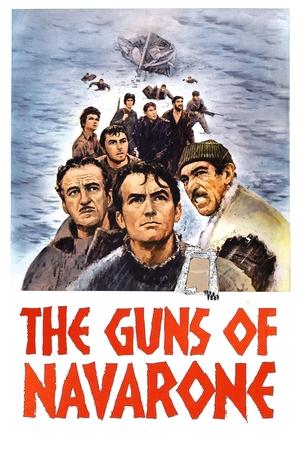
The Guns of Navarone(en)
A team of allied saboteurs are assigned an impossible mission: infiltrate an impregnable Nazi-held island and destroy the two enormous long-range field guns that prevent the rescue of 2,000 trapped British soldiers.
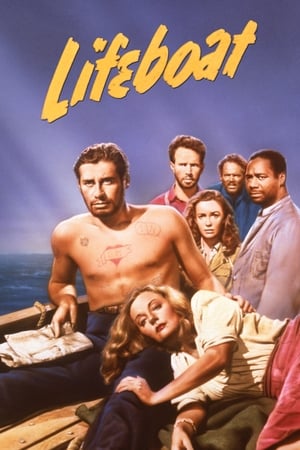
Lifeboat(en)
During World War II, a small group of survivors is stranded in a lifeboat together after the ship they were traveling on is destroyed by a German U-boat.
The Bridge at Remagen(en)
In March of 1945, as the War in Europe is coming to a close, fighting erupts between German and American troops at the last remaining bridgehead across the Rhine.
Overlord(en)
During World War II, a young man is called up and, with an increasing sense of foreboding, undertakes his army training ready for D-Day, June 6th, 1944.
What Did You Do in the War, Daddy?(en)
A by-the-book Captain is ordered to capture a strategic village in Italy. The Italian soldiers are willing to surrender, if they can have a festival first. The lieutenant convinces the Captain this is the only way. Because of aerial reconnaissance, they must look like they are fighting. To sort this out an intelligence officer is sent in. Meanwhile the festival gets complicated with the Mayors daughter.
Five Came Back(en)
The extraordinary story of how Hollywood changed World War II – and how World War II changed Hollywood, through the interwoven experiences of five legendary filmmakers who went to war to serve their country and bring the truth to the American people: John Ford, William Wyler, John Huston, Frank Capra, and George Stevens. Based on Mark Harris’ best-selling book, “Five Came Back: A Story of Hollywood and the Second World War.”
The Last Rifleman(en)
A WWII veteran escapes his care home in Northern Ireland and embarks on an arduous but inspirational journey to France to attend the 75th anniversary of the D-Day landings, finding the courage to face the ghosts of his past.

Passport to Pimlico(en)
When an unexploded WWII bomb is accidentally detonated in Pimlico, it reveals a treasure trove and documents proving that the region is in fact part of Burgundy, France and thus foreign territory. The British government attempts to regain control by setting up border controls and cutting off services to the area.
Story of G.I. Joe(en)
War correspondent Ernie Pyle joins Company C, 18th Infantry as this American army unit fights its way across North Africa in World War II. He comes to know the soldiers and finds much human interest material for his readers back in the States. Preserved by the Academy Film Archive in partnership with The Film Foundation in 2000.
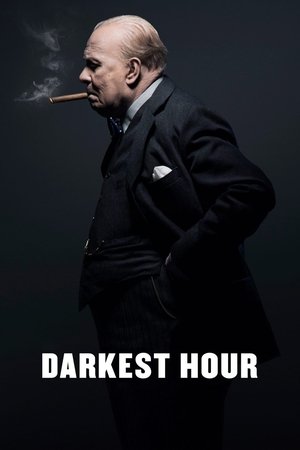
Darkest Hour(en)
In May 1940, the fate of World War II hangs on Winston Churchill, who must decide whether to negotiate with Adolf Hitler or fight on knowing that it could mean the end of the British Empire.
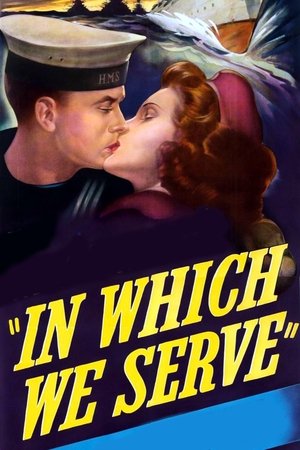
In Which We Serve(en)
The story of the HMS Torrin, from its construction to its sinking in the Mediterranean during action in World War II. The ship’s first and only commanding officer is Captain E.V. Kinross, who trains his men not only to be loyal to him and the country, but—most importantly—to themselves.
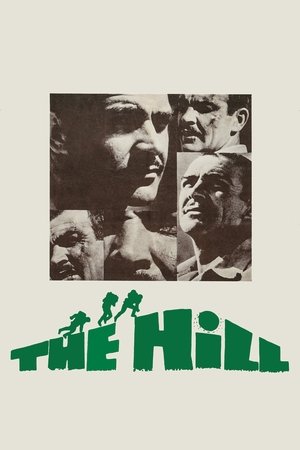
The Hill(en)
North Africa, World War II. British soldiers on the brink of collapse push beyond endurance to struggle up a brutal incline. It's not a military objective. It's The Hill, a manmade instrument of torture, a tower of sand seared by a white-hot sun. And the troops' tormentors are not the enemy, but their own comrades-at-arms.
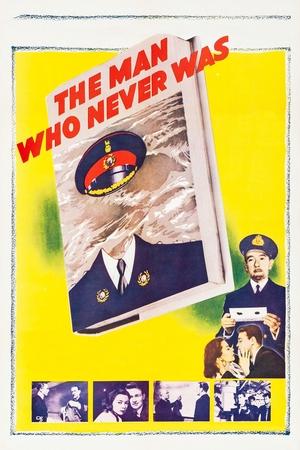
The Man Who Never Was(en)
The true story of a British effort to trick the Germans into weakening Sicily's defenses before the 1943 attack. A dead soldier is dressed as a British officer and outfitted with faked papers showing that the Allies were intending to invade occupied Greece. His body is put into the sea where it will ultimately drift ashore and the papers be passed along to German Intelligence.
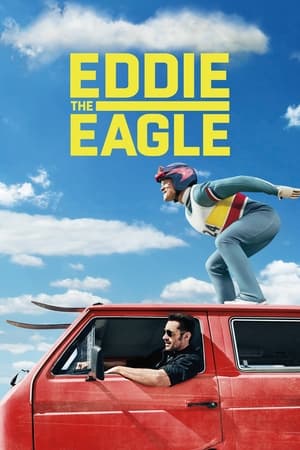
Eddie the Eagle(en)
The feel-good story of Michael 'Eddie' Edwards, an unlikely but courageous British ski-jumper who never stopped believing in himself—even as an entire nation was counting him out. With the help of a rebellious and charismatic coach, Eddie takes on the establishment and wins the hearts of sports fans around the world by making an improbable and historic showing at the 1988 Calgary Winter Olympics.
Similar Movies

Christmas Eve '45(en)
The post-war guilt and horrific secrets of Nazi Germany serve as a backdrop to a disturbing mind game between a young anatomist and a prostitute in a small hotel room the first Christmas following the war.
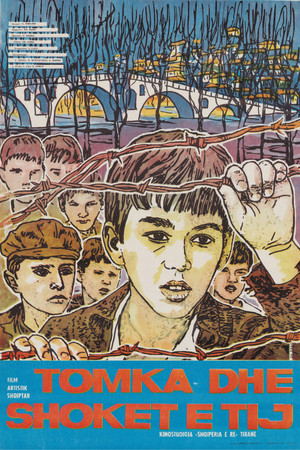
Tomka and His Friends(sq)
Tomka is a boy who likes playing football with his friends. When the German army captures his town, the German soldiers establish their camp in the town stadium. Tomka with help from his friends and their parents organizes sabotage actions against the soldiers.
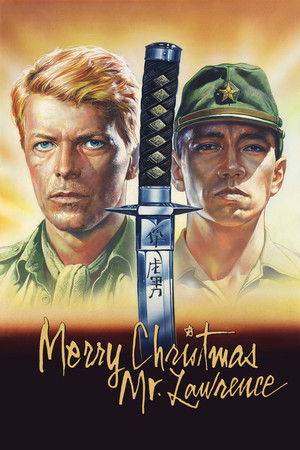
Merry Christmas, Mr. Lawrence(ja)
Island of Java, 1942, during World War II. British Major Jack Celliers arrives at a Japanese prison camp, run by the strict Captain Yonoi. Colonel John Lawrence, who has a profound knowledge of Japanese culture, and Sergeant Hara, brutal and simpleton, will witness the struggle of wills between two men from very different backgrounds who are tragically destined to clash.
See You(hr)
In the war-driven Balkans in 1991, four friends meet to pay respect to a dead friend...
Pressure(en)
In the tense 72 hours before D-Day, and the fate of the free world hanging in the balance, General Dwight D. Eisenhower and Captain James Stagg face an impossible choice—launch the largest and most dangerous seaborne invasion in history or risk losing the war altogether.

Antonia's Line(nl)
After World War II, Antonia and her daughter, Danielle, go back to their Dutch hometown, where Antonia's late mother has bestowed a small farm upon her. There, Antonia settles down and joins a tightly-knit but unusual community. Those around her include quirky friend Crooked Finger, would-be suitor Bas and, eventually for Antonia, a granddaughter and great-granddaughter who help create a strong family of empowered women.

The Best Years of Our Lives(en)
It's the hope that sustains the spirit of every GI: the dream of the day when he will finally return home. For three WWII veterans, the day has arrived. But for each man, the dream is about to become a nightmare.
Enemy at the Gates(en)
A Russian and a German sniper play a game of cat-and-mouse during the Battle of Stalingrad in WWII.
The Bridge on the River Kwai(en)
The classic story of English POWs in Burma forced to build a bridge to aid the war effort of their Japanese captors. British and American intelligence officers conspire to blow up the structure, but Col. Nicholson, the commander who supervised the bridge's construction, has acquired a sense of pride in his creation and tries to foil their plans.
Operation Bottleneck(en)
WWII Burma...Six paratroopers undertake an extremely dangerous mission against the Japanese. It will ultimately cost them their lives, except for one "lucky" survivor.
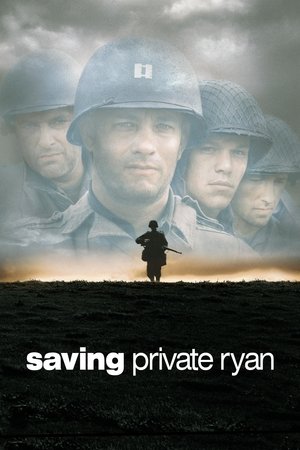
Saving Private Ryan(en)
As U.S. troops storm the beaches of Normandy, three brothers lie dead on the battlefield, with a fourth trapped behind enemy lines. Ranger captain John Miller and seven men are tasked with penetrating German-held territory and bringing the boy home.
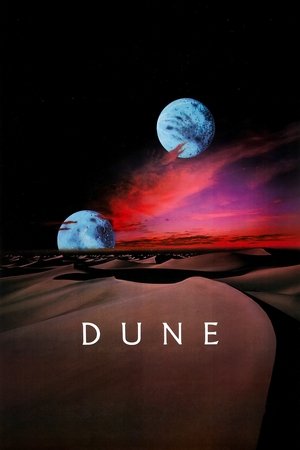
Dune(en)
In the year 10,191, the most precious substance in the universe is the spice Melange. The spice extends life. The spice expands consciousness. The spice is vital to space travel. The spice exists on only one planet in the entire universe, the vast desert planet Arrakis, also known as Dune. Its native inhabitants, the Fremen, have long held a prophecy that a man would come, a messiah who would lead them to true freedom.

Shanghai Express(en)
A beautiful temptress re-kindles an old romance while trying to escape her past during a tension-packed train journey.
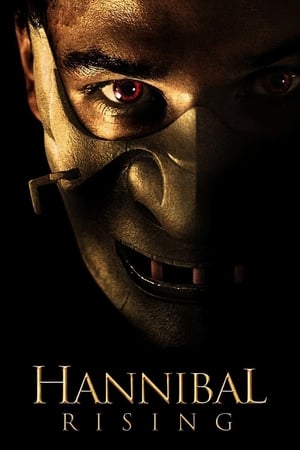
Hannibal Rising(en)
The story of the early, murderous roots of the cannibalistic killer, Hannibal Lecter – from his hard-scrabble Lithuanian childhood, where he witnesses the repulsive lengths to which hungry soldiers will go to satiate themselves, through his sojourn in France, where as a medical student he hones his appetite for the kill.
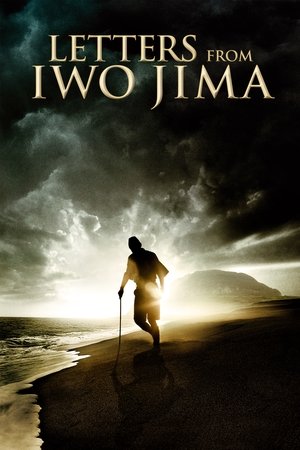
Letters from Iwo Jima(en)
The story of the battle of Iwo Jima between the United States and Imperial Japan during World War II, as told from the perspective of the Japanese who fought it.
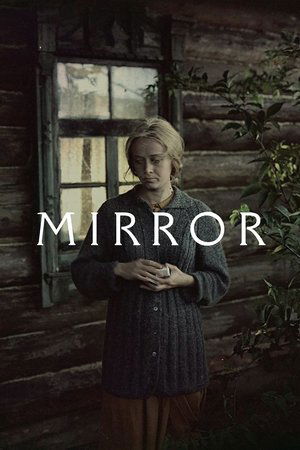
Mirror(ru)
A dying man in his forties recalls his childhood, his mother, the war and personal moments that tell of and juxtapose pivotal moments in Soviet history with daily life.
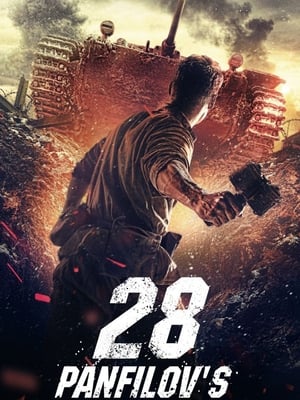
Panfilov's 28 Men(ru)
USSR, November, 1941. Based on the account by Vasiliy Koroteev this is the story of Panifilov's Twenty-Eight, a group of twenty-eight Red Army soldiers commanded by General Ivan Panfilov, that stopped the advance on Moscow of a column of fifty-four Nazi tanks of the 11th Panzer Division for several days. Though lightly armed they fight tirelessly and defiantly, with uncommon bravery and unwavering dedication, to protect Moscow and their Motherland.
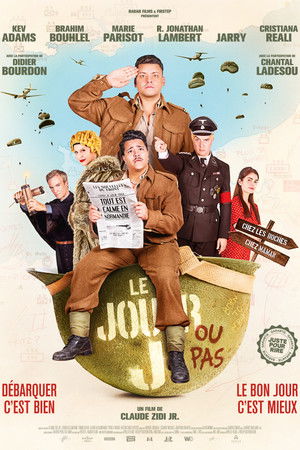
G-Day(fr)
June 1944. Europe is torn apart by war, and preparations are underway for the Normandy landings. Denis Porte continues his daily work with dedication at a British military base... which is fake. His mission: to move fake soldiers around every day and thus deceive the enemy. In the Porte family, there is a tendency for fathers and sons to die as heroes for France. So there is no question of Porte taking the slightest risk for his mother. Looking after a fake base is the most she will tolerate for her son. But after meeting Sami, an Algerian doctor who dreams of meeting De Gaulle, they decide during a drunken evening to take part. They set off bravely (and with quite a few drinks under their belts). Except that they don't have the right date or the right place. Add to that a hero who doesn't want to expose himself to danger. On D-Day, or almost...