Loading Page

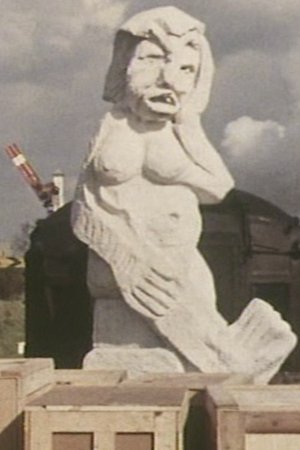
Made to Be Destroyed(2016)
Status: Released
Date: 2016-12-17
0%
0 Votes
Time: 0h 22m
Overview:
With MADE TO BE DESTROYED, Christian Marclay edits together a multitude of film clips in which artworks are destroyed. The minutia of the preliminary research and ensuing editing highlights a series of narrative and cultural patterns whereby art is the victim of violence. Whether sprayed (Batman, 1989), burnt (Equilibrium, 2002) or smashed (Le sang d’un poète, 1932 The Naked Gun, 1988), artworks are destroyed in moments that express rage against the self and others, the pain of loss, rebellion against a state or political power, or simply the perfect foil for a slapstick mishap.
Languages:
Countries:
Movie: Made to Be Destroyed
HomePage
Overview
With MADE TO BE DESTROYED, Christian Marclay edits together a multitude of film clips in which artworks are destroyed. The minutia of the preliminary research and ensuing editing highlights a series of narrative and cultural patterns whereby art is the victim of violence. Whether sprayed (Batman, 1989), burnt (Equilibrium, 2002) or smashed (Le sang d’un poète, 1932 The Naked Gun, 1988), artworks are destroyed in moments that express rage against the self and others, the pain of loss, rebellion against a state or political power, or simply the perfect foil for a slapstick mishap.
Release Date
2016-12-17
Average
0
Rating:
0.0 startsTagline
Genres
Languages:
Recommendations Movies
70%
The Cutting Edge: The Magic of Movie Editing(en)
2004-10-12
Documentary about the art of film editing. Clips are shown from many groundbreaking films with innovative editing styles.
71%
They'll Love Me When I'm Dead(en)
2018-08-31
As his life comes to its end, famous Hollywood director Orson Welles puts it all on the line at the chance for renewed success with the film The Other Side of the Wind.
64%
The Beaver(en)
2011-05-05
Suffering from a severe case of depression, toy company CEO Walter Black begins using a beaver hand puppet to help him open up to his family. With his father seemingly going insane, adolescent son Porter pushes for his parents to get a divorce.
70%
Puss Gets the Boot(en)
1940-02-10
Jasper is given an ultimatum by his master: break one more thing and you're out. Rodent Jerry does his best to make sure that his tormentor "gets the boot".
61%
Ararat(en)
2002-05-20
Interrogated by a customs officer, a young man recounts how his life was changed during the making of a film about the Armenian genocide.
70%
Visions of Light(en)
1992-09-17
Cameramen and women discuss the craft and art of cinematography and of the "DP" (the director of photography), illustrating their points with clips from 100 films, from Birth of a Nation to Do the Right Thing. Themes: the DP tells people where to look; changes in movies (the arrival of sound, color, and wide screens) required creative responses from DPs; and, these artisans constantly invent new equipment and try new things, with wonderful results. The narration takes us through the identifiable studio styles of the 30s, the emergence of noir, the New York look, and the impact of Europeans. Citizen Kane, The Conformist, and Gordon Willis get special attention.
66%
A Bucket of Blood(en)
1959-10-21
Nerdy Walter Paisley, a maladroit busboy at a beatnik café who doesn't fit in with the cool scene around him, attempts to woo his beautiful co-worker, Carla, by making a bust of her. When his klutziness results in the death of his landlady's cat, he panics and hides its body under a layer of plaster. But when Carla and her friends enthuse over the resulting artwork, Walter decides to create some bigger and more elaborate pieces using the same artistic process.
61%
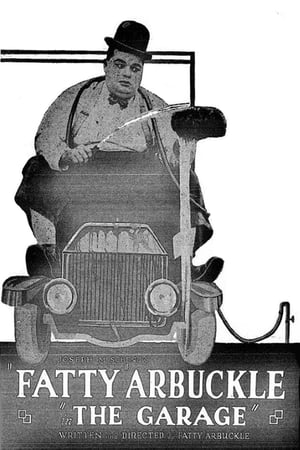
The Garage(en)
1920-01-11
Roscoe and Buster operate a combination garage and fire station. In the first half they destroy a car left for them to clean. In the second half they go off on a false alarm and return to find their own building on fire.
77%
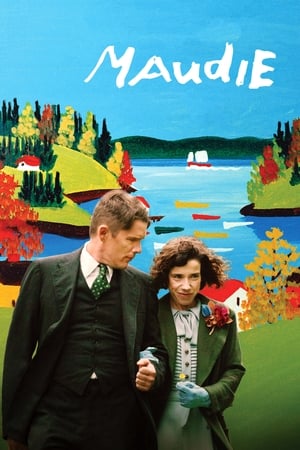
Maudie(en)
2016-06-16
Canadian folk artist Maud Lewis falls in love with a fishmonger while working for him as a live-in housekeeper.
62%
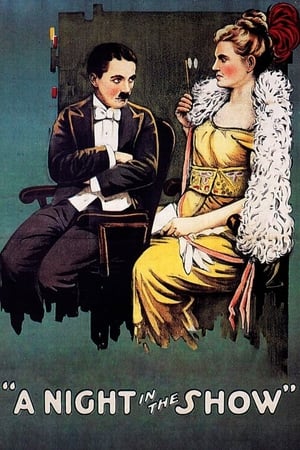
A Night in the Show(en)
1915-11-20
Mr. Pest tries several theatre seats before winding up in front in a fight with the conductor. He is thrown out. In the lobby he pushes a fat lady into a fountain and returns to sit down by Edna. Mr. Rowdy, in the gallery, pours beer down on Mr. Pest and Edna. He attacks patrons, a harem dancer, the singers Dot and Dash, and a fire-eater.
75%
Frank and Ollie(en)
1995-10-20
Before computer graphics, special effects wizardry, and out-of-this world technology, the magic of animation flowed from the pencils of two of the greatest animators The Walt Disney Company ever produced -- Frank Thomas and Ollie Johnston. Frank and Ollie, the talent behind BAMBI, PINOCCHIO, LADY AND THE TRAMP, THE JUNGLE BOOK, and others, set the standard for such modern-day hits as THE LION KING. It was their creative genius that helped make Disney synonymous with brilliant animation, magnificent music, and emotional storytelling. Take a journey with these extraordinary artists as they share secrets, insights, and the inspiration behind some of the greatest animated movies the world has ever known!
70%
An Inconvenient Truth(en)
2006-05-24
A documentary on Al Gore's campaign to make the issue of global warming a recognized problem worldwide.
60%
Maniac(en)
2012-12-26
As he helps a young artist with her upcoming exhibition, the owner of a mannequin shop's deadly, suppressed desires come to the surface.
72%
The Director and the Jedi(en)
2018-03-12
An intimate documentary delving into Rian Johnson's process as he comes in as a director new to the Star Wars universe.

61%
Naqoyqatsi(en)
2002-09-02
A visual montage portrait of our contemporary world dominated by globalized technology and violence.
68%
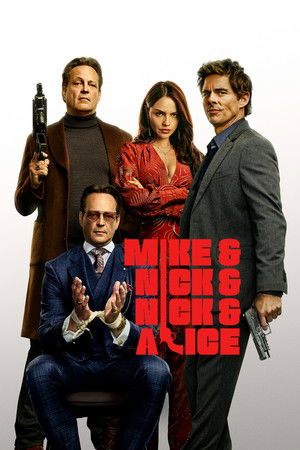
Mike & Nick & Nick & Alice(en)
2026-03-14
Two gangsters and the woman they love try to survive the most dangerous night of their lives. As if that wasn’t enough, there’s one wild ingredient added to the mix: a time machine.
69%
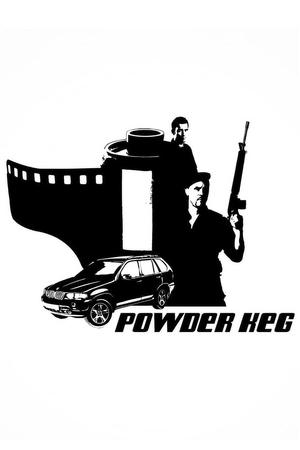
Powder Keg(en)
2001-06-01
The Driver is drafted by the UN to rescue a wounded war photographer named Harvey Jacobs from out of hostile territory. While they are leaving Jacobs tells the Driver about the horrors he saw as a photographer, but he regrets his inability to help war victims. Jacobs answers the driver curiosity about why he is a photographer by saying how his mother taught him to see. He gives the Driver the film needed for a New York Times story and also his dog tags to give to his mother. When they reach the border, they are confronted by a guard who begins to draw arms as Jacobs begins taking pictures, trying to get himself killed. The Driver drives through a hail of gunfire to the border, but finds Jacobs killed by a bullet through the seat. The Driver arrives in America to visit Jacobs' mother and share the news of him winning the Pulitzer prize and hand over the dog tags, only to discover that she is blind.
73%
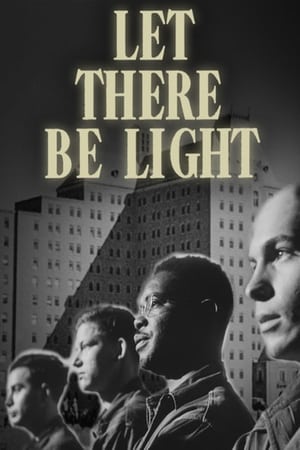
Let There Be Light(en)
1946-12-16
The final entry in a trilogy of films produced for the U.S. government by John Huston. Some returning combat veterans suffer scars that are more psychological than physical. This film follows patients and staff during their treatment. It deals with what would now be called PTSD, but at the time was categorised as psychoneurosis or shell-shock. Government officials deemed this 1946 film counterproductive to postwar efforts; it was not shown publicly until 1981.
59%
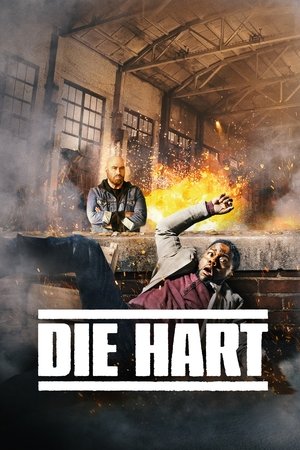
Die Hart(en)
2023-02-22
Kevin Hart - playing a version of himself - is on a death-defying quest to become an action star. And with a little help from John Travolta, Nathalie Emmanuel, and Josh Hartnett - he just might pull it off.