

Tsukiji(2001)
Tsukiji is a “city symphony” film of sorts, dedicated to the largest fish-market in the world, and one of the last surviving proletarian spaces in Tokyo. A film about cutting in a double sense, it harkens back to a moment of intersection of modernism and social realism, evoking the ghost of the left-wing Japanese novelist of the 1920s and 30s, Takiji Kobayashi, author of Kani kosen (The Factory Ship) and an early victim of Japanese fascism. —Allan Sekula
Movie: Tsukiji
HomePage
Overview
Tsukiji is a “city symphony” film of sorts, dedicated to the largest fish-market in the world, and one of the last surviving proletarian spaces in Tokyo. A film about cutting in a double sense, it harkens back to a moment of intersection of modernism and social realism, evoking the ghost of the left-wing Japanese novelist of the 1920s and 30s, Takiji Kobayashi, author of Kani kosen (The Factory Ship) and an early victim of Japanese fascism. —Allan Sekula
Release Date
2001-01-01
Average
0
Rating:
0.0 startsTagline
Genres
Languages:
日本語
Recommendations Movies
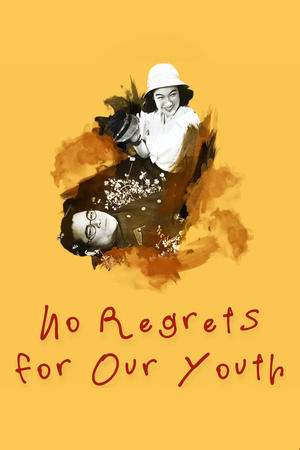
No Regrets for Our Youth(ja)
After her anti-fascist professor father is dismissed, Yukie navigates love, political repression, and wartime upheaval—ultimately forging her own path in pre- and post-WWII Japan.

Taboo(ja)
Set during Japan's Shogun era, this film looks at life in a samurai compound where young warriors are trained in swordfighting. A number of interpersonal conflicts are brewing in the training room, all centering around a handsome young samurai named Sozaburo Kano. The school's stern master can choose to intervene, or to let Kano decide his own path.
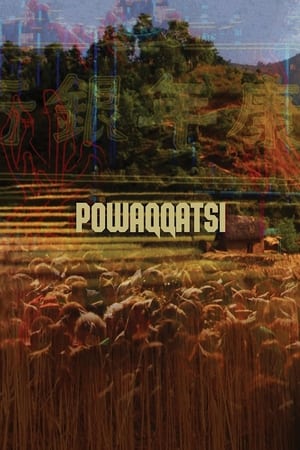
Powaqqatsi(en)
An exploration of technologically developing nations and the effect the transition to Western-style modernization has had on them.

Imprint(ja)
An American journalist travels through 19th-century Japan to find the prostitute he fell in love with but instead learns of the physical and existential horror that befell her after he left.
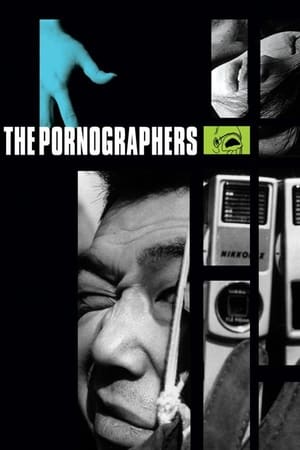
The Pornographers(ja)
Subu makes pornographic films. He sees nothing wrong with it. They are an aid to a repressed society, and he uses the money to support his landlady, Haru, and her family. From time to time, Haru shares her bed with Subu, though she believes her dead husband, reincarnated as a carp, disapproves. Director Shohei Imamura has always delighted in the kinky exploits of lowlifes, and in this 1966 classic, he finds subversive humor in the bizarre dynamics of Haru, her Oedipal son, and her daughter, the true object of her pornographer-boyfriend’s obsession. Imamura’s comic treatment of such taboos as voyeurism and incest sparked controversy when the film was released, but The Pornographers has outlasted its critics, and now seems frankly ahead of its time.
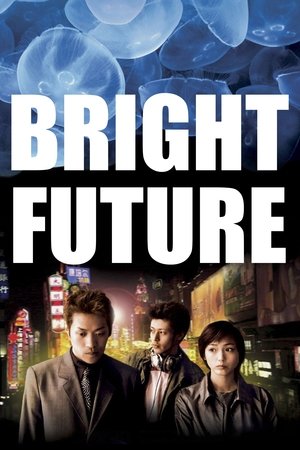
Bright Future(ja)
Buddies working at an oshibori factory bond over an uncontrollable rage neither can control, as well as a strange jellyfish they keep as a pet.
Kissed(en)
Over the years, a child's romantic ideals about death blossom into necrophilia, the study of embalming and the most profound relationship of her life.

Eros + Massacre(ja)
Two interwoven stories. The first is a biography of anarchist Sakae Osugi which follows his relationship with three women in the 1920s. The second centers around two 1960s students researching Osugi's theories.
Evil Does Not Exist(ja)
Takumi and his daughter Hana live in Mizubiki Village, close to Tokyo. One day, the village inhabitants become aware of a plan to build a camping site near Takumi's house offering city residents a comfortable "escape" to nature.

Blood and Bones(ja)
In 1923, teenager Kim Shun-Pei moves from Cheju Island, in South Korea, to Osaka, in Japan. Along the years, he becomes a cruel, greedy and violent man and builds a factory of kamaboko, processed seafood products, in his poor Korean-Japanese community exploiting his employees.
The Twilight Samurai(ja)
Seibei Iguchi leads a difficult life as a low ranking samurai at the turn of the nineteenth century. A widower with a meager income, Seibei struggles to take care of his two daughters and senile mother. New prospects seem to open up when the beautiful Tomoe, a childhood friend, comes back into he and his daughters' life, but as the Japanese feudal system unravels, Seibei is still bound by the code of honor of the samurai and by his own sense of social precedence. How can he find a way to do what is best for those he loves?

Godzilla Against MechaGodzilla(ja)
JSDF pilot Akane has a fateful encounter when a new Godzilla emerges in Tateyama. As a countermeasure, a cyborg named Kiryu is constructed from the remains of the original. The machine is discovered to harbor the restless soul of the original monster as Akane must learn to find value in her own life as well.

Love & Pop(ja)
Tokyo schoolgirl Hiromi and her friends engage in a practice known as enjo kosai, or "compensated dating", where older men pay young girls for dates. Hiromi plunges deeper into this world to raise money for an expensive ring.

My Brother the Devil(en)
Fourteen-year-old Mo is a lonely, sensitive boy whose hunger for the rant and banter of buddies makes him prone to tread dangerous territories. He idolizes his handsome older brother, Rashid, a charismatic, well-respected member of a local gang, whose drug dealing enables “Rash” to provide for his family. Aching to be seen as a tough guy himself, Mo takes a job that unlocks a fateful turn of events and forces the brothers to confront their inner demons. It turns out that hate is easy. It is love and understanding that take real courage.

My Rainy Days(ja)
Because of her past, 17-year-old Rio lives her days filling the emptiness in her heart with money—until one day, she meets a university professor named Kouki and falls in love.

A Hen in the Wind(ja)
Tokiko patiently awaits her husband's return from WWII when her four-year old son falls ill. She takes him to the doctor but has no means of paying, so she resorts to prostitution. A month later, her husband returns to find his desperate wife, who tells him the truth. Together, they must deal with the consequences.
Nothing Personal(en)
Alone in her empty flat, from her window Anne observes the people passing by who nervously snatch up the personal belongings and pieces of furniture she has put out on the pavement. Her final gesture of taking a ring off her finger signals she is leaving her previous life in Holland behind. She goes to Ireland, where she chooses to lead a solitary, wandering existence, striding through the austere landscapes of Connemara. During her travels, she discovers a house that is home to a hermit, Martin.

Autumn in New York(en)
Will Keane, a Manhattan restaurateur, is content with his playboy lifestyle until he meets Charlotte Fielding, a free-spirited young woman. Together the pair pursue a passionate affair that forces them both to reevaluate what they want out of life, even as fate threatens to steal away their future.
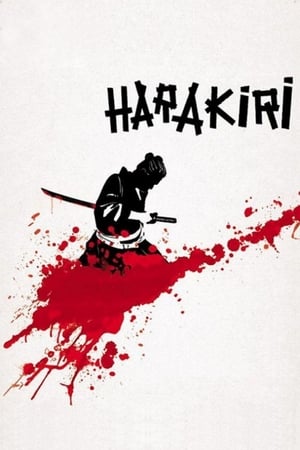
Harakiri(ja)
Down-on-his-luck veteran Tsugumo Hanshirō enters the courtyard of the prosperous House of Iyi. Unemployed, and with no family, he hopes to find a place to commit seppuku—and a worthy second to deliver the coup de grâce in his suicide ritual. The senior counselor for the Iyi clan questions the ronin’s resolve and integrity, suspecting Hanshirō of seeking charity rather than an honorable end. What follows is a pair of interlocking stories which lay bare the difference between honor and respect, and promises to examine the legendary foundations of the Samurai code.

The Pervert's Guide to Ideology(en)
A journey into the labyrinthine heart of ideology, which shapes and justifies both collective and personal beliefs and practices: with an infectious zeal and voracious appetite for popular culture, Slovenian philosopher and psychoanalyst Slavoj Žižek analyzes several of the most important films in the history of cinema to explain how cinematic narrative helps to reinforce prevailing ethics and political ideas.