
The Dialogue(2014)
Interviews with Dalai Lama and some Chinese intellectuals about Tibet/China relations and related issues.
Movie: The Dialogue
Top 3 Billed Cast
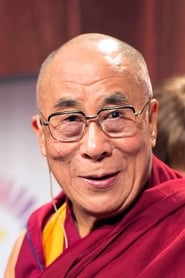
Self
Video Trailer The Dialogue
All 1 videos

《對話》--王我| "Dialogue" directed by Wang wo - Trailer
Recommendations Movies

Anna Nicole Smith: You Don't Know Me(en)
From the heights of her modeling fame to her tragic death, this documentary reveals Anna Nicole Smith through the eyes of the people closest to her.

My Mom Jayne(en)
Through deeply personal interviews with her siblings and an examination of the photographs, letters, and belongings left behind, Mariska assembles a new portrait of her mother Jayne Mansfield, an extraordinary and complex woman.

Harry Dean Stanton: Partly Fiction(en)
An impressionistic portrait of the iconic actor Harry Dean Stanton comprised of intimate moments, film clips from some of his 250 films and his renditions of American folk songs.
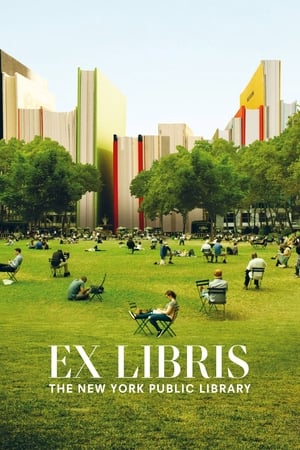
Ex Libris: The New York Public Library(en)
A documentary about how a dominant cultural and demographic institution both sustains their traditional activities and adapts to the digital revolution.
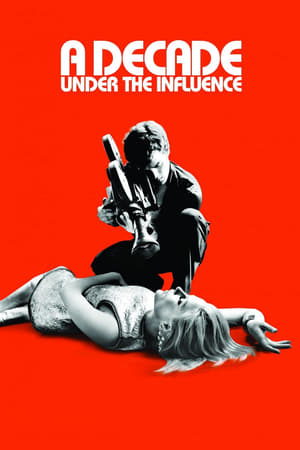
A Decade Under the Influence(en)
A documentary examining the decade of the 1970s as a turning point in American cinema. Some of today's best filmmakers interview the influential directors of that time.
Oprah Winfrey Presents: When They See Us Now(en)
Oprah Winfrey talks with the exonerated men once known as the Central Park Five, plus the cast and producers who tell their story in "When They See Us."

John Candy: I Like Me(en)
Those who knew iconic funnyman John Candy best share his story, in their own words, through never-before-seen archival footage, imagery, and interviews.
Love, Antosha(en)
From a prolific career in film and television, Anton Yelchin left an indelible legacy as an actor. Through his journals and other writings, his photography, the original music he wrote, and interviews with his family, friends, and colleagues, this film looks not just at Anton's impressive career, but at a broader portrait of the man.
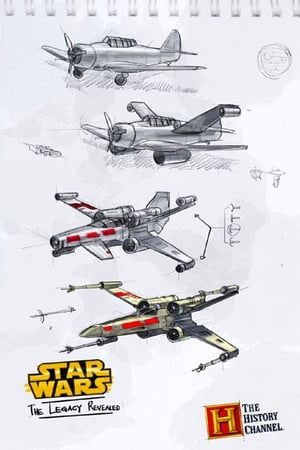
Star Wars: The Legacy Revealed(en)
The special focuses on how Star Wars is relevant today and the history that inspired it, and also makes various connections to Greek mythology. It consists of several interviews with well-known politicians, journalists, and critics, along with historical content and clips from all six of the Star Wars movies.
Being James Bond(en)
Daniel Craig candidly reflects on his 15 year adventure as James Bond. Including never-before-seen archival footage from Casino Royale to the upcoming 25th film No Time To Die, Craig shares his personal memories in conversation with 007 producers, Michael G Wilson and Barbara Broccoli.

I Am Heath Ledger(en)
The life and career of an actor, artist, and icon. His own journey through his own camera.

Gilbert(en)
The life and career of one of comedy's most inimitable modern voices, Mr. Gilbert Gottfried.
Lake of Fire(en)
An unflinching look at the how the battle over abortion rights has played out in the United States over the last 15 years.
Public Speaking(en)
Martin Scorsese’s portrait of writer and social commentator Fran Lebowitz, celebrated for her sharp wit and observations on modern life. Filmed at New York’s Waverly Inn and intercut with archival footage and interviews, the documentary captures Lebowitz’s distinctive worldview through her spontaneous monologues and public appearances.
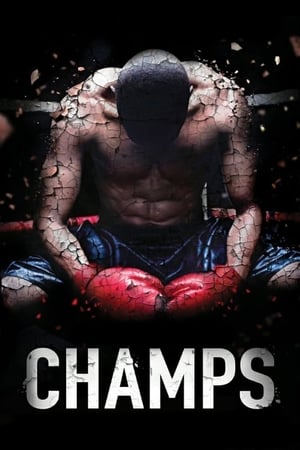
Champs(en)
A documentary about the sport of boxing, as seen through the eyes of champions Mike Tyson, Evander Holyfield and Bernard Hopkins.

The Class of ‘92(en)
A detailing of the rise to prominence and global sporting superstardom of six supremely talented young Manchester United football players (David Beckham, Nicky Butt, Ryan Giggs, Paul Scholes, Phil and Gary Neville). The film covers the period 1992-1999, culminating in Manchester United's European Cup triumph.
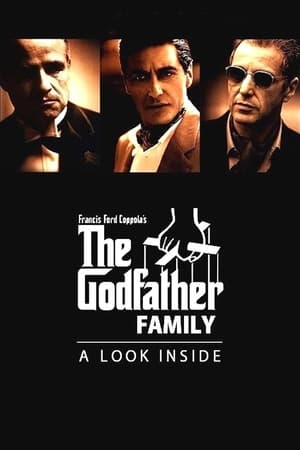
The Godfather Family: A Look Inside(en)
A documentary on the making of the three Godfather films, with interviews and recollections from the film makers and cast. This feature also includes the original screen tests of some of the actors for "The Godfather" film, and some candid moments on the set of "The Godfather: Part III."
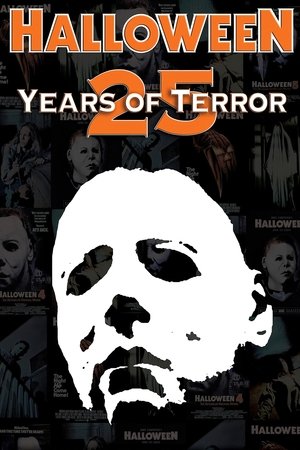
Halloween: 25 Years of Terror(en)
Follow the evolution of the 'Halloween' movies over the past twenty-five years. It examines why the films are so popular and revisits many of the original locations used in the films - seeing the effects on the local community. For the first time, cast, crew, critics and fans join together in the ultimate 'Halloween' retrospective.
Similar Movies
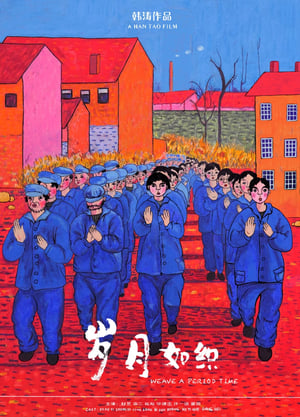
Weave A Period Of Time(zh)
Han Tao’s latest film is set in a textile factory of the 1970s. Chong Er, a worker there, is in love with newcomer Xiao Lan and pursues her. They get married, but the happy time does not last long. Chong Er was executed, allegedly for breaking the law. More than 30 years later, the textile factory is closed down. The truth behind the case is finally revealed, but time has diluted everything and changed everyone’s visage. The film attempts to reconstruct the mental state of that generation, even though the workers and everything in the factory have been forgotten. Once upon a time, there were so many energetic lives that worked and lived there. The confining space was everything they had – where life began and ended, becoming eternally trapped in memories.
All There Will Be(zh)
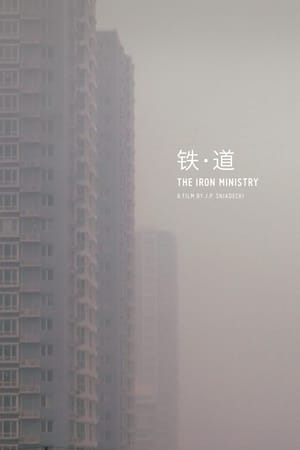
The Iron Ministry(zh)
Filmed over three years on China’s railways, The Iron Ministry traces the vast interiors of a country on the move: flesh and metal, clangs and squeals, light and dark, and language and gesture. Scores of rail journeys come together into one, capturing the thrills and anxieties of social and technological transformation. The Iron Ministry immerses audiences in fleeting relationships and uneasy encounters between humans and machines on what will soon be the world’s largest railway network.
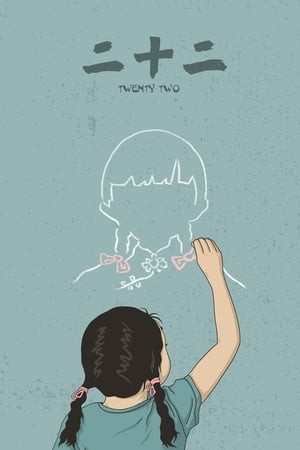
Twenty Two(zh)
Follow the lives of the elderly survivors who were forced into sex slavery as “Comfort Women” by the Japanese during World War II. At the time of filming, only 22 of these women were still alive to tell their story. Through their own personal histories and perspectives, they tell a tale that should never be forgotten to generations unaware of the brutalization that occurred.
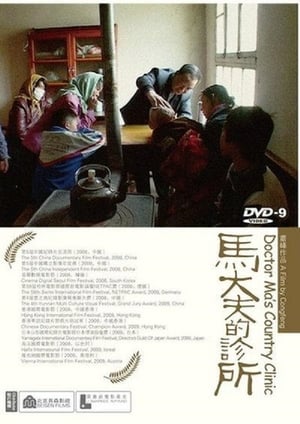
Doctor Ma's Country Clinic(zh)
"Huangyangchuan, Gansu province, China. It's an arid mountain area with poor roads. Ma Bingcheng is well-respected local doctor, so many patients (most of them farmers) come to see him every day. In his small clinic, people chat with each other about their lives, local conditions, or the people they know. The clinic seems to open up like a microcosm, the information and experiences of different people intertwine, revealing the conditions of typical Chinese farmers, and the typical fates of both young and old--"
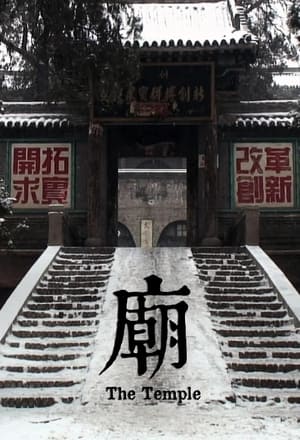
The Temple(zh)
Several boys who are about to graduate live in the 2006 dormitory. All-day long eating, chatting, playing cards, and playing with mobile phones, to kill their youth, just to get a high school diploma. Finally, I graduated from high school, but where is the future? Go to work or continue to join a college? Facing such students, it is difficult for teachers to show enthusiasm for teaching. Only Teacher Hou carefully wiped the bulletin board , as always. The original site of Duancun Middle School in Pingyao County was an ancient temple in the Ming Dynasty. In the summer of 2011, more than 150 students from the school merged with two other high schools and moved into the new school in the city. Grass grows on the playground, and the gatekeeper Laomi and his family continue to live in the teaching building.
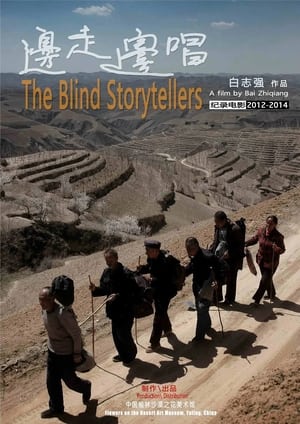
The Blind Storytellers(zh)
Li Shouwang is the leader of a blind storytellers team, learned storytelling at the age of 19. His childernare living hard in other cities. Li's money amost goes to his children's pocket every year. But with urbanisation, the storytellers have lost almost all their audience. As the conflict between the storytelling team and the village team intensified, his son, who was far away from home, became the only spiritual sustains... When he was excited that his son would be taking his family home for Chinese New Year, what's await is a sigh.
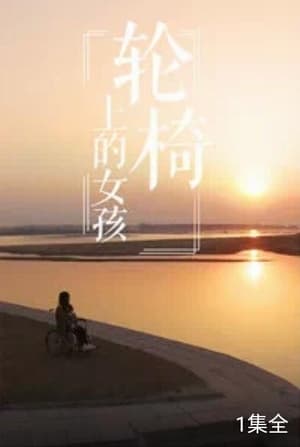
Girl in Wheelchair(zh)
In Yuncheng County, Shandong, there is a girl born in the 90s named Han Wenjing who was paraplegic in a car accident in her childhood. As Han Wenjing gets older and older, she is worried about her future life. Marriage has become the biggest concern of parents. Han Wenjing got acquainted with a soldier online, but finally broke up under his father's opposition. The younger sister-in-law also had a dispute between the two over her marriage. When Han Wenjing was depressed, her father proposed to carry her to Liangshan. First, fulfilling Han Wenjing's wish was also compensation for Han Wenjing. Later, Han Wenjing met a dumb while studying e-commerce sales. The dumb liked her very much. Both parents were satisfied when they met. However, Han Wenjing felt that she still couldn't accept the disabled and wanted to try to combine healthy people, even if it failed. Under the pressure of her parents and sister-in-law on Han Wenjing, Han Wenjing still insists on her choice
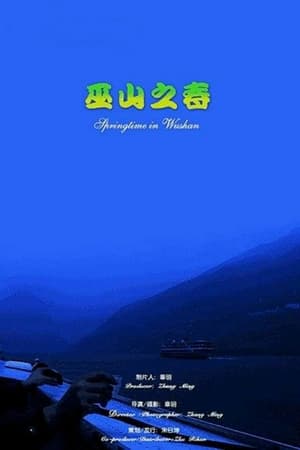
Springtime in Wushan(zh)
Zhang Ming went back to his hometown Wushan to record the last images before it being changed forever by the upcoming Three Gorges Dam.
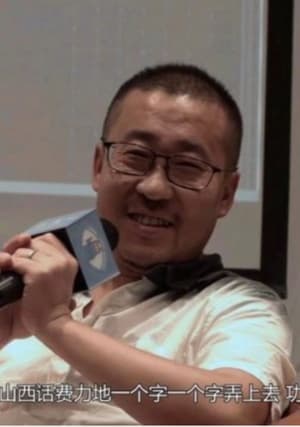
WANG HONG WEI: CHINESE INDIE FILM(en)
The player of Jia Zhangke's early film "Xiao Wu" and the famous independent film activist Wang Hongwei talked about Chinese independent films at the IFF Independent Film Forum.
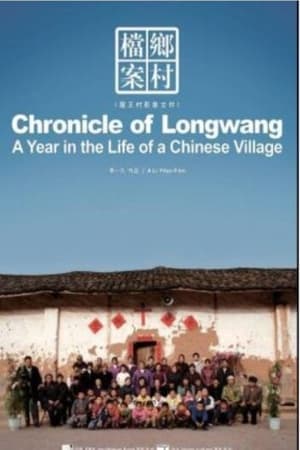
THE LONGWANG CHRONICLES: A YEAR OF LIFES IN A CHINESE VILLAGE(zh)
Unusually popular religions and extreme secular beliefs, unconstrained power and no authoritarian society, people work hard on the land and live thrifty but do not believe in the meaning of life at all. This is Longwang Village, an empty old farming society, the most essential reality of an ordinary western village. The film does not have a perpetual plot. The images are presented with the changing of the four seasons. There is no great joy or great sadness. Everything is recorded, and no results are produced. Strictly speaking, this is actually just a rural video file, a running account of ordinary western villages without all rhetoric.
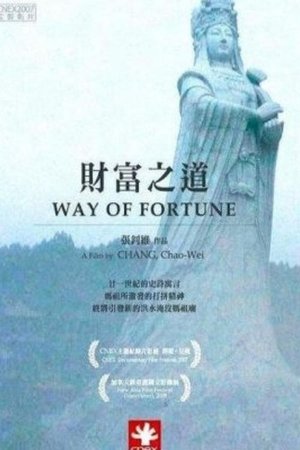
Way of Fortune(zh)
"Mazu" or "The Sea God" has been the most important religious belief of ordinary people in my hometown for four hundred years. Along the coast of China and even in the Nanyang region, there is at least one temple dedicated to Mazu in various seaside cities-this geographical and historical distribution coincides with the contemporary economic or industrial area of Chinese society. It is frustrating that rapid economic development has led to global warming. The factories located on the coast of southern China from all over the world will eventually cause flooding and inundate these temples dedicated to Mazu. This is indeed a very ironic discovery for our civilization, "We", not only Chinese or all human beings, now or in the past, how can we Chinese avoid this upcoming tragedy?
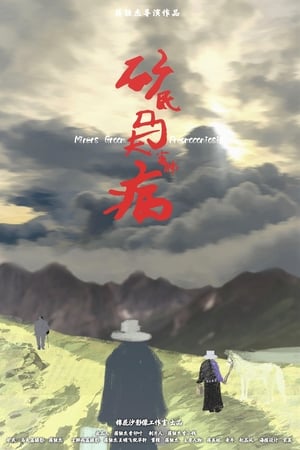
Miners, Groom, Pneumoconiosis(zh)
The location of Hunan's southwestern Hunan, the local economy is not active, the people either go out to work or go up the mountain to mine. Due to the constant mining disasters, despite the government's efforts to rectify and regulate, many people still illegally mine. Miners often do not pay attention to the protection of mines. Many years later, many miners have pneumoconiosis. The film started shooting in 2010 until 2018, with a filming period of nearly ten years, until the death of Zhao Pingfeng, the protagonist of pneumoconiosis, leaving young children and mentally handicapped wife.

First Vote(en)
A soon-to-be first-time voter, the filmmaker’s thought-provoking journey into the Rust Belt and South captures four Asian American voters’ ardent first time grassroots political participation ignited by the 2016 rise of “Chinese Americans for Trump.” FIRST VOTE is a character driven cinema verité style film chronicling the democratic participation of four Asian American voters from 2016 through the 2018 midterm elections.
Disappearance(zh)
Yu Tian (played by Hu Tian) is a senior this year. He hasn't returned home for a few years while studying in a big city. The estrangement between him and his mother (Lin Jiehua) is somehow getting bigger and bigger. He is immersed in his artistic dreams and is not practical, but his mother, who has always been conservative, does not understand. His friends remained the same, still the same young people in the small town. Friends booed that he would be the most promising one among them, but he himself was convinced. He told his sister (played by Sun Nan) that he would go to the big city to make a fortune.
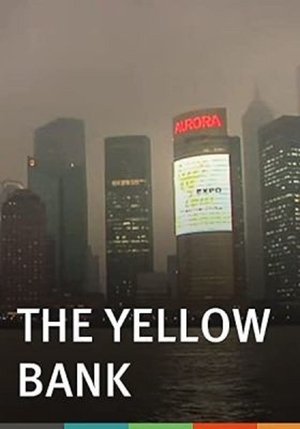
The Yellow Bank(zh)
A short documentary that captures the longest total solar eclipse of the 21st century, The Yellow Bank takes you on a contemplative boat ride across the Huangpu River in Shanghai, China. Filmmaker J.P. Sniadecki, who lived and worked in Shanghai nine years earlier, uses the eclipse as a catalyst to explore the way weather, light, and sound affect the urban architectural environment during this extremely rare phenomenon.
Lost in the Mountain(zh)
The film is director Gao Zipeng’s first fiction film which takes three years to complete. It premieres on March 27, 2001 in UCCA and stars the poet A Jian, Xiao Zhao and the writer Gou Zi. The film is based on a true crime of disappearance. It creates an atmosphere of what Ma Zhiyuan, a celebrated poet and playwright of Yuan Dynasty, portrays in his famous poem “Autumn Thoughts”: Over old trees wreathed with rotten vines fly evening crows/ Under a small bridge near a cottage a stream flows/ On ancient road in the west wind a lean horse goes/ Westward declines the sun/ Far, far from home is the heartbroken one.
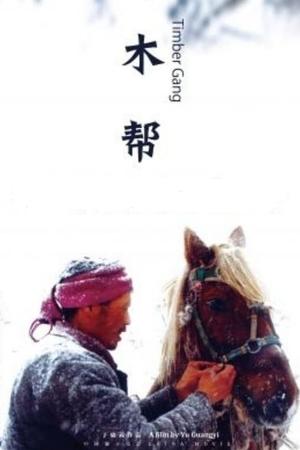
Timber Gang(zh)
Yu Guangyi's stunning debut explores a grueling winter amongst loggers in Northeast China as they employ traditional practices through one last, fateful expedition. For generations, the lumberjacks of Heilongjiang, China have made their living harvesting timber amidst a barren, wintry landscape. These woodcutters confront the elements, living in makeshift cabins surrounded by snow and ice. Hand tools, sleds and horses are the only technology they employ to drag massive trees down the perilous slopes of Black Bear Valley. At constant risk of injury and death, they attempt to appease the mountain gods with ancient rituals and sacrifices. Despite their heroic efforts to subsist, the deforestation caused by their decades-long customs may lead to their ultimate demise.
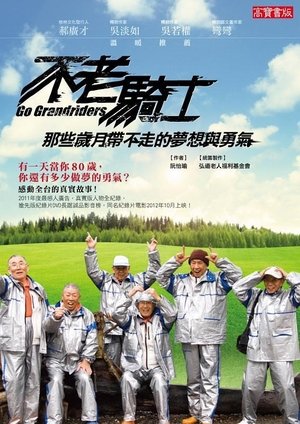
Go Grandriders(zh)
17 riders with avarage age 81 decide to follow the dream of their youth and start their journey to ride around Taiwan island.
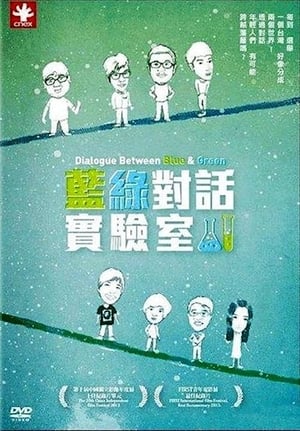
Dialogue Between Blue & Green(zh)
Taiwan's democracy is the envy of Chinese people all over the world. At the same time, when this two-party system-'blue' and 'green'-get at each other's throats, it seems to cast a dark cloud over this beacon of advancing democratization. How does the young generation, many of them first time voters, feel about the political environment they've inherited? Will they allow for their political differences to drive a deeper wedge into the Taiwanese society? A year and a half before Taiwan's 2012 Presidential Election I gathered a group of young people from across the blue and green spectrum to participate in a political dialogue. Although they're from opposing parties, they were willing to talk politics. Through these deliberately arranged dialogues, what sparks will fly?