Loading Page

Souvenirs/Bourges(1981)
Status: Released
Date: 1981-04-21
0%
0 Votes
Time: 0h 14m
Overview:
Bourges, France, May 1981. Invited to the Experimental Film and Music Festival, Hernández films the city for four days. Without a documentary concern, the film starts at a fair. It seems to be inhabited; there seems to be life there.
Languages: French.
Countries:
France
Movie: Souvenirs/Bourges
HomePage
Overview
Bourges, France, May 1981. Invited to the Experimental Film and Music Festival, Hernández films the city for four days. Without a documentary concern, the film starts at a fair. It seems to be inhabited; there seems to be life there.
Release Date
1981-04-21
Average
0
Rating:
0.0 startsTagline
Genres
Languages:
Français
Recommendations Movies
77%
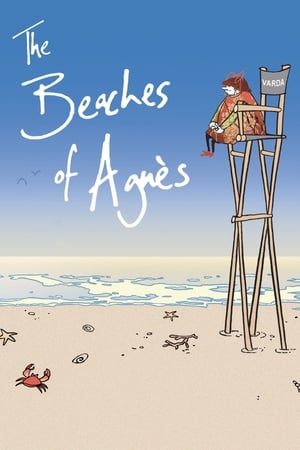
The Beaches of Agnès(fr)
2008-12-17
Filmmaking icon Agnès Varda, the award-winning director regarded by many as the grandmother of the French new wave, turns the camera on herself with this unique autobiographical documentary. Composed of film excerpts and elaborate dramatic re-creations, Varda's self-portrait recounts the highs and lows of her professional career, the many friendships that affected her life and her longtime marriage to cinematic giant Jacques Demy.

60%
The Public Woman(fr)
1984-06-16
An inexperienced young actress is invited to play a role in a film based on Dostoyevsky's 'The Possessed'. The film director, a Czech immigrant in Paris, takes over her life, and in a short time she is unable to draw the line between acting and reality. She winds up playing a real-life role posing as the dead wife of another Czech immigrant, who is manipulated by the filmmaker into commiting a political assassination.
67%
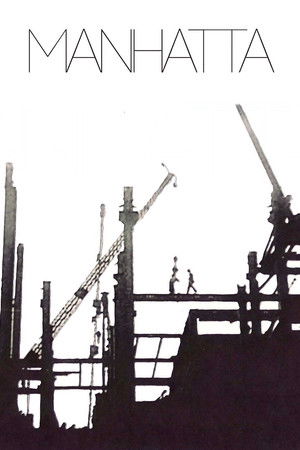
Manhatta(en)
1921-01-01
Morning reveals New York harbor, the wharves, the Brooklyn Bridge. A ferry boat docks, disgorging its huddled mass. People move briskly along Wall St. or stroll more languorously through a cemetery. Ranks of skyscrapers extrude columns of smoke and steam. In plain view. Or framed, as through a balustrade. A crane promotes the city's upward progress, as an ironworker balances on a high beam. A locomotive in a railway yard prepares to depart, while an arriving ocean liner jostles with attentive tugboats. Fading sunlight is reflected in the waters of the harbor. The imagery is interspersed with quotations from Walt Whitman, who is left unnamed.
66%
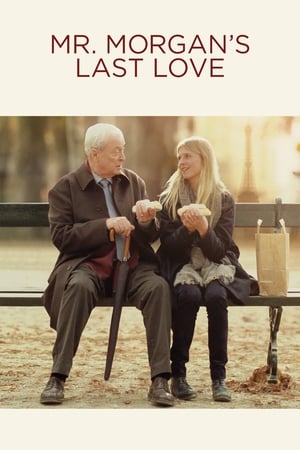
Mr. Morgan's Last Love(en)
2013-08-22
A widowed professor living in Paris develops a special relationship with a younger French woman.
72%
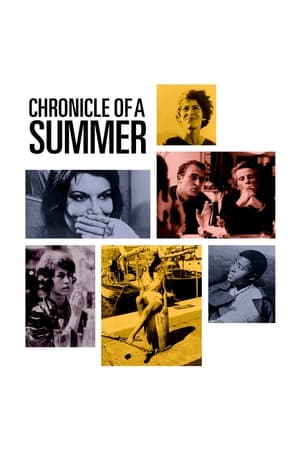
Chronicle of a Summer(fr)
1961-10-20
Paris, summer 1960. Anthropologist and filmmaker Jean Rouch and sociologist and film critic Edgar Morin wander through the crowded streets asking passersby how they cope with life's misfortunes.
63%
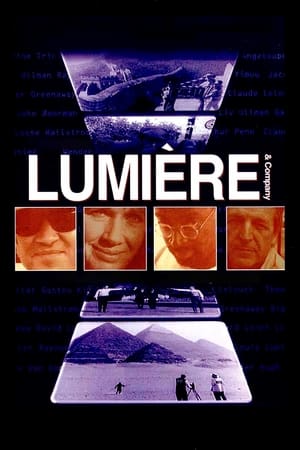
Lumière & Company(fr)
1995-12-20
40 international directors were asked to make a short film using the original Cinematographe invented by the Lumière Brothers, working under conditions similar to those of 1895. There were three rules: (1) The film could be no longer than 52 seconds, (2) no synchronized sound was permitted, and (3) no more than three takes.

74%
Hello Cubans(fr)
1963-11-26
A photo montage of Cubans filmed by Agnès Varda during her visit to Cuba in 1963, four years after Fidel Castro came to power. This black & white documentary explores their socialist culture and society while making use of 1500 pictures (out of 4000!) the filmmaker took while on the island.

78%
Lionel Messi: Destiny(en)
2023-05-27
Behind-the-scenes documentary about how Lionel Messi succeeded in lifting the World Cup – the only trophy to have eluded him in an incredible career.

71%
Black Panthers(fr)
1968-12-01
A film shot during the summer of 1968 in Oakland, California around the meetings organised by the Black Panthers Party to free Huey Newton, one of their leaders, and to turn his trial into a political debate. They tried and succeeded in catching America’s attention.
77%
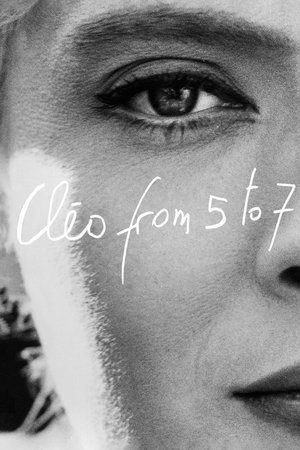
Cléo from 5 to 7(fr)
1962-04-11
Agnès Varda eloquently captures Paris in the sixties with this real-time portrait of a singer set adrift in the city as she awaits test results of a biopsy. A chronicle of the minutes of one woman’s life, Cléo from 5 to 7 is a spirited mix of vivid vérité and melodrama, featuring a score by Michel Legrand and cameos by Jean-Luc Godard and Anna Karina.

71%
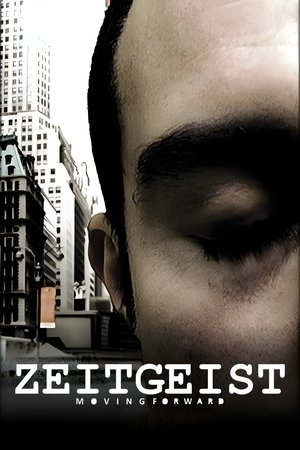
Zeitgeist: Moving Forward(en)
2011-01-15
A presentation of a case for a needed transition out of the current socioeconomic monetary paradigm which governs the entire world society. This subject matter will transcend the issues of cultural relativism and traditional ideology and move to relate the core, empirical 'life ground' attributes of human and social survival, extrapolating those immutable natural laws into a new sustainable social paradigm called a 'Resource-Based Economy'.
72%
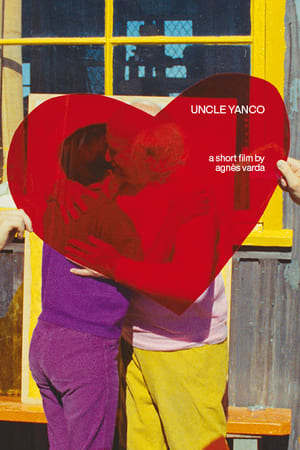
Uncle Yanco(fr)
1967-10-01
While in San Francisco for the promotion of her last film in October 1967, Agnès Varda, tipped by her friend Tom Luddy, gets to know a relative she had never heard of before, Jean Varda, nicknamed "Yanco". This hitherto unknown uncle lives on a boat in Sausalito, is a painter, has adopted a hippie lifestyle and loves life. The meeting is a very happy one.
74%
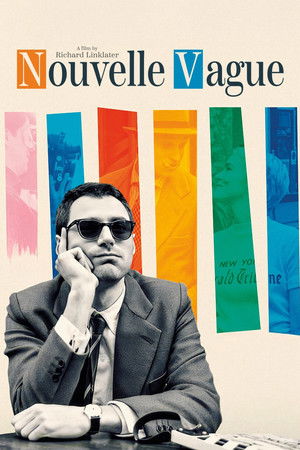
Nouvelle Vague(fr)
2025-10-08
After writing for Cahiers du cinéma, a young Jean-Luc Godard decides making films is the best film criticism. He convinces producer Georges de Beauregard to fund a low-budget feature, and creates a treatment with fellow New Wave filmmaker François Truffaut about a gangster couple. The result? Breathless, one of the first features of the Nouvelle Vague era of French cinema.
65%
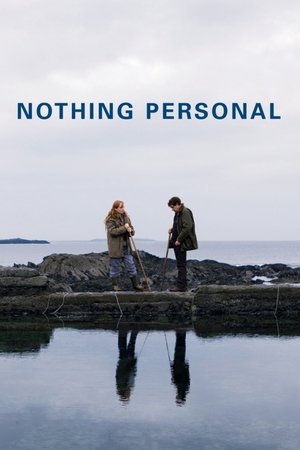
Nothing Personal(en)
2009-08-14
Alone in her empty flat, from her window Anne observes the people passing by who nervously snatch up the personal belongings and pieces of furniture she has put out on the pavement. Her final gesture of taking a ring off her finger signals she is leaving her previous life in Holland behind. She goes to Ireland, where she chooses to lead a solitary, wandering existence, striding through the austere landscapes of Connemara. During her travels, she discovers a house that is home to a hermit, Martin.

65%
The Hunchback of Notre Dame(en)
1923-09-06
In 15th century France, a gypsy girl is framed for murder by the infatuated Chief Justice, and only the deformed bellringer of Notre Dame Cathedral can save her.
73%
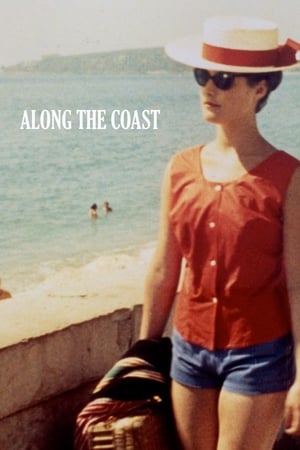
Along the Coast(fr)
1958-11-01
Tongue-in-cheek look at the French Riviera, especially in summer when it overflows with tourists. Reviews its history and famous visitors; displays its faux-exotic buildings, its crowded beaches, its trees and monuments; and, pokes fun at the colors women wear and the vagaries of fashion. The film celebrates the use of "Eden" as a place name, suggesting that paradise comes to the coast after all are gone, perhaps only on a remote island beach.
62%
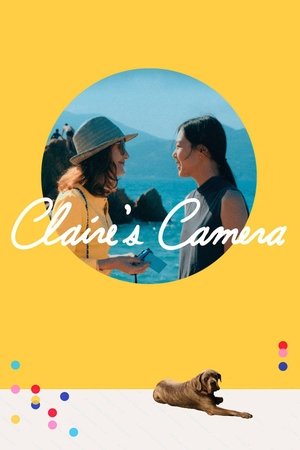
Claire's Camera(fr)
2018-03-07
On a business trip to the Cannes Film Festival, Manhee is accused of being dishonest, and fired. A teacher named Claire goes around taking photos with a Polaroid camera. She gets to know Manhee and sympathizes with her. Claire is like a person who can see Manhee's possible future or past selves, through the mysterious power of the beach tunnel. Through taking photos, Claire has acquired the ability to look slowly at things, and to transform objects. Now, Claire goes with Manhee to the café where she was fired. We look forward to seeing Claire's power at work.
70%
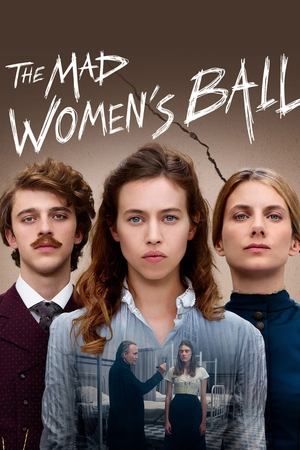
The Mad Women's Ball(fr)
2021-09-12
A woman who is unfairly institutionalized at a Paris asylum plots to escape with the help of one of its nurses. Based on the novel 'Le bal des folles' by Victoria Mas.
65%
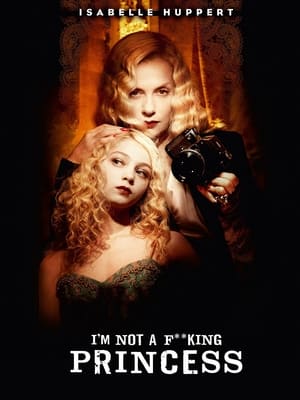
My Little Princess(fr)
2011-06-29
Young Violetta and her mother Hannah are a peculiar couple. Ten-year-old Violetta lives a quiet life with her grandmother, while her mother Hannah is an unpredictable photographer who lives off of the generosity of others. When Hannah forces her daughter to pose as a model, Violetta finds her life with her loving grandmother turned upside down.The resulting pictures quickly become a sensation for the trendy 70's Paris art scene, and Violetta finds herself caught in between her new stature as an art muse and her dull childhood.