Loading Page


Lightning Ridge: The Land of Black Opals(2017)
Status: Released
Date: 2017-08-20
0%
0 Votes
Time: 0h 21m
Overview:
An insight into the lives of the miners who search for Australia’s famous black opals.
Languages: English.
Countries:
Australia
ProductionCompanies:
Fountain Vista
Movie: Lightning Ridge: The Land of Black Opals
HomePage
Overview
An insight into the lives of the miners who search for Australia’s famous black opals.
Release Date
2017-08-20
Average
0
Rating:
0.0 startsTagline
Genres
Languages:
EnglishKeywords
Similar Movies
0%
Im Westen ging die Sonne auf(de)
2002-10-22
The mining industry, which always had been “sponsor” and “financier” of the soccer clubs in the Ruhr valley during the post-war period, doesn’t exist anymore nowadays in that form. Many of the once glorious clubs which dominated German soccer until the 1970s faded into obscurity without financial backers. The documentary “Im Westen ging die Sonne auf" ("The sun had risen in the west“) shows the history of the “Revierfußball” from after the second World War until the decline of the mining industry and recalls legendary players and forgotten clubs. The film shows especially how deeply rooted the sport was back then in the entire lifestyle of the Ruhr area - in private life as well as in society - and how structural change also left clearly visible marks in sports. With pictures from back then, interviews with contemporary witnesses, and footage of original locations nowadays, a contemporary document of German post-war history, by taking the example of soccer, has been created.
0%
Poison in the Rockies(en)
1990-01-09
Acid rain, economic development, and a century of mining pollute Rocky Mountain waters.
70%
The Wild(en)
2019-05-19
Newly into addiction recovery, an urgent threat emerges to spur filmmaker, Mark Titus back to the Alaskan wilderness - where the people of Bristol Bay and the world's last intact wild salmon runs face devastation if a massive copper mine is constructed.
0%
Playground(en)
2017-01-03
Brought by poverty, Petang and Cereno are driven into the realm of child labor to live by the clock. Film Weekly follows their journey as they step back to breathe and to be children once again.
67%
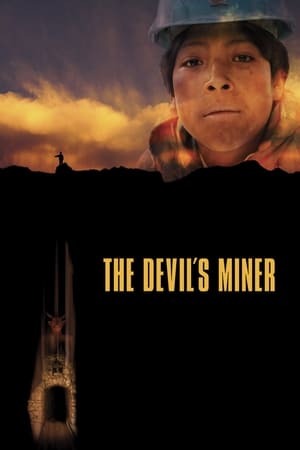
The Devil's Miner(en)
2005-11-05
'The Devil's Miner' tells the story of 14-year-old Basilio who worships the devil for protection while working in a Bolivian silver mine to support his family.
80%
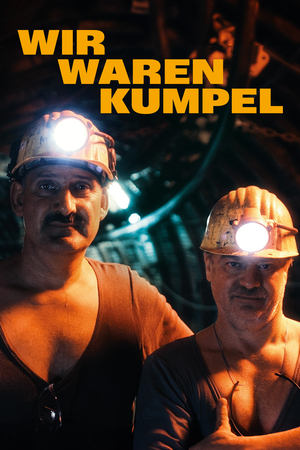
Once We Were Pitmen(de)
2023-05-10
Black dust, shrill metallic noises, dark tunnels, muscular bodies – all that is the past. At the end of 2018, extraction of coal throughout Germany came to an end. That same year, the voices of the emerging climate protest movement Fridays for Future grew louder. Against the backdrop of these media and socio-political events, the film follows five miners on their tragic, humorous and heartwarming search for a new role in life.
0%
Yirrkala: Conversations with Dundiwuy Wanambi(en)
1995-01-01
Yirrkala is an Aboriginal township on the Gove Peninsula in Northeast Arnhem Land. It was established as a Methodist mission in 1935 and over the years Yolngu from many different clans moved there. Conversations With Dundiwuy Wanambi is a personal film which reveals something of the struggles and thoughts of one elder in the face of enormous change. In the early years Dundiwuy was a heavy drinker. In a disturbing interview in a pub, Dundiwuy explains his reasons for drinking. Then, through a dream, Dundiwuy realizes he must begin to protect his family and clan. He establishes his Marrakulu clan homeland center at Gurka'wuy, south of Yirrkala. He will hold a great ceremony there. Years later Dundiwuy returns to Yirrkala. His clan is small and he did not receive the necessary support from his sons. But Dundiwuy endures, continues his struggle, and we learn in the post-script of how he has become a successful and sought-after artist.
78%
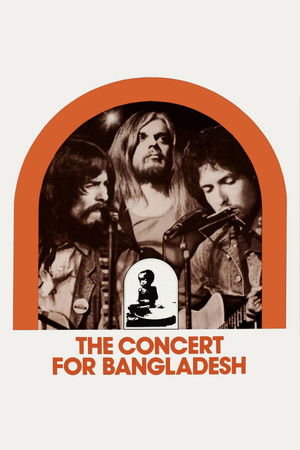
The Concert for Bangladesh(en)
1972-03-23
A film about the first benefit rock concert when major musicians performed to raise relief funds for the poor of Bangladesh. The Concert for Bangladesh was a pair of benefit concerts organised by former Beatles guitarist George Harrison and Indian sitar player Ravi Shankar. The shows were held at 2:30 and 8:00 pm on Sunday, 1 August 1971, at Madison Square Garden in New York City, to raise international awareness of, and fund relief for refugees from East Pakistan, following the Bangladesh Liberation War-related genocide.

75%
Harlan County U.S.A.(en)
1977-01-23
This film documents the coal miners' strike against the Brookside Mine of the Eastover Mining Company in Harlan County, Kentucky in June, 1973. Eastover's refusal to sign a contract (when the miners joined with the United Mine Workers of America) led to the strike, which lasted more than a year and included violent battles between gun-toting company thugs/scabs and the picketing miners and their supportive women-folk. Director Barbara Kopple puts the strike into perspective by giving us some background on the historical plight of the miners and some history of the UMWA. Preserved by the Academy Film Archive in partnership with New York Women in Film & Television in 2004.
0%
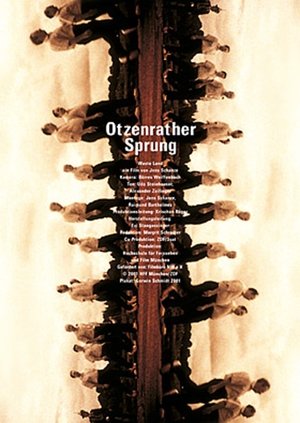
Waste Land(de)
2001-11-18
By 2045, twenty localities in Germany will be resettled because of brown coal open pit mining. The film Waste Land follows the inhabitants of three villages in the Rhenish coal-mining district during their last years in their old home and documents how an entire region prepares for its collective relocation.
100%
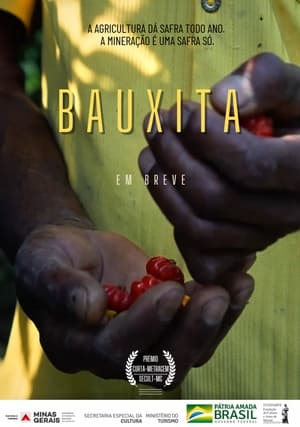
Bauxita(en)
2023-07-14
Brazil is one of the most dangerous countries for environmentalists. The rural community of Belisário holds the country's second largest bauxite reserve, right below one of the most bio-diverse areas in the world: the Atlantic Forest. The small community was shaken when the beloved Gilberto, a Franciscan Friar, received a death threat followed by the lines: "you've been talking against mining way too much". PT: O Brasil é um dos países mais perigosos do mundo para defensores do meio ambiente. Em Minas Gerais, a comunidade rural de Belisário abriga a segunda maior reserva de bauxita do país, em uma das áreas de maior biodiversidade do mundo: a Mata Atlântica. A tranquilidade do pequeno vilarejo foi abalada quando Frei Gilberto, um franciscano que dedica sua vida à preservação da natureza, recebeu uma ameaça de morte com o seguinte aviso: "você tem falado demais contra a mineração".

0%
Uranium(en)
1990-11-07
Explores the consequences of uranium mining in Canada. Toxic and radioactive waste pose profound, long-term environmental hazards. Miners suffer a substantially increased risk of getting cancer. Most mining occurs on Indigenous People's land, violating their traditional economic and spiritual lives. Given our limited knowledge of the risks associated with uranium mining, why continue?

0%
Diamantes(es)
1969-01-01
Diamantes, short produced by the ULA, registered the birth of a new town: San Salvador de Paul, the arrival of new residents, farmers who ventured in search of riches, merchants, gamblers, prostitutes, all trying to snatch the momentary wealth of those who discovered the mineral, typical image of underdevelopment.
0%
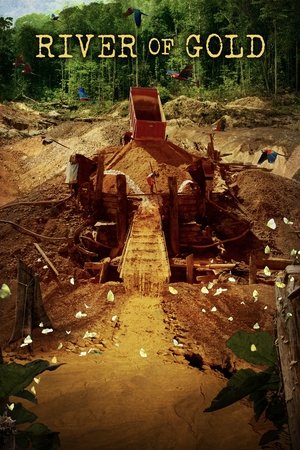
River of Gold(en)
2016-03-26
Narrated by Academy Award winners Sissy Spacek and Herbie Hancock, River of Gold is the disturbing account of a clandestine journey into Peru's Amazon rainforest to uncover the savage unraveling of pristine jungle. What will be the fate of this critical region of priceless biodiversity as these extraordinarily beautiful forests are turned into a hellish wasteland?

0%
Knox Mine Disaster(en)
2019-01-22
The catastrophic and avoidable coal mining disaster at the Knox Mine is recounted by the people who lived through the tragedy.
70%
Under the Cloud(en)
2023-08-30
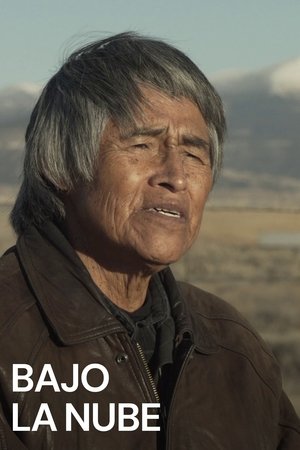
An investigation into the unfolding history of nuclear testing, uranium mining, and nuclear waste disposal on indigenous lands in the US. It raises the voices of those who witnessed and experienced the consequences of nuclear colonialism and those who still resist.