Loading Page


Mémoire Commune(1978)
Status: Released
Date: 1978-01-25
100%
1 Votes
Time: 1h 25m
Overview:
A character, directly addressing the viewer, attempts, through his or her knowledge, a historical reflection on the Paris Commune of 1871. A series of five tableaux retraces the major phases of the events. First comes the analysis of the Second Empire. Then comes the fall of the Empire and the proclamation of the Republic on September 4, 1870. Based on texts by Jules Vallès, several actors evoke the event in the contemporary setting of the large housing estates of Bobigny. The third part deals with the period October-March 1871, during which the people of Paris felt, little by little, betrayed by the government. Finally, March 18 is the revolutionary day. Inspired by Bertold Brecht's "Days of the Commune," actors perform the episode "Madame Cabet's Canon." The fifth part, entitled "Two or Three Things I Know About Her," directly evokes the work of the Commune, building and imagining a better world...
Languages: French.
Countries:
Movie: Mémoire Commune
Top 10 Billed Cast

Jean-Paul Wenzel
La Mémoire collective

Florence Camarroque
La Commune
Roland Amstutz

Jean Badin
Jacques Brylant

Gérard Chaillou

André Marcon
Denise Péron
HomePage
Overview
A character, directly addressing the viewer, attempts, through his or her knowledge, a historical reflection on the Paris Commune of 1871. A series of five tableaux retraces the major phases of the events. First comes the analysis of the Second Empire. Then comes the fall of the Empire and the proclamation of the Republic on September 4, 1870. Based on texts by Jules Vallès, several actors evoke the event in the contemporary setting of the large housing estates of Bobigny. The third part deals with the period October-March 1871, during which the people of Paris felt, little by little, betrayed by the government. Finally, March 18 is the revolutionary day. Inspired by Bertold Brecht's "Days of the Commune," actors perform the episode "Madame Cabet's Canon." The fifth part, entitled "Two or Three Things I Know About Her," directly evokes the work of the Commune, building and imagining a better world...
Release Date
1978-01-25
Average
10
Rating:
5.0 startsTagline
Genres
Languages:
Français
Recommendations Movies
75%
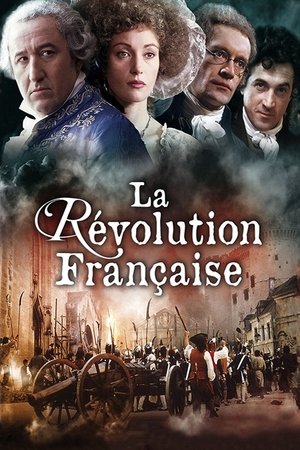
The French Revolution(fr)
1989-05-10
A history of the French Revolution beginning from the decision of the king to convene the Etats-Generaux in 1789 in order to deal with France's debt problem. Part one spans the event until August 10, 1792 (when the King Louis XVI lost all authority and was imprisoned). Part two carries the story through the end of the terror in 1794.
74%
The Phantom of Liberty(fr)
1974-09-10
This Surrealist film, with a title referencing the Communist Manifesto, strings together short incidents based on the life of director Luis Buñuel. Presented as chance encounters, these loosely related, intersecting situations, all without a consistent protagonist, reach from the 19th century to the 1970s. Touching briefly on subjects such as execution, pedophilia, incest, and sex, the film features an array of characters, including a sick father and incompetent police officers.
66%
Notre-Dame on Fire(fr)
2022-03-16
A film relating from the inside the Notre-Dame de Paris fire of April 2019.
75%
La Commune (Paris, 1871)(fr)
2003-07-03
We are in the year 1871. A journalist for Versailles Television broadcasts a soothing and official view of events while a Commune television is set up to provide the perspectives of the Paris rebels. On a stage-like set, more than 200 actors interpret characters of the Commune, especially the Popincourt neighborhood in the XIth arrondissement. They voice their thoughts and feelings concerning the social and political reforms.

69%
The Passengers of the Night(fr)
2022-05-04
On election night in 1981, celebrations spill out onto the street and there is an air of hope and change throughout Paris. But for Elisabeth, her marriage is coming to an end and she will now have to support herself and her two teenage children. She finds work at a late-night radio show and encounters a troubled teenager named Talulah whom she invites into her home.
69%
La Chinoise(fr)
1967-08-30
A small group of French students are studying Mao, trying to find out their position in the world and how to change the world to a Maoistic community using terrorism.
75%
The Rules of the Game(fr)
1939-07-09
The Marquis de la Chesnaye and his wife host a weekend gala where a variety of complicated romantic and social entanglements between guests and servants lead to tragedy, all against the backdrop of a looming war.

71%
Waterloo(en)
1970-10-26
After defeating France and imprisoning Napoleon on Elba, ending two decades of war, Europe is shocked to find Napoleon has escaped and has caused the French Army to defect from the King back to him. The best of the British generals, the Duke of Wellington, beat Napolean's best generals in Spain and Portugal, but now must beat Napoleon himself with an Anglo Allied army.

62%
The Flood(fr)
2024-11-21
1792. Louis XVI, his wife Marie Antoinette, and their children have been arrested and imprisoned in the Tour du Temple, a sinister chateau in Paris, awaiting their trial. Far from the splendour of Versailles, they are isolated and vulnerable for the first time in their lives.

74%
Hello Cubans(fr)
1963-11-26
A photo montage of Cubans filmed by Agnès Varda during her visit to Cuba in 1963, four years after Fidel Castro came to power. This black & white documentary explores their socialist culture and society while making use of 1500 pictures (out of 4000!) the filmmaker took while on the island.

78%
Napoleon(fr)
1927-01-10
A biopic of Napoleon Bonaparte, tracing the Corsican's career from his schooldays (where a snowball fight is staged like a military campaign) to his flight from Corsica, through the French Revolution (where a real storm is intercut with a political storm) and the Terror, culminating in his triumphant invasion of Italy in 1797.
67%
The Emperor's New Clothes(en)
2001-08-11
Napoleon, exiled, devises a plan to retake the throne. He'll swap places with commoner Eugene Lenormand, sneak into Paris, then Lenormand will reveal himself and Napoleon will regain his throne. Things don't go at all well; first, the journey proves more difficult than expected, but more disastrously, Lenormand enjoys himself too much to reveal the deception. Napoleon adjusts somewhat uneasily to the life of a commoner while waiting, while Lenormand gorges on rich food.
72%
Chronicle of a Summer(fr)
1961-10-20
Paris, summer 1960. Anthropologist and filmmaker Jean Rouch and sociologist and film critic Edgar Morin wander through the crowded streets asking passersby how they cope with life's misfortunes.
67%
Rugrats in Paris: The Movie(en)
2000-11-17
A group of rambunctious toddlers travel a trip to Paris. As they journey from the Eiffel Tower to Notre Dame, they learn new lessons about trust, loyalty and love.
69%
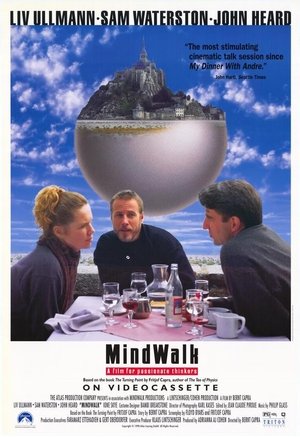
Mindwalk(en)
1991-12-05
On the French island of Mont Saint-Michel, Jack, a failed presidential candidate, Tom, his ex-speechwriter and Sonia, a physicist, engage in an intellectual conversation about politics, philosophy and life over the course of a single day.
65%
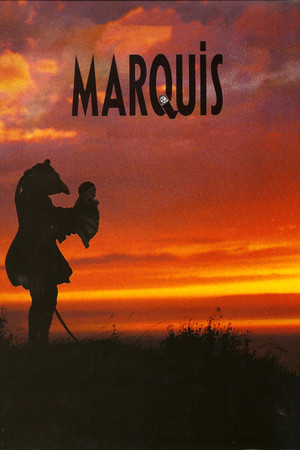
Marquis(fr)
1989-04-26
On the eve of revolution, French activist and author Marquis and his talking penis, Colin, await judgment in the Bastille for allegedly plotting against the state. While Marquis dedicates himself to his art and Colin longs for action, the provocative pair unwittingly rouse the interest of competing ideological factions.