Loading Page


The Barefoot Doctor(2016)
Status: Released
Date: 2016-04-01
0%
0 Votes
Time: 1h 47m
Overview:
This documentary film recounts Dr. Sun Lizhe's remarkable experience as a barefoot doctor in rural China and offers a glimpse of China's healthcare condition during and shortly after the Cultural Revolution (1966-1976). Described as "Chinese Dr. Zhivago" in the film, Sun's distinguished life began from his decision to become a "barefoot doctor" when he was an 18-year-old educated youth from Beijing sent down to the countryside. He had since saved numerous lives by performing difficult surgery when emergency situations arose. For example, he once manually removed a placenta from a peasant women's uterus during her placental dystocia. In villages where medical resources were extremely limited, Sun devoted himself to the healthcare of peasants, performing more than 3000 operations in the cave dwellings of Shaanxi province. In 1974 he was selected by Chairman Mao as one of China's five model "educated youths."
Languages: Mandarin.
Countries:
China
Movie: The Barefoot Doctor
Top 1 Billed Cast
HomePage
Overview
This documentary film recounts Dr. Sun Lizhe's remarkable experience as a barefoot doctor in rural China and offers a glimpse of China's healthcare condition during and shortly after the Cultural Revolution (1966-1976). Described as "Chinese Dr. Zhivago" in the film, Sun's distinguished life began from his decision to become a "barefoot doctor" when he was an 18-year-old educated youth from Beijing sent down to the countryside. He had since saved numerous lives by performing difficult surgery when emergency situations arose. For example, he once manually removed a placenta from a peasant women's uterus during her placental dystocia. In villages where medical resources were extremely limited, Sun devoted himself to the healthcare of peasants, performing more than 3000 operations in the cave dwellings of Shaanxi province. In 1974 he was selected by Chairman Mao as one of China's five model "educated youths."
Release Date
2016-04-01
Average
0
Rating:
0.0 startsTagline
Genres
Languages:
普通话Keywords
Recommendations Movies

65%
Downloaded(en)
2013-06-20
A documentary that explores the downloading revolution; the kids that created it, the bands and the businesses that were affected by it, and its impact on the world at large.


61%
Naqoyqatsi(en)
2002-09-02
A visual montage portrait of our contemporary world dominated by globalized technology and violence.
64%
Ex Libris: The New York Public Library(en)
2017-09-13
A documentary about how a dominant cultural and demographic institution both sustains their traditional activities and adapts to the digital revolution.
70%
Girl Rising(en)
2013-03-07
Nine filmmakers each profile a young girl from a different part of the world to weave a global tapestry of youth in the 21st century.
79%
John Candy: I Like Me(en)
2025-09-04
Those who knew iconic funnyman John Candy best share his story, in their own words, through never-before-seen archival footage, imagery, and interviews.
70%
Public Speaking(en)
2011-02-23
Martin Scorsese’s portrait of writer and social commentator Fran Lebowitz, celebrated for her sharp wit and observations on modern life. Filmed at New York’s Waverly Inn and intercut with archival footage and interviews, the documentary captures Lebowitz’s distinctive worldview through her spontaneous monologues and public appearances.
70%
The Curious Birth of Benjamin Button(en)
2009-05-05
A documentary about the making of David Fincher's 2008 film THE CURIOUS CASE OF BENJAMIN BUTTON. Virtually every element in the evolution of the Fincher's film is documented here, from the project's attachment to numerous other directors during the 1990s, to its shoot in 2006 and 2007 in New Orleans, to its complex, CGI-intensive postproduction process.

76%
Night Will Fall(en)
2014-06-07
When Allied forces liberated the Nazi concentration camps in 1944-45, their terrible discoveries were recorded by army and newsreel cameramen, revealing for the first time the full horror of what had happened. Making use of British, Soviet and American footage, the Ministry of Information’s Sidney Bernstein (later founder of Granada Television) aimed to create a documentary that would provide lasting, undeniable evidence of the Nazis’ unspeakable crimes. He commissioned a wealth of British talent, including editor Stewart McAllister, writer and future cabinet minister Richard Crossman – and, as treatment advisor, his friend Alfred Hitchcock. Yet, despite initial support from the British and US Governments, the film was shelved, and only now, 70 years on, has it been restored and completed by Imperial War Museums under its original title "German Concentration Camps Factual Survey".
69%
Harry Dean Stanton: Partly Fiction(en)
2013-09-11
An impressionistic portrait of the iconic actor Harry Dean Stanton comprised of intimate moments, film clips from some of his 250 films and his renditions of American folk songs.
71%
Zeitgeist: Moving Forward(en)
2011-01-15
A presentation of a case for a needed transition out of the current socioeconomic monetary paradigm which governs the entire world society. This subject matter will transcend the issues of cultural relativism and traditional ideology and move to relate the core, empirical 'life ground' attributes of human and social survival, extrapolating those immutable natural laws into a new sustainable social paradigm called a 'Resource-Based Economy'.
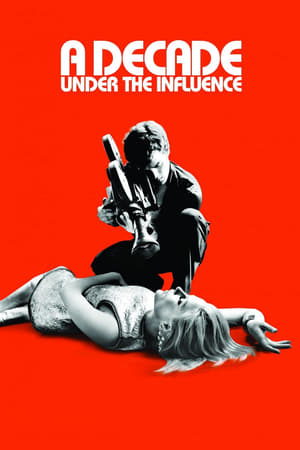
79%
A Decade Under the Influence(en)
2003-04-25
A documentary examining the decade of the 1970s as a turning point in American cinema. Some of today's best filmmakers interview the influential directors of that time.
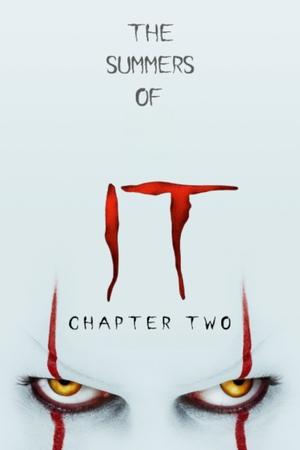
71%
The Summers of It - Chapter Two: It Ends(en)
2019-12-10
This documentary focuses on the actors and their journey over two summers to create the remake to the original IT, by Stephen King. The documentary originally released as bonus material, bundled with IT: Chapter Two.
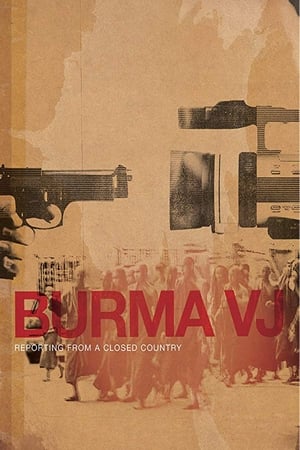
72%
Burma VJ: Reporting from a Closed Country(en)
2008-11-12
Going beyond the occasional news clip from Burma, the acclaimed filmmaker, Anders Østergaard, brings us close to the video journalists who deliver the footage. Though risking torture and life in jail, courageous young citizens of Burma live the essence of journalism as they insist on keeping up the flow of news from their closed country.
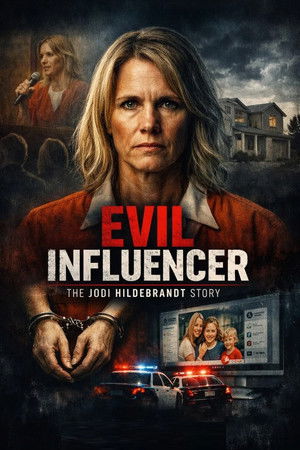
62%
Evil Influencer: The Jodi Hildebrandt Story(en)
2025-12-30
Unravel the case of Utah therapist Jodi Hildebrandt, whose child abuse arrest with parenting YouTuber Ruby Franke exposed a twisted tale of manipulation.
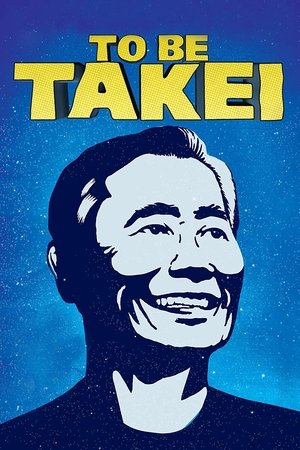
72%
To Be Takei(en)
2014-08-22
Over seven decades, actor and activist George Takei journeyed from a World War II internment camp to the helm of the Starship Enterprise, and then to the daily news feeds of five million Facebook fans. Join George and his husband, Brad, on a wacky and profound trek for life, liberty, and love.
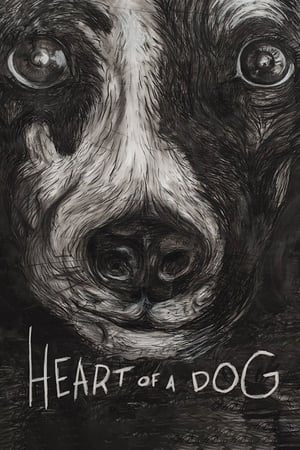
65%
Heart of a Dog(en)
2015-10-21
Lyrical and powerfully personal essay film that reflects on the deaths of her husband Lou Reed, her mother, her beloved dog, and such diverse subjects as family memories, surveillance, and Buddhist teachings.
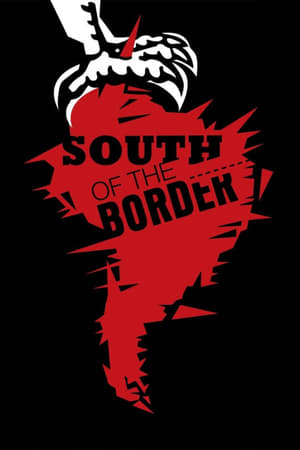
59%
South of the Border(en)
2009-09-07
A road trip across five countries to explore the social and political movements as well as the mainstream media's misperception of South America while interviewing seven of its elected presidents.
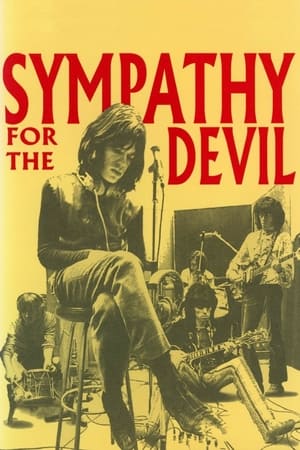
62%
Sympathy for the Devil(en)
1968-12-01
While The Rolling Stones rehearse "Sympathy for the Devil" in the studio, an alternating narrative reflects on 1968 society, politics and culture through five different vignettes.
Similar Movies
0%
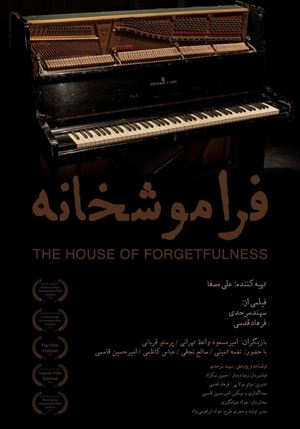
The House of Forgetfulness(fa)
2020-12-15
The Journey of a young man who is making a documentary about forgotten narratives around an old piano, takes him through an unknown path towards restoring history, culture and identity of his homeland, Iran, in dusty and abandoned objects.
10%
Star Trek: The True Story(en)
2013-01-05
Documentary covering the current state of both the theoretical and practical development of the various scientific basic principles that served, as per Gene Roddenberry's dictum, as a believable basis at the time for The Original Series. Several real-world scientists are interviewed, not a few of them unabashedly admitting they went into their chosen field of profession because of Star Trek: The Original Series.
50%
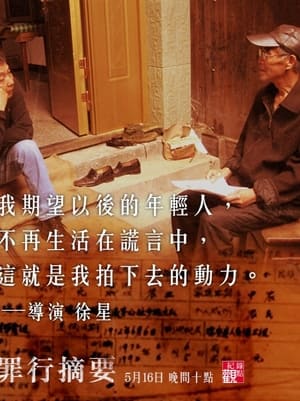
Summary of Crimes(zh)
2014-03-16
Peasants that were targeted as counter-revolutionaries during the Cultural Revolution in China share their stories in this documentary by Xu Xing.
60%
In Memory of Rock(fr)
1963-01-01
The rock-wild youth of the 1960s during the apparitions of their idols.
0%
Red Guards after The Cultural Revolution(da)
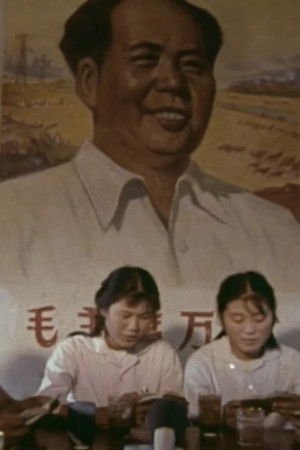
1972-01-01
Red Guards were a student movement supported by Mao Zedong in 1966-67 during the Cultural Revolution. A group of students at Qinghua University who issued 2 big-character posters in May-June 1966 called themselves Red Guards. The students criticised the university administration of elitism and bourgeois tendencies. In August 1966 Mao Zedong expressed support for the Red Guards. This gave the student movement political legitimacy and it spread outside Beijing. The Red Guards started to attack the Four Olds and marched across China to eradicate old ideas, old cultures, old customs and old habits. Ultimately the struggle between different Red Guard factions led to a chaotic civil-war-like situation. During 1967-68 the Peoples Liberation Army got the movement under control and restored social order. Beginning late 1968 members of the Red Guard movement were sent to the countryside to undergo re-education. We met and filmed them in August 1971.
100%
Kekaiulu Hula Studio(en)
2022-11-10
Kekaiulu Hula Studio follows the Proclaimed Hula Halau of the same name, showcasing their twist on what the real reason for hula is and what life as a dancer in the halau is really like. Something previously unseen in the public eye.
87%
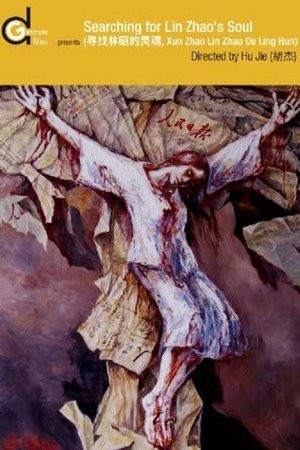
Searching for Lin Zhao's Soul(zh)
2004-01-01
This landmark documentary reveals the tragic life of a gifted young woman who was executed for speaking out during the height of Chairman Mao’s rule.
74%
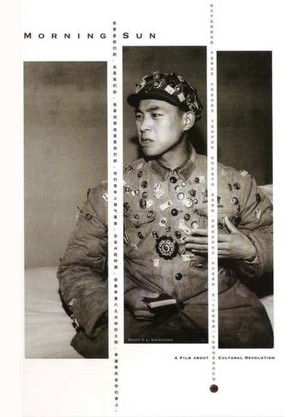
Morning Sun(en)
2003-09-24
The film Morning Sun attempts in the space of a two-hour documentary film to create an inner history of the Great Proletarian Cultural Revolution (c.1964-1976). It provides a multi-perspective view of a tumultuous period as seen through the eyes—and reflected in the hearts and minds—of members of the high-school generation that was born around the time of the founding of the People’s Republic of China in 1949, and that came of age in the 1960s. Others join them in creating in the film’s conversation about the period and the psycho-emotional topography of high-Maoist China, as well as the enduring legacy of that period.
0%
100 Years(en)
2021-06-30
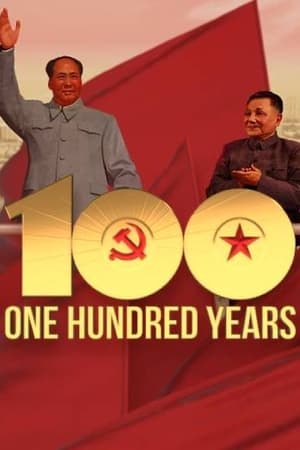
As the Communist Party of China celebrates its 100th anniversary, this documentary looks back at the party’s history, from the 1920’s, to the Civil War, the Great Leap Forward, the Great Famine, the Cultural Revolution and the reforms by Mao Zedong and Deng Xiaoping. Did the Great Famine cost more than 15 million lives? How does the Cultural Revolution continue to shape Chinese politics today? What was capitalism like after Mao’s death? Through rare and never-before-seen historical footage, expert interviews and eyewitness accounts of the Great Famine, Tiananmen incident, and the Cultural Revolution, get to know how one party has so profoundly shaped China.
74%
How the Beatles Changed the World(en)
2017-10-23
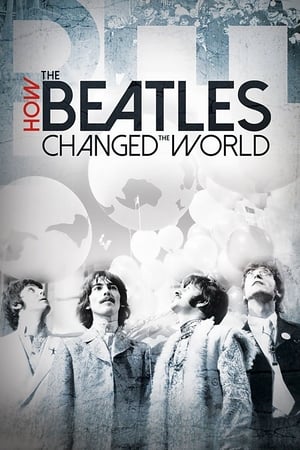
The fascinating story of the cultural, social, spiritual, and musical revolution ignited by the coming of the Beatles. Tracing the impact that these four band members had, first in their native Britain and soon after worldwide, it reappraises the band and follows their path from young subversives to countercultural heroes. Featuring fresh, revealing interviews with key collaborators as well as a wealth of rarely-seen archival footage, this is a bold new take on the most significant band in the history of music and their enduring impact on popular culture.
73%
Dead Souls(zh)
2018-10-24
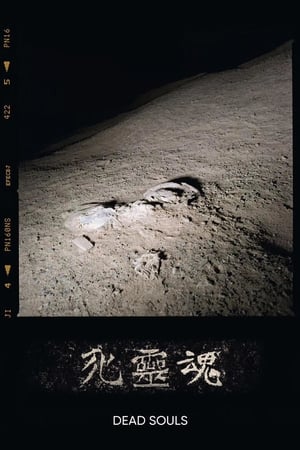
In Gansu Province, northwest China, lie the remains of countless prisoners abandoned in the Gobi Desert sixty years ago. Designated as ultra-rightists in the Communist Party’s Anti-Rightist campaign of 1957, they starved to death in the reeducation camps. The film invites us to meet the survivors of the camps to find out firsthand who these persons were, the hardships they were forced to endure and what became their destiny.
70%
How Yukong Moved the Mountains(fr)
1976-03-10
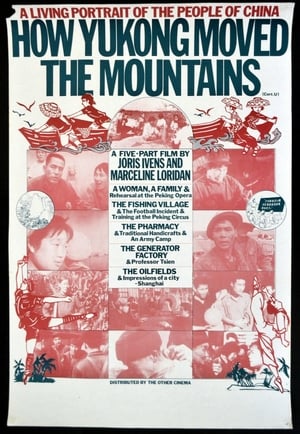
From 1972 until 1974, Joris Ivens and Marceline Loridan, along with a Chinese film crew, documented the last days of the Cultural Revolution, marking the end of an era. The vast amount of footage they shot was edited into 14 films of varying lengths. Focusing on ordinary people spread over a wide geographic area—many of whom were living and working in collectives—the filmmakers recorded a unique moment in history, and also captured some of the more enduring aspects of Chinese culture.
80%
Fruit Farm(zh)
2025-02-20
Nana Xu travels to the place built by her father as a prisoner during the Cultural Revolution: first a work camp, later a prison, fruit farm and treatment centre. Conversations with last remaining witnesses, where home is still shaped by a repressed past.
69%
The Matrix: Generation(fr)
2023-12-13
After the 1999 premiere of the first Matrix movie, it became a pop culture phenomenon. A special documentary about the Matrix saga and its prophetic aspects.
64%
Breakdown: 1975(en)
2025-12-18
In 1975, as America faced social and political upheaval, filmmakers turned chaos into art.
20%
Smothered: The Censorship Struggles of the Smothers Brothers Comedy Hour(en)
2002-12-04
The history of the irreverent "The Smothers Brothers Comedy Hour" and the content battles it fought with its television network.
50%
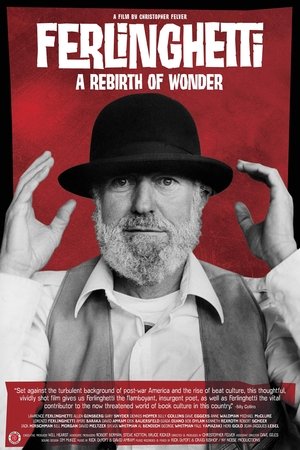
Ferlinghetti: A Rebirth of Wonder(en)
2009-04-01
The poet and painter, Lawrence Ferlinghetti, is among the world's living monuments to arts and letters. For well over a half century, Ferlinghetti helped shape the currents of poetry and literature with his forceful engagement with society and an ideological position that often found him at odds with the political currents of his day. Ferlinghetti's quiet, behind the scenes demeanor and disarming mien may have assuaged, or even fooled, certain opponents, while in reality he was a literary mercenary, a rebel at the forefront of our own cultural revolution.
90%
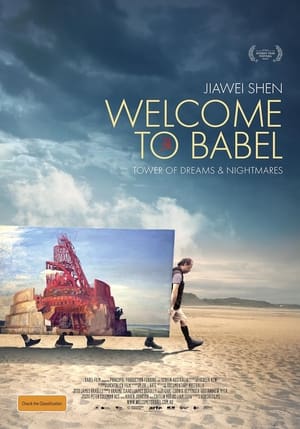
Welcome to Babel(en)
2024-11-14
Chinese-Australian artist Jiawei Shen's plans to create an epic work depicting his homeland's tumultuous recent history.