Loading Page

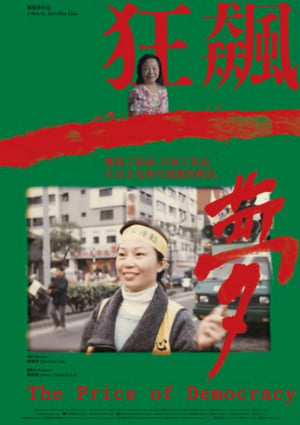
The Price of Democracy(2020)
Status: Released
Date: 2020-03-06
0%
0 Votes
Time: 1h 31m
Overview:
The expressions of democratization are usually interpreted by elites from two different parties but neglect the real faces/ life of every individual among the resistance rally. The director (a confused twenty-something) looks back upon the 40-year-history of democratization of Taiwan through the life experiences of two old-timers (who are grass-root rebels). He attempts to discover what causes their actions and decisions to be lefties, and what are their limitations.
Languages:
Countries:
Taiwan
Movie: The Price of Democracy
HomePage
Overview
The expressions of democratization are usually interpreted by elites from two different parties but neglect the real faces/ life of every individual among the resistance rally. The director (a confused twenty-something) looks back upon the 40-year-history of democratization of Taiwan through the life experiences of two old-timers (who are grass-root rebels). He attempts to discover what causes their actions and decisions to be lefties, and what are their limitations.
Release Date
2020-03-06
Average
0
Rating:
0.0 startsTagline
Genres
Languages:
Keywords
Recommendations Movies

72%
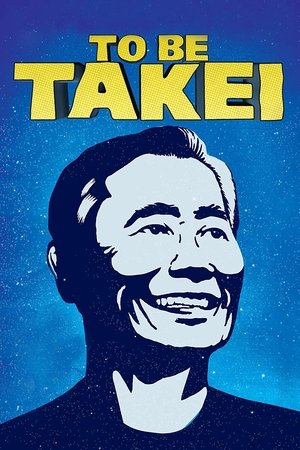
To Be Takei(en)
2014-08-22
Over seven decades, actor and activist George Takei journeyed from a World War II internment camp to the helm of the Starship Enterprise, and then to the daily news feeds of five million Facebook fans. Join George and his husband, Brad, on a wacky and profound trek for life, liberty, and love.

59%
South of the Border(en)
2009-09-07
A road trip across five countries to explore the social and political movements as well as the mainstream media's misperception of South America while interviewing seven of its elected presidents.

64%
Ex Libris: The New York Public Library(en)
2017-09-13
A documentary about how a dominant cultural and demographic institution both sustains their traditional activities and adapts to the digital revolution.

65%
Downloaded(en)
2013-06-20
A documentary that explores the downloading revolution; the kids that created it, the bands and the businesses that were affected by it, and its impact on the world at large.
65%
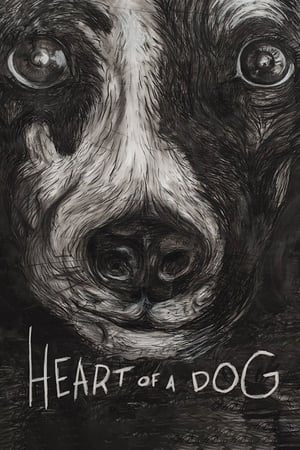
Heart of a Dog(en)
2015-10-21
Lyrical and powerfully personal essay film that reflects on the deaths of her husband Lou Reed, her mother, her beloved dog, and such diverse subjects as family memories, surveillance, and Buddhist teachings.
79%
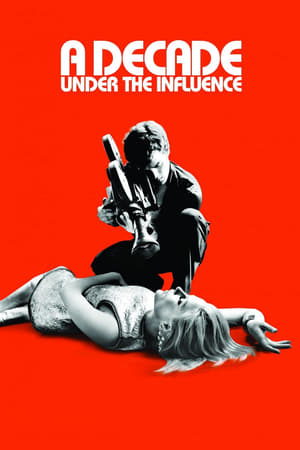
A Decade Under the Influence(en)
2003-04-25
A documentary examining the decade of the 1970s as a turning point in American cinema. Some of today's best filmmakers interview the influential directors of that time.
69%
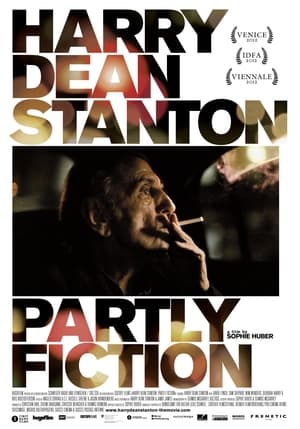
Harry Dean Stanton: Partly Fiction(en)
2013-09-11
An impressionistic portrait of the iconic actor Harry Dean Stanton comprised of intimate moments, film clips from some of his 250 films and his renditions of American folk songs.
72%
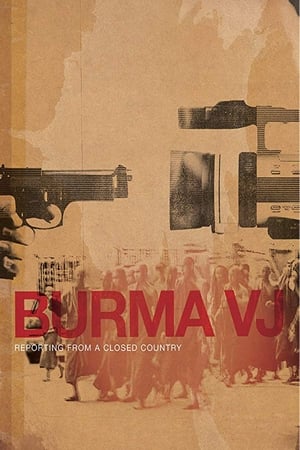
Burma VJ: Reporting from a Closed Country(en)
2008-11-12
Going beyond the occasional news clip from Burma, the acclaimed filmmaker, Anders Østergaard, brings us close to the video journalists who deliver the footage. Though risking torture and life in jail, courageous young citizens of Burma live the essence of journalism as they insist on keeping up the flow of news from their closed country.

70%
This Place Rules(en)
2022-12-30
Acclaimed for his unfiltered reporting and deadpan humor, Andrew Callaghan brings his gonzo style reporting to the undercurrents that led to the January 6 Capitol Riot. As one of the best-known and hardest working journalists of his generation, the 25-year-old ventures on a wild RV journey through America to take the pulse of a divided nation.

66%
Love, Marilyn(en)
2013-05-30
Using the book 'Fragments', which collects Marilyn Monroe's poems, notes and letters, and with participation from the Arthur Miller and Truman Capote estates who have contributed more material, each of the actresses will embody the legend at various stages in her life.
71%
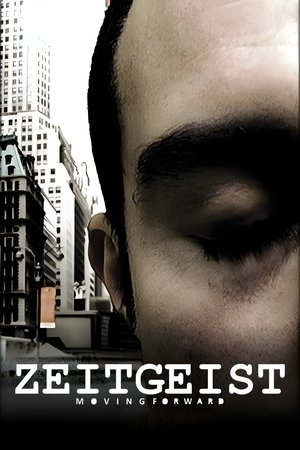
Zeitgeist: Moving Forward(en)
2011-01-15
A presentation of a case for a needed transition out of the current socioeconomic monetary paradigm which governs the entire world society. This subject matter will transcend the issues of cultural relativism and traditional ideology and move to relate the core, empirical 'life ground' attributes of human and social survival, extrapolating those immutable natural laws into a new sustainable social paradigm called a 'Resource-Based Economy'.
70%
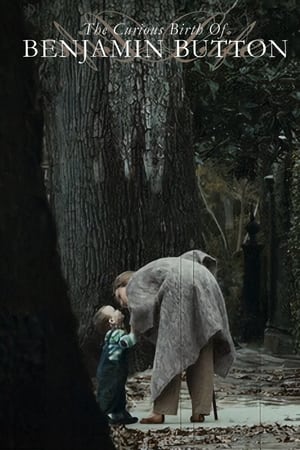
The Curious Birth of Benjamin Button(en)
2009-05-05
A documentary about the making of David Fincher's 2008 film THE CURIOUS CASE OF BENJAMIN BUTTON. Virtually every element in the evolution of the Fincher's film is documented here, from the project's attachment to numerous other directors during the 1990s, to its shoot in 2006 and 2007 in New Orleans, to its complex, CGI-intensive postproduction process.
62%
Evil Influencer: The Jodi Hildebrandt Story(en)
2025-12-30
Unravel the case of Utah therapist Jodi Hildebrandt, whose child abuse arrest with parenting YouTuber Ruby Franke exposed a twisted tale of manipulation.

66%
Champs(en)
2015-03-13
A documentary about the sport of boxing, as seen through the eyes of champions Mike Tyson, Evander Holyfield and Bernard Hopkins.

71%
The Class of ‘92(en)
2013-12-01
A detailing of the rise to prominence and global sporting superstardom of six supremely talented young Manchester United football players (David Beckham, Nicky Butt, Ryan Giggs, Paul Scholes, Phil and Gary Neville). The film covers the period 1992-1999, culminating in Manchester United's European Cup triumph.

61%
Naqoyqatsi(en)
2002-09-02
A visual montage portrait of our contemporary world dominated by globalized technology and violence.

70%
Lake of Fire(en)
2006-09-09
An unflinching look at the how the battle over abortion rights has played out in the United States over the last 15 years.
75%
Listen to Me Marlon(en)
2015-07-29
With exclusive access to his extraordinary unseen and unheard personal archive including hundreds of hours of audio recorded over the course of his life, this is the definitive Marlon Brando cinema documentary. Charting his exceptional career as an actor and his extraordinary life away from the stage and screen with Brando himself as your guide, the film will fully explore the complexities of the man by telling the story uniquely from Marlon's perspective, entirely in his own voice. No talking heads, no interviewees, just Brando on Brando and life.

76%
Night Will Fall(en)
2014-06-07
When Allied forces liberated the Nazi concentration camps in 1944-45, their terrible discoveries were recorded by army and newsreel cameramen, revealing for the first time the full horror of what had happened. Making use of British, Soviet and American footage, the Ministry of Information’s Sidney Bernstein (later founder of Granada Television) aimed to create a documentary that would provide lasting, undeniable evidence of the Nazis’ unspeakable crimes. He commissioned a wealth of British talent, including editor Stewart McAllister, writer and future cabinet minister Richard Crossman – and, as treatment advisor, his friend Alfred Hitchcock. Yet, despite initial support from the British and US Governments, the film was shelved, and only now, 70 years on, has it been restored and completed by Imperial War Museums under its original title "German Concentration Camps Factual Survey".
Similar Movies
73%
Joshua: Teenager vs. Superpower(en)
2017-01-20
When the Chinese Communist Party backtracks on its promise of autonomy to Hong Kong, teenager Joshua Wong decides to save his city. Rallying thousands of kids to skip school and occupy the streets, Joshua becomes an unlikely leader in Hong Kong and one of China’s most notorious dissidents.
60%
Blooming over the line(ko)
2022-02-10
Born in 1918 in the ideal village of independence activists in the northern part of Manchuria, pastor Moon Ik-hwan lost his childhood friend Yun Dong-ju under Japanese oppression and Chang Chun-ha during the Yusin regime. Moon survived the mass of modern Korean history, giving hope everywhere suffering.
100%
President(ko)
2019-11-07
This documentary celebrates the life of former President Kim Dae-joong, who fought for democracy in South Korea and peace in the Korean Peninsula. It marks the 10th anniversary of his passing and covers his challenging journey, from his childhood on an island to his imprisonment, exile, near-death experiences, and ultimately becoming the president.
82%
Kim Dae Jung Must Not Die(ko)
2024-01-10
Kim Dae Jung, who stands next to people in the middle of caotic history! A young businessman Kim Dae Jung recognized the victims of ideology. He decided to be a politician to make his country where people's politic and democracy are rooted. The price of being leave from a guaranteed future and take the first step on a bumby road was kidnapping, death threats, imprisonment, and a death sentence that shook him to the core, but even in his final moments, when he was sentenced to death, Kim never wavered. "Democracy will be recovered. I believe in it." The life of President Kim Dae-jung, a death row inmate who survived from the throes of death, four parliamentary elections, and three unsuccessful presidential campaigns, is etched into the modern history of South Korea.
50%
Names of Revolution(ko)
2021-10-09
Names of Revolution recalls the memories of those who participated in the struggle to rewrite the history of the “Busan-Masan Democratic Protests,” which has been under-represented in modern Korean history. As the then college students, seamstresses, mold technicians, combat police, workers, bus drivers, advertising planners, and photojournalists pour out their memories from over 40 years ago before the camera, vivid words come to life.
80%
The Hinzpeter Story(ko)
2018-05-17
In May of 1980, the city is locked down and phone lines are dead because of protests and struggles in demand of democracy. Just when Gwangju was being ignored by the media, Jurgen Hinzpeter, a reporter from Germany, sneaks in despite the danger!
80%
Kim-Gun(ko)
2019-05-23
KIM-GUN searches for the whereabouts of a young man whose identity has sparked a national controversy over the 1980 May 18 Gwangju Uprising. Starting with the vague memories of those who had crossed paths with him during that time, the film tracks down those who participated in the Uprising as “Citizen Soldiers.” It also traces KIM’s final steps, based on photographic clues found in the firearms he carried and the “Surveillance Truck No. 10” in which he rode. By identifying KIM-GUN, we believe that we can find valuable leads to resolving the ongoing controversy over May 18. Why did a nameless young man join the Uprising? Why did he take up arms? Where has he gone afterwards? It is the answers to these questions that the film seeks.

0%
Beyond Now, Nyein(ko)
2025-09-13
Choi Jinbae from Korea and Nyein Thazin from Myanmar are an international couple. They married seven years ago in Mandalay and, after a ceremony in Korea, planned to return. But COVID-19 left them stranded in Seoul. One day, a photo arrives from Myanmar showing a village destroyed by the coup. Urged by fellow Myanmar people to share their country's reality with the world, Choi picks up a camera. An ordinary family's life is suddenly thrust into questions of pain, solidarity, and the ethics of bearing witness.
0%
존경하고 사랑하는 국민여러분(ko)
2022-01-27
55%
Gwangju Video: The Missing(ko)
2020-07-16
There are people whose lives have been shaken by the 'Gwangju Video'. On May of 1980, the course of their lives changed in front of a huge wave of truth in Gwangju. The people who made and spread the 'Gwangju Video' are also the people who had their bodies on the waves. The hidden stories of these people, the 40th anniversary of the Gwangju Uprising, and the pursuit to trace the missing 4 hours of mass shooting will be revealed for the first time.
0%
Let's be Together(ko)
2024-03-28
0%
The Yearbook: Waiting for the Teacher(ko)
2026-05-18
On May 27, 1980—the last day of the Gwangju Uprising—students at Sinheung High School in Jeonju defied martial law. Their teacher disciplined them to protect them, but this act of love left forty years of misunderstanding. Now in his nineties, the teacher reunites with his former students to finally offer each other the reconciliation they had long set aside.
0%
No Name Stars(ko)
2011-05-12
This year is the 30th anniversary of the Gwangju Democratization Movement. Though the country commemorates the event as the official historical records, it does not include any 'real' accounts of the people who experienced it firsthand. The students who were part of the movement; the female vendors who made rice balls for the students; the female high school students cooked at the government building; now, past their middle age, they live as ordinary citizens in Gwangju city. How is the event remembered by these people?
0%
The Blue Roof from the Window(ko)
2025-12-24
My family has lived in a house across from the Blue House, the presidential palace, for 50 years. During the era of military dictatorship, the Blue House was a place of fear and inaccessibility. But as South Korea democratized, more and more people were allowed to approach it. I had grown up surrounded by countless protests, but it was the first time their sound followed me home. The never-ending noise made the house where I was born and raised feel unfamiliar. But the place they now stood was the very spot where I had held a candle to protest just months before. My right to raise my voice also guarantees theirs.

0%
Poliboy(ko)
2025-02-12
In spring 1987, 14-year-old Song Gwi-cheol runs away from his abusive father to Seoul. Lost at Cheongnyangni Station, he meets a fugitive student activist who brings him to Korea University. Nicknamed “Jung-dol,” he finds a surrogate family among the campus movement. By June, Jung-dol joins the pro-democracy protests, becomes part of the studentrun nongak ensemble, and masters the janggu drum. His journey from street orphan to activist and talented drummer embodies the spirit of Korea’s 1987 student uprising.
81%
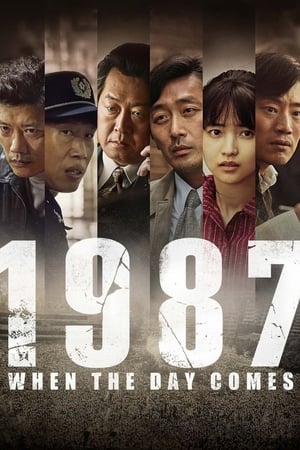
1987: When the Day Comes(ko)
2017-12-27
In January 1987, a 22-year-old college student dies during a police interrogation. Under the orders of Director Park, the police request the body to be cremated in order to destroy evidence. Public Prosecutor Choi, who was on duty on the day of the incident, denies the request and calls for an autopsy. The police maintain the lie that the death was a simple accident, resulting from shock. The autopsy results, however, point to torture as the cause of death. Yoon, a journalist following the case, reports that the death was a result of asphyxiation during torture. Director Park attempts to conceal the truth by ending the case, arresting two detectives including inspector Cho. While in prison, inspector Cho reveals the truth to prison guard Han Byung-yong, who embarks on a dangerous mission to relay the information to an opposition politician through his niece, Yeon-hee.
80%
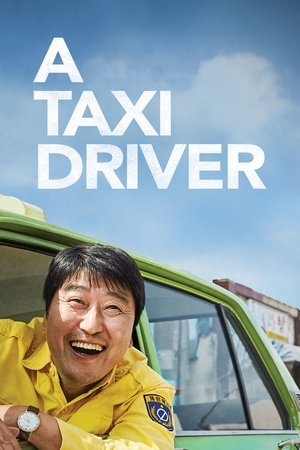
A Taxi Driver(ko)
2017-08-02
May, 1980. Man-seob is a taxi driver in Seoul who lives from hand to mouth, raising his young daughter alone. One day, he hears that there is a foreigner who will pay big money for a drive down to Gwangju city. Not knowing that he’s a German journalist with a hidden agenda, Man-seob takes the job.
75%
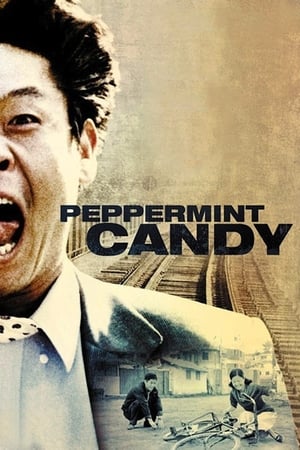
Peppermint Candy(ko)
2000-01-01
In the spring of 1999, a group of old friends gather to celebrate their 20 year reunion. Among the group is Yeong-ho, a cold, unhappy man, whose demeanor puts a damper on the festivities. The seriousness of Yeong-ho's depression becomes apparent when he climbs a railroad bridge and looks like he might jump. At this crucial moment, memories of seven crucial episodes from Yeong-ho's past flood his mind.