Loading Page


Souvenir d'utopie(2006)
Status: Released
Date: 2006-01-01
0%
0 Votes
Time: 0h 7m
Overview:
Short film by Ann-Marie Mieville on Godard's model for his exhibition "Collages de France"
Languages: French.
Countries:
Movie: Souvenir d'utopie
HomePage
Overview
Short film by Ann-Marie Mieville on Godard's model for his exhibition "Collages de France"
Release Date
2006-01-01
Average
0
Rating:
0.0 startsTagline
Genres
Languages:
Français
Recommendations Movies
63%
The Image Book(fr)
2018-10-11
In Le Livre d’Image, Jean-Luc Godard recycles existing images (films, documentaries, paintings, television archives, etc.), quotes excerpts from books, uses fragments of music. The driving force is poetic rhyme, the association or opposition of ideas, the aesthetic spark through editing, the keystone. The author performs the work of a sculptor. The hand, for this, is essential. He praises it at the start. “There are the five fingers. The five senses. The five parts of the world (…). The true condition of man is to think with his hands. Jean-Luc Godard composes a dazzling syncopation of sequences, the surge of which evokes the violence of the flows of our contemporary screens, taken to a level of incandescence rarely achieved. Crowned at Cannes, the last Godard is a shock film, with twilight beauty.
66%
Mr. Morgan's Last Love(en)
2013-08-22
A widowed professor living in Paris develops a special relationship with a younger French woman.
77%
Cléo from 5 to 7(fr)
1962-04-11
Agnès Varda eloquently captures Paris in the sixties with this real-time portrait of a singer set adrift in the city as she awaits test results of a biopsy. A chronicle of the minutes of one woman’s life, Cléo from 5 to 7 is a spirited mix of vivid vérité and melodrama, featuring a score by Michel Legrand and cameos by Jean-Luc Godard and Anna Karina.

67%
Camille Claudel(fr)
1988-12-07
The life of Camille Claudel, a French sculptor who becomes the apprentice of Auguste Rodin and later his lover. Her passion for her art and Rodin drive her further away from reason and rationality.

60%
The Public Woman(fr)
1984-06-16
An inexperienced young actress is invited to play a role in a film based on Dostoyevsky's 'The Possessed'. The film director, a Czech immigrant in Paris, takes over her life, and in a short time she is unable to draw the line between acting and reality. She winds up playing a real-life role posing as the dead wife of another Czech immigrant, who is manipulated by the filmmaker into commiting a political assassination.

63%
Desire(fr)
2011-10-06
In a social context deteriorated by a countrywide economic crisis, the life of several people will be turned upside down after they meet Cécile, a character who symbolizes desire.
72%
Chronicle of a Summer(fr)
1961-10-20
Paris, summer 1960. Anthropologist and filmmaker Jean Rouch and sociologist and film critic Edgar Morin wander through the crowded streets asking passersby how they cope with life's misfortunes.
65%
My Little Princess(fr)
2011-06-29
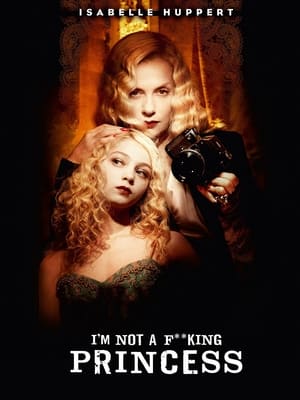
Young Violetta and her mother Hannah are a peculiar couple. Ten-year-old Violetta lives a quiet life with her grandmother, while her mother Hannah is an unpredictable photographer who lives off of the generosity of others. When Hannah forces her daughter to pose as a model, Violetta finds her life with her loving grandmother turned upside down.The resulting pictures quickly become a sensation for the trendy 70's Paris art scene, and Violetta finds herself caught in between her new stature as an art muse and her dull childhood.
70%
Modigliani(en)
2004-05-18
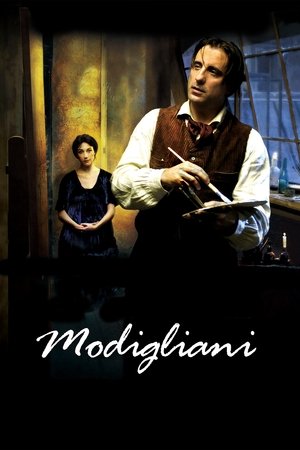
Set in Paris in 1919, biopic centers on the life of late Italian artist Amedeo Modigliani, focusing on his last days as well as his rivalry with Pablo Picasso. Modigliani, a Jew, has fallen in love with Jeanne, a young and beautiful Catholic girl. The couple has an illegitimate child, and Jeanne's bigoted parents send the baby to a faraway convent to be raised by nuns.
74%
Nouvelle Vague(fr)
2025-10-08
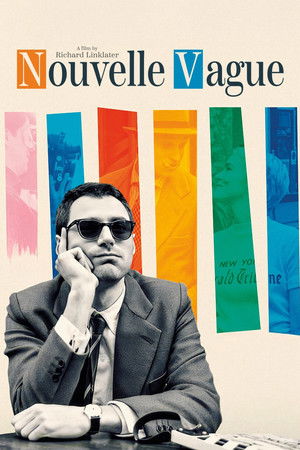
After writing for Cahiers du cinéma, a young Jean-Luc Godard decides making films is the best film criticism. He convinces producer Georges de Beauregard to fund a low-budget feature, and creates a treatment with fellow New Wave filmmaker François Truffaut about a gangster couple. The result? Breathless, one of the first features of the Nouvelle Vague era of French cinema.
60%
Final Portrait(en)
2017-08-03
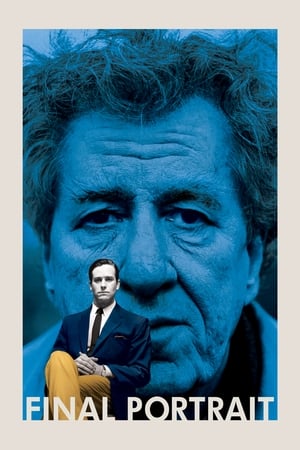
Paris, 1964. The Swiss sculptor and painter Alberto Giacometti, one of the most accomplished and respected artists of his generation, asks his friend, the American writer James Lord, to sit for a portrait, assuring him that it will take no longer than two or three hours, an afternoon at the most.

69%
Hotel Chevalier(en)
2007-10-26
In a Paris hotel room, Jack Whitman lies on a bed. His phone rings; it's a woman on her way to see him, a surprise. She arrives and the complications of their relationship emerge in bits and pieces. Will they make love? Is their relationship over? (A prequel to The Darjeeling Limited, 2007.)
65%
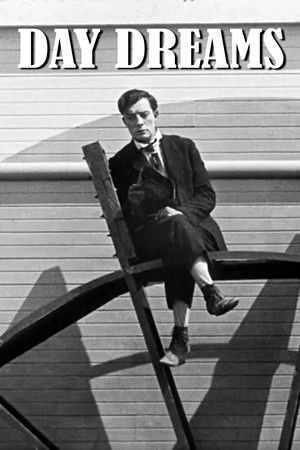
Day Dreams(en)
1922-11-27
In order to impress the father of a girl he is keen on, a young man goes to the city in search of work. In his letters home he writes of his various jobs which her imagination expands into much nobler ones than those that he is actually attempting.
68%
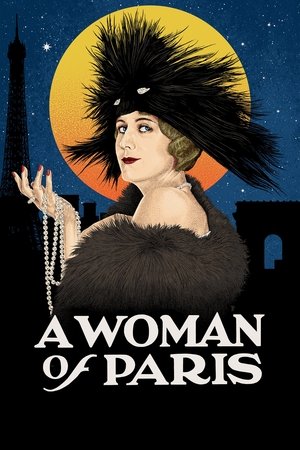
A Woman of Paris: A Drama of Fate(en)
1923-10-01
When Marie St. Clair believes she has been jilted by her artist fiance Jean, she decides to leave for Paris on her own. After spending a year in the city as a mistress of the wealthy Pierre Revel, she is reunited with Jean by chance. This leaves her with the choice between a glamorous life in Paris, and the true love she left behind.
70%
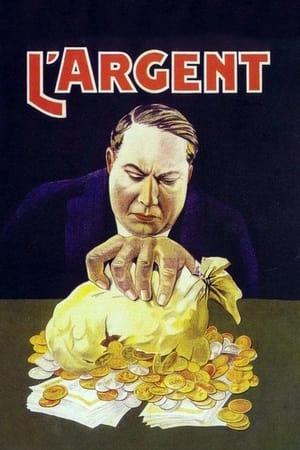
L'Argent(fr)
1928-12-25
Adapted from the novel L'Argent by Émile Zola, the film portrays the world of banking and the stock market in Paris in the 1920s.
62%
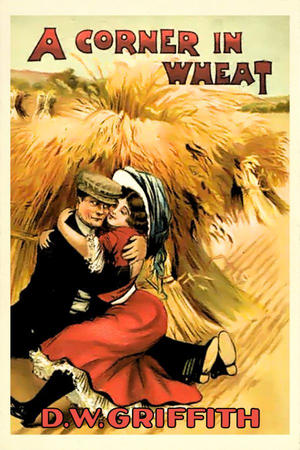
A Corner in Wheat(en)
1909-12-13
On a whim, a greedy tycoon decides to corner the world market in wheat. This doubles the price of bread, forcing grain producers into charity lines and others further into poverty. The film contrasts the differences between the lives of those who work to grow the wheat and the life of the man who dabbles in its sale for profit.
69%
Powder Keg(en)
2001-06-01
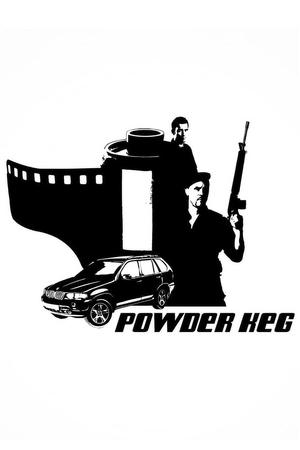
The Driver is drafted by the UN to rescue a wounded war photographer named Harvey Jacobs from out of hostile territory. While they are leaving Jacobs tells the Driver about the horrors he saw as a photographer, but he regrets his inability to help war victims. Jacobs answers the driver curiosity about why he is a photographer by saying how his mother taught him to see. He gives the Driver the film needed for a New York Times story and also his dog tags to give to his mother. When they reach the border, they are confronted by a guard who begins to draw arms as Jacobs begins taking pictures, trying to get himself killed. The Driver drives through a hail of gunfire to the border, but finds Jacobs killed by a bullet through the seat. The Driver arrives in America to visit Jacobs' mother and share the news of him winning the Pulitzer prize and hand over the dog tags, only to discover that she is blind.

69%
Two English Girls(fr)
1971-11-18
In the early 20th-century, Frenchman Claude meets Englishwoman Ann in Paris. Ann invites him to her family home, intending him for her sister Muriel. Claude falls for Muriel, but families demand year-long separation before approving marriage.
67%
Manhatta(en)
1921-01-01
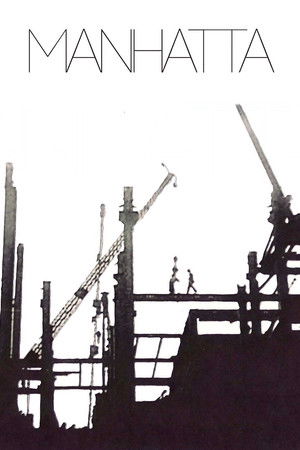
Morning reveals New York harbor, the wharves, the Brooklyn Bridge. A ferry boat docks, disgorging its huddled mass. People move briskly along Wall St. or stroll more languorously through a cemetery. Ranks of skyscrapers extrude columns of smoke and steam. In plain view. Or framed, as through a balustrade. A crane promotes the city's upward progress, as an ironworker balances on a high beam. A locomotive in a railway yard prepares to depart, while an arriving ocean liner jostles with attentive tugboats. Fading sunlight is reflected in the waters of the harbor. The imagery is interspersed with quotations from Walt Whitman, who is left unnamed.
74%
Once in a Lifetime(fr)
2014-12-03
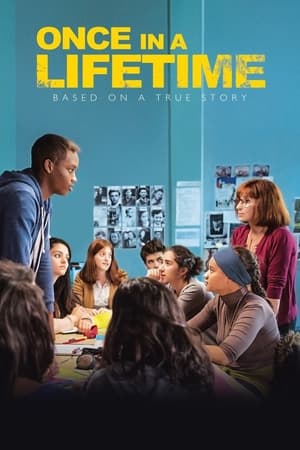
At Léon Blum High School in Créteil, France, a history teacher decides to have her weakest 10th grade class participate in a national history competition.