Loading Page

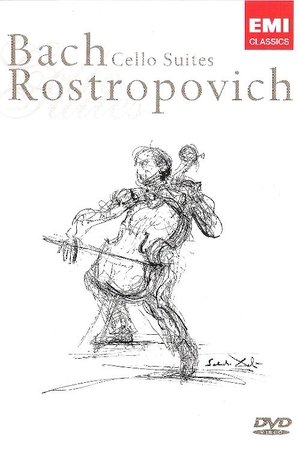
Mstislav Rostropovich - Bach Cello Suites(2004)
Status: Released
Date: 2004-03-04
0%
0 Votes
Time: 4h 0m
Overview:
This is one of the most important recordings of the 20th century, both for its content (considered by many the greatest cello music of all time) and for the intense devotion, careful preparation, and towering technical skill that went into the project. It was a brilliant idea to make a video as well as an audio recording. Cellists will welcome the chance to study Rostropovich's bowing and fingering techniques, close up and at leisure. And music-lovers will welcome the visuals of the recording location, a French church whose architecture, statues, and flickering candles complement the music.
Languages: English.
Countries:
ProductionCompanies:
EMI
Movie: Mstislav Rostropovich - Bach Cello Suites
Top 1 Billed Cast
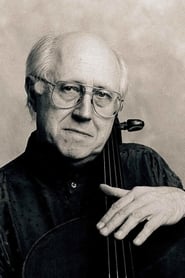
Мстислав Ростропович
Himself
HomePage
Overview
This is one of the most important recordings of the 20th century, both for its content (considered by many the greatest cello music of all time) and for the intense devotion, careful preparation, and towering technical skill that went into the project. It was a brilliant idea to make a video as well as an audio recording. Cellists will welcome the chance to study Rostropovich's bowing and fingering techniques, close up and at leisure. And music-lovers will welcome the visuals of the recording location, a French church whose architecture, statues, and flickering candles complement the music.
Release Date
2004-03-04
Average
0
Rating:
0.0 startsTagline
Genres
Languages:
EnglishKeywords
Recommendations Movies
82%
Taylor Swift: Reputation Stadium Tour(en)
2018-12-31
Taylor Swift takes the stage in Dallas for the Reputation Stadium Tour and celebrates a monumental night of music, memories and visual magic.
86%
Metallica and San Francisco Symphony: S&M(en)
1999-11-23
Michael Kamen conducts the San Francisco Symphony Orchestra in support of metal rockers Metallica in this 1999 concert performance.
81%
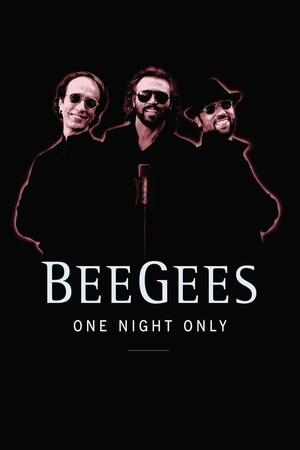
Bee Gees: One Night Only(en)
1998-11-24
The brothers Gibb perform their greatest hits from the 60's, 70's, 80's and 90's including many songs written for and made hits by other artists but never recorded by the Bee Gees themselves.
78%
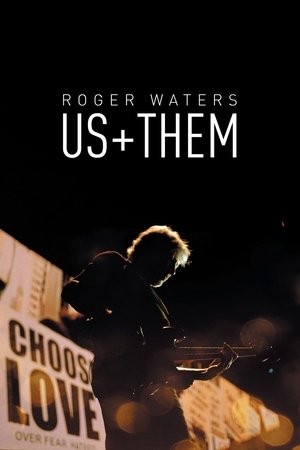
Roger Waters: Us + Them(en)
2019-10-02
Filmed in Amsterdam on the European leg of his 2017 – 2018 Us + Them tour which saw Waters perform to over two million people worldwide, the film features songs from his legendary Pink Floyd albums (The Dark Side of the Moon, The Wall, Animals, Wish You Were Here) and from his last album, Is This The Life We Really Want?
80%
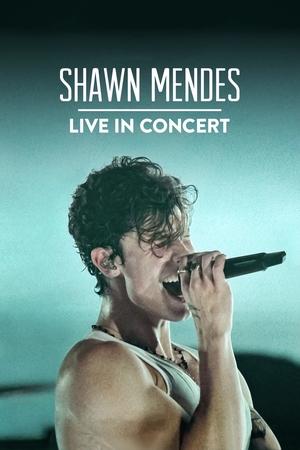
Shawn Mendes: Live in Concert(en)
2020-11-25
In his hometown of Toronto, Shawn Mendes pours his heart out on stage with a live performance in a stadium packed with adoring fans.
59%
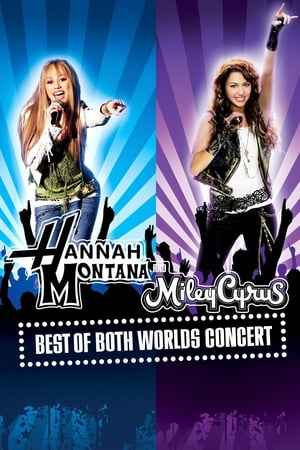
Hannah Montana & Miley Cyrus: Best of Both Worlds Concert(en)
2008-02-01
In this concert film, 'Hannah Montana' star Miley Cyrus performs a slew of hit songs, including 'Just Like You' and 'Life's What You Make It.'
83%
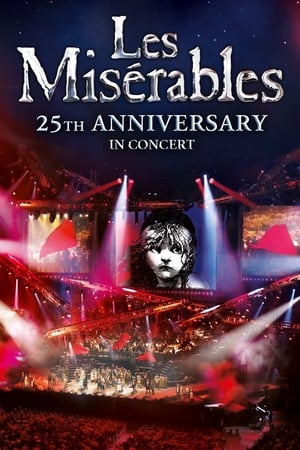
Les Misérables: 25th Anniversary in Concert(en)
2010-10-03
This concert, recorded to celebrate the 25th anniversary of the landmark musical Les Miserables, gathers the casts of the show's 2010 original production at the Queen's Theatre, the 1985 original production by the London company, and the 2010 production at the Barbican together for one performance. Together with talents like Michael Ball, Hadley Fraser, and John Owen-Jones, the performers present the play's musical numbers in a semi-theatrical style, fully costumed and with all the emotion of the musical's heyday.
67%
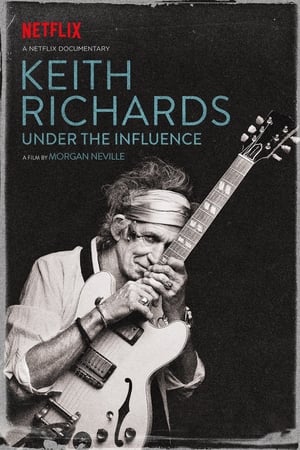
Keith Richards: Under the Influence(en)
2015-09-18
A portrait of Keith Richards that takes us on a journey to discover the genesis of his sound as a songwriter, guitarist and performer.
82%
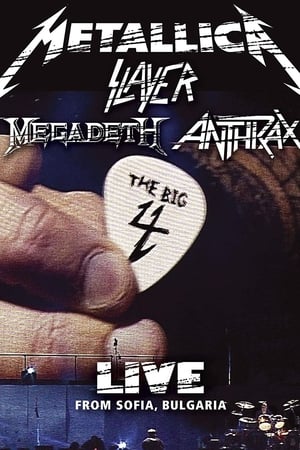
The Big Four: Live in Sofia(en)
2010-10-29
When the 'Big Four' - Metallica, Slayer, Megadeth and Anthrax - shared a stage together on 22nd June 2010 in Sofia, Bulgaria, the show was beamed live into over 550 theatres worldwide via satellite in a special HD cinematic event. The Big Four Live from Sofia includes full shows from all four bands as well as behind the scenes and interview footage. The legendary concert from the Sonisphere Festival was one of only 7 shows across Europe when the four monsters of metal shared a stage for the first time.
79%
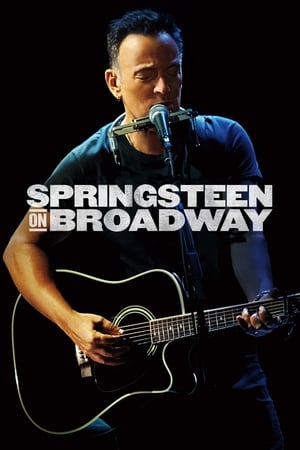
Springsteen on Broadway(en)
2018-12-15
Bruce Springsteen shares personal stories from his life and acoustic versions of some of his best-known songs in an intimate one-man show.
86%
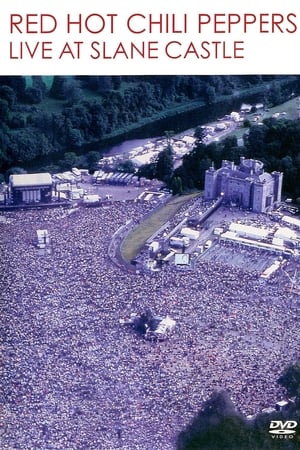
Red Hot Chili Peppers: Live at Slane Castle(en)
2003-11-17
On tour promoting their 2002 studio album 'By the Way', Los Angeles-based funk rock band Red Hot Chili Peppers performs a sold-out live show to 80,000 people at Slane Castle in County Meath, Ireland on August 23, 2003.
62%
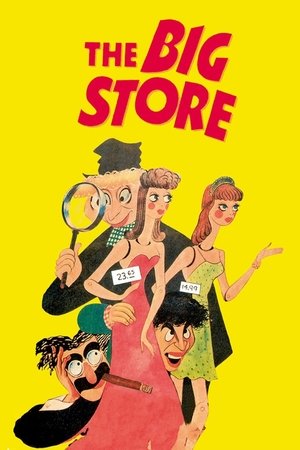
The Big Store(en)
1941-06-20
A detective is hired to protect the life of a singer, who has recently inherited a department store, from the store's crooked manager.
70%
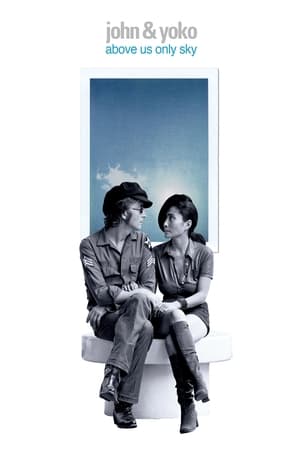
John & Yoko: Above Us Only Sky(en)
2018-11-24
Film telling the untold story of John Lennon's 1971 album Imagine, exploring the creative collaboration between Lennon and Yoko Ono and featuring interviews and never-seen-before footage.
73%
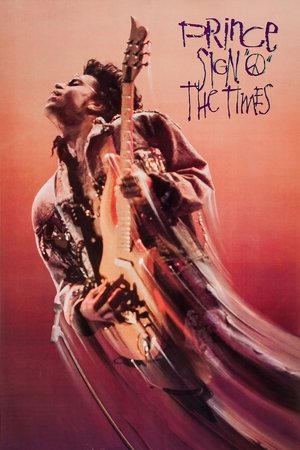
Prince: Sign 'o' the Times(en)
1987-11-20
In 1987, to capitalize on his growing success in Europe, Prince toured extensively to promote the album of the same name and sales increased accordingly. However, the United States remained resistant to his latest album, and sales began to drop; it was at this point that Prince decided to film a live concert promoting the new material, for eventual distribution to theaters in America. Featuring the band that accompanied Prince on his 1987 Sign o' the Times Tour, including dancer Cat Glover, keyboardist Boni Boyer, bassist Levi Seacer, Jr., guitarist Miko Weaver, drummer Sheila E. and former member of The Revolution keyboardist Dr. Fink, the film sees the group perform live on stage (although "U Got the Look" is represented by its promotional music video).
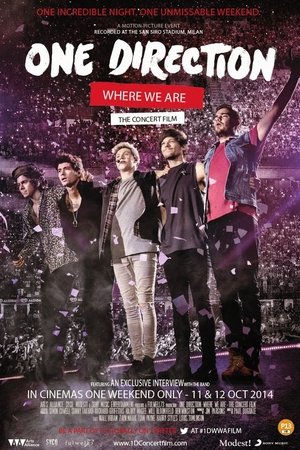
84%
One Direction: Where We Are - The Concert Film(en)
2014-10-08
Where We Are: Live from San Siro Stadium features the entire 23 track concert filmed at San Siro Stadium in Milan in June 2014, as well as 24 minutes of bonus content including backstage footage of One Direction and their crew.
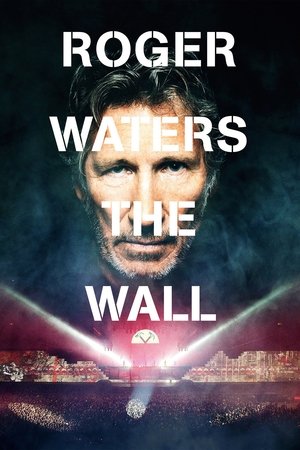
80%
Roger Waters: The Wall(en)
2014-09-29
A concert film that the former Pink Floyd singer-songwriter made on various tour dates between 2010 and 2013, when he was playing his former group's 1980 double-album in its entirety.
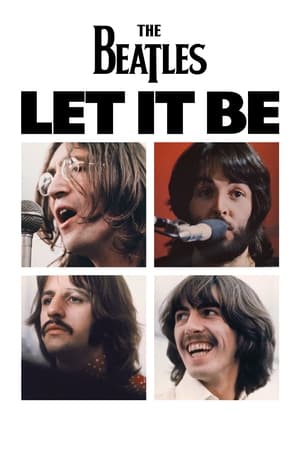
75%
Let It Be(en)
1970-02-13
A documentary chronicling the Beatles' rehearsal sessions in January 1969 for their proposed "back to basics" album, "Get Back," later re-envisioned and released as "Let It Be."
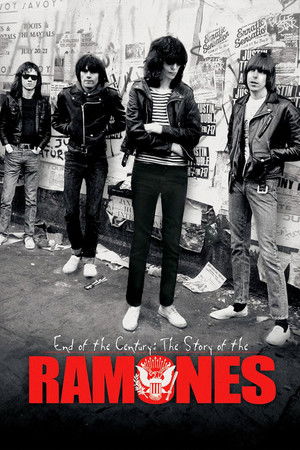
76%
End of the Century: The Story of the Ramones(en)
2003-01-19
A years-in-the-making documentary on the legendary punk band the Ramones. Through a mixture of archival footage, archival and new interviews with all members of the band's various lineups, and new interviews with a number of their contemporaries, the film traces the peaks and valleys the band experienced over the course of its 20-plus year career before disbanding in 1995.
76%
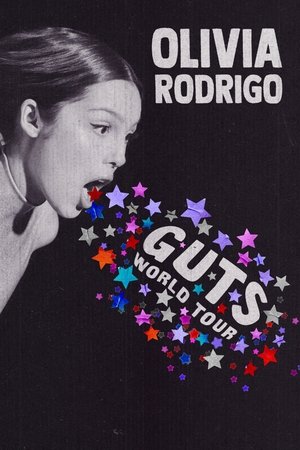
Olivia Rodrigo: GUTS World Tour(en)
2024-10-25
At a sold-out concert in her hometown of LA, Olivia Rodrigo pours her heart into an electrifying night of chart-topping hits and pop-rock power ballads.
Similar Movies
0%
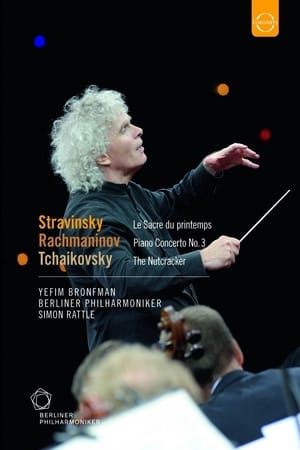
Waldbühne 2009 | Russian Rhythms(de)
2009-06-21
Every year, the Berliner Philharmoniker hold a kind of classical-music fête with a bright, cheerful concert to end the season. In 2009 about 22,000 people had come together at the Berlin Waldbühne to enjoy the traditional summer picnic concert. The theme of the evening was “Russian rhythms”, and star conductor Sir Simon Rattle, the Berliner Philharmoniker and Yefim Bronfman, one of the most famous pianists in the world today, presented a superb selection of Russian music. Repertoire Tchaikovsky: The Nutcracker, op. 71, Overture, The Christmas Tree, March, Pas de deux (Intrada) Rachmaninoff: Piano Concerto No.3 in D minor, op. 30 Stravinsky: Le Sacre du printemps Lincke: Berliner Luft
100%
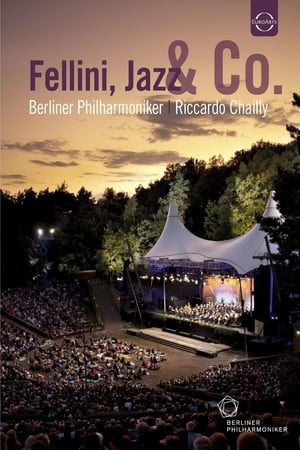
Waldbühne 2011: Fellini, Jazz & Co(de)
2011-07-02
The Waldbühne in Berlin, one of the most appealing outdoor amphitheatres on the European continent, is the home of the Berliner Philharmoniker’s summer concerts. With audiences of more than 20,000, these are some of the most popular classical music concerts in the world. Riccardo Chailly is famous for having one of the broadest and most eclectic repertoires. Here, under his baton, the orchestra presents perennial favourites by Shostakovich, Rota and Respighi. Live recording from the Waldbühne, Berlin, 23 August 2011, directed by Kasten Henning, produced by Jan Bremme. TV Producer: Dorothea Diekmann, RBB. Repertoire Dmitry Shostakovich: Suite No. 2 for Jazz Orchestra (Suite for Variety Orchestra), Lady Macbeth of Mtsensk Suite – Allegretto; Nino Rota: ‘La Strada’ Ballet Suite; Ottorino Respighi: Fountains of Rome • Pines of Rome • Danza gueresca ‘Belkis’; Paul Lincke: Berliner Luft
0%
Bruckner: Symphony No. 6(en)
2014-01-06
Anton Bruckner’s 6th Symphony was written between 1879 and 1881: a very happy time in his life. Unlike most of Bruckner’s symphonies, the 6th was not revised. Of all his works, this one seems to come from a single source of inspiration. Bruckner himself called it his “boldest” symphony – probably due to its extreme degree of motivic, rhythmic and harmonic originality. This live recording of the seldom-performed 6th Symphony is the next instalment of the acclaimed Bruckner cycle by the Staatskapelle Berlin and Daniel Barenboim. Anton Bruckner Symphony No. 6 in A major (original version) Daniel Barenboim, Conductor Staatskapelle Berlin Recorded live at the Philharmonie Berlin, 22 June 2010
0%
Bruckner: Symphony No. 8(en)
2014-11-03
“Clarity was one thing that made this performance a marvel. Another was the flexibility of Barenboim’s speeds…. The flexibility of Barenboim’s tempi meant that Bruckner’s charm – an often overlooked aspect of his genius – shone through, especially in the genial Trio.” (The Telegraph) Bruckner’s 8th is the last symphony completed by the Austrian composer. Many of his contemporaries regarded the symphony as “the pinnacle of 19th century music”. Even today, this monumental work fascinates listeners with its virtuoso orchestral technique, its immensity of sound, and its inexhaustible richness of detail. Symphony No. 8 in C minor (second version 1887-90, Robert Haas Edition) Daniel Barenboim, Conductor Staatskapelle Berlin Recorded live at the Philharmonie Berlin, 26 June 2010
0%
Bruckner Symphony No. 9(en)
2010-02-02
With nearly 450 years of tradition, the Staatskapelle Berlin is one of the oldest orchestras in the world. Daniel Barenboim has served as its music director since 1992, and in 2000 the orchestra appointed him Chief Conductor for Life. Having already performed important cycles such as Beethoven, Brahms and Schumann together, Daniel Barenboim and the Staatskapelle turned their focus toward Anton Bruckner's last six Symphonies, performed in the Philharmonie Berlin in the course of only one week in June 2010. This music is more serious and more significant than one had thought, the Berliner Zeitung summarized in its review of Daniel Barenboims celebrated Bruckner cycle with the Staatskapelle Berlin. Bruckners unfinished Symphony No. 9 brought to an end, in a poignant manner, the work of one of the greatest symphonic composers of the Classic-Romantic era.
100%
Mahler - Symphonies Nos. 1, 2 & 3(en)
1973-08-17
Beginning with the First Symphony, Bernstein reveals Mahler's position at the hinge of modernism, while emphasizing his emotional extremism. The uplifting Second "Resurrection" Symphony, with which Bernstein had an especially long and close association, is recorded here in a historic performance from 1973, set in the Romanesque splendor of Ely Cathedral. In the Third, Bernstein encompasses the symphony's spiritual panorama like no other conductor, with the Vienna Philharmonic players alive to every nuance.
0%
Mahler - Symphonies Nos. 7 & 8(en)
1975-07-17
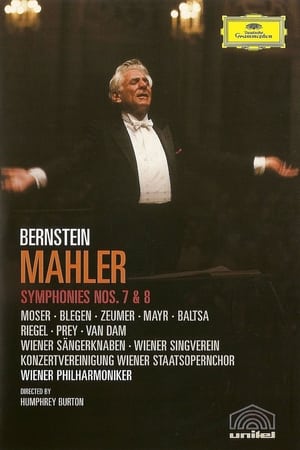
Leonard Bernstein made these recordings during his wonderfully productive collaboration with the Wiener Philharmoniker in the mid-1970s when he was at the peak of his career. Humphrey Burton's direction is, as always, very fine, giving the viewer/listener both the larger picture and highlighting individual soloists, players or groups of musicians and, of course, the maestro. The video and audio tracks show their age, but are quite acceptable even for today's standards. Bernstein's Seventh is everything one could desire: dark and spooky, highly sensual, but also structurally strong and assertive where needed. Bernstein's reading does not gloss over breakdowns in tonality and the foreshadowing of later musical developments.
0%
The Metropolitan Opera Centennial Gala(en)
1983-01-01
In celebration of its 100th anniversary in 1983, the Metropolitan Opera hosts a four-hour performance uniting some of the world's most spellbinding opera singers and conductors. The event includes a ballet from Samson et Dalila and boasts incredible classical performances from Kathleen Battle, Plácido Domingo, Jose Carerras, Leonard Bernstein, Marilyn Horne, Leona Mitchell, Luciano Pavarotti and many more.
59%
Lisztomania(en)
1975-10-10
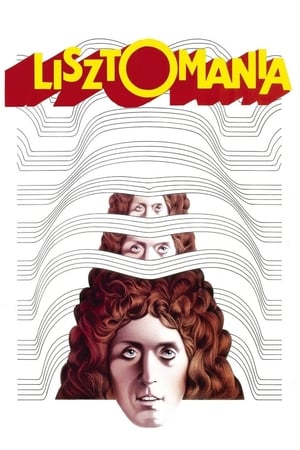
In the 19th century, Romantic composer/pianist Franz Liszt tries to end his hedonistic ways but keeps getting sucked back in by his seductive fellow composer Richard Wagner.
80%
An Evening with Joan Sutherland and Luciano Pavarotti(en)
1988-12-15
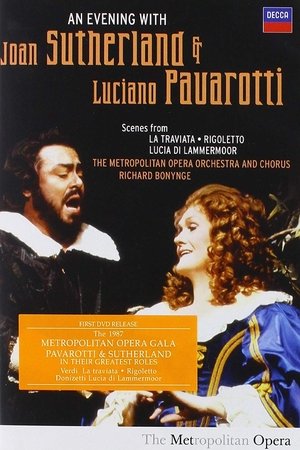
Opera greats Luciano Pavarotti and Joan Sutherland -- one of the most acclaimed tenors and one of the most beloved sopranos of the 20th century -- take the stage at the Met for a gala evening of opera scenes with special guest Leo Nucci. Filmed in 1987, the memorable program includes scenes from the first and third acts of Donizetti's "Lucia di Lammermoor," the third act of Verdi's "La Traviata" and the third act of Verdi's "Rigoletto."
78%
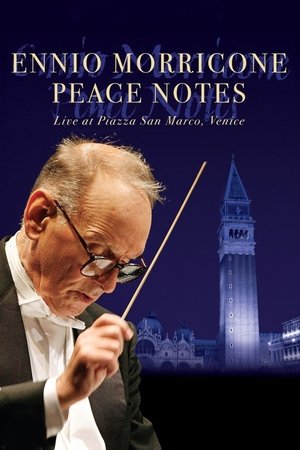
Ennio Morricone: Peace Notes - Live in Venice(it)
2007-09-07
From his impressive back catalogue as a cinematic composer, the illustrious Ennio Morricone conducts a moving and uplifting tribute to the victims of the 9/11 attacks and to all victims of unjust tragedies throughout history. Filmed in 2007 in high definition at the historic Piazza San Marco in Venice, this remarkable live performance features music from 'Cinema Paradiso', 'The Good The Bad and The Ugly', 'Once Upon a Time in America', 'Love Circle', 'The Mission' and many other timeless classics.
0%
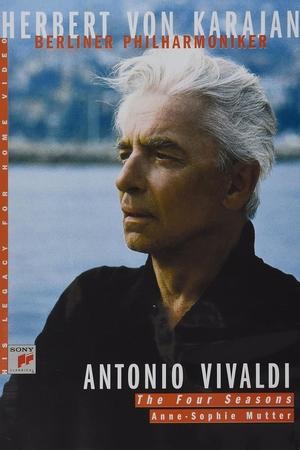
Vivaldi - The Four Seasons / Von Karajan, Mutter, Berlin Philharmonic(en)
1990-02-16
Famed conductor Herbert Von Karajan leads the Berlin Philharmonic in a performance of what may be Vivaldi's best-known composition -- "The Four Seasons" -- in this sparkling video. Recorded in 1987 at the Chamber Music Hall, this concert features Anne-Sophie Mutter as a guest violin soloist.
0%
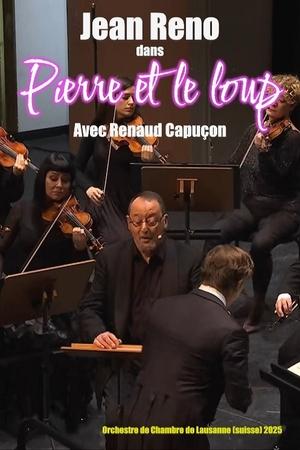
Pierre et le loup : Avec Jean Reno et Renaud Capuçon(fr)
2025-02-20
For Peter and the Wolf, premiered in 1936, Prokofiev chose the form of a symphonic tale, featuring a narrator alongside the orchestra. A unique work in which each instrument embodies a character. Renaud Capuçon conducts the Orchestre de Chambre de Lausanne, while Jean Reno takes on the role of narrator.

0%
Igor Stravinsky's 'The Firebird' by The Royal Philharmonic Orchestra(en)
2022-11-17
On Air presents Igor Stravinsky's The Firebird, performed by the world-renowned Royal Philharmonic Orchestra, conducted by Peter Breiner, and recorded at BBC Television Centre. Expertly brought to life by some of the world's most sought-after classical musicians, The Firebird comprises 74 musicians: 51 string, 11 brass, 8 woodwind and 4 percussion. Available now to watch on demand in cinematic quality.

0%
Igor Stravinsky's The Rite of Spring performed by The Royal Philharmonic Orchestra(en)
2022-11-17
On Air presents Igor Stravinsky's The Rite of Spring, performed by the world-renowned Royal Philharmonic Orchestra, conducted by Peter Breiner, and recorded at BBC Television Centre. Expertly brought to life by some of the world's most sought-after classical musicians, the ensemble comprises 93 instruments: 51 string, 16 woodwind, 20 brass and 6 percussion. The full performance is available to watch on demand in cinematic quality.

0%
Igor Stravinsky's 'Petrushka' by The Royal Philharmonic Orchestra(en)
2022-11-17
On Air presents Igor Stravinsky's Petrushka, performed by the world-renowned Royal Philharmonic Orchestra, conducted by Peter Breiner, and recorded at BBC Television Centre. Expertly brought to life by some of the world's most sought-after classical musicians, the ensemble comprises 86 instruments: 51 string, 14 woodwind, 16 brass, 4 percussion and 1 piano. Available now to watch on demand in cinematic quality.
100%
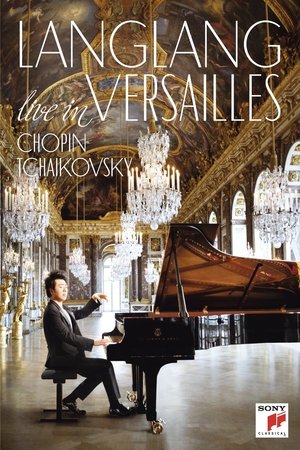
Lang Lang - Live in Versailles(en)
2015-01-01
Ever since his first visit to the magical Hall of Mirrors at Versailles Palace, superstar classical pianist Lang Lang had dreamed of performing there. His dream came to fruition in the form of a special concert there in June 2015. Lang Lang selected the same repertoire that the city of light inspired him to play on his latest album, Lang Lang in Paris - Chopin s four momentous Scherzi and Tchaikovsky s rarer, masterful cycle, The Seasons making Lang Lang Live in Versailles a companion piece to the album.
0%
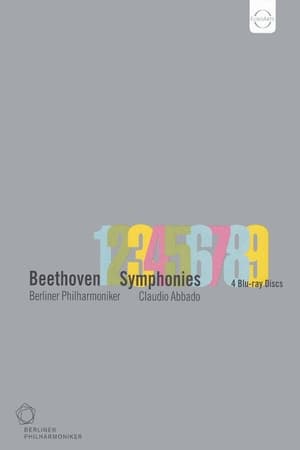
Beethoven: The Symphonies(en)
2013-06-03
Conductor: Claudio Abbado. Orchestra/Ensemble: Berlin Philharmonic Orchestra. 1.Symphony no 1 in C major, Op. 21 2. Symphony no 2 in D major, Op. 36 3. Symphony no 3 in E flat major, Op. 55 "Eroica" 4. Symphony no 4 in B flat major, Op. 60 5. Symphony no 5 in C minor, Op. 67 6. Symphony no 6 in F major, Op. 68 "Pastoral" 7. Symphony no 7 in A major, Op. 92 8. Symphony no 8 in F major, Op. 93 9. Symphony no 9 in D minor, Op. 125 "Choral"
100%
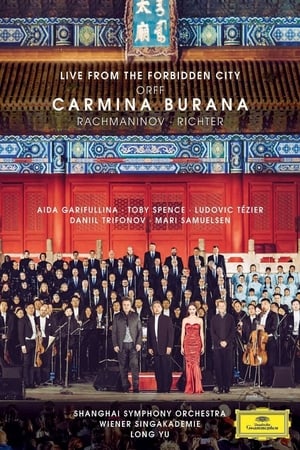
The Forbidden City Concert: Carmina Burana(en)
2019-06-01
A spectacular concert at the site of Beijing’s Forbidden City. The concert features the renowned Shanghai Symphony Orchestra and Maestro Long Yu, who perform Orff’s Carmina Burana with Aida Garifullina, Toby Spence and Ludovic Tézier, before being joined by Daniil Trifonov for Rachmaninov’s Piano Concerto No.2 and Mari Samuelsen for Max Richter’s Violin piece "November". Length 114′ (complete repertoire) / 71′ (Carmina Burana & Jasmine Flower Song) / 43′ (Piano Concert & November)