Stalin's Last Plot(2011)
January 1953: On the eve of his death Stalin finds himself yet another imaginary enemy: Jewish doctors. He organizes the most violent anti-Semitic campaign ever launched in the USSR, by fabricating the "Doctors' Plot," whereby doctors are charged with conspiring to murder the highest dignitaries of the Soviet Regime. Still unknown and untold, this conspiracy underlines the climax of a political scheme successfully masterminded by Stalin to turn the Jews into the new enemies of the people. It reveals his extreme paranoia and his compulsion to manipulate those around him. The children and friends of the main victims recount for the first time their experience and their distress related to these nightmarish events.


Movie: Stalin's Last Plot
Top 10 Billed Cast

Narrator (voice)

Self - Historian
Self (archive footage)
Self (archive footage)
Self - Historian
Self (archive footage)
Self (archive footage)
Recommendations Movies
Shoah(fr)
Director Claude Lanzmann spent 11 years on this sprawling documentary about the Holocaust, conducting his own interviews and refusing to use a single frame of archival footage. Dividing Holocaust witnesses into three categories – survivors, bystanders, and perpetrators – Lanzmann presents testimonies from survivors of the Chelmno concentration camp, an Auschwitz escapee, and witnesses of the Warsaw Ghetto Uprising, as well as a chilling report of gas chambers from an SS officer at Treblinka.

Room 237(en)
A subjective documentary that explores various theories about hidden meanings in Stanley Kubrick's classic film The Shining. Five very different points of view are illuminated through voice over, film clips, animation and dramatic reenactments.
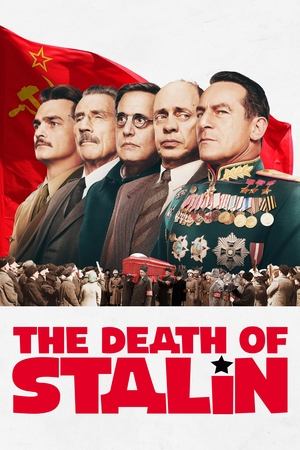
The Death of Stalin(en)
When dictator Joseph Stalin dies, his parasitic cronies square off in a frantic power struggle to become the next Soviet leader. As they bumble, brawl and back-stab their way to the top, the question remains — just who is running the government?
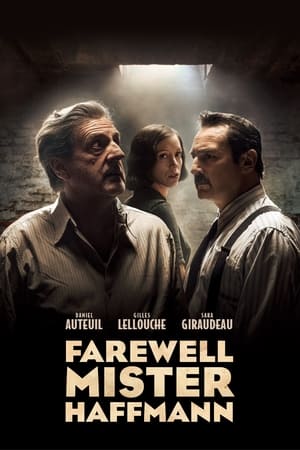
Farewell, Mr. Haffmann(fr)
Paris 1942. François Mercier is an ordinary man who only aspires to start a family with the woman he loves, Blanche. He is also the employee of a talented jeweler, Mr. Haffmann. But faced with the German occupation, the two men will have no other choice but to conclude an agreement whose consequences, over the months, will upset the fate of our three characters.

Amen.(fr)
Kurt Gerstein—a member of the Institute for Hygiene of the Waffen-SS—is appalled to discover that a poison gas he helped discover is being used to kill Jews. Driven by his conscience to alert the rest of the world, Gerstein teams up with a young Jesuit priest, Riccardo Fontana, but their protestations fall on deaf ears in the Vatican.
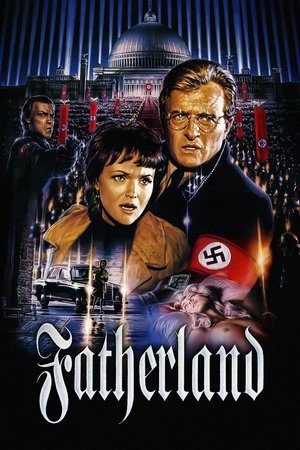
Fatherland(en)
Fictional account of what might have happened if Hitler had won the war. It is now the 1960s and Germany's war crimes have so far been kept a secret. Hitler wants to talk peace with the US president. An American journalist and a German homicide cop stumble into a plot to destroy all evidence of the genocide.

Night Will Fall(en)
When Allied forces liberated the Nazi concentration camps in 1944-45, their terrible discoveries were recorded by army and newsreel cameramen, revealing for the first time the full horror of what had happened. Making use of British, Soviet and American footage, the Ministry of Information’s Sidney Bernstein (later founder of Granada Television) aimed to create a documentary that would provide lasting, undeniable evidence of the Nazis’ unspeakable crimes. He commissioned a wealth of British talent, including editor Stewart McAllister, writer and future cabinet minister Richard Crossman – and, as treatment advisor, his friend Alfred Hitchcock. Yet, despite initial support from the British and US Governments, the film was shelved, and only now, 70 years on, has it been restored and completed by Imperial War Museums under its original title "German Concentration Camps Factual Survey".
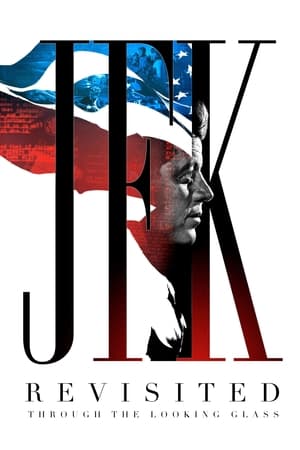
JFK Revisited: Through the Looking Glass(en)
Thirty years after the release of his film JFK (1991), filmmaker Oliver Stone reviews recently declassified evidence related to the assassination of President John F. Kennedy, which took place in Dallas on November 22, 1963.

Einstein and the Bomb(en)
What happened after Einstein fled Nazi Germany? Using archival footage and his own words, this docudrama dives into the mind of a tortured genius.
Wormwood(en)
In this genre-bending tale, Errol Morris explores the mysterious death of a U.S. scientist entangled in a secret Cold War program known as MK-Ultra.
The Beaches of Agnès(fr)
Filmmaking icon Agnès Varda, the award-winning director regarded by many as the grandmother of the French new wave, turns the camera on herself with this unique autobiographical documentary. Composed of film excerpts and elaborate dramatic re-creations, Varda's self-portrait recounts the highs and lows of her professional career, the many friendships that affected her life and her longtime marriage to cinematic giant Jacques Demy.
Conspiracy(en)
At the Wannsee Conference on January 20, 1942, senior Nazi officials meet to determine the manner in which the so-called "Final Solution to the Jewish Question" can be best implemented.
Night and Fog(fr)
Filmmaker Alain Resnais documents the atrocities behind the walls of Hitler's concentration camps.
Eichmann(en)
Based upon the final confession of Adolf Eichmann, made before his execution in Israel, of his role in Hitler's plan for the final solution.
Navalny(en)
Follows the man who survived an assassination attempt by poisoning with a lethal nerve agent in August 2020. During his months-long recovery, he makes shocking discoveries about the attempt on his life and decides to return home.
The Killing Fields(en)
New York Times reporter Sydney Schanberg is on assignment covering the Cambodian Civil War, with the help of local interpreter Dith Pran and American photojournalist Al Rockoff. When the U.S. Army pulls out amid escalating violence, Schanberg makes exit arrangements for Pran and his family. Pran, however, tells Schanberg he intends to stay in Cambodia to help cover the unfolding story — a decision he may regret as the Khmer Rouge rebels move in.
And the Oscar Goes To...(en)
The story of the gold-plated statuette that became the film industry's most coveted prize, AND THE OSCAR GOES TO... traces the history of the Academy itself, which began in 1927 when Louis B. Mayer, then head of MGM, led other prominent members of the industry in forming this professional honorary organization. Two years later the Academy began bestowing awards, which were nicknamed "Oscar," and quickly came to represent the pinnacle of cinematic achievement.
Good Night, and Good Luck.(en)
The story of journalist Edward R. Murrow's stand against Senator Joseph McCarthy's anti-communist witch-hunts in the early 1950s.
Similar Movies
The Witches of Salem(fr)
Salem 1692. The young Abigail, seduced and abandoned by John Proctor, accuses John's wife of being a witch in revenge. A series of tragic trials soon befall Salem as fear and suspicion blur the lines of reality.
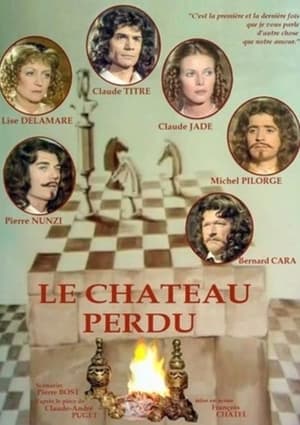
Le Château perdu(fr)
In 1662, ten years after the Fronde, King Louis XIV, then aged 24, was still feeling the insult. When the name of Baron de Fargues came to his ears, the king unleashed a blind vengeance against this amnestied former rebel. But Louise de La Vallière, Louis XIV's mistress, could jeopardize the plan.
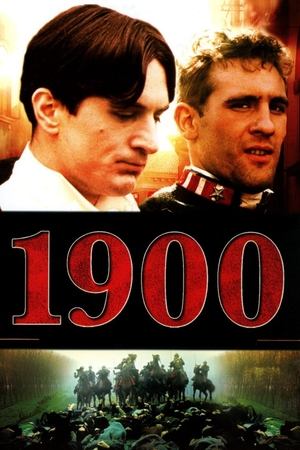

Alain Delon, l'ombre au tableau(fr)
A childhood in boarding school, volunteered at 17 for the war and dismissed for indiscipline, thug in Marseille turned gigolo in Paris, he became actor thanks to some inspired women. Then flying high, fast and far, thanks to his director masters René Clément, Luchino Visconti & Jean-Pierre Melville.

Marilyn Monroe(en)
Born Norma Jean Baker, actress Marilyn Monroe would become one of the most iconic and desirable women in the world. From her humble beginnings, to her USO performances, to her now-famous pin-up photographs and award-winning acting roles, Marilyn made her mark as the most beautiful blonde bombshell of her day. However, behind her beauty, Marilyn suffered a tragic private life.
Good Night, and Good Luck.(en)
The story of journalist Edward R. Murrow's stand against Senator Joseph McCarthy's anti-communist witch-hunts in the early 1950s.
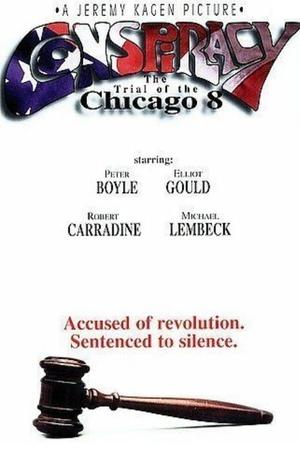
Conspiracy: The Trial of the Chicago 8(en)
A made-for-cable-TV docudrama about the trial of the men accused of conspiring to cause protesters to riot at the 1968 Democratic National Convention in Chicago. Combines in an innovative manner dramatic recreations (largely faithful to the actual trial transcripts) with documentary footage and interviews with the actual defendants.

Der lange Weg ans Licht(de)
Edeltraut Hertel - a midwife caught between two worlds. She has been working as a midwife in a small village near Chemnitz for almost 20 years, supporting expectant mothers before, during and after the birth of their offspring. However, working as a midwife brings with it social problems such as a decline in birth rates and migration from the provinces. Competition for babies between birthing centers has become fierce, particularly in financial terms. Obstetrics in Tanzania, Africa, Edeltraud's second place of work, is completely different. Here, the midwife not only delivers babies, she also trains successors, carries out educational and development work and struggles with the country's cultural and social problems.

Die Liebe des Hans Albers(de)
He is considered to be one of the greatest German film stars, Hans Albers, known as "Der blonde Hans", a man made for the cinema. He was an actor, singer, idol of the Germans - and darling of the Nazis. Nevertheless, he could not protect his great love, the Jewess Hansi Burg. In 1938 she had to flee to London from anti-Semitism in Germany. But Albers himself stayed in Germany and continued to film, driven by a desire for a career and the call of money. In 1946, one year after the end of the Second World War, they meet again: Hansi Burg returns to the land of the murderers of her parents in the uniform of the British Army and visits Hans Albers in his villa on Lake Starnberg. He lives there with another woman. The rival has to go, then there is a tense debate. For a day and a night, the blonde Hans has to face uncomfortable questions and even more uncomfortable truths.
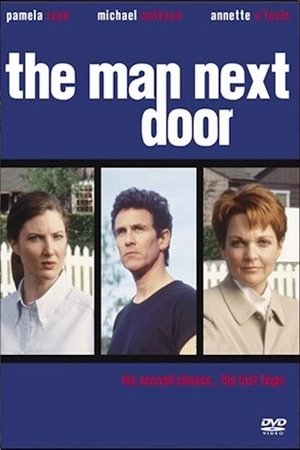
The Man Next Door(en)
Residents of a small town struggle when a paroled rapist moves into the area.
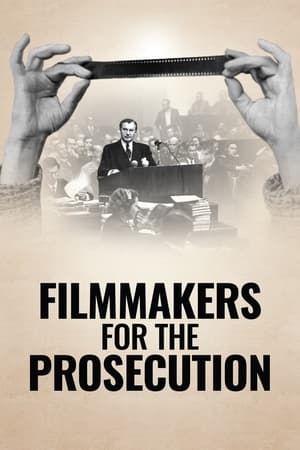
Filmmakers for the Prosecution(fr)
In 1945, two young American soldiers, brothers Budd and Stuart Schulberg, are commissioned to collect filmed and recorded evidence of the horrors committed by the infamous Third Reich in order to prove Nazi war crimes during the Nuremberg trials (1945-46). The story of the making of Nuremberg: Its Lesson for Today, a paramount historic documentary, released in 1948.
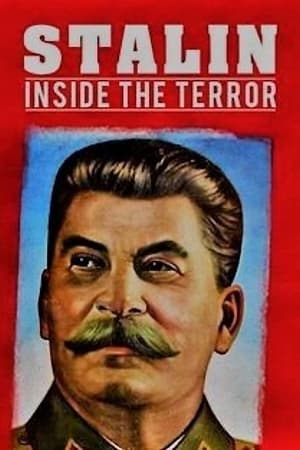
Stalin: Inside the Terror(en)
This program is an overview of the life and career of Joseph Stalin. It concentrates on describing and attempting to explain the origins of the policy of “terror” instigated by Stalin as leader of the USSR. There are interviews with surviving family members and experts all of whom attempt some sort of personality “analysis” of the dictator to explain his behaviour and policies. Another question that is examined is, given his record of “terror”, why was he so popular? Why did so many Russians mourn his death in 1953? This could be an overview and introduction to a study of both Stalin and USSR in the post revolution period.
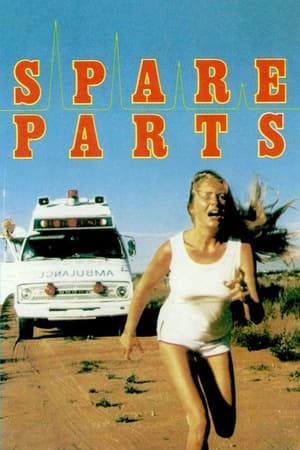
Spare Parts(de)
Honeymooning couple Monica and Mike check into a motel in New Mexico. All seems normal until an ambulance pulls up and abducts Mike. Monica narrowly escapes and, with the help of truck driver Bill, discovers the awful secret of the motel and the ambulance service.
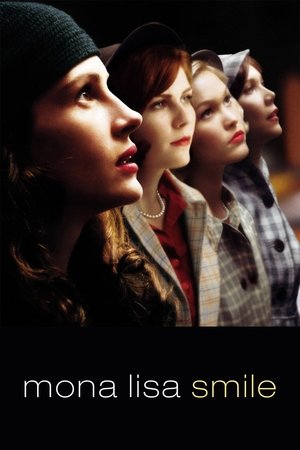
Mona Lisa Smile(en)
Katherine Watson is a recent UCLA graduate hired to teach art history at the prestigious all-female Wellesley College, in 1953. Determined to confront the outdated mores of society and the institution that embraces them, Katherine inspires her traditional students, including Betty and Joan, to challenge the lives they are expected to lead.
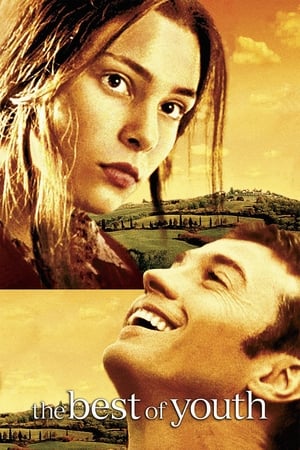
The Best of Youth(it)
After a fateful encounter in the summer of 1966, the lifepaths of two brothers from a middle-class Roman family diverge, intersecting with some of the most significant events of postwar Italian history in the following decades.

Großes Kino made in DDR(de)
In 2016, DEFA celebrates its 70th anniversary: the film embarks on a journey into the exciting film history of the GDR. In a comprehensive kaleidoscope, the importance of DEFA productions is illuminated, the relevance of the films as propaganda productions for the GDR, which socio-political themes were in the foreground, but also which heroes DEFA brought to the screen and celebrated as people from the people.
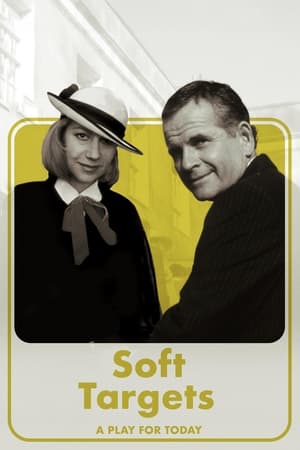
Soft Targets(en)
Stephen Poliakoff's parody of the spy-thriller genre. A Russian diplomat becomes convinced that he is at the centre of a Foreign Office plot.
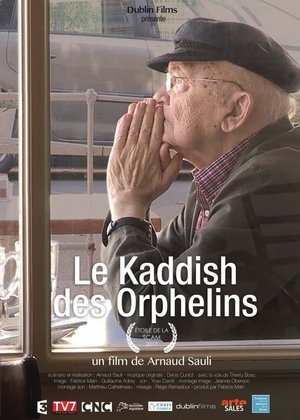
The Orphan’s Kaddish(fr)
An elderly man is working tirelessly to revive the Jewish world lost in the Holocaust. His name is Aharon Appelfeld, and he became one of the greatest Jewish writers of our time. Every day, through his murmuring voice and handwriting, the survivors, the children of Ukraine, the peasants of Yiddishland come alive in the tiny office of a Jerusalem apartment. Aharon Appelfeld, solitary, wants to fight this battle to his last breath.
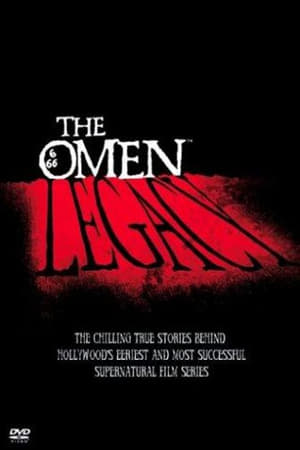
The Omen Legacy(en)
The true stories that spawned the serie tale of Damien, a small boy with an angelic face, whose very name still conjures up thoughts of Satan. This documentary shares spine-tingling information about the the all-too-memorable flick that has terrorized film audiences since 1976.