Loading Page

And the Pig Was Born(2003)
Status: Released
Date: 2003-10-09
0%
0 Votes
Time: 0h 23m
Overview:
« Made for the Musee d'Art Moderne de la Ville de Paris exposition VOILA (Summer 2000), from ‘found’ footage taken from hundreds of unfinished films stored in Anthology's basement. A tour-de-force montage film with the spirit of Vigo and Buñuel hovering over it. Made before Godard's Origins of the 21st Century, Ziz's film provokes interesting comparisons. Both deal with images of the 20th century. But while Godard's film could be described as a poster, Ziz's film is a poem. I don't have to tell you which one I prefer...- » (Jonas Mekas)
Languages: No Language.
Countries:
France,
United States of America
Movie: And the Pig Was Born
Video Trailer And the Pig Was Born
All 1 videos

Julius Ziz, And the Pig Was Born (Excerpt) - Clip
Recommendations Movies
63%
The Image Book(fr)
2018-10-11
In Le Livre d’Image, Jean-Luc Godard recycles existing images (films, documentaries, paintings, television archives, etc.), quotes excerpts from books, uses fragments of music. The driving force is poetic rhyme, the association or opposition of ideas, the aesthetic spark through editing, the keystone. The author performs the work of a sculptor. The hand, for this, is essential. He praises it at the start. “There are the five fingers. The five senses. The five parts of the world (…). The true condition of man is to think with his hands. Jean-Luc Godard composes a dazzling syncopation of sequences, the surge of which evokes the violence of the flows of our contemporary screens, taken to a level of incandescence rarely achieved. Crowned at Cannes, the last Godard is a shock film, with twilight beauty.
71%
Blue(en)
1993-08-19
Against a plain, unchanging blue screen, a densely interwoven soundtrack of voices, sound effects and music attempt to convey a portrait of Derek Jarman's experiences with AIDS, both literally and allegorically, together with an exploration of the meanings associated with the colour blue.

61%
Naqoyqatsi(en)
2002-09-02
A visual montage portrait of our contemporary world dominated by globalized technology and violence.
77%
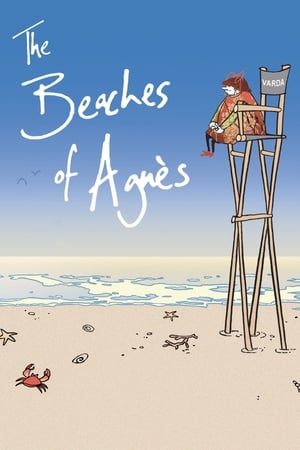
The Beaches of Agnès(fr)
2008-12-17
Filmmaking icon Agnès Varda, the award-winning director regarded by many as the grandmother of the French new wave, turns the camera on herself with this unique autobiographical documentary. Composed of film excerpts and elaborate dramatic re-creations, Varda's self-portrait recounts the highs and lows of her professional career, the many friendships that affected her life and her longtime marriage to cinematic giant Jacques Demy.
60%
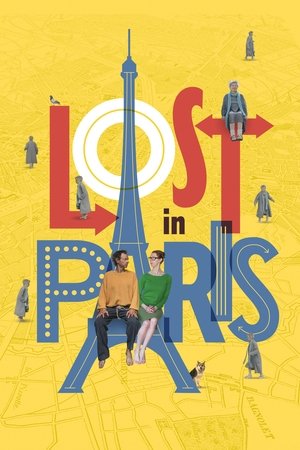
Lost in Paris(fr)
2017-01-14
Fiona visits Paris for the first time to assist her myopic Aunt Martha. Catastrophes ensue, mainly involving Dom, a homeless man who has yet to have an emotion or thought he was afraid of expressing.
74%
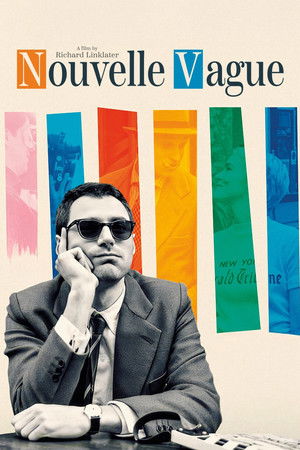
Nouvelle Vague(fr)
2025-10-08
After writing for Cahiers du cinéma, a young Jean-Luc Godard decides making films is the best film criticism. He convinces producer Georges de Beauregard to fund a low-budget feature, and creates a treatment with fellow New Wave filmmaker François Truffaut about a gangster couple. The result? Breathless, one of the first features of the Nouvelle Vague era of French cinema.

73%
Lady Bird(en)
2017-09-01
Lady Bird McPherson, a strong willed, deeply opinionated, artistic 17 year old comes of age in Sacramento. Her relationship with her mother and her upbringing are questioned and tested as she plans to head off to college.
65%
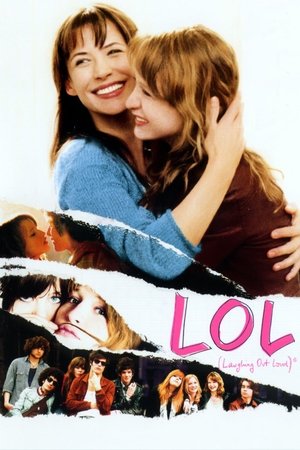
LOL (Laughing Out Loud)(fr)
2009-02-04
Lola is a striking teenaged girl who is on the cusp of adulthood and longs to rush into the adult world of independence, freedom and sexual exploits, but is tenaciously held back by her mother.
72%
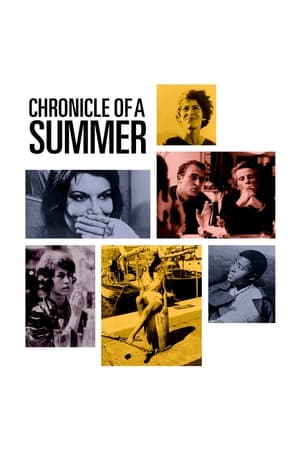
Chronicle of a Summer(fr)
1961-10-20
Paris, summer 1960. Anthropologist and filmmaker Jean Rouch and sociologist and film critic Edgar Morin wander through the crowded streets asking passersby how they cope with life's misfortunes.
74%
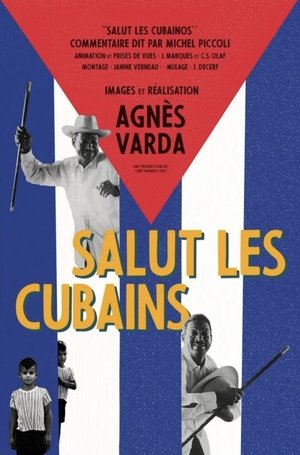
Hello Cubans(fr)
1963-11-26
A photo montage of Cubans filmed by Agnès Varda during her visit to Cuba in 1963, four years after Fidel Castro came to power. This black & white documentary explores their socialist culture and society while making use of 1500 pictures (out of 4000!) the filmmaker took while on the island.
74%
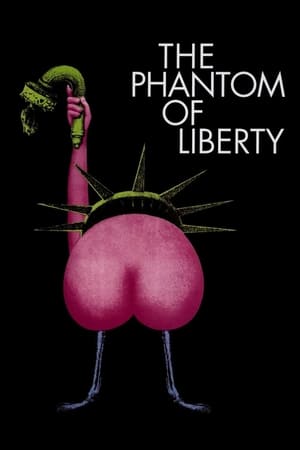
The Phantom of Liberty(fr)
1974-09-10
This Surrealist film, with a title referencing the Communist Manifesto, strings together short incidents based on the life of director Luis Buñuel. Presented as chance encounters, these loosely related, intersecting situations, all without a consistent protagonist, reach from the 19th century to the 1970s. Touching briefly on subjects such as execution, pedophilia, incest, and sex, the film features an array of characters, including a sick father and incompetent police officers.
71%
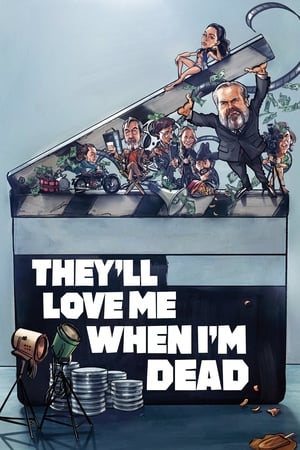
They'll Love Me When I'm Dead(en)
2018-08-31
As his life comes to its end, famous Hollywood director Orson Welles puts it all on the line at the chance for renewed success with the film The Other Side of the Wind.
68%
Not Quite Hollywood(en)
2008-08-28
As Australian cinema broke through to international audiences in the 1970s through respected art house films like Peter Weir's "Picnic At Hanging Rock," a new underground of low-budget exploitation filmmakers were turning out considerably less highbrow fare. Documentary filmmaker Mark Hartley explores this unbridled era of sex and violence, complete with clips from some of the scene's most outrageous flicks and interviews with the renegade filmmakers themselves.
76%
As I Was Moving Ahead, Occasionally I Saw Brief Glimpses of Beauty(en)
2000-11-05
A compilation of over 30 years of private home movie footage shot by Lithuanian-American avant-garde director Jonas Mekas, assembled by Mekas "purely by chance", without concern for chronological order.
65%
The Souvenir: Part II(en)
2021-10-11
In the aftermath of her tumultuous relationship with a charismatic and manipulative older man, Julie begins to untangle her fraught love for him in making her graduation film, sorting fact from his elaborately constructed fiction.
64%
Heavy Traffic(en)
1973-08-08
A white dropout struggles to become a cartoonist and filmmaker, drawing inspiration from the harsh, gritty world around him. Still sharing his rundown apartment with his middle-aged parents, an oafish slob of an Italian father and a ditzy nutcase of a Jewish mother, he's ridiculed and looked down upon by his friends, hypocrites who run with violent gangs and the Italian Mafia, and a shallow Black girl who makes her living downtown with the pimps and pushers. The cartoonist gets a chance to pitch a film idea to a movie mogul, but the story proves too outrageous: a far-future Earth, depleted by war and pollution, where a mutant antihero challenges and kills God.
72%
The Director and the Jedi(en)
2018-03-12
An intimate documentary delving into Rian Johnson's process as he comes in as a director new to the Star Wars universe.
64%
JLG/JLG: Self-Portrait in December(fr)
1995-03-08
Director Jean-Luc Godard reflects in this movie about his place in film history, the interaction of film industry and film as art, as well as the act of creating art.
72%
Living in Oblivion(en)
1995-07-21
Low-budget independent filmmaker Nick Reve tries to keep everything together as his production is plagued with an insecure actress, a megalomaniac star, a pretentious beret-wearing director of photography, and lousy catering.
72%
Uncle Yanco(fr)
1967-10-01
While in San Francisco for the promotion of her last film in October 1967, Agnès Varda, tipped by her friend Tom Luddy, gets to know a relative she had never heard of before, Jean Varda, nicknamed "Yanco". This hitherto unknown uncle lives on a boat in Sausalito, is a painter, has adopted a hippie lifestyle and loves life. The meeting is a very happy one.
Similar Movies
20%
1st Time 16mm(pt)
2010-11-13
Miguel, a debutant director, and his young team live a series of tribulations during the shootings of their first film, which unrolls between Lisbon, Venice, Paris and Madrid.
100%
heroes(en)
2020-11-11
Displaying the faces and voices of transgender youth, the documentary short shows the authenticity of queer and trans people living in Toronto, while simultaneously discussing the struggles for self-acceptance that people who do not conform to cisgender and heteronormative ideals of gender face. Andy Nguyen, trans director and film student, captures his trans friends in their natural state on 16mm film shot on a Bolex h16 camera. Accompanied by narration written and recited by Salem Rao, this film represents that trans people exist and this is what we look like. Regardless of the obvious everyday transphobia, trans people find community and uniqueness within each other and themselves.
0%
Count Vim's Last Exercise(en)
1968-01-02
An early short film by Peter Weir, produced between 1967 and 1968 for a Channel Seven staff revue and later screened in underground film programs.
0%
The Music Lesson(fr)
2021-01-01
Seb, mariachi musician by night and guitar teacher by day, is by all accounts, a failed artist. Like a ghost wandering through his own life, Seb follows outside expectations and comically drifts further away from his dream of becoming a songwriter.
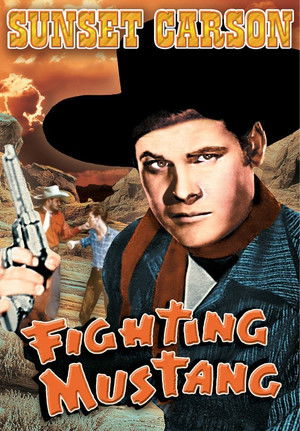
0%
Fighting Mustang(en)
1948-02-20
Filmed back-to-back with three other Sunset Carson vehicles in 1947, this Yucca Pictures Western starred the former Republic cowboy as a Texas Ranger chasing a gang of rustlers into the notorious outlaw territory of Three Corners. Attempting to sabotage the proposed annexation of the territory, desperado Bart Dawson (Stephen Keyes) and his men ambush Sunset and his young trainee Jed (Al Terry). The villains, who have been terrorizing pretty trading post operator Helen Bennett (Patricia Starling), are eventually defeated by the rangers in a violent gun battle and the planned annexation takes place on schedule. For all intents and purposes, the handsome but wooden Sunset Carson ended his screen career with this series of extremely low-budget Westerns, originally filmed in 16mm and released by that dumping ground of Poverty Row flotsam, Astor Pictures.
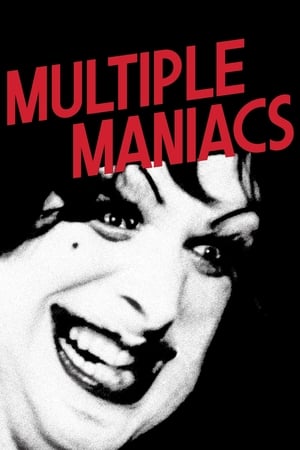
63%
Multiple Maniacs(en)
1970-04-10
The Cavalcade of Perversion, a traveling freak show, acts as a front for Divine, who is out for blood after discovering her lover's affair.
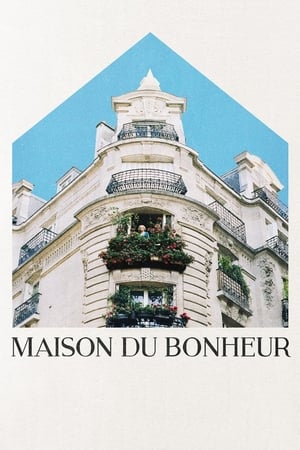
61%
Maison du Bonheur(fr)
2018-08-17
When asked to make a documentary about her friend’s mother—a Parisian astrologer named Juliane—the filmmaker sets off for Montmartre with a Bolex to craft a portrait of an infectiously exuberant personality and the pre-war apartment she’s called home for 50 years.
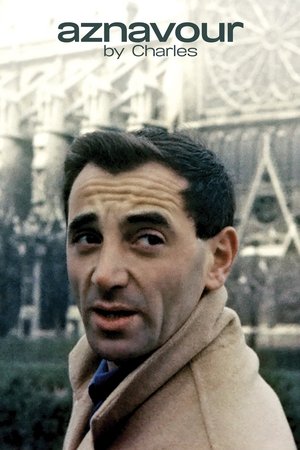
69%
Aznavour by Charles(fr)
2019-10-02
In 1948, French singer Charles Aznavour (1924-2018) receives a Paillard Bolex, his first camera. Until 1982, he will shoot hours of footage, his filmed diary. Wherever he goes, he carries his camera with him. He films his life and lives as he films: places, moments, friends, loves, misfortunes.
53%
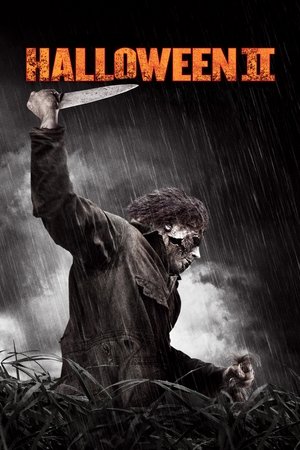
Halloween II(en)
2009-08-28
Laurie Strode struggles to come to terms with her brother Michael's deadly return to Haddonfield, Illinois. Meanwhile, Michael prepares for another reunion with his sister.
100%
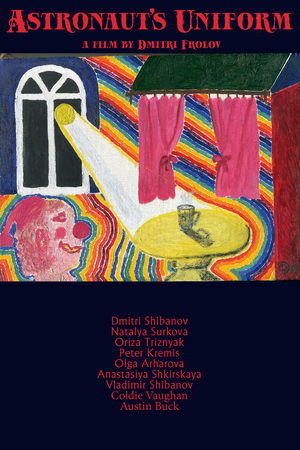
Astronaut's Uniform(ru)
2021-03-11
Mockumentary experimental film, which shows one day in the life of a young man. The action takes place on the Day of Soviet Cosmonautics, April 12, one of the last years of the USSR. Outside the window, it is gradually getting warmer, the onset of spring is felt, promising hope for the possibility of changes in the country. The hero of the film is fond of space. The young man, who idolizes Gagarin, is engaged in reconstruction, making the uniform in which the cosmonaut walked in the prime of his glory. Our hero is also a film enthusiast. He makes films with stories of space flights and shows them to his friends. The film is stylized as amateur films of the 1980s and was shot on a 16-mm color film made by the company" Svema", made in the Soviet Union. The quality of this film allows the viewer to fully immerse themselves in the atmosphere of the time of the film, which is dedicated to Soviet cosmonautics and Edward D. Wood Jr.
0%
Untitled(en)
1977-06-01
"Untitled begins with a flat, out-of-focus, reddish-pink screen on which blurry white patterns quickly appear and disappear. After awhile a space seems to emerge behind the screen. The swiftly changing patterns generate an experience of soft floating motion, through a field of snowflakes that whirl about in the wind. There is simultaneous serenity and agitation in the portrayed motions. The background appears soft, almost quivering at first, as if alive, and the reddish color suggests warmth and contrast with the snow. As the film progresses the snowflakes get smaller and better focused, yielding a kind of distance perspective and the background acquires more and more substantiality. At some point and often quite suddenly, the trans-like floating experience is broken by the discovery of what lies ahead: a red brick wall! The entire meaning of the earlier experience undergoes a sudden shift as this prototype of the impenetrable obstacle becomes apparent."– Robert Becklen
40%
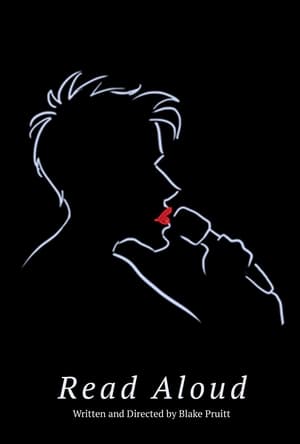
Read Aloud(en)
2015-10-24
Justin is a film editor surrounded by performances. Sick of sitting in a dark room watching others, he starts to envision ‘70s cabaret style performances of his own. When a new relationship starts to develop, Justin has to decide how badly he wants to come out from behind the camera.
0%
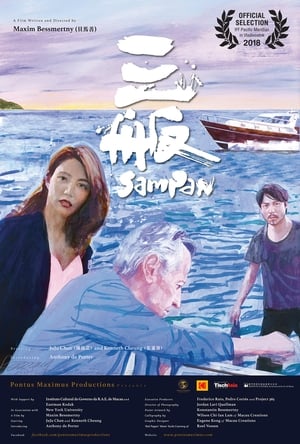
Sampan(en)
2017-04-24
A fisherman, a banker and an actress are involved in a love triangle in the middle of the ocean.
51%
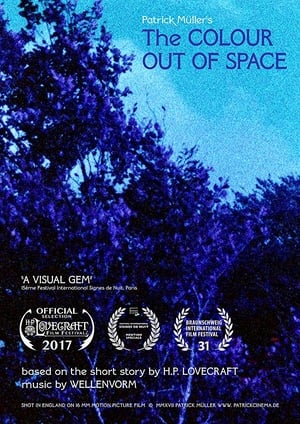
The Colour Out of Space(en)
2017-08-18
A meteorite, strange vegetation, a colour: an experimental take on H.P. Lovecraft's spiral into madness, shot with a vintage camera on truly unique LomoChrome 16mm film.
58%
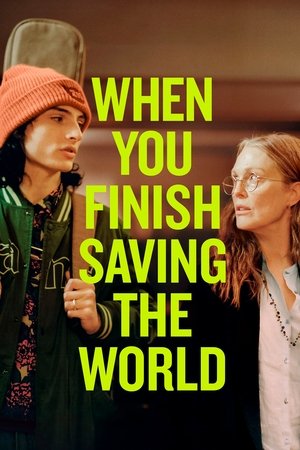
When You Finish Saving the World(en)
2023-01-20
Evelyn and her oblivious son Ziggy seek out replacements for each other. As Evelyn tries to parent an unassuming teenager at her shelter, Ziggy fumbles through his pursuit of a brilliant young woman at school.
65%
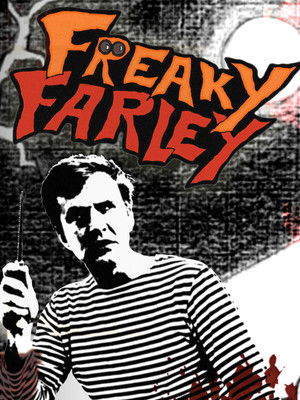
Freaky Farley(en)
2007-10-08
In a small New Hampshire town, the local peeping tom, Freaky Farley is embroiled in a tale of murder, monsters, ninjas, witches, angst, anger, insecurity and madness.