Loading Page

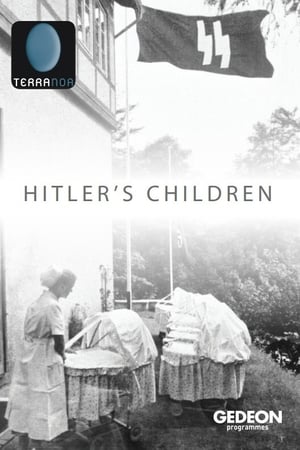
Hitler's Children(2017)
Status: Released
Date: 2017-06-05
70%
2 Votes
Time: 0h 51m
Overview:
This exclusive documentary recounts the crazy project of Nazi Germany which secretly gave birth to Aryan children as far as France. In these maternities for the rich called the ‘Lebensborn’, the Nazis raised ‘perfect’ children born of progenitors from the SS and women with well defined racial grounds. This plan gave birth to thousands of children who were called ‘Hitler's Children’. They were supposed to lead the world one day. It wasn’t until 30 years later that the existence of one of these centers in France was discovered. For the very first time, the children born in the ‘Lesenborn’ in Lamorlaye find out about their existence and disclose one the most frightening plans of History, as well as the dark secret of their origins.
Languages: French.
Countries:
France
ProductionCompanies: 


Movie: Hitler's Children
Loading Photos
Photo Type :Total items
Recommendations Movies
77%
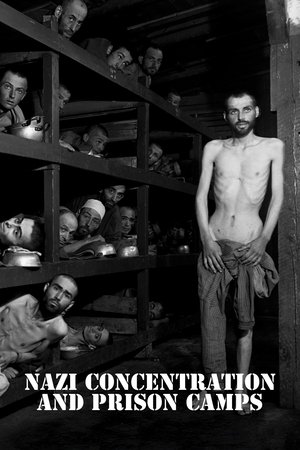
Nazi Concentration Camps(en)
1945-11-29
Produced and presented as evidence at the Nuremberg war crimes trial of Hermann Göring and twenty other Nazi leaders, this film consists primarily of dead and surviving prisoners and of facilities used to kill and torture during the World War II.
71%
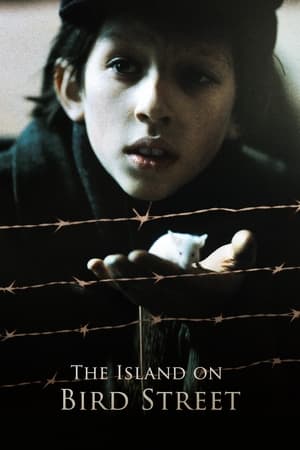
The Island on Bird Street(en)
1997-04-11
Alex is an 11-year old boy who, during WWII, hides in the Jewish ghetto from Nazis after all his relatives have been sent to the concentration camp. The movie portrays the ghetto through his eyes.
76%
The 25th Hour(fr)
1967-04-26
A Romanian peasant fights to get back to his family after he's imprisoned by the Nazis.The picture is based on real events. It includes Hungary's government in collaboration with the Nazis, the encroachment of Romania by Stalin's troopers, and other happenings.
82%
Shoah(fr)
1985-04-21
Director Claude Lanzmann spent 11 years on this sprawling documentary about the Holocaust, conducting his own interviews and refusing to use a single frame of archival footage. Dividing Holocaust witnesses into three categories – survivors, bystanders, and perpetrators – Lanzmann presents testimonies from survivors of the Chelmno concentration camp, an Auschwitz escapee, and witnesses of the Warsaw Ghetto Uprising, as well as a chilling report of gas chambers from an SS officer at Treblinka.
68%
God on Trial(en)
2008-09-03
In the Jewish tradition of arguing with God, Jewish prisoners in Auschwitz decide to put God on Trial.
79%
Five Came Back(en)
2017-03-31
The extraordinary story of how Hollywood changed World War II – and how World War II changed Hollywood, through the interwoven experiences of five legendary filmmakers who went to war to serve their country and bring the truth to the American people: John Ford, William Wyler, John Huston, Frank Capra, and George Stevens. Based on Mark Harris’ best-selling book, “Five Came Back: A Story of Hollywood and the Second World War.”

71%
3rd Reich Mothers, in the Name of the Master Race(fr)
2012-09-14
Two beautiful and different girls, Alice and Lisette are 17 years old, when forcibly removed from their Alsatian family to cooperate in the war effort in Germany. After spending six months in a indoctrination camp, they are both sent to a munitions factory where they are tasked to perform inhuman works. An explosion erupts, they are suspected of sabotage and threatened with being sent to a boot camp. Alice and Lisette believe they saved when transferred to a maternity where they continue living the hell of war.
75%
The War on Democracy(en)
2007-06-15
Set both in Latin America and the United States, the film explores the historic and current relationship of Washington with countries such as Venezuela, Bolivia and Chile. Pilger says that the film "...tells a universal story... analysing and revealing, through vivid testimony, the story of great power behind its venerable myths. It allows us to understand the true nature of the so-called "war on terror". According to Pilger, the film’s message is that the greed and power of empire is not invincible and that people power is always the "seed beneath the snow".
66%
The Grey Zone(en)
2001-09-13
The story of Auschwitz's twelfth Sonderkommando — one of the thirteen consecutive "Special Squads" of Jewish prisoners placed by the Nazis in the excruciating moral dilemma of assisting in the extermination of fellow Jews in exchange for a few more months of life.
72%
Trinity and Beyond: The Atomic Bomb Movie(en)
1995-09-29
"Trinity and Beyond" is an unsettling yet visually fascinating documentary presenting the history of nuclear weapons development and testing between 1945-1963. Narrated by William Shatner and featuring an original score performed by the Moscow Symphony Orchestra, this award-winning documentary reveals previously unreleased and classified government footage from several countries.

76%
Night Will Fall(en)
2014-06-07
When Allied forces liberated the Nazi concentration camps in 1944-45, their terrible discoveries were recorded by army and newsreel cameramen, revealing for the first time the full horror of what had happened. Making use of British, Soviet and American footage, the Ministry of Information’s Sidney Bernstein (later founder of Granada Television) aimed to create a documentary that would provide lasting, undeniable evidence of the Nazis’ unspeakable crimes. He commissioned a wealth of British talent, including editor Stewart McAllister, writer and future cabinet minister Richard Crossman – and, as treatment advisor, his friend Alfred Hitchcock. Yet, despite initial support from the British and US Governments, the film was shelved, and only now, 70 years on, has it been restored and completed by Imperial War Museums under its original title "German Concentration Camps Factual Survey".

73%
The Zookeeper's Wife(en)
2017-03-24
The account of keepers of the Warsaw Zoo, Jan and Antonina Zabinski, who helped save hundreds of people and animals during the Nazi invasion.
61%
The Match(en)
2021-07-10
Inspired by true events from the spring of 1944 when the Nazis organized a football match between a team of camp inmates and an elite Nazi team on Adolf Hitler's birthday. A match the prisoners are determined to win, no matter what happens.
61%
Adam Resurrected(en)
2008-08-08
After again attempting to commit murder, a Jewish man with a mysterious past and extraordinary intelligence, charisma, and body control returns to an insane asylum, where he makes a startling discovery.
62%
Waiting for Anya(en)
2020-02-07
During the harrows of WWII, Jo, a young shepherd along with the help of the widow Horcada, helps to smuggle Jewish children across the border from southern France into Spain.

78%
A Bag of Marbles(fr)
2017-01-18
At the beginning of the 1940s, in a France occupied by Nazi forces, lived the Jewish Joffo family. Happy and tight-knit, she sees her future darken when all members of the family are forced to wear the yellow star. Fearing the worst, the parents organized their family to flee to the free zone in the south of the country. Maurice, twelve years old, and Joseph, ten years old, will therefore leave alone in order to maximize their chances of finding their older brothers already settled in Nice. The brothers left to their own devices demonstrate an incredible amount of cleverness, courage, and ingenuity to escape the enemy invasion and to try to reunite their family once again.
69%
Escape to Victory(en)
1981-06-17
A group of POWs in a German prison camp during World War II play the German National Soccer Team in this powerful film depicting the role of prisoners during wartime.
62%
The Bunker(en)
1981-04-15
Dramatization depicting the events surrounding Adolf Hitler's last weeks in and around his underground bunker in Berlin before and during the battle for the city.
83%
Night and Fog(fr)
1956-01-29
Filmmaker Alain Resnais documents the atrocities behind the walls of Hitler's concentration camps.
75%
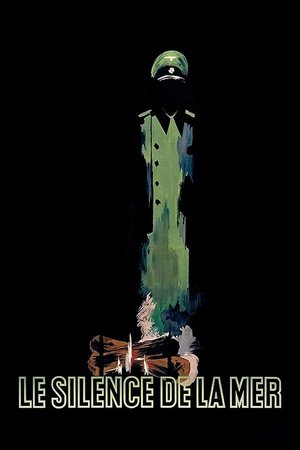
Le Silence de la mer(fr)
1949-04-22
In a small town in WWII France, a German officer is billeted in the house of an elderly man and his niece who resist the occupation by refusing to interact with him, even as he speaks to them candidly about his life and hopes for the future of France and Germany.
Similar Movies

69%
Don't Be a Sucker!(en)
1943-07-04
Propaganda short film depicting the rise of Nazism in Germany and how political propaganda is similarly used in the United States. The film was made to make the case for the desegregation of the United States armed forces.
62%
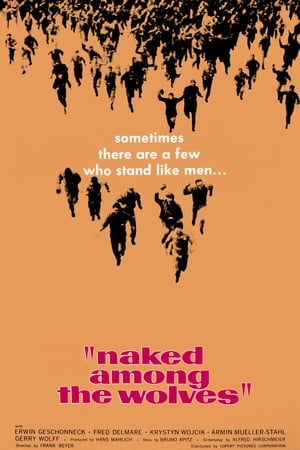
Naked Among Wolves(de)
1963-04-10
Based on a true story of inmates at KZ Buchenwald that risked their lives to hide a small Jewish boy shortly before the liberation of the camp.

67%
Shalom Italia(he)
2017-05-04
Shalom Italia tells the story of three brothers, who set off on a journey to find a cave in the woods of Tuscany. The place where they, as children, hid to escape the Nazis. But more than a search to find a geographical location, the brothers are on their way to locate the common ground of memory, the nexus where the conflicting versions of their stories can come to rest.

0%
In naam van de Führer(nl)
1978-05-11
82%
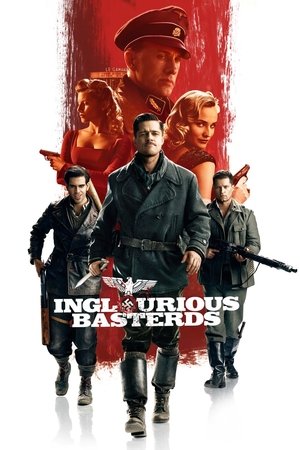
Inglourious Basterds(en)
2009-08-02
In Nazi-occupied France during World War II, a group of Jewish-American soldiers known as "The Basterds" are chosen specifically to spread fear throughout the Third Reich by scalping and brutally killing Nazis. The Basterds, lead by Lt. Aldo Raine soon cross paths with a French-Jewish teenage girl who runs a movie theater in Paris which is targeted by the soldiers.
65%
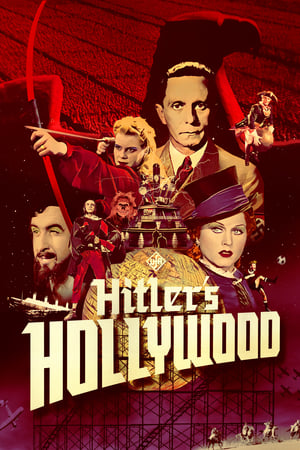
Hitler's Hollywood(de)
2017-02-23
Film journalist and critic Rüdiger Suchsland examines German cinema from 1933, when the Nazis came into power, until 1945, when the Third Reich collapsed. (A sequel to From Caligari to Hitler, 2015.)
79%
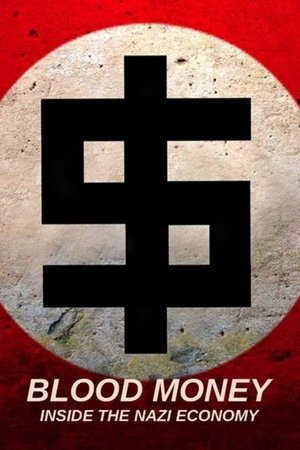
Blood Money: Inside the Nazi Economy(fr)
2021-02-02
How did Nazi Germany, from limited natural resources, mass unemployment, little money and a damaged industry, manage to unfurl the cataclysm of World War Two and come to occupy a large part of the European continent? Based on recent historical works of and interviews with Adam Tooze, Richard Overy, Frank Bajohr and Marie-Bénédicte Vincent, and drawing on rare archival material.

0%
Roparz Hemon(fr)
2000-01-01
The bombings recently carried out by the Revolutionary Breton Army (ARB) have drawn attention to the political and cultural history of the Breton movement. The writer Roparz Hemon is one of its emblematic figures. He was born in Brest in 1900, and died in Dublin in 1978 after thirty years of voluntary exile in Ireland following his trial for collaboration at the end of the war. He had indeed organised the first Breton-language radio programmes under German control. The work of this poet, novelist, and translator of Shakespeare and Cervantes is dominated by the theme of the dream.
73%
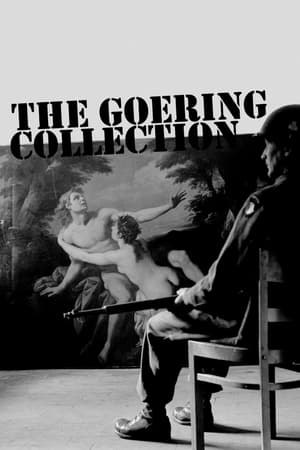
Goering's Catalogue: A Collection of Art and Blood(fr)
2021-03-14
For more than a decade, Reichsmarschall Hermann Goering, Adolf Hitler's right-hand man during the infamous Third Reich, assembled a collection of thousands of works of art that were meticulously catalogued.

70%
Karajan: Portrait of a Maestro(de)
2019-09-22
An account of the life and work of controversial German orchestra conductor Herbert von Karajan (1908-89), celebrated as one of the greatest musicians of the twentieth century.
70%
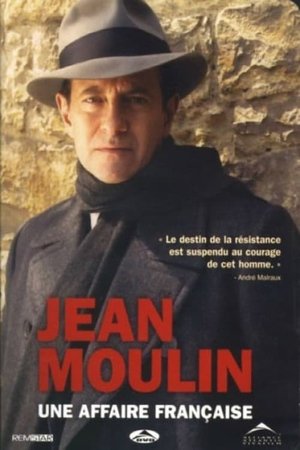
Jean Moulin, une affaire française(fr)
2003-01-06
Drama set in the Second World War, focused on Jean Moulin, hero, martyr and symbol of the French resistance and the patriotism during the dark years of Nazi occupation.
75%
Fascism in Colour(en)
2006-01-01
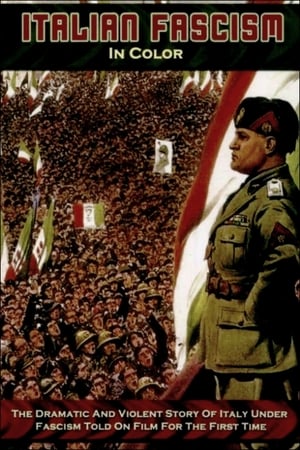
After the World War I, Mussolini's perspective on life is severely altered; once a willful socialist reformer, now obsessed with the idea of power, he founds the National Fascist Party in 1921 and assumes political power in 1922, becoming the Duce, dictator of Italy. His success encourages Hitler to take power in Germany in 1933, opening the dark road to World War II. (Originally released as a two-part miniseries. Includes colorized archival footage.)
72%
The Last Train(de)
2006-10-26
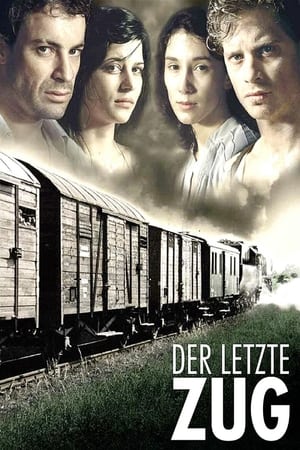
A group of people are imprisoned in a rail car bound from Berlin to a concentration camp in 1945.
0%
JO de Berlin 36, la grande illusion(fr)
2015-03-15
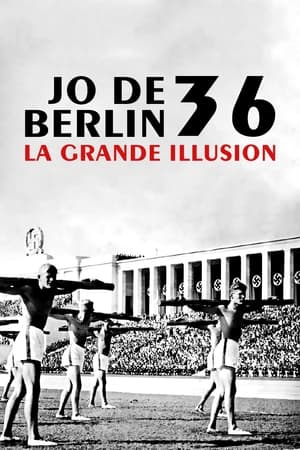
In August 1936, the Olympic Games, orchestrated by Joseph Goebbels, the Third Reich's Minister of Propaganda, took place in Berlin. This was a vast charm offensive designed to present Germany as a nation that respected the Olympic principles of equality and fraternity. This documentary reveals the political strategies of the Third Reich, which benefited from the complicity of the International Olympic Committee in thwarting calls for a boycott by several countries. Once the games were over, Nazi policy intensified. How could the civilized world turn a blind eye to this "great illusion"? Gretel Bergmann, the German Jewish athlete at the center of a bargaining chip between the German authorities and the US government, and Noël Vandernotte, who won a bronze medal in rowing, share their stories.

70%
Hitler's Evil Science(fr)
2019-05-25
In 1935, German scientists dug for bones; in 1943, they murdered to get them. How the German scientific community supported Nazism, distorted history to legitimize a hideous system and was an accomplice to its unspeakable crimes. The story of the Ahnenerbe, a sinister organization created to rewrite the obscure origins of a nation.
70%
The Ministry of Ungentlemanly Warfare(en)
2024-04-18
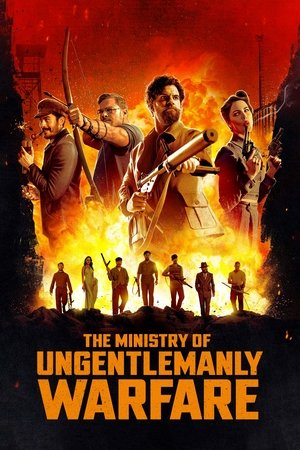
During World War II, the British Army assigns a group of competent soldiers to carry out a mission against the Nazi forces behind enemy lines... A true story about a secret British WWII organization — the Special Operations Executive. Founded by Winston Churchill, their irregular warfare against the Germans helped to change the course of the war, and gave birth to modern black operations.
80%
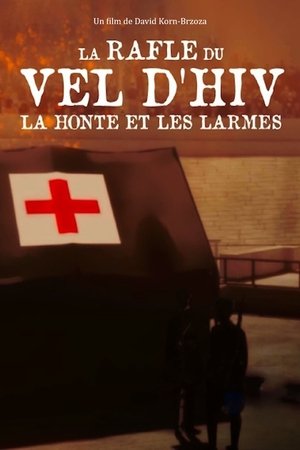
La Rafle du Vel d'Hiv, la honte et les larmes(fr)
2022-07-11
In 1942, more than 8,000 Jews were arrested on 16 and 17 July and sent to the Vélodrome d'Hiver sports center in the 15th district, a stone's throw from the Eiffel Tower, before being deported. The expression "Vel d'Hiv round-up" has become part of our collective memory, to the point of becoming the main memorial reference point for France during the dark years. Based on research carried out in unpublished or rarely explored archives, this film retraces the history of this roundup as experienced by hunted Jews and police trackers, from its planning in the Vichy offices to its hour-by-hour unfolding in the streets of Paris.
46%
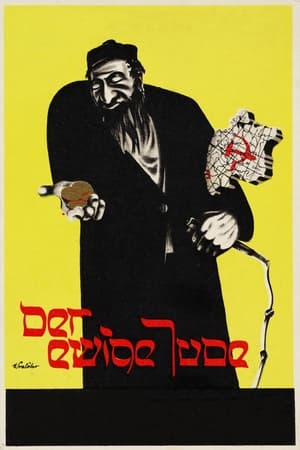
The Eternal Jew(de)
1940-11-28
A Nazi propaganda film made to promote anti-Semitism among the German people. Newly-shot footage of Jewish neighborhoods in recently-conquered Poland is combined with preexisting film clips and stills to defame the religion and advance Hitler's slurs that its adherents were plotting to undermine European civilization.