Loading Page


Personal Life of a Hole(2021)
Status: Released
Date: 2021-06-26
0%
0 Votes
Time: 1h 2m
„A window is a hole in the wall... or in the roof.“
Overview:
A hole gapes in a house wall. A small flaw, something imperfect that we seldom consciously direct our attention to. Filmmaker Ondřej Vavrečka finds holes in every corner. His focus is on the imperfections of human existence. A hole can also mean an uncertain future, or an empty stomach. The gap that partners leave behind after a breakup. Ondřej Vavrečka does not only deal with visible holes. He looks at the incomplete from a philosophical perspective. He also lets a nuclear physicist, a theologian and an ethnologist have their say. He underscores their thoughts and theses with absurd everyday scenes: a woman with a chair on her head or an invisible skier. These scenes combine with interviews, sounds and stop-motion sequences to create a playful collage.
Languages: Czech, English, French.
Countries:
Czech Republic,
Finland
ProductionCompanies: 
Silk Films
Movie: Personal Life of a Hole
HomePage
Overview
A hole gapes in a house wall. A small flaw, something imperfect that we seldom consciously direct our attention to. Filmmaker Ondřej Vavrečka finds holes in every corner. His focus is on the imperfections of human existence. A hole can also mean an uncertain future, or an empty stomach. The gap that partners leave behind after a breakup. Ondřej Vavrečka does not only deal with visible holes. He looks at the incomplete from a philosophical perspective. He also lets a nuclear physicist, a theologian and an ethnologist have their say. He underscores their thoughts and theses with absurd everyday scenes: a woman with a chair on her head or an invisible skier. These scenes combine with interviews, sounds and stop-motion sequences to create a playful collage.
Release Date
2021-06-26
Average
0
Rating:
0.0 startsTagline
„A window is a hole in the wall... or in the roof.“
Genres
Languages:
ČeskýEnglishFrançaisKeywords
Similar Movies

64%
Atlantis(en)
2014-10-19
A documentary portrait of Utopia, loosely framed by Plato’s invocation of the lost continent of Atlantis in 360 BC and its re-resurrection via a 1970s science fiction pulp novel.
0%
The Weight of Sight(no)
2024-01-23
The Weight of Sight is a playful and very personal essay where director Truls Krane Meby, through a massive archive of his own material - anything from DV-tapes to 35mm - explores the last 20 years of digital development - how it’s influenced the images we make, and our bodies. What kind of images do we get of the world now that everyone is a photographer, and what does it do with how we unfold our identities? How has the internet both captured and freed us? And will Truls even dare to show this film?
40%
París #1(gl)
2008-01-01
A group of friends share a cinematographical experience in a particular region of Spain, Galicia. The goal is simple: to film what they like, without preconceived ideas about what should be filmed. They want their images to reflect the feelings that unite them with the people they find along the way.
0%
Adios amigo mío, sin gestos, sin palabras(en)
2015-10-14
The title comes from Sergei Yesenin's last poem before comiting suicide. Using Virginia Woolf's last letters as a base, this film is meditation on the power of the word and its undertsanding and the the last moments before saying "goodbye".
71%
Arcadia(en)
2017-10-08
A provocative and poetic exploration of how the British people have seen their own land through more than a century of cinema. A hallucinated journey of immense beauty and brutality. A kaleidoscopic essay on how magic and madness have linked human beings to nature since the beginning of time.

0%
Off to School(de)
2025-11-21
In July of 2021 there was a flood of catastrophic scope in the Ahrtal Region of Germany. 135 people lost their lives and countless others lost their possessions, their homes, their most treasured mementos. Three years later the reconstruction is progressing slowly. This is an attempt at exploring, what it means to irretrievably lose a part of ones’ past.

60%
Starlight(en)
1969-12-04
A Tibetan Lama. His disciple. The disciple's wife, young boy and terrier. An old tugboat crossing the Mississippi River. A man in his seventh month of solitude. His hermitage built by his own hands. The man's bloodhound; his cat. Clouds crossing the Continental Divide. A mountain stream. A girl. The sun.
54%
Thot-Fal'N(en)
1978-06-27
This film describes a psychological state "kin to moonstruck, its images emblems (not quite symbols) of suspension-of-self within consciousness and then that feeling of falling away from conscious thought. The film can only be said to describe or be emblematic of this state because I cannot imagine symbolizing or otherwise representing an equivalent of thoughtlessness itself. Thus the actors in the film, Jane Brakhage, Tom and Gloria Bartek, Williams Burroughs, Allen Ginsberg, Peter Olovsky and Phillip Whalen are figments of this 'Thought-Fallen Process', as are their images in the film to find themselves being photographed."
65%
The Fall of Communism as Seen in Gay Pornography(en)
1998-01-06
Every image in The Fall of Communism as Seen in Gay Pornography comes from gay erotic videos produced in Eastern Europe since the introduction of capitalism. The video provides a glimpse of young men responding to the pressures of an unfamiliar world, one in which money, power and sex are now connected.

0%
Age 12: Love with a Little L(en)
1991-07-12
This film is depicts early lesbian sexuality, using reenacted scenes from the experience of a 12-year old girl as the platform for a meditation on forbidden desire, transgression, and Lacanian psychoanalytic concepts of identity formation. Raw adolescent memories counterpoint staged scenes, exploring mechanisms of power and submission.
0%
Chance, History, Art...(en)
1980-08-25
Anne Bean, John McKeon, Stuart Brisley, Rita Donagh, Jamie Reid and Jimmy Boyle are interviewed about their artistic practice and the legacy of Surrealism on their work.
0%
Exergo(eu)
2024-05-04
Departing from peripheral details of some paintings of the Bilbao Fine Arts Museum, a female narrator unravels several stories related to the economic, social and psychological conditions of past and current artists.
50%
Cinnamon(en)
2006-01-20
An experimental film that lifts the veil on the world of African American drag racing.
50%
Vineyard IV(en)
1967-01-02
Glen Denny observed: "This film is not ocean, it is panther stalking jungle." Camera flows because it is free to move through space.
78%
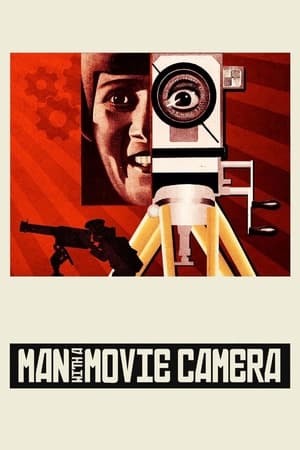
Man with a Movie Camera(ru)
1929-05-12
A cameraman wanders around with a camera slung over his shoulder, documenting urban life with dazzling inventiveness.
0%
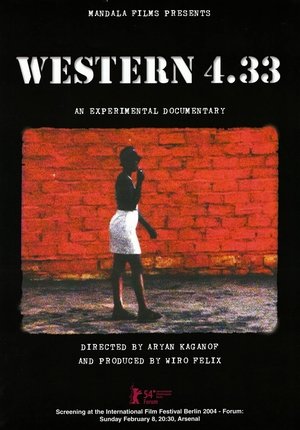
Western 4.33(en)
2001-11-16
Vertiginous documentary, shot in effective black-and-white, treats two painful histories. The first is a love story about a truck driver who, on his way from Johannesburg (South Africa) to Luderitz (Namibia), is haunted by thoughts of his girlfriend and their recently severed relationship. His memories are expressed in an often recurring scene, in which songs by Alec Empire, Macy Gray and Robert Schumann roughly tell the story. This small history is alternated with the tragic fate of the Namibian Heroro people, many thousands of whom died early last century in concentration camps that had been set up by the German colonisers near Luderitz. The depiction of this history is cruder and more poignant, with slanting frames, odd camera angles and a multi-layered sound sculpture. The dilapidated barracks and officers' quarters are the last remnants of the miscarried, so-called civilisation projects in Africa.
0%
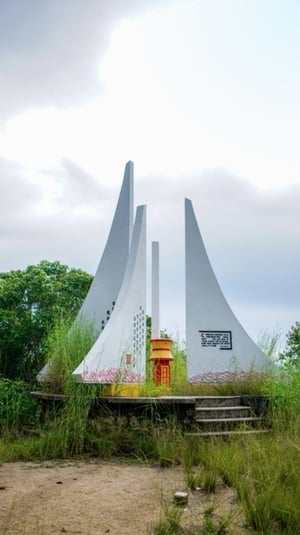
The Island(en)
2017-03-17
The Island is a short film shot entirely on Pulau Bidong, an island off the coast of Malaysia that became the largest and longest-operating refugee camp after the Vietnam War. The artist and his family were some of the 250,000 people who inhabited the tiny island between 1978 and 1991; it was once one of the most densely populated places in the world. After the United Nations High Commissioner for Refugees shuttered the camp in 1991, Pulau Bidong became overgrown by jungle, filled with crumbling monuments and relics. The film takes place in a dystopian future in which the last man on earth - having escaped forced repatriation to Vietnam - finds a United Nations scientists who has washed ashore after teh world’s last nuclear battle. By weaving together footage from Bidong’s past with a narrative set in its future, Nguyen questions the individual’s relationship to history, trauma, nationhood, and displacement.