Loading Page

1919 - Fiume, Città di Vita(2019)
Status: Released
Date: 2019-09-25
0%
0 Votes
Time: 0h 58m
Overview:
A country torn apart by the First World War. A people mourning over 650,000 fallen in the trenches. Politicians humiliated at the Versailles peace table. A poet-soldier who draws crowds to every rally. A city that becomes an emblem of irredentist and nationalist claims. It was in this Italy that the Fiume enterprise began on 12 September 1919: the adventure of Grabiele d'Annunzio and a handful of legionnaires who set out from Ronchi in Friuli, against the will of the established power, to occupy the Adriatic city and annex it to Italy, establish the Regency of Carnaro, and found a 'myth' destined to influence Italian and international culture and politics, aesthetics and vocabulary, well beyond the Twenty Years of Fascism.
Languages: Italian.
Countries:
Italy
ProductionCompanies: 
Movie: 1919 - Fiume, Città di Vita
Top 5 Billed Cast
HomePage
Overview
A country torn apart by the First World War. A people mourning over 650,000 fallen in the trenches. Politicians humiliated at the Versailles peace table. A poet-soldier who draws crowds to every rally. A city that becomes an emblem of irredentist and nationalist claims. It was in this Italy that the Fiume enterprise began on 12 September 1919: the adventure of Grabiele d'Annunzio and a handful of legionnaires who set out from Ronchi in Friuli, against the will of the established power, to occupy the Adriatic city and annex it to Italy, establish the Regency of Carnaro, and found a 'myth' destined to influence Italian and international culture and politics, aesthetics and vocabulary, well beyond the Twenty Years of Fascism.
Release Date
2019-09-25
Average
0
Rating:
0.0 startsTagline
Genres
Languages:
ItalianoKeywords
Recommendations Movies
64%
Why We Fight: Prelude to War(en)
1942-05-27
Prelude to War was the first film of Frank Capra's Why We Fight propaganda film series, commissioned by the Pentagon and George C. Marshall. It was made to convince American troops of the necessity of combating the Axis Powers during World War II. This film examines the differences between democratic and fascist states.
78%
They Shall Not Grow Old(en)
2018-11-09
A documentary about World War I with never-before-seen footage to commemorate the centennial of Armistice Day, and the end of the war.
75%
The War on Democracy(en)
2007-06-15
Set both in Latin America and the United States, the film explores the historic and current relationship of Washington with countries such as Venezuela, Bolivia and Chile. Pilger says that the film "...tells a universal story... analysing and revealing, through vivid testimony, the story of great power behind its venerable myths. It allows us to understand the true nature of the so-called "war on terror". According to Pilger, the film’s message is that the greed and power of empire is not invincible and that people power is always the "seed beneath the snow".
65%
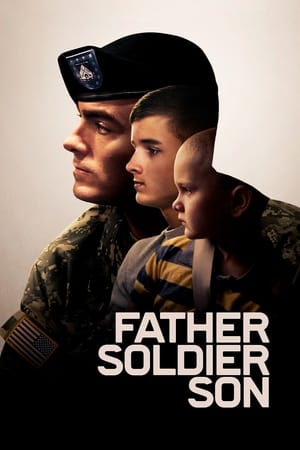
Father Soldier Son(en)
2020-04-15
When Sgt. First Class Brian Eisch is critically wounded in Afghanistan, it sets him and his sons on a journey of love, loss, redemption and legacy.

61%
The Battle of San Pietro(en)
1945-05-03
This documentary movie is about the battle of San Pietro, a small village in Italy. Over 1,100 US soldiers were killed while trying to take this location, that blocked the way for the Allied forces from the Germans. Preserved by the Academy Film Archive in 2005.
82%
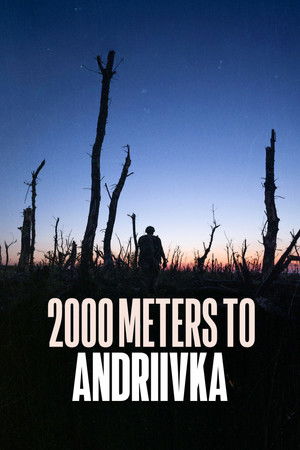
2000 Meters to Andriivka(en)
2025-07-23
Amid the failing counteroffensive, a journalist follows a Ukrainian platoon on their mission to traverse one mile of heavily fortified forest and liberate a strategic village from Russian occupation. But the farther they advance through their destroyed homeland, the more they realize that this war may never end.
72%
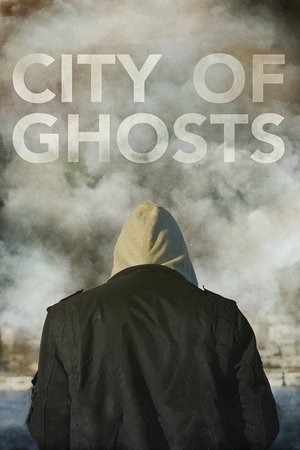
City of Ghosts(en)
2017-07-14
With unprecedented access, this documentary follows the extraordinary journey of “Raqqa is Being Slaughtered Silently”—a group of anonymous citizen journalists who banded together after their homeland was overtaken by ISIS—as they risk their lives to stand up against one of the greatest evils in the world today.
63%
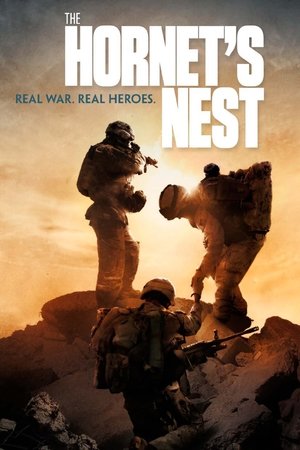
The Hornet's Nest(en)
2014-05-09
Armed only with their cameras, Peabody and Emmy Award-winning conflict Journalist Mike Boettcher, and his son, Carlos, provide unprecedented access into the longest war in U.S. history: they are embed with U.S. troops during nine days of intense combat in Afghanistan.
66%
The Age of Stupid(en)
2009-09-21
Pete Postlethwaite stars as a man living alone in the devastated future world of 2055, looking at old footage from 2008 and asking: why didn’t we stop climate change when we had the chance?
79%
Five Came Back(en)
2017-03-31
The extraordinary story of how Hollywood changed World War II – and how World War II changed Hollywood, through the interwoven experiences of five legendary filmmakers who went to war to serve their country and bring the truth to the American people: John Ford, William Wyler, John Huston, Frank Capra, and George Stevens. Based on Mark Harris’ best-selling book, “Five Came Back: A Story of Hollywood and the Second World War.”

76%
Night Will Fall(en)
2014-06-07
When Allied forces liberated the Nazi concentration camps in 1944-45, their terrible discoveries were recorded by army and newsreel cameramen, revealing for the first time the full horror of what had happened. Making use of British, Soviet and American footage, the Ministry of Information’s Sidney Bernstein (later founder of Granada Television) aimed to create a documentary that would provide lasting, undeniable evidence of the Nazis’ unspeakable crimes. He commissioned a wealth of British talent, including editor Stewart McAllister, writer and future cabinet minister Richard Crossman – and, as treatment advisor, his friend Alfred Hitchcock. Yet, despite initial support from the British and US Governments, the film was shelved, and only now, 70 years on, has it been restored and completed by Imperial War Museums under its original title "German Concentration Camps Factual Survey".
66%
Korengal(en)
2014-05-30
Korengal picks up where Restrepo left off; the same men, the same valley, the same commanders, but a very different look at the experience of war.
82%
For Sama(en)
2019-07-26
A love letter from a young mother to her daughter, the film tells the story of Waad al-Kateab’s life through five years of the uprising in Aleppo, Syria as she falls in love, gets married and gives birth to Sama, all while cataclysmic conflict rises around her. Her camera captures incredible stories of loss, laughter and survival as Waad wrestles with an impossible choice– whether or not to flee the city to protect her daughter’s life, when leaving means abandoning the struggle for freedom for which she has already sacrificed so much.
77%
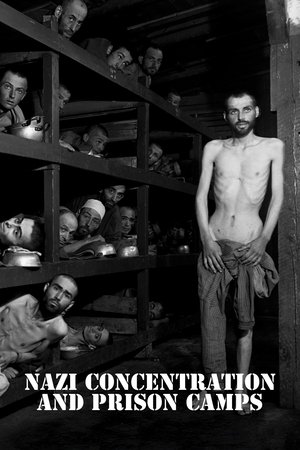
Nazi Concentration Camps(en)
1945-11-29
Produced and presented as evidence at the Nuremberg war crimes trial of Hermann Göring and twenty other Nazi leaders, this film consists primarily of dead and surviving prisoners and of facilities used to kill and torture during the World War II.
73%
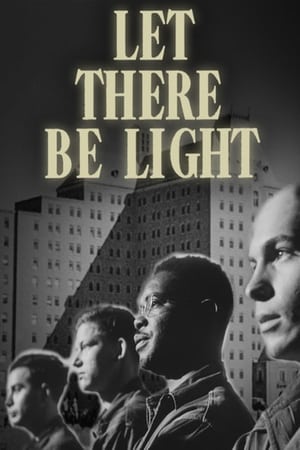
Let There Be Light(en)
1946-12-16
The final entry in a trilogy of films produced for the U.S. government by John Huston. Some returning combat veterans suffer scars that are more psychological than physical. This film follows patients and staff during their treatment. It deals with what would now be called PTSD, but at the time was categorised as psychoneurosis or shell-shock. Government officials deemed this 1946 film counterproductive to postwar efforts; it was not shown publicly until 1981.
67%
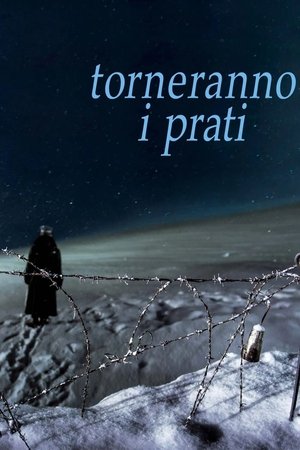
Greenery Will Bloom Again(it)
2014-11-06
World War I, Italian north-eastern front after the 1917 bloody battles on the Altipiano. A group of soldiers face the difficulty of war in a story that unfolds in the space of one night. Events follow one after the other without any kind of pattern: the peaceful mountains suddenly become a place where men die. But every story told in this film is a true story.
72%
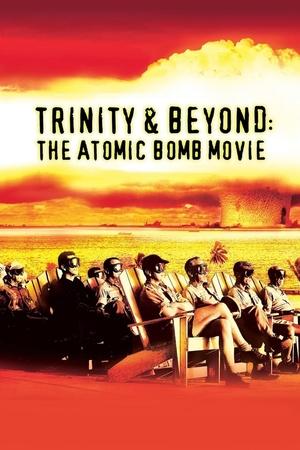
Trinity and Beyond: The Atomic Bomb Movie(en)
1995-09-29
"Trinity and Beyond" is an unsettling yet visually fascinating documentary presenting the history of nuclear weapons development and testing between 1945-1963. Narrated by William Shatner and featuring an original score performed by the Moscow Symphony Orchestra, this award-winning documentary reveals previously unreleased and classified government footage from several countries.
64%
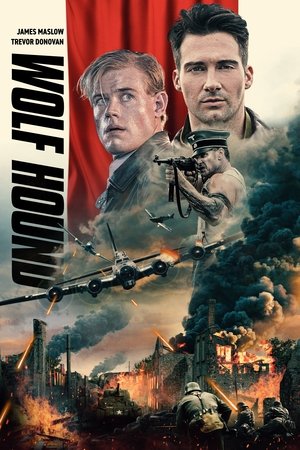
Wolf Hound(en)
2022-06-03
Inspired by the real-life German special operations unit KG 200 that shot down, repaired, and flew Allied aircraft as Trojan horses, "Wolf Hound" takes place in 1944 German-occupied France and follows the daring exploits of Jewish-American fighter pilot Captain David Holden. Ambushed behind enemy lines, Holden must rescue a captured B-17 Flying Fortress crew, evade a ruthless enemy stalking him at every turn, and foil a plot that could completely alter the outcome of World War II.
59%
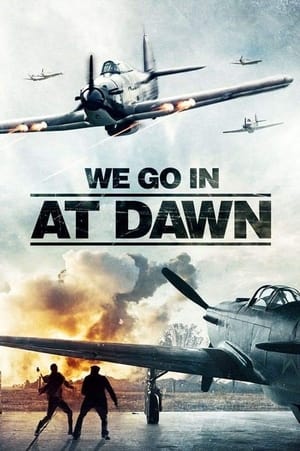
We Go In at Dawn(en)
2020-03-16
When a high-ranking war planner is captured and held in a German prisoner of war camp, a team of specialists take on the dangerous mission of trying to break him out. Trouble is, he doesn't want to be rescued.
82%
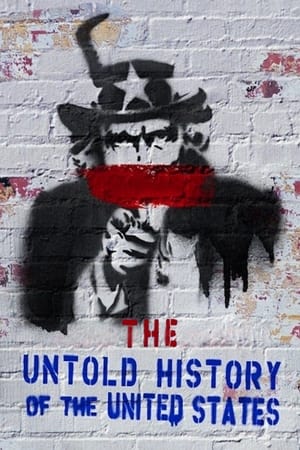
The Untold History Of The United States(en)
2012-11-12
Oliver Stone charts the history of the United States from the Second World War to the present.
Similar Movies
53%
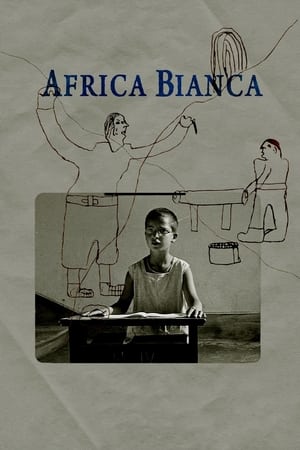
The Imperial Lullaby(it)
2020-03-21
The armies of Fascist Italy conquered Addis Ababa, capital of Abyssinia, in May 1936, thus culminating the African colonial adventure of the ruthless dictator Benito Mussolini, by then lord of Libya, Eritrea and Somalia; a bloody and tragic story told through the naive drawings of Pietro Dall'Igna, an Italian schoolboy born in 1925.
58%
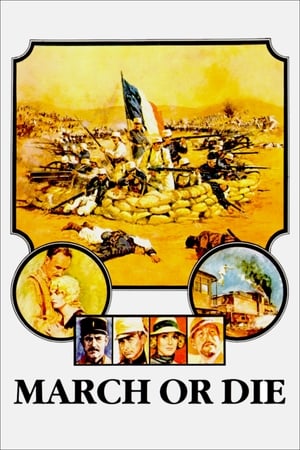
March or Die(en)
1977-09-08
Just after World War I, Major Foster is incorporating new recruits into his French Foreign Legion platoon when he is sent to his former remote outpost located in the French Morocco to protect an archaeological excavation from El Krim, a Rifian leader who intends to unite all local tribes to fight the colonial government…
75%
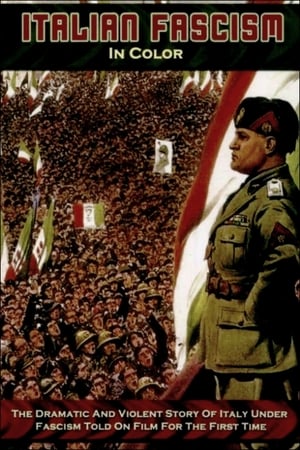
Fascism in Colour(en)
2006-01-01
After the World War I, Mussolini's perspective on life is severely altered; once a willful socialist reformer, now obsessed with the idea of power, he founds the National Fascist Party in 1921 and assumes political power in 1922, becoming the Duce, dictator of Italy. His success encourages Hitler to take power in Germany in 1933, opening the dark road to World War II. (Originally released as a two-part miniseries. Includes colorized archival footage.)
60%
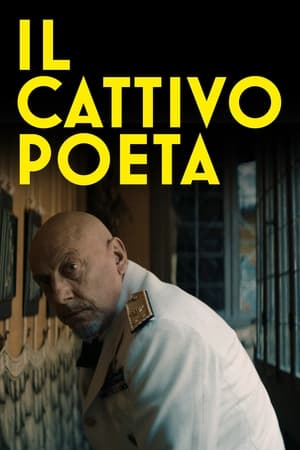
The Bad Poet(it)
2021-05-20
1936. Giovanni Comini, the youngest Federal in Fascist Italy, is summoned to Rome for a delicate mission: to surveil aging national poet Gabriele D'Annunzio, whose increasingly restless behavior Mussolini fears could damage his alliance with Nazi Germany. However, after spending time with D'Annunzio, Comini finds himself torn between loyalty to the Party and his fascination with the poet, who will put his burgeoning career at risk.

65%
Cinecittà Babilonia: Sex, Drugs and Black Shirts(it)
2017-06-14
The story of Italian cinema under Fascism, a sophisticated film industry built around the founding of the Cinecittà studios and the successful birth of a domestic star system, populated by very peculiar artists among whom stood out several beautiful, magnetic, special actresses; a dark story of war, drugs, sex, censorship and tragedy.
64%
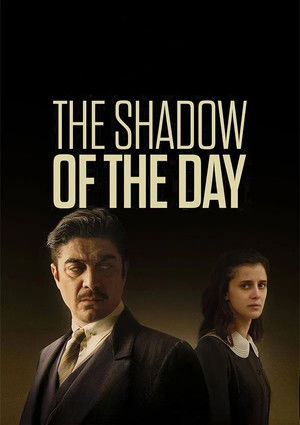
The Shadow of the Day(it)
2022-02-24
In 1938 Italy, after Jews are banned from public life, fascist-abiding restaurateur Luciano nonetheless believes he can still live by his own rules. Everything changes when Anna, a girl with a dangerous secret, begins working at his business.
67%
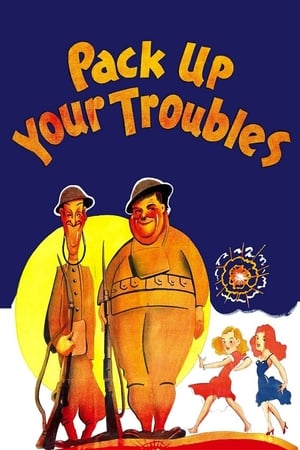
Pack Up Your Troubles(en)
1932-09-16
The story begins in 1917 with Stan and Ollie being drafted into the U.S. Army to fight in World War I. While in the Army, the pair befriend a man named Eddie Smith, who is killed by the enemy during a battle. After the war is over, Stan and Ollie venture to New York City, where they begin a quest to reunite Eddie's little daughter with her rightful family. The task proves both monumental and problematic as the boys discover just how many people in New York have the last name Smith.
71%
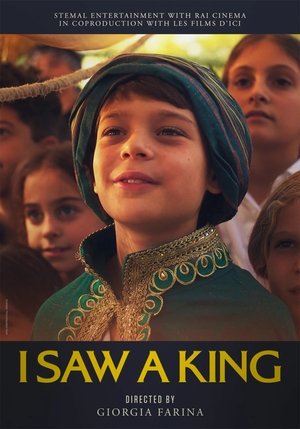
I Saw a King(it)
2025-04-30
1936, in the aftermath of the Ethiopian occupation by Fascist Italy, under the incredulous gaze of the inhabitants of the small town in the Italian province Abraham Imirrù, an ethiopian prince and guerrila fighter is being held prisoner in the local Podesta garden's aviary. But for little Emilio, local recently force enlisted and reality-dissociated Balilla, he is Sandokan, the literal Salgari's character ...and he will be his hero.
72%
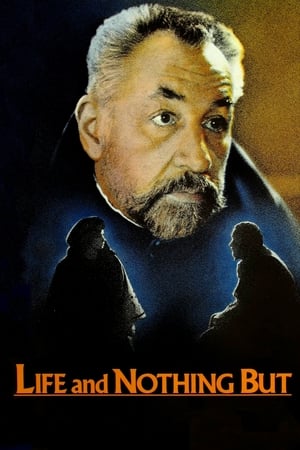
Life and Nothing But(fr)
1989-09-06
In 1920, Major Dellaplane, a man of honor and ethics, searches for missing French soldiers. He meets Madame Irène de Courtil, a politically connected Parisian, and their paths cross.
65%
The March on Rome(it)
2022-10-20
The fascinating story of the rise to power of dictator Benito Mussolini (1883-1945) in Italy in 1922 and how fascism marked the fate of the entire world in the dark years to come.
68%
The Water Diviner(en)
2014-12-25
In 1919, Australian farmer Joshua Connor travels to Turkey to discover the fate of his three sons, reported missing in action. Holding on to hope, Joshua must travel across the war-torn landscape to find the truth and his own peace.
78%
See You Up There(fr)
2017-10-25
In November 1918, a few days before the Armistice, when Lieutenant Pradelle orders a senseless attack, he causes a useless disaster; but his outrageous act also binds the lives of two soldiers who have nothing more in common than the battlefield: Édouard saves Albert, although at a high cost. They become companions in misfortune who will attempt to survive in a changing world. Pradelle, in his own way, does the same.

60%
Love & Loyalty: The Making of 'The Remains of the Day'(en)
2001-10-22
The filmmakers and lead actors of The Remains of the Day (1993) discuss how they came to make the film, and the subtle power of its execution.
0%
The Killers of Mussolini(en)
1959-06-04
As the Salo Republic crumbles around him, Mussolini, along with his mistress and several of his ministers flee with retreating Nazi soldiers, but are caught at the town of Dongo by red partisans. All are brutally executed without trial.
77%
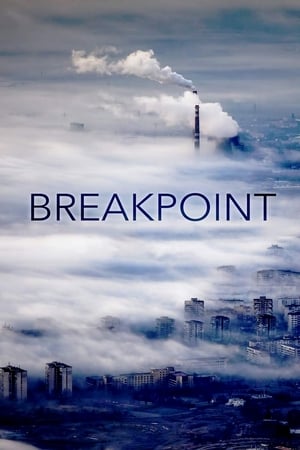
Breakpoint: A Counter History of Progress(fr)
2019-07-14
An account of the last two centuries of the Anthropocene, the Age of Man. How human beings have progressed so much in such a short time through war and the selfish interests of a few, belligerent politicians and captains of industry, damaging the welfare of the majority of mankind, impoverishing the weakest, greedily devouring the limited resources of the Earth.
64%
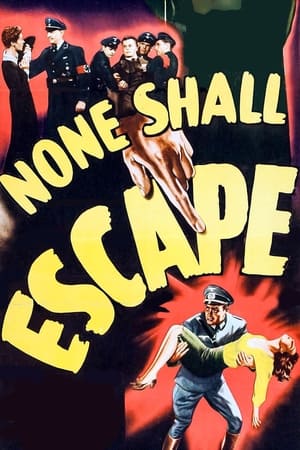
None Shall Escape(en)
1944-02-03
Through flashbacks going as far back as the end of WW1, the story of a Nazi war criminal is exposed during his trial.
67%
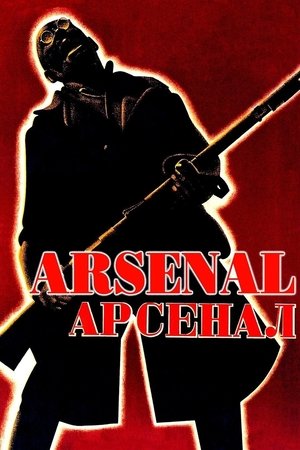
Arsenal(ru)
1929-02-25
A soldier returns to Kyiv after surviving a train crash and encounters clashes between nationalists and collectivists. The story of the suppression of the Bolshevik uprising at the Arsenal factory in Kyiv by the Central Council troops.
76%
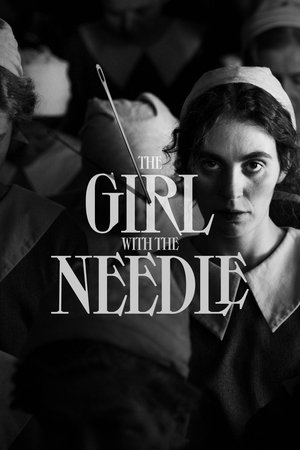
The Girl with the Needle(da)
2024-09-06
Struggling to survive in post-WWI Copenhagen, a newly unemployed and pregnant young woman is taken in by a charismatic elder to help run an underground adoption agency. The two form an unexpected bond, until a sudden discovery changes everything.