Loading Page
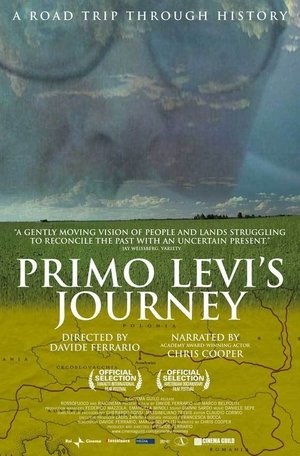
Primo Levi's Journey(2006)
Status: Released
Date: 2006-09-12
59%
6 Votes
Time: 1h 31m
Overview:
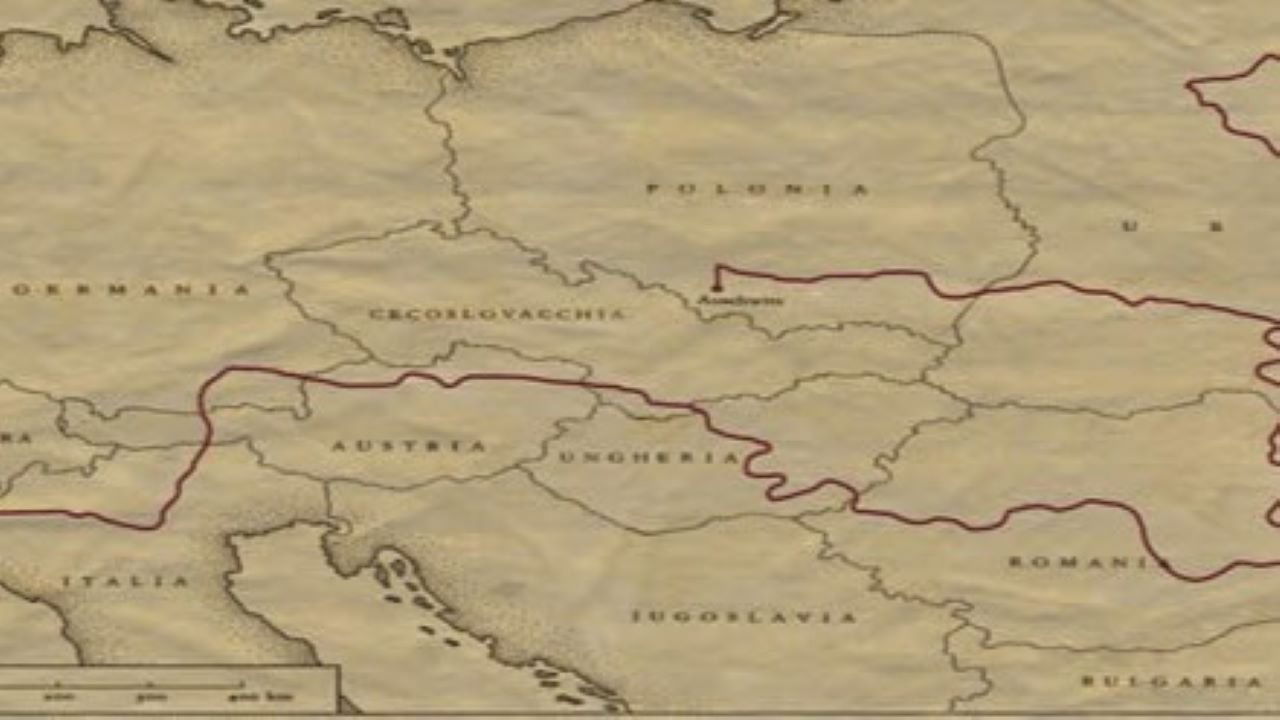
In February, 1945, Primo Levi (1919-1987) and other Auschwitz survivors set off for home. The journey took more then eight months. Sixty years later, a film crew retraces Levi's steps. Levi's words, mainly from "The Truce" (1963), tell us what he experienced. In turn, we see Poland's hollow post-war factories, nationalism in the Ukraine, Soviet-style Communism in Belarus, the abandoned town of Prypiat (Chernobyl), poverty and emigration from Moldavia, Italian factories in Romania, and on across Hungary and Slovakia to Munich where Levi's rage found no listeners. Then home to Turin. An aged Mario Rigoni Stern remembers his friend. What has changed? Some issues of the war remain unsettled.
Languages: English, Italian.
Countries:
Italy
Revenue: $166,215.00
ProductionCompanies: 
Adriana Chiesa Enterprises
Rossofuoco
Movie: Primo Levi's Journey
Top 4 Billed Cast

Andrzej Wajda
Self
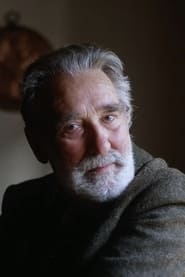
Mario Rigoni Stern
Self

Chris Cooper
Narrator (voice) (U.S. version)

Umberto Orsini
Narrator (voice) (Italian version)
Loading Photos
Photo Type :Total items
Recommendations Movies
73%
The Zookeeper's Wife(en)
2017-03-24
The account of keepers of the Warsaw Zoo, Jan and Antonina Zabinski, who helped save hundreds of people and animals during the Nazi invasion.

73%
The Courageous Heart of Irena Sendler(en)
2009-04-19
Irena Sendler is a Catholic social worker who has sympathized with the Jews since her childhood, when her physician father died of typhus contracted while treating poor Jewish patients. When she initially proposes saving Jewish children from the Warsaw Ghetto, her idea is met with skepticism by fellow workers, her parish priest, and even her own mother Janina.
69%
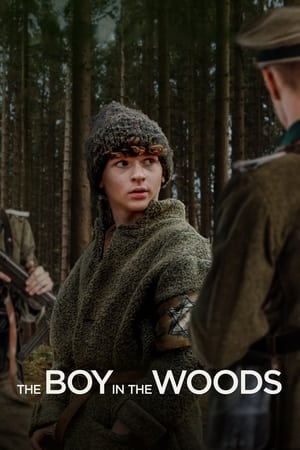
The Boy in the Woods(en)
2023-09-19
The remarkable true-life survival story of a Jewish boy hiding and being hunted in the forests of Nazi-occupied Eastern Europe, based on Maxwell Smart's memoir.
61%
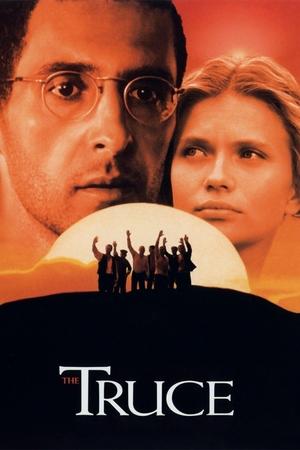
The Truce(it)
1997-02-14
After the liberation of Auschwitz, an Italian prisoner of War begins a torturous voyage home to Turin, through a Europe caught between war and peace.

73%
Sophie's Choice(en)
1982-12-08
Stingo, a young writer, moves to Brooklyn in 1947 to begin work on his first novel. As he becomes friendly with Sophie and her lover Nathan, he learns that she is a Holocaust survivor. Flashbacks reveal her harrowing story, from pre-war prosperity to Auschwitz. In the present, Sophie and Nathan's relationship increasingly unravels as Stingo grows closer to Sophie and Nathan's fragile mental state becomes ever more apparent.
75%
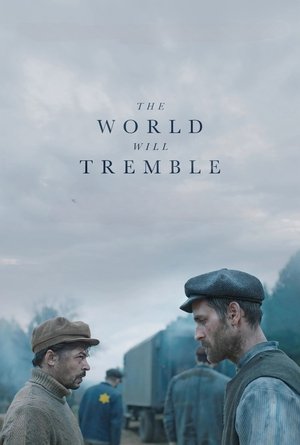
The World Will Tremble(en)
2025-03-14
The incredible, untold true story of how a group of prisoners attempt a seemingly impossible escape from the first Nazi death camp in order to provide the first eyewitness account of the Holocaust.
73%
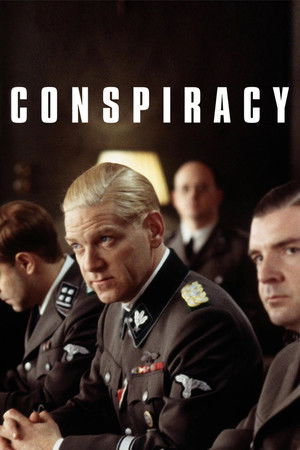
Conspiracy(en)
2001-05-19
At the Wannsee Conference on January 20, 1942, senior Nazi officials meet to determine the manner in which the so-called "Final Solution to the Jewish Question" can be best implemented.
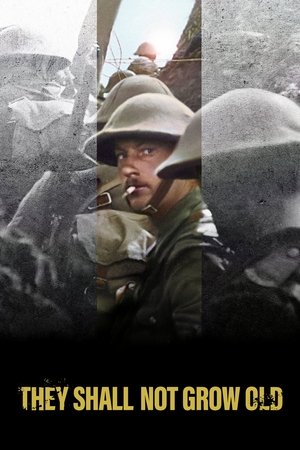
78%
They Shall Not Grow Old(en)
2018-11-09
A documentary about World War I with never-before-seen footage to commemorate the centennial of Armistice Day, and the end of the war.
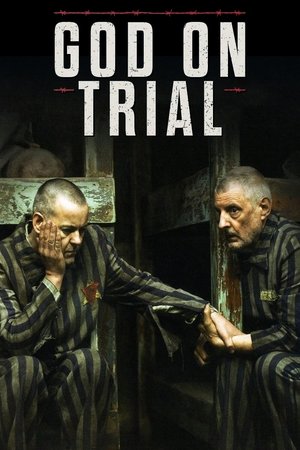
68%
God on Trial(en)
2008-09-03
In the Jewish tradition of arguing with God, Jewish prisoners in Auschwitz decide to put God on Trial.
66%
The Grey Zone(en)
2001-09-13
The story of Auschwitz's twelfth Sonderkommando — one of the thirteen consecutive "Special Squads" of Jewish prisoners placed by the Nazis in the excruciating moral dilemma of assisting in the extermination of fellow Jews in exchange for a few more months of life.
61%
Adam Resurrected(en)
2008-08-08
After again attempting to commit murder, a Jewish man with a mysterious past and extraordinary intelligence, charisma, and body control returns to an insane asylum, where he makes a startling discovery.
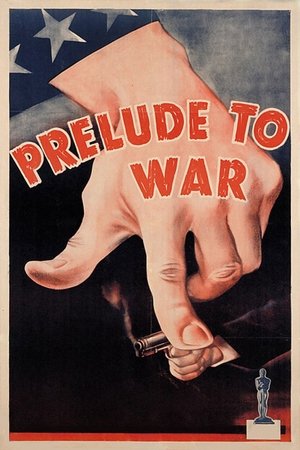
64%
Why We Fight: Prelude to War(en)
1942-05-27
Prelude to War was the first film of Frank Capra's Why We Fight propaganda film series, commissioned by the Pentagon and George C. Marshall. It was made to convince American troops of the necessity of combating the Axis Powers during World War II. This film examines the differences between democratic and fascist states.
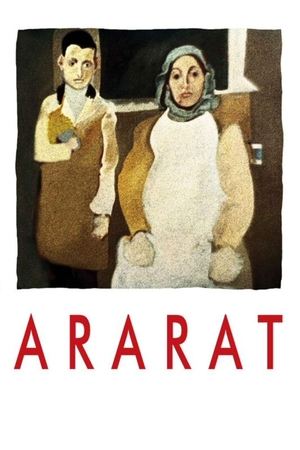
61%
Ararat(en)
2002-05-20
Interrogated by a customs officer, a young man recounts how his life was changed during the making of a film about the Armenian genocide.
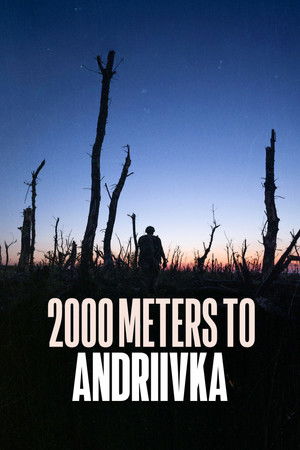
82%
2000 Meters to Andriivka(en)
2025-07-23
Amid the failing counteroffensive, a journalist follows a Ukrainian platoon on their mission to traverse one mile of heavily fortified forest and liberate a strategic village from Russian occupation. But the farther they advance through their destroyed homeland, the more they realize that this war may never end.
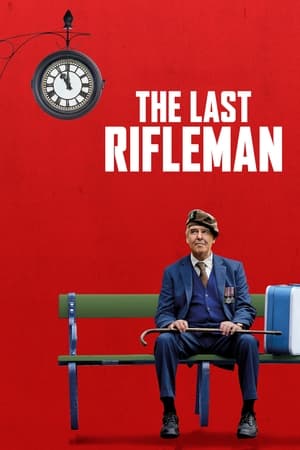
66%
The Last Rifleman(en)
2023-12-07
A WWII veteran escapes his care home in Northern Ireland and embarks on an arduous but inspirational journey to France to attend the 75th anniversary of the D-Day landings, finding the courage to face the ghosts of his past.
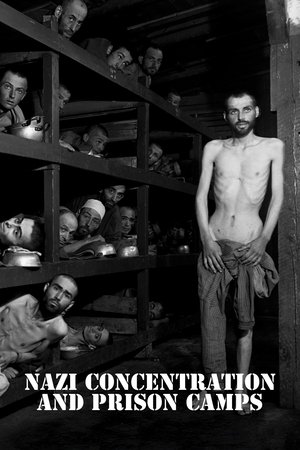
77%
Nazi Concentration Camps(en)
1945-11-29
Produced and presented as evidence at the Nuremberg war crimes trial of Hermann Göring and twenty other Nazi leaders, this film consists primarily of dead and surviving prisoners and of facilities used to kill and torture during the World War II.
75%
The War on Democracy(en)
2007-06-15
Set both in Latin America and the United States, the film explores the historic and current relationship of Washington with countries such as Venezuela, Bolivia and Chile. Pilger says that the film "...tells a universal story... analysing and revealing, through vivid testimony, the story of great power behind its venerable myths. It allows us to understand the true nature of the so-called "war on terror". According to Pilger, the film’s message is that the greed and power of empire is not invincible and that people power is always the "seed beneath the snow".

76%
Night Will Fall(en)
2014-06-07
When Allied forces liberated the Nazi concentration camps in 1944-45, their terrible discoveries were recorded by army and newsreel cameramen, revealing for the first time the full horror of what had happened. Making use of British, Soviet and American footage, the Ministry of Information’s Sidney Bernstein (later founder of Granada Television) aimed to create a documentary that would provide lasting, undeniable evidence of the Nazis’ unspeakable crimes. He commissioned a wealth of British talent, including editor Stewart McAllister, writer and future cabinet minister Richard Crossman – and, as treatment advisor, his friend Alfred Hitchcock. Yet, despite initial support from the British and US Governments, the film was shelved, and only now, 70 years on, has it been restored and completed by Imperial War Museums under its original title "German Concentration Camps Factual Survey".
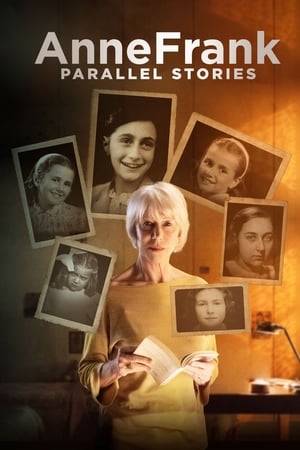
70%
#AnneFrank. Parallel Stories(en)
2019-10-18
One single Anne Frank moves us more than the countless others who suffered just as she did but whose faces have remained in the shadows-Primo Levi. The Oscar®-winning Helen Mirren will introduce audiences to Anne Frank's story through the words in her diary. The set will be her room in the secret refuge in Amsterdam, reconstructed in every detail by set designers from the Piccolo Theatre in Milan. Anne Frank this year would have been 90 years old. Anne's story is intertwined with that of five Holocaust survivors, teenage girls just like her, with the same ideals, the same desire to live: Arianna Szörenyi, Sarah Lichtsztejn-Montard, Helga Weiss and sisters Andra and Tatiana Bucci. Their testimonies alternate with those of their children and grandchildren.
Similar Movies
62%
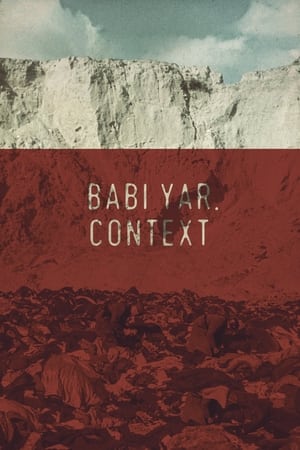
Babi Yar. Context(ru)
2021-11-04
Nazi troops massacre 30,000 Jews over a three-day period in September 1941. Babyn Yar ravine in Kyiv, Ukraine.

67%
The Life and Loves of Beethoven(fr)
1937-01-15
Lyrical biography of the classical composer, depicted as a romantic hero, an accursed artist.
40%
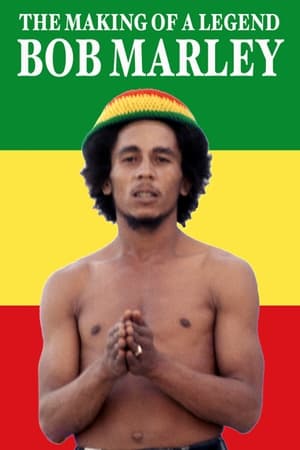
Bob Marley: The Making of a Legend(en)
2011-10-10
Based on footage shot in the early seventies and lost for more than thirty years, we see and hear the young Bob Marley before he was famous. The film shows us the Wailers' first rehearsal, when the idea of a Jamaican supergroup was still just a dream. Sit in as the albums of Bob Marley and the Wailers brought reggae music and Rasta consciousness to the world, starting a revolution that would change rock music and contemporary culture.

80%
Thomas Schütte - Ich bin nicht allein(de)
2023-06-29
Thomas Schütte's work is always about people. His works have gravity and lightness, but they also show damage, power relations, fears, dependencies, evil, weird and beautiful figures. Schütte studied from 1973 to 1981 at the Düsseldorf Art Academy under Fritz Schwegler and Gerhard Richter. Today, he is one of the most important contemporary artists and is represented in all major museums and collections worldwide.
100%
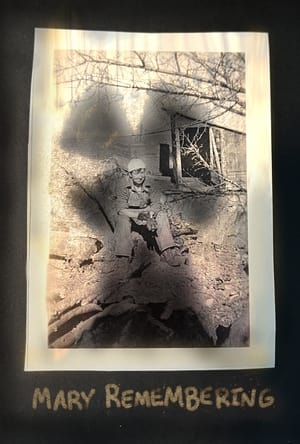
Mary Remembering(en)
2023-06-30
A short animated documentary featuring archival recordings of the filmmaker's Volga-German Great-Great-Grandmother, Mary Frank Lind, in which she recalls key memories of childhood—her father's windmill, warm rains, wolf sightings, bone trading, and her passion for carpentry, which broke gender norms but was supported by her father.

70%
The Girl with the Instagram(he)
2019-05-01
Nagyvárad, Hungary, 1944. From February to June, Eva Heyman, a 13-year-old Jewish girl, wrote a diary describing the harsh conditions of her life under Nazi occupation. How would she have told her story if she had used Instagram?

52%
Emmanuelle: A Hard Look(en)
2001-01-01
Documentary about the Emmanuelle movies, looking at their making as well as their social and cultural impact.
73%
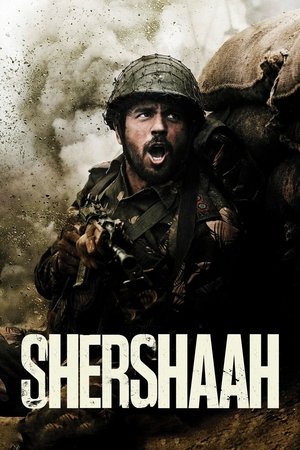
Shershaah(hi)
2021-08-12
Inspired by the life of Captain Vikram Batra (PVC), the film celebrates his bravery, valiant spirit and honors his invaluable sacrifice during the Kargil War of 1999, at the age of 24.
51%
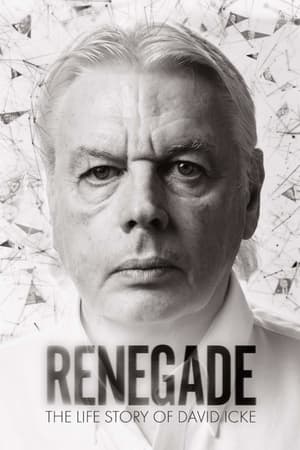
Renegade: The Life Story of David Icke(en)
2019-05-03
A Feature Documentary, featuring David Icke The 'mad man' who has been proved right again and again and again. David Icke has been warning for nearly 30 years of a coming global Orwellian state in which a tiny few would enslave humanity through control of finance, government, media and a military-police Gestapo overseeing 24/7 surveillance of a micro-chipped population. They called him 'crazy', 'insane', a 'lunatic', and he was subjected to decades of ridicule, dismissal and abuse. Oh, but how things change. Today his books are read all over the world and his speaking events are watched by thousands on every continent. Why? Because what he has been so derided for saying is now happening in world events and even mainstream scientists are concluding that reality is indeed a simulation. Almost every day something that David Icke said long ago is supported by happenings and evidence. As Mahatma Gandhi said: 'First they ignore you, then they laugh at you, then they fight you, then you win.

71%
Sissi: The Fateful Years of an Empress(de)
1957-12-18
After a wonderful time in Hungary Sissi falls extremely ill and must retreat to a Mediterranean climate to rest. The young empress’ mother takes her from Austria to recover in Madeira.

0%
Esther Williams: Hollywood's Mermaid(fr)
2024-08-11
The story of Esther Williams is that of an improbable encounter. That of the glamorous Hollywood of the 1940s with a swimming champion. A meeting that gave birth to the most kitsch and flamboyant genre films in Technicolor: the Aqua-musicals! A dive into the troubled waters of post-war Hollywood, where only her qualities as an athlete allow an extraordinary actress to fight to emancipate herself and avoid the traps of the predators who lurk around her

74%
Sid & Judy(en)
2019-06-26
Explore the dramatic career and personal struggles of the talented and tragically short-lived entertainer Judy Garland through rare concert footage, never-heard-before voice recordings and personal photos.

70%
George Michael: Freedom Uncut(en)
2022-06-16
Freedom Uncut chronicles the tumultuous — yet creatively fruitful — period of George Michael’s life and career following the release of his 1987 solo debut, Faith, then through the creation and release of his 1990 follow-up Listen Without Prejudice, Vol. 1. Along with documenting his creative efforts during this period, the doc will also explore his relationship with Anselmo Feleppa — who died from AIDS-related complications — as well as the death of Michael’s mother.

60%
The Dreamlife of Georgie Stone(en)
2022-06-09
Sharing her journey from child to teen activist, Georgie Stone looks back at her life and historic fight for transgender rights in this documentary.

0%
OKINAWA PHILADELPHIA(en)
2024-08-15
An Okinawan photographer, Mao Ishikawa was 33 years old when she crossed the ocean to Philadelphia in order to photograph the life of her friend, Myron Carr, a former US marine whom she met during his service in Okinawa in the 1970s. The subsequent photo book, “Life in Philly”, is filled with raw and vivid images, capturing the atmosphere and the culture of the predominantly African American neighborhood of downtown Philadelphia in the late 80s. This film looks back on those days, bringing Myron to remembrance as Mao and his surviving family try to find the missing pieces.
75%
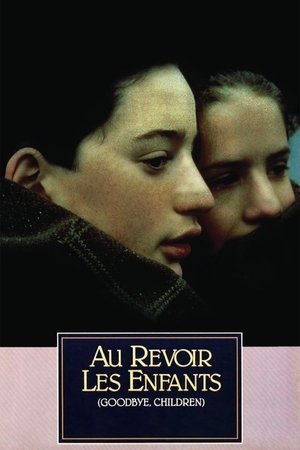
Au Revoir les Enfants(fr)
1987-10-07
Au revoir les enfants tells a heartbreaking story of friendship and devastating loss concerning two boys living in Nazi-occupied France. At a provincial Catholic boarding school, the precocious youths enjoy true camaraderie—until a secret is revealed. Based on events from writer-director Malle’s own childhood, the film is a subtle, precisely observed tale of courage, cowardice, and tragic awakening.
72%
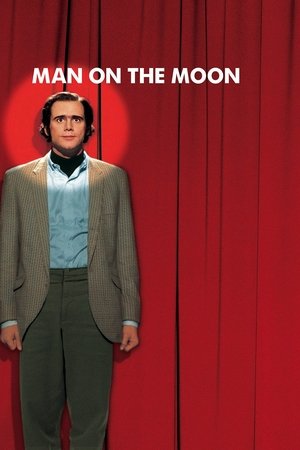
Man on the Moon(en)
1999-12-22
The story of the life and career of eccentric avant-garde comedian, Andy Kaufman.
75%
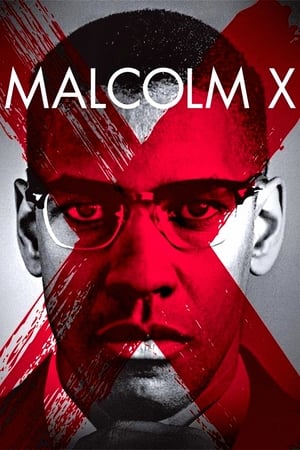
Malcolm X(en)
1992-11-18
A tribute to the controversial black activist and leader of the struggle for black liberation. He hit bottom during his imprisonment in the '50s, he became a Black Muslim and then a leader in the Nation of Islam. His assassination in 1965 left a legacy of self-determination and racial pride.

0%
Salir de casa(es)
2016-01-15
After almost thirty years of his career, the musician Fran Nixon joins film director David Trueba for a travel around Spain in which they'll talk about it and meet some friends.