Loading Page


Navrácený svět(1950)
Status: Released
Date: 1950-12-31
0%
0 Votes
Overview:
A documentary about a vision care school that enables visually impaired children to learn the skills necessary for a full life.
Languages: Czech.
Countries:
Czechoslovakia
ProductionCompanies:
Studio dokumentárních filmů Praha
Movie: Navrácený svět
HomePage
Overview
A documentary about a vision care school that enables visually impaired children to learn the skills necessary for a full life.
Release Date
1950-12-31
Average
0
Rating:
0.0 startsTagline
Genres
Languages:
ČeskýKeywords
Recommendations Movies
72%
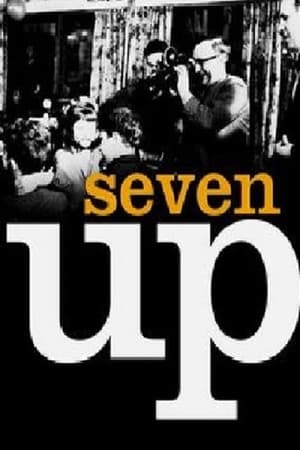
Seven Up!(en)
1964-05-05
A group of British children aged 7 from widely ranging backgrounds are interviewed about a range of subjects. The filmmakers plan to re-interview them at 7 year intervals to track how their lives and attitudes change as they age.

64%
Ex Libris: The New York Public Library(en)
2017-09-13
A documentary about how a dominant cultural and demographic institution both sustains their traditional activities and adapts to the digital revolution.

65%
Downloaded(en)
2013-06-20
A documentary that explores the downloading revolution; the kids that created it, the bands and the businesses that were affected by it, and its impact on the world at large.

80%
My Mom Jayne(en)
2025-06-20
Through deeply personal interviews with her siblings and an examination of the photographs, letters, and belongings left behind, Mariska assembles a new portrait of her mother Jayne Mansfield, an extraordinary and complex woman.
72%
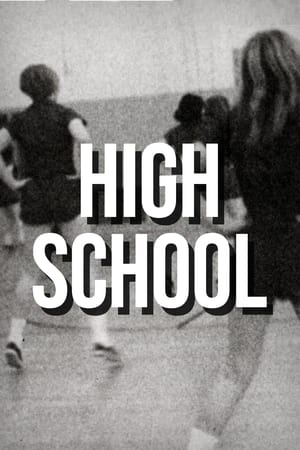
High School(en)
1969-05-14
Documentary filmmaker Frederick Wiseman takes us inside Northeast High School as a fly on the wall to observe the teachers and how they interact with the students.
73%
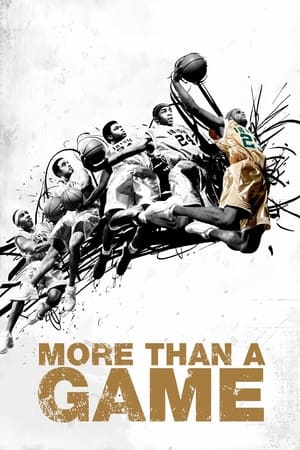
More than a Game(en)
2008-09-06
This documentary follows NBA superstar LeBron James and four of his talented teammates through the trials and tribulations of high school basketball in Ohio and James' journey to fame.

71%
The Class of ‘92(en)
2013-12-01
A detailing of the rise to prominence and global sporting superstardom of six supremely talented young Manchester United football players (David Beckham, Nicky Butt, Ryan Giggs, Paul Scholes, Phil and Gary Neville). The film covers the period 1992-1999, culminating in Manchester United's European Cup triumph.
66%
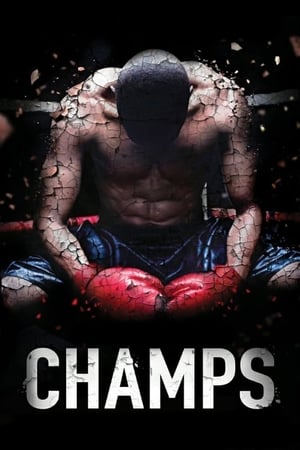
Champs(en)
2015-03-13
A documentary about the sport of boxing, as seen through the eyes of champions Mike Tyson, Evander Holyfield and Bernard Hopkins.
70%
Girl Rising(en)
2013-03-07
Nine filmmakers each profile a young girl from a different part of the world to weave a global tapestry of youth in the 21st century.

60%
Anna Nicole Smith: You Don't Know Me(en)
2023-05-16
From the heights of her modeling fame to her tragic death, this documentary reveals Anna Nicole Smith through the eyes of the people closest to her.

61%
Naqoyqatsi(en)
2002-09-02
A visual montage portrait of our contemporary world dominated by globalized technology and violence.
75%
Struggle: The Life and Lost Art of Szukalski(en)
2018-12-20
Artists in LA discover the work of forgotten Polish sculptor Stanislav Szukalski, a mad genius whose true story unfolds chapter by astounding chapter.
84%
No Half Measures: Creating the Final Season of Breaking Bad(en)
2013-11-26
A documentary about the making of season five of the acclaimed AMC series Breaking Bad.
79%
John Candy: I Like Me(en)
2025-09-04
Those who knew iconic funnyman John Candy best share his story, in their own words, through never-before-seen archival footage, imagery, and interviews.
75%
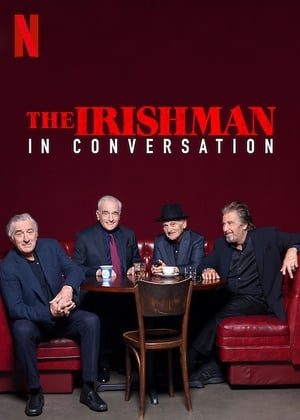
The Irishman: In Conversation(en)
2019-11-27
Martin Scorsese, Robert De Niro, Joe Pesci, and Al Pacino in conversation about The Irishman.

72%
Avatar: The Deep Dive - A Special Edition of 20/20(en)
2022-12-13
An inside look at one of the most anticipated movie sequels ever with James Cameron and cast.

68%
Spider-Man: All Roads Lead to No Way Home(en)
2022-05-03
JB Smoove and Martin Starr host a celebration of 20 years of "Spider-Man" movies, from the Sam Raimi trilogy to Marc Webb's movies and the trio from Jon Watts.
72%
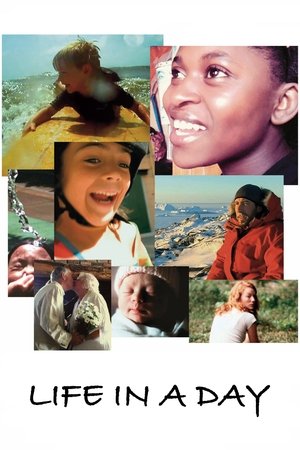
Life in a Day(en)
2011-01-27
A documentary shot by filmmakers all over the world that serves as a time capsule to show future generations what it was like to be alive on the 24th of July, 2010.

70%
Bobby Robson: More Than a Manager(en)
2018-06-06
The definitive portrait of one of sport's most inspirational, influential figures - whose legacy lives on far beyond the football field.
62%
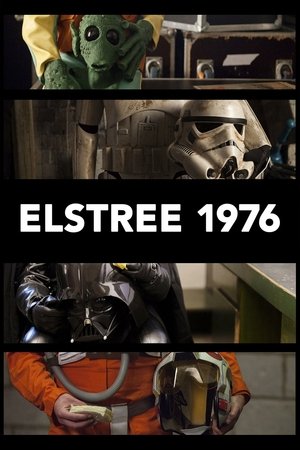
Elstree 1976(en)
2015-10-09
A documentary about ten very different lives connected by having appeared onscreen wearing masks or helmets in Star Wars.
Similar Movies
73%
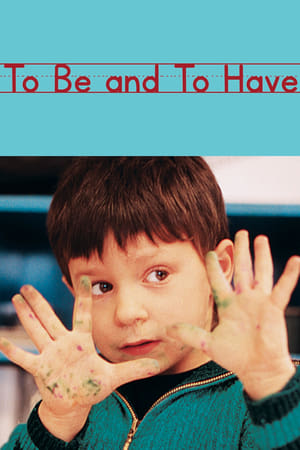
To Be and to Have(fr)
2002-08-28
The documentary's title translates as "to be and to have", the two auxiliary verbs in the French language. It is about a primary school in the commune of Saint-Étienne-sur-Usson, Puy-de-Dôme, France, the population of which is just over 200. The school has one small class of mixed ages (from four to twelve years), with a dedicated teacher, Georges Lopez, who shows patience and respect for the children as we follow their story through a single school year.

0%
34 Days in 2018(en)
2025-07-18
13-year-old Anderson Cefola documents his month-long grounding in 2018 with an old handheld camera he kept.

60%
Writing Life – Annie Ernaux Through the Eyes of High School Students(fr)
2025-08-28
A major figure in contemporary feminism and the first Frenchwoman to win the Nobel Prize for Literature, Annie Ernaux is seen by many as a source of individual and collective emancipation, blending the intimate with the universal. Filmmaker Claire Simon has devoted an original portrait to her, giving students and teachers a voice.
60%
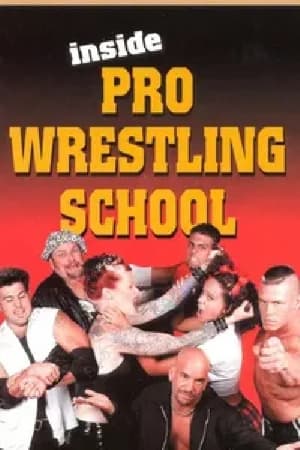
Inside Wrestling School(en)
2000-08-20
A look at one of the most popular forms of entertainment in the United States, professional wrestling.
60%
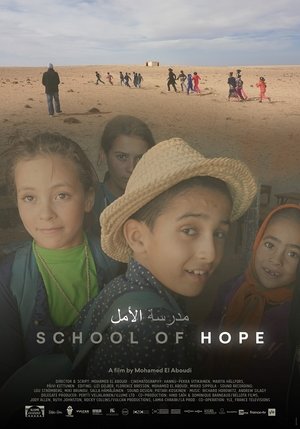
School of Hope(ar)
2020-12-31
In the vast expanse of desert East of Atlas Mountains in Morocco, seasonal rain and snow once supported livestock, but now the drought seems to never end. Hardly a blade of grass can be seen, and families travel miles on foot to get water from a muddy hole in the ground. Yet the children willingly ride donkeys and bicycles or walk for miles across rocks to a "school of hope" built of clay. Following both the students and the teachers in the Oulad Boukais Tribe's community school for over three years, SCHOOL OF HOPE shows students Mohamed, Miloud, Fatima, and their classmates, responding with childish glee to the school's altruistic young teacher, Mohamed. Each child faces individual obstacles - supporting their aging parents; avoiding restrictions from relatives based on traditional gender roles - while their young teacher makes do in a house with no electricity or water.
68%
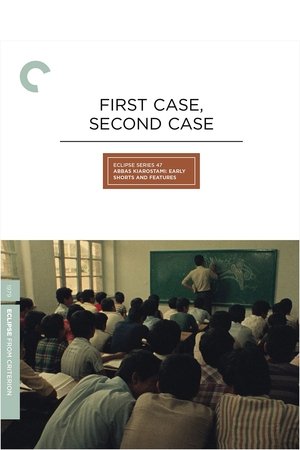
First Case, Second Case(fa)
1979-02-01
A documentary about a teacher who sends a group of pupils out of the classroom when one of them does not own up to talking behind the master's back.
69%
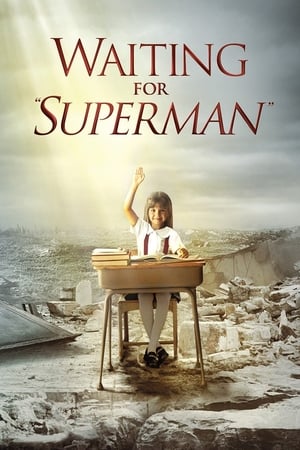
Waiting for "Superman"(en)
2010-09-24
Gripping, heartbreaking, and ultimately hopeful, Waiting for Superman is an impassioned indictment of the American school system from An Inconvenient Truth director Davis Guggenheim.
0%
Eine geschlossene Gesellschaft(de)
1987-01-01
Follows the lives of students and their teachers based on the director's childhood memories. The events of the film take places in the actual boarding school called "Gymnasium Canisianum", founded in 1946 by a German catholic priest.

0%
The Colonel's Playbook(en)
2021-07-22
In 1969, in order to bolster its shrinking student body, Fort Worth Country Day School recruited retired Marine Corps Lt. Colonel, R.C. "Rocky" Rosacker to ignite participation in athletics. No one was prepared for the Colonel's expectations of maximum effort and execution. Not only did the Colonel create a dynasty of championships but his teachings continue to inspire many generations after he taught.
0%
The Ugly Face of Disability Hate Crime(en)
2015-07-23
Adam Pearson - who has neurofibromatosis type 1 - is on a mission to explore disability hate crime: to find out why it goes under-reported, under-recorded and under people's radar.
70%
Deux Cancres(en)
2017-05-26
A father films the daily efforts and struggle of his son to do his homework. Completing the school tasks is an agony that oppresses the creative passion of a restless, imaginative boy. His father gets deeply involved so he can understand what the problem is, and spends an hour every day to help him with his homework. Days, weeks, years go by, and we observe how the eagerness to learn clashes with the ghost of school dropout. The endearing relationship between father and son, a real rollercoaster of emotions, reveals with a sense of humour the contradictions in the French education system.

0%
Bitter Sweet Ballad(zh)
2025-06-25
This is a story about youth with music. It all happens at the Dandelion School, Beijing’s first middle school specifically established for the children of migrant workers. Every year when new pupils arrive, Ms. Yuan Xiaoyan, who has worked in the school choir for eight years, would choose a group of music-loving first-years with solid musical foundations to join the choir. A new group of children join the choir while those who have advanced to the second year have to discuss with their families their future choices. For choir members, their music career in middle school will eventually stop due to the pressure of high school entrance examinations and the inevitable parting. But along this journey accompanied by music, they have been savoring the joys and sorrows of their youth, burying them deep in their hearts, and transforming them into growth-promoting nutrients.
68%
A, B, C... Z(sq)
1971-02-16
Children get ready to start the first grade. They start learning the first letters.
64%
The ABCs of Book Banning(en)
2024-02-16
In recent years, more than 2,500 books have been removed from school districts around the US, labeled as banned, restricted, or challenged, and made unavailable to millions of students. By no accident, the themes targeted are the usual scapegoats of the American Right—LGBTQ+ issues, Black History, and women’s empowerment—impeding the power of future generations to develop their own thoughts and opinions on critical social issues. By weaving together a lyrical montage of young readers and authors, THE ABCs OF BOOK BANNING reveals the voices of the impacted parties, and inspires hope for the future through the profound insights of inquisitive youthful minds.
0%
High School Radical(fr)
2025-11-05
At 16, Max left with dreams and a GoPro slung over his shoulder for an exchange program at a high school in Oklahoma. Since then, Donald Trump has become president, the Capitol has been stormed, and abortion bans have gained ground. On the eve of Trump’s second term, Max goes back to see his friends to understand what their journeys reveal about the evolution of American society
68%
Let the Child Be the Guide(fr)
2017-09-27
As a young father, watching his daughter go through her life experiences, film director Alexandre Mourot discovered the Montessori approach and decided to set his camera up in a children's house (3 to 6 years of age) in the oldest Montessori school in France. Alexandre was warmly welcomed in a surprisingly calm and peaceful environment, filled with flowers, fruits and Montessori materials. He met happy children, who were free to move about, working alone or in small groups. The teacher remained very discreet. Some children were reading, others were making bread, doing division, laughing or sleeping. The children guided the film director throughout the whole school year, helping him to understand the magic of their autonomy and self-esteem - the seeds of a new society of peace and freedom, which Maria Montessori dedicated her life work to.
0%
Oyler(en)
2015-10-30
A Cincinnati public school fights to break the cycle of poverty in its Urban Appalachian neighborhood, where senior Raven Gribbins aims to become the first in her troubled family to graduate and go to college. When Principal Craig Hockenberry's job is threatened, it becomes clear it's a make-or-break year for both of them.
0%
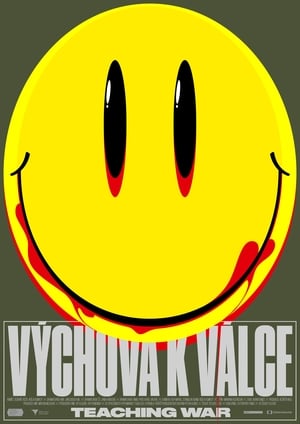
Teaching War(cs)
2016-10-27
This episode from the Czech Journal series examines how a military spirit is slowly returning to our society. Attempts to renew military training or compulsory military service and in general to prepare the nation for the next big war go hand in hand with society’s fear of the Russians, the Muslims, or whatever other “enemies”. This observational flight over the machine gun nest of Czech militarism becomes a grotesque, unsettling military parade. It can be considered not only to be a message about how easily people allow themselves to be manipulated into a state of paranoia by the media, but also a warning against the possibility that extremism will become a part of the regular school curriculum.