Loading Page
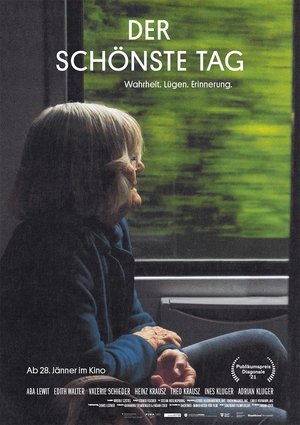
The Last Dialogue(2022)
Status: Released
Date: 2022-01-28
0%
0 Votes
Time: 1h 52m
Truth. Lie. Memory.
Overview:
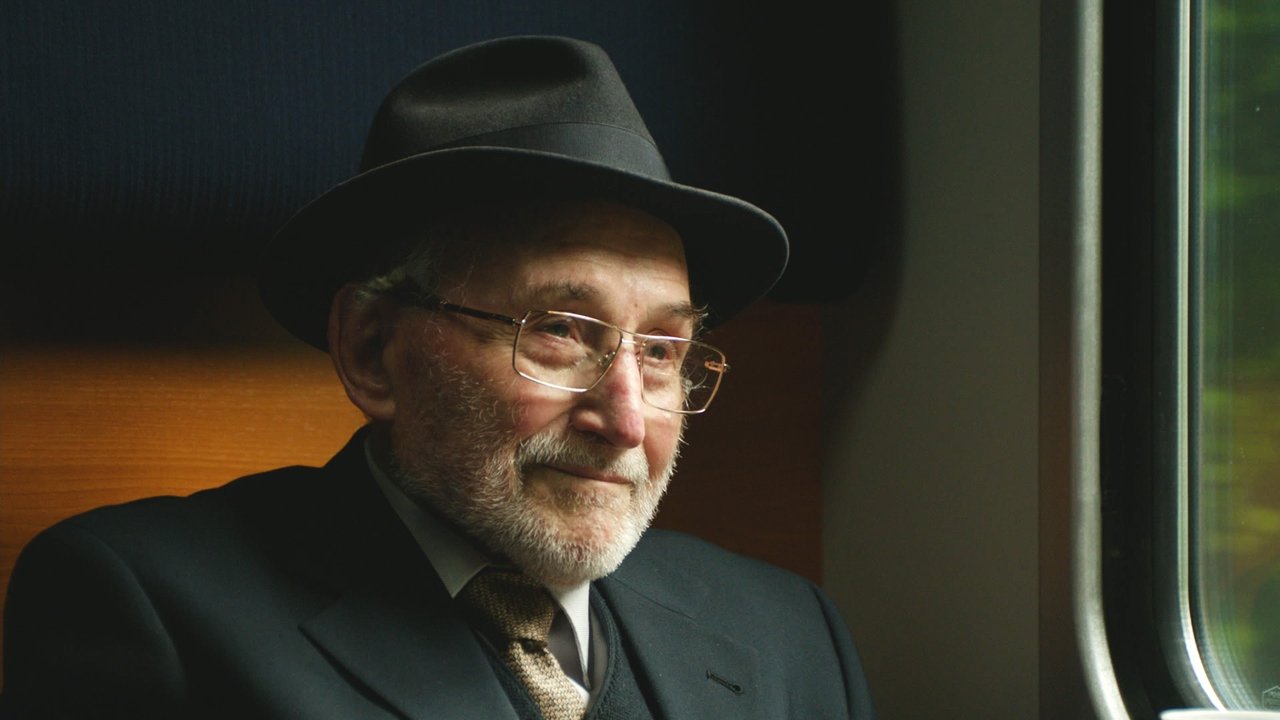
"Austria - First Victim of National Socialism" - this is the core theme of the self-image of the country that first welcomed Hitler with waving flags and arms stretched to the sky: Nation, People and Race - Sieg Heil! Monuments, commemorative events and in between the helplessness of dull remembrance. What to do with the lie, where to put the pain, and why again? The war of narratives begins with the liberation of the concentration camps, with the piles of corpses - and it continues to this day. A final journey with those who were there. Which story do we tell ourselves, and which do we want to hear?
Languages: German.
Countries:
Austria
ProductionCompanies:
Backyard – Manufaktur für Film
Movie: The Last Dialogue
Top 10 Billed Cast
HomePage
Overview
"Austria - First Victim of National Socialism" - this is the core theme of the self-image of the country that first welcomed Hitler with waving flags and arms stretched to the sky: Nation, People and Race - Sieg Heil! Monuments, commemorative events and in between the helplessness of dull remembrance. What to do with the lie, where to put the pain, and why again? The war of narratives begins with the liberation of the concentration camps, with the piles of corpses - and it continues to this day. A final journey with those who were there. Which story do we tell ourselves, and which do we want to hear?
Release Date
2022-01-28
Average
0
Rating:
0.0 startsTagline
Truth. Lie. Memory.
Genres
Languages:
DeutschKeywords
Recommendations Movies
68%
Misha and the Wolves(en)
2021-09-03
A woman’s Holocaust memoir takes the world by storm, but a fallout with her publisher-turned-detective reveals her story as an audacious deception created to hide a darker truth.
69%
One of Us(en)
2017-09-10
Penetrating the insular world of New York's Hasidic community, focusing on three individuals driven to break away despite threats of retaliation.
74%
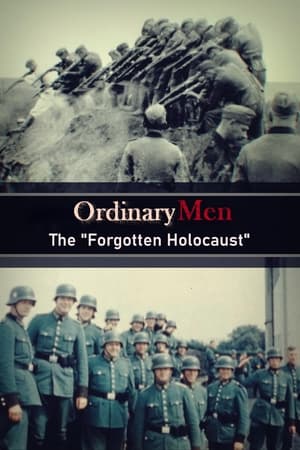
Ordinary Men: The "Forgotten Holocaust"(de)
2022-01-25
Six million Jews died during World War II, both in the extermination camps and murdered by the mobile commandos of the Einsatzgruppen and police battalions, whose members shot men, women and children, day after day, obediently, as if it were a normal job, a fact that is hardly known today. Who were these men and how could they commit such crimes?

76%
Night Will Fall(en)
2014-06-07
When Allied forces liberated the Nazi concentration camps in 1944-45, their terrible discoveries were recorded by army and newsreel cameramen, revealing for the first time the full horror of what had happened. Making use of British, Soviet and American footage, the Ministry of Information’s Sidney Bernstein (later founder of Granada Television) aimed to create a documentary that would provide lasting, undeniable evidence of the Nazis’ unspeakable crimes. He commissioned a wealth of British talent, including editor Stewart McAllister, writer and future cabinet minister Richard Crossman – and, as treatment advisor, his friend Alfred Hitchcock. Yet, despite initial support from the British and US Governments, the film was shelved, and only now, 70 years on, has it been restored and completed by Imperial War Museums under its original title "German Concentration Camps Factual Survey".

67%
Gilbert(en)
2017-04-20
The life and career of one of comedy's most inimitable modern voices, Mr. Gilbert Gottfried.
75%
Struggle: The Life and Lost Art of Szukalski(en)
2018-12-20
Artists in LA discover the work of forgotten Polish sculptor Stanislav Szukalski, a mad genius whose true story unfolds chapter by astounding chapter.
69%
Wormwood(en)
2017-10-22
In this genre-bending tale, Errol Morris explores the mysterious death of a U.S. scientist entangled in a secret Cold War program known as MK-Ultra.

60%
Anna Nicole Smith: You Don't Know Me(en)
2023-05-16
From the heights of her modeling fame to her tragic death, this documentary reveals Anna Nicole Smith through the eyes of the people closest to her.

71%
The Class of ‘92(en)
2013-12-01
A detailing of the rise to prominence and global sporting superstardom of six supremely talented young Manchester United football players (David Beckham, Nicky Butt, Ryan Giggs, Paul Scholes, Phil and Gary Neville). The film covers the period 1992-1999, culminating in Manchester United's European Cup triumph.

77%
Ask Dr. Ruth(en)
2019-08-15
A documentary portrait chronicling the incredible life of Dr. Ruth Westheimer, a Holocaust survivor who became the United States' most famous sex therapist. As her 90th birthday approaches, Dr. Ruth revisits her painful past and her career at the forefront of the sexual revolution.
62%
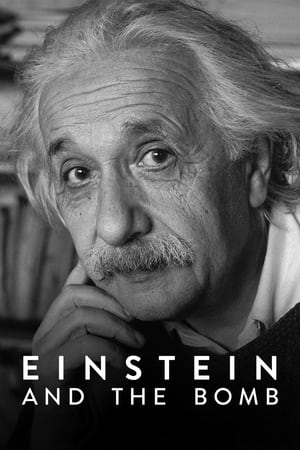
Einstein and the Bomb(en)
2024-02-16
What happened after Einstein fled Nazi Germany? Using archival footage and his own words, this docudrama dives into the mind of a tortured genius.
75%
The Last Days(en)
1998-10-23
Five Jewish Hungarians, now US citizens, tell their stories: before March 1944, when Nazis began to exterminate Hungarian Jews, months in concentration camps, and visiting childhood homes more than 50 years later. An historian, a Sonderkommando, a doctor who experimented on Auschwitz prisoners, and US soldiers who were part of the liberation in April 1945.
63%
Salinger(en)
2013-09-06
An in-depth investigation into the private world of the American writer J. D. Salinger (1919-2010), who lived most of his life behind the impenetrable wall of a self-imposed seclusion: how his dramatic experiences during World War II influenced his life and work, his relationships with very young women, his obsessive writing methods, his many literary secrets.

61%
In the Basement(de)
2014-09-26
Filmmaker Ulrich Seidl explores of the dark underside of the human psyche by entering Austrian basements fitted out as private domains for secrets and fetishes.
69%
Bombshell: The Hedy Lamarr Story(en)
2018-06-06
The life and career of the hailed Hollywood movie star and underappreciated genius inventor, Hedy Lamarr.

74%
For the Love of Spock(en)
2016-09-09
The life of Mr. Spock, as well as that of Leonard Nimoy, the actor who played him for almost fifty years, written and directed by his son: Adam.
74%
Hitler: A Career(de)
1977-07-08
A keen chronicle of the unlikely rise to power of Adolf Hitler (1889-1945) and a dissection of the Third Reich (1933-1945), but also an analysis of mass psychology and how the desperate crowd can be deceived and shepherded to the slaughterhouse.
70%
Mickey: The Story of a Mouse(en)
2022-03-19
Mickey Mouse is one of the most enduring symbols in our history. Those three simple circles take on meaning for virtually everyone on the planet. So ubiquitous in our lives that he can seem invisible, Mickey is something we all share, with unique memories and feelings. Over the course of his nearly century-long history, Mickey functions like a mirror, reflecting our personal and cultural values back at us. "Mickey: The Story of a Mouse" explores Mickey's significance, getting to the core of what Mickey's cultural impact says about each of us and about our world.
69%
Charlie: The Life and Art of Charles Chaplin(en)
2003-05-01
Brilliant, long in-the-works story of the life and art of the world's greatest comedian and the cinema's first genius, Charlie Chaplin. Produced, written and directed by renowned film critic Richard Schickel.
Similar Movies
62%
Babi Yar. Context(ru)
2021-11-04
Nazi troops massacre 30,000 Jews over a three-day period in September 1941. Babyn Yar ravine in Kyiv, Ukraine.
70%
Challenging Churchill(de)
2012-07-03
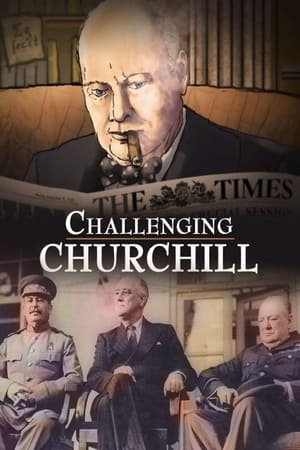
Churchill, a name typically associated with braveness and altruism. Recently found evidence from Soviet and British sources however brings up questions about Churchill's doings in the conferences of Tehran, Yalta and Potsdam. Why did he agree to give Stalin large parts of Poland? The story of two world leaders in times of war - it is also the story of Poland.
0%
The Unknown Woman(fi)
2011-02-04
The Unknown Woman is a documentary film scripted and directed by Elina Kivihalme. It depicts the reality of Finnish agriculture and forestry during the war years, when the home front relied entirely upon the work and endurance of the women. All farm work, caring for the children, woodcutting and other forestry operations were undertaken by the civilians, as the men in their prime were on the front.
0%
Inland(en)
2019-05-03
"Politics for Austria," "Fairness," "We provide security"-election slogans that promise a return to bygone morals, adorn the city of Vienna before the Austrian national parliamentary elections in 2017. The mistrust with regard to supposed political elites, coupled with promises made by the right wing populist parties, polarize Austrian society. INLAND offers intimate insight into the lives of its protagonists and thereby draws a genre picture of their fears and hopes in complex times.
77%
Breakpoint: A Counter History of Progress(fr)
2019-07-14
An account of the last two centuries of the Anthropocene, the Age of Man. How human beings have progressed so much in such a short time through war and the selfish interests of a few, belligerent politicians and captains of industry, damaging the welfare of the majority of mankind, impoverishing the weakest, greedily devouring the limited resources of the Earth.
100%
Old Man River(en)
1999-03-03
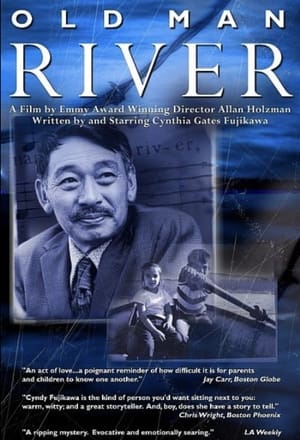
Documentary film version of the stage show in which actress Cynthia Gates Fujikawa explores the story of her father, actor Jerry Fujikawa, who had a long career in films and television, most often as a stereotyped Asian. The daughter, in the course of searching out her late father's history, discovers many things that she had not known, among them that her father had spent time in Manzanar, the internment camp for Japanese-Americans during World War II, that he had had a family prior to hers, and that somewhere out there was a sister she had never known existed.

70%
The World Under the Bombs, from Guernica to Hiroshima(fr)
2017-01-23
Beginning with Guernica and the Chinese cities of Chongqing and Shanghai in 1937 and ending with the bombing of Hiroshima and Nagasaki in August 1945, World War Two saw a new art of warfare in the form of extensive, worldwide bombing campaigns.

56%
How to Cook Your Life(de)
2007-05-10
A Zen priest in San Francisco and cookbook author use Zen Buddhism and cooking to relate to everyday life.
73%
German Concentration Camps Factual Survey(en)
2017-01-06
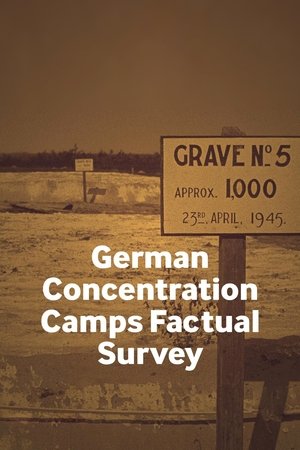
On the 29th September 1945, the incomplete rough cut of a brilliant documentary about concentration camps was viewed at the MOI in London. For five months, Sidney Bernstein had led a small team – which included Stewart McAllister, Richard Crossman and Alfred Hitchcock – to complete the film from hours of shocking footage. Unfortunately, this ambitious Allied project to create a feature-length visual report that would damn the Nazi regime and shame the German people into acceptance of Allied occupation had missed its moment. Even in its incomplete form (available since 1984) the film was immensely powerful, generating an awed hush among audiences. But now, complete to six reels, this faithfully restored and definitive version produced by IWM, is being compared with Alain Resnais’ Night and Fog (1955).
73%
A Journey Into the Holocaust(en)
2015-01-22
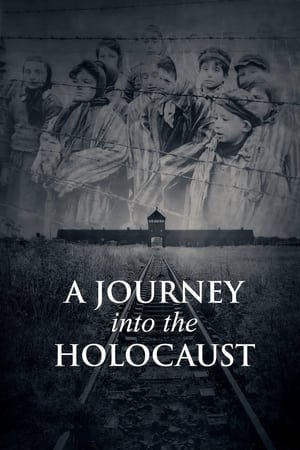
A detailed and deeply personal exploration into genocide and how something this atrocious happened, and continues to happen again and again - even in modern times. First-time filmmaker, Paul Bachow, travels around the world and taps into a vast knowledge base of historians, psychology practitioners, and data derived from countless interviews with experts from around the world.
66%
2 or 3 Things I Know About Him(de)
2005-04-07
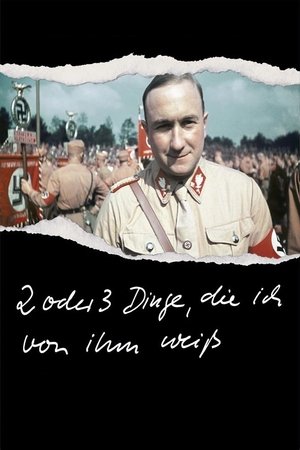
What would your family reminiscences about dad sound like if he had been an early supporter of Hitler’s, a leader of the notorious SA and the Third Reich’s minister in charge of Slovakia, including its Final Solution? Executed as a war criminal in 1947, Hanns Ludin left behind a grieving widow and six young children, the youngest of whom became a filmmaker. It's a fascinating, maddening, sometimes even humorous look at what the director calls "a typical German story." (Film Forum)

80%
Bella Ciao! - German Soldiers in the Italian Resistance(de)
2025-06-10
When Italy capitulated 1943 and joined the allied forces, some soldiers from the German Wehrmacht also changed sides and joined the Italians in their fight to liberate the country. This film tells the story of Rudolf Jacobs, Walter Fischer and Heinz Brauers, three of the ‘Good Germans’ remembered in Italy for their efforts in fighting the Nazis.
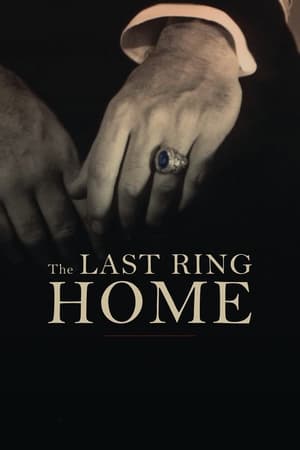
90%
The Last Ring Home(en)
2016-09-05
The Last Ring Home is a made-for-TV documentary that recounts the story of how a WWII hero's last wish was lost, found, finally fulfilled and then lost again. The discovery of the story by the hero's grandson is as big as the discovery of the ring.
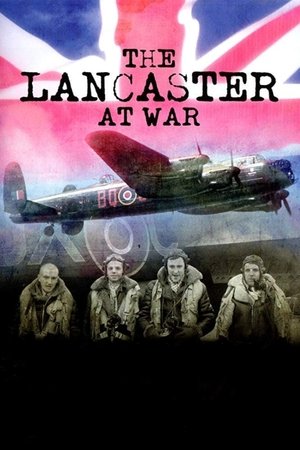
53%
The Lancaster at War(en)
2009-07-25
The incredible story of the Avro Lancaster, one of the finest bombers of the Second World War, which played a crucial role in the long and savage campaign to defeat Hitler's Third Reich. This documentary features interviews with surviving veterans of Bomber Command, who share frank personal accounts of their part in an aerial battle of attrition which claimed the lives of 55'000 aircrew.
70%
The Man Who Made Angels Fly(en)
2013-06-30
When the lights dim and the stage is revealed, Meschke channels life through the strings of his puppets, triggering the spiritual connection between the creator and his alter-egos: the charismatic Don Quixote, the loving Penelope, the inquisitive Baptiste, or the mysterious Antigone. THE MAN WHO MADE ANGELS FLY is a poetic story about a master of his craft that has inspired audiences to reflect upon common issues of suffering and the mortal coil. Visionary and un-biographic, imaginary tribute to the puppeteer.
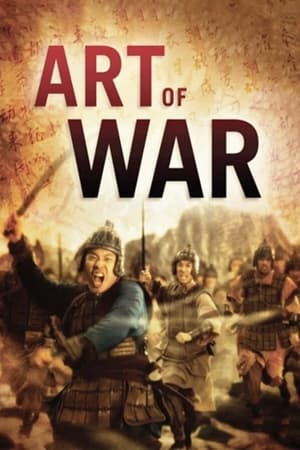
70%
Art of War(en)
2009-05-03
Documentary on the main principles of Sun Tsu "Art of War" illustrated with examples from the second world war, the Vietnam war and the American civil war.
63%
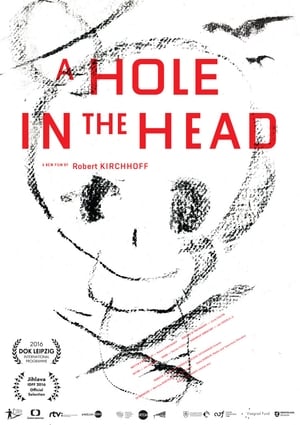
A Hole In The Head(cs)
2017-03-16
A pig farm in Lety, South Bohemia would make an ideal monument to collaboration and indifference, says writer and journalist Markus Pape. Most of those appearing in this documentary filmed in Slovakia, the Czech Republic, Poland, France, Germany and Croatia have personal experience of the indifference to the genocide of the Roma. Many of them experienced the Holocaust as children, and their distorted memories have earned them distrust and ridicule. Continuing racism and anti-Roma sentiment is illustrated among other matters by how contemporary society looks after the locations where the murders occurred. However, this documentary film essay focuses mainly on the survivors, who share with viewers their indelible traumas, their "hole in the head".
80%
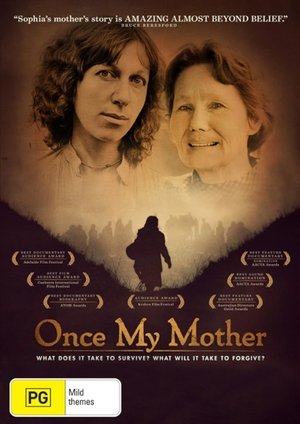
Once My Mother(en)
2014-07-24
Australian filmmaker Sophia Turkiewicz investigates why her Polish mother abandoned her and uncovers the truth behind her mother's wartime escape from a Siberian gulag, leaving Sophia to confront her own capacity for forgiveness.
40%
Liberators Take Liberties(de)
1992-02-22
Helke Sander interviews multiple German women who were raped in Berlin by Soviet soldiers in May 1945. Most women never spoke of their experience to anyone, due largely to the shame attached to rape in German culture at that time.