Loading Page
Rester là-bas(1992)
Status: Released
Date: 1992-01-01
100%
1 Votes
Time: 0h 46m
Overview:
Algiers. From the port to the souks, passing through the Jardin d'Essai, Dominique Cabrera transports us to the land where she was born, on the other side of the Mediterranean "where the sea is saltier". If most of the pieds-noirs left Algeria in the summer of 1962, some -a minority- remained. By going to meet them, the director makes her own inner journey.
Languages: Arabic, French.
Countries:
France
ProductionCompanies: 
La Sept-Arte
Méli-Mélo Productions
Movie: Rester là-bas
HomePage
Overview
Algiers. From the port to the souks, passing through the Jardin d'Essai, Dominique Cabrera transports us to the land where she was born, on the other side of the Mediterranean "where the sea is saltier". If most of the pieds-noirs left Algeria in the summer of 1962, some -a minority- remained. By going to meet them, the director makes her own inner journey.
Release Date
1992-01-01
Average
10
Rating:
5.0 startsTagline
Genres
Languages:
العربيةFrançaisKeywords
Recommendations Movies
67%
Days of Glory(fr)
2006-09-27
1943. They have never stepped foot on French soil but because France was at war, Said, Abdelkader, Messaoud and Yassir enlist in the French Army, along with 130,000 other “indigenous” soldiers, to liberate the “fatherland” from the Nazi enemy. Heroes that history has forgotten…
76%
The Rays and Shadows(fr)
2026-03-18
Jean and Otto, a French newspaperman and a young German Francophile, are fighting for peace in Europe. Jean’s daughter, Corinne, is launching a brilliant acting career in the film world, but war breaks out and France is occupied. The two friends have a major role to play in this new France. Jean becomes a big press baron and an ardent advocate of collaboration with the occupying forces, while Otto becomes the Reich’s ambassador in Paris. Corinne, meanwhile, finds herself thrown into the lion’s pit.
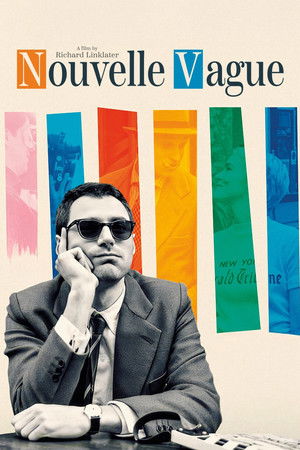
74%
Nouvelle Vague(fr)
2025-10-08
After writing for Cahiers du cinéma, a young Jean-Luc Godard decides making films is the best film criticism. He convinces producer Georges de Beauregard to fund a low-budget feature, and creates a treatment with fellow New Wave filmmaker François Truffaut about a gangster couple. The result? Breathless, one of the first features of the Nouvelle Vague era of French cinema.
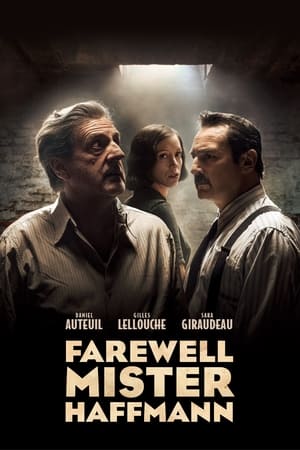
69%
Farewell, Mr. Haffmann(fr)
2022-01-12
Paris 1942. François Mercier is an ordinary man who only aspires to start a family with the woman he loves, Blanche. He is also the employee of a talented jeweler, Mr. Haffmann. But faced with the German occupation, the two men will have no other choice but to conclude an agreement whose consequences, over the months, will upset the fate of our three characters.
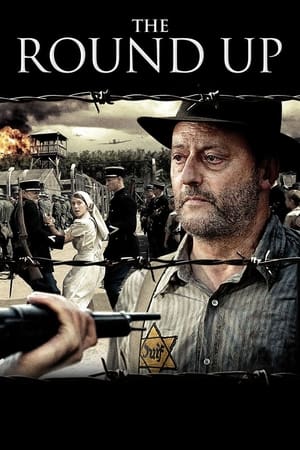
75%
The Round Up(fr)
2010-03-10
A faithful retelling of the 1942 "Vel' d'Hiv Roundup" and the events surrounding it.

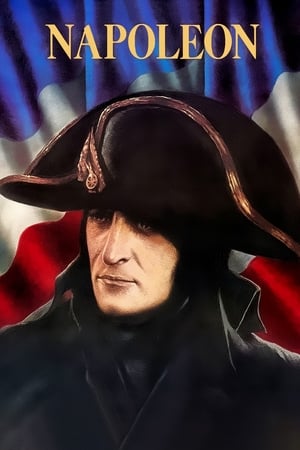
78%
Napoleon(fr)
1927-01-10
A biopic of Napoleon Bonaparte, tracing the Corsican's career from his schooldays (where a snowball fight is staged like a military campaign) to his flight from Corsica, through the French Revolution (where a real storm is intercut with a political storm) and the Terror, culminating in his triumphant invasion of Italy in 1797.
70%
Girl Rising(en)
2013-03-07
Nine filmmakers each profile a young girl from a different part of the world to weave a global tapestry of youth in the 21st century.
60%
Final Portrait(en)
2017-08-03
Paris, 1964. The Swiss sculptor and painter Alberto Giacometti, one of the most accomplished and respected artists of his generation, asks his friend, the American writer James Lord, to sit for a portrait, assuring him that it will take no longer than two or three hours, an afternoon at the most.

69%
Colette(en)
2018-09-21
After marrying a successful Parisian writer known commonly as Willy, Sidonie-Gabrielle Colette is transplanted from her childhood home in rural France to the intellectual and artistic splendor of Paris. Soon after, Willy convinces Colette to ghostwrite for him. She pens a semi-autobiographical novel about a witty and brazen country girl named Claudine, sparking a bestseller and a cultural sensation. After its success, Colette and Willy become the talk of Paris and their adventures inspire additional Claudine novels.
66%
The Last Rifleman(en)
2023-12-07
A WWII veteran escapes his care home in Northern Ireland and embarks on an arduous but inspirational journey to France to attend the 75th anniversary of the D-Day landings, finding the courage to face the ghosts of his past.
82%
Shoah(fr)
1985-04-21
Director Claude Lanzmann spent 11 years on this sprawling documentary about the Holocaust, conducting his own interviews and refusing to use a single frame of archival footage. Dividing Holocaust witnesses into three categories – survivors, bystanders, and perpetrators – Lanzmann presents testimonies from survivors of the Chelmno concentration camp, an Auschwitz escapee, and witnesses of the Warsaw Ghetto Uprising, as well as a chilling report of gas chambers from an SS officer at Treblinka.
70%
Visions of Light(en)
1992-09-17
Cameramen and women discuss the craft and art of cinematography and of the "DP" (the director of photography), illustrating their points with clips from 100 films, from Birth of a Nation to Do the Right Thing. Themes: the DP tells people where to look; changes in movies (the arrival of sound, color, and wide screens) required creative responses from DPs; and, these artisans constantly invent new equipment and try new things, with wonderful results. The narration takes us through the identifiable studio styles of the 30s, the emergence of noir, the New York look, and the impact of Europeans. Citizen Kane, The Conformist, and Gordon Willis get special attention.
68%
Making Waves: The Art of Cinematic Sound(en)
2019-10-25
The history of cinematic sound, told by legendary sound designers and visionary filmmakers.
72%
Chronicle of a Summer(fr)
1961-10-20
Paris, summer 1960. Anthropologist and filmmaker Jean Rouch and sociologist and film critic Edgar Morin wander through the crowded streets asking passersby how they cope with life's misfortunes.
72%
Les Misérables(en)
1998-05-01
In 19th century France, Jean Valjean, a man imprisoned for stealing bread, must flee a relentless policeman named Javert. The pursuit consumes both men's lives, and soon Valjean finds himself in the midst of the student revolutions in France.
65%
The Wind and the Lion(en)
1975-05-22
At the beginning of the 20th century an American woman is abducted in Morocco by Berbers, and the attempts to free her range from diplomatic pressure to military intervention.

76%
Night Will Fall(en)
2014-06-07
When Allied forces liberated the Nazi concentration camps in 1944-45, their terrible discoveries were recorded by army and newsreel cameramen, revealing for the first time the full horror of what had happened. Making use of British, Soviet and American footage, the Ministry of Information’s Sidney Bernstein (later founder of Granada Television) aimed to create a documentary that would provide lasting, undeniable evidence of the Nazis’ unspeakable crimes. He commissioned a wealth of British talent, including editor Stewart McAllister, writer and future cabinet minister Richard Crossman – and, as treatment advisor, his friend Alfred Hitchcock. Yet, despite initial support from the British and US Governments, the film was shelved, and only now, 70 years on, has it been restored and completed by Imperial War Museums under its original title "German Concentration Camps Factual Survey".
75%
McQueen(en)
2018-06-08
Alexander McQueen's rags-to-riches story is a modern-day fairy tale, laced with the gothic. Mirroring the savage beauty, boldness and vivacity of his design, this documentary is an intimate revelation of McQueen's own world, both tortured and inspired, which celebrates a radical and mesmerizing genius of profound influence.

68%
Spider-Man: All Roads Lead to No Way Home(en)
2022-05-03
JB Smoove and Martin Starr host a celebration of 20 years of "Spider-Man" movies, from the Sam Raimi trilogy to Marc Webb's movies and the trio from Jon Watts.
Similar Movies
67%
Brotherhood of the Wolf(fr)
2001-01-31
In 18th century France, the Chevalier de Fronsac and his Native American friend Mani are sent by the King to the Gevaudan province to investigate the killings of hundreds by a mysterious beast.
71%
The Arrival of a Train at La Ciotat(fr)
1896-06-30
A group of people are standing along the platform of a railway station in La Ciotat, waiting for a train. One is seen coming, at some distance, and eventually stops at the platform. Doors of the railway-cars open and attendants help passengers off and on. Popular legend has it that, when this film was shown, the first-night audience fled the café in terror, fearing being run over by the "approaching" train. This legend has since been identified as promotional embellishment, though there is evidence to suggest that people were astounded at the capabilities of the Lumières' cinématographe.
55%
The King Without a Crown(en)
1937-10-09
This short explores the possibility that Louis XVII, son of King Louis XVI and Marie Antoinette, escaped death during the French Revolution and was raised by Indians in America.
0%
Art: By Any Means Necessary(ht)
2024-05-09
Follows the defiance of two art institutions in the Caribbean: one closed but squatted by artists, the other fighting to stay open. Against the backdrop of political strife, Haitian and Guadeloupean artists grapple with the concept of freedom in their battle to preserve their spaces.
65%
L'Âge d'or de la pub(fr)
2023-06-02
55 years ago, on October 1 1968, the first brand advertising spot appeared on the French television screen. Over the next three decades, thousands of creative little films would seduce and build our collective memory. Kitschy or cult spots, humor, slogans, music, stars, gimmicks, grand spectacle or sex appeal: during its golden age, how did advertising convince? Thierry Ardisson has brought together almost 400 advertising clips to relive the era of the conquest of minds and wallets.
68%
Vengeance of the Three Musketeers(fr)
1961-10-25
To avenge her defeat and with the help of the Cardinal's army leader Rochefort, the treacherous Milady de Winter kidnaps both D'Artagnan and Constance, in order to spur a war between the French and the English, as per the Cardinal's wish.
68%
Danton(fr)
1983-01-12
Danton and Robespierre were close friends and fought together in the French Revolution, but by 1793 Robespierre was France's ruler, determined to wipe out opposition with a series of mass executions that became known as the Reign of Terror. Danton, well known as a spokesman of the people, had been living in relative solitude in the French countryside, but he returned to Paris to challenge Robespierre's violent rule and call for the people to demand their rights. Robespierre, however, could not accept such a challenge, even from a friend and colleague, and he blocked out a plan for the capture and execution of Danton and his allies.
75%
The French Revolution(fr)
1989-05-10
A history of the French Revolution beginning from the decision of the king to convene the Etats-Generaux in 1789 in order to deal with France's debt problem. Part one spans the event until August 10, 1792 (when the King Louis XVI lost all authority and was imprisoned). Part two carries the story through the end of the terror in 1794.

40%
Children playing with skipping rope(en)
1896-01-01
A group of children are encouraged to play in a park by two men. Some play a skipping game. One of the other children refuses and eventually runs away. Another child is fascinated by the camera and stares at it throughout, even when encouraged by one of the men to play. IN the background, traffic passes and pedestrians stroll past behind a railing on an upper level. The children wear sunhats, indicating the weather is very sunny.

60%
Many Beautiful Things(en)
2015-10-17
In an age when women were incapable of joining the artistic dialogue, Lilias Trotter managed to win the favour of celebrated critics.
79%
Grand Illusion(fr)
1937-06-04
A group of French soldiers, including the patrician Captain de Boeldieu and the working-class Lieutenant Maréchal, grapple with their own class differences after being captured and held in a World War I German prison camp. When the men are transferred to a high-security fortress, they must concoct a plan to escape beneath the watchful eye of aristocratic German officer von Rauffenstein, who has formed an unexpected bond with de Boeldieu.

0%
The Mountain(zh)
2015-10-03
For hundreds of years, Taiwan has been under different colonial rules. From the Dutch, the Spanish, the Japanese, and nowadays Republic of China, each regime left their footprints on this island. Only the indigenous people of this island experienced of the process. They were given different names during different periods of colonisation and their cultures have been changed. Through the life of a Truku elder, we see the history of aboriginal recertification movement.
63%
Madame Bovary(fr)
1991-03-03
In 19th-century France, doctor's wife Emma Bovary seeks to escape her dull provincial life through various extramarital affairs and extravagant spending, leading to tragic consequences.
63%
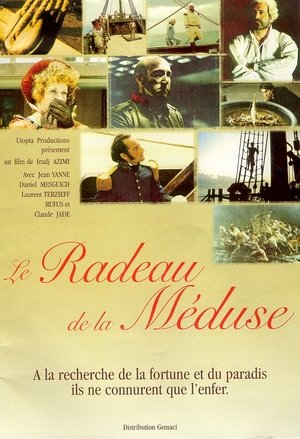
Le radeau de la Méduse(fr)
1998-07-15
Iranian Iradj Azimi directed this French historical drama re-creating events depicted in the famous 1819 painting The Raft of the Medusa by Jean Louis Andre Theodore Gericault (1791-1824). The ill-fated voyage of the frigate Medusa begins when it departs Rochefort for Senegal in 1816. After striking a sandbar off the African coast, 150 civilians row safely to shore, but Captain Chaumareys (Jean Yanne) orders 140 soldiers and sailors onto a raft (minus supplies) and has it cut loose. Only 14 survive from the 140, creating a scandal back in France. Gericault (Laurent Terzieff) later talks to three of the survivors while researching his painting. Work on this film began in 1987, but sets destroyed by Hurricane Hugo caused delays, so the film was not completed until 1990. However, it then remained undistributed until an incident in which writer-director Azimi slashed his wrists in front of French Ministry of Culture officials.
65%
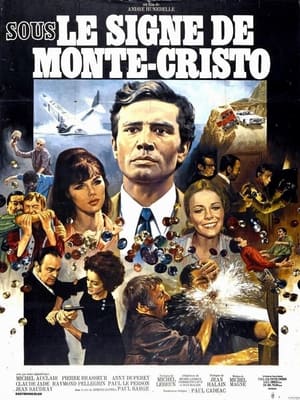
Sous le signe de Monte-Cristo(fr)
1968-12-11
Edmond Dantès, who was active in the resistance against the Nazis, is accused for being a Nazi collaborator and is imprisoned in the fortress of Sisteron.
60%
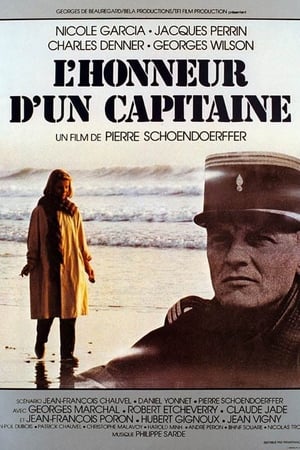
A Captain's Honor(fr)
1982-12-29
During a televised debate on the Algerian war in the early 1980s, Professor Paulet denounced the methods of Captain Caron, killed in action in 1957. The widow of the captain, Patricia, decided to file a defamation suit.
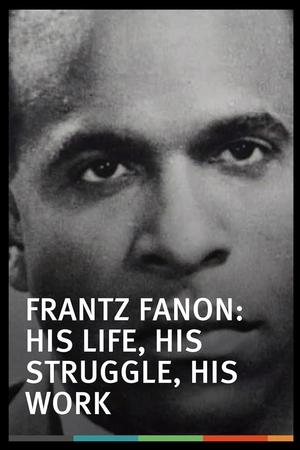
100%
Frantz Fanon: His Life, His Struggle, His Work(fr)
2001-11-30
It is the evocation of a life as brief as it is dense. An encounter with a dazzling thought, that of Frantz Fanon, a psychiatrist of West Indian origin, who will reflect on the alienation of black people. It is the evocation of a man of reflection who refuses to close his eyes, of the man of action who devoted himself body and soul to the liberation struggle of the Algerian people and who will become, through his political commitment, his fight, and his writings, one of the figures of the anti-colonialist struggle. Before being killed at the age of 36 by leukemia, on December 6, 1961. His body was buried by Chadli Bendjedid, who later became Algerian president, in Algeria, at the Chouhadas cemetery (cemetery of war martyrs ). With him, three of his works are buried: “Black Skin, White Masks”, “L’An V De La Révolution Algérien” and “The Wretched of the Earth”.

100%
Ancient Caves(en)
2020-03-13
Ancient Caves brings science and adventure together as it follows paleoclimatologist Dr. Gina Moseley on a mission to unlock the secrets of the Earth’s climate in the most unlikely of places: caves. Moseley and her team of cave explorers travel the world exploring vast underground worlds in search of stalagmite samples – geologic “fingerprints” – that reveal clues about the planet’s climate history. Their quest leads them to some of the world’s most remote caves, both above and below the water, in France, Iceland, the Bahamas, the U.S. and Mexico’s Yucatan Peninsula. Together, they go where very few humans will ever go, revealing the incredible lengths scientists will go to study the unknown.
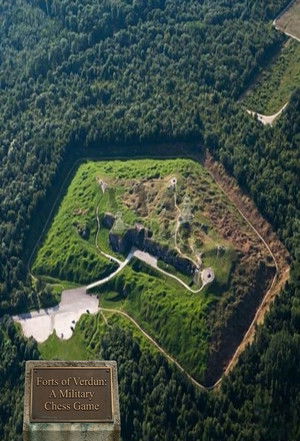
0%
Forts of Verdun: A Military Chess Game(en)
2024-08-24
With 38 forts at stake, Verdun was highly strategic during WWI. Through rare archives, 3D animations and interviews with historians and scientists, we plunge inside the walls of these coveted fortifications.