Loading Page

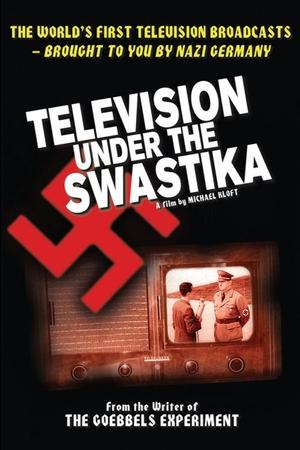
Television Under the Swastika(1999)
Status: Released
Date: 1999-06-21
68%
5 Votes
Time: 0h 55m
Overview:
A history of Nazi television programming and technology, from 1935 to 1944.
Languages: German.
Countries:
Germany
ProductionCompanies: 
Movie: Television Under the Swastika
Top 1 Billed Cast

Peter Buchholz
Self - Narrator (voice)
Loading Photos
Photo Type :Total items
Recommendations Movies
74%
Hitler: A Career(de)
1977-07-08
A keen chronicle of the unlikely rise to power of Adolf Hitler (1889-1945) and a dissection of the Third Reich (1933-1945), but also an analysis of mass psychology and how the desperate crowd can be deceived and shepherded to the slaughterhouse.

73%
Riefenstahl(de)
2024-08-29
Explores Leni Riefenstahl's artistic legacy and her complex ties to the Nazi regime, juxtaposing her self-portrayal with evidence suggesting awareness of the regime's atrocities.
68%
Making Waves: The Art of Cinematic Sound(en)
2019-10-25
The history of cinematic sound, told by legendary sound designers and visionary filmmakers.
68%
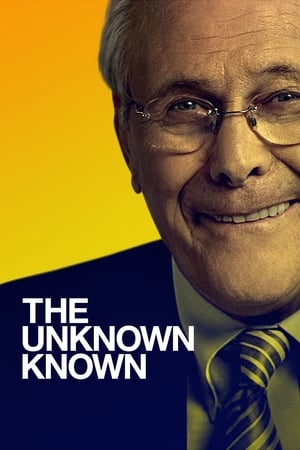
The Unknown Known(en)
2013-08-29
Former United States Secretary of Defense, Donald Rumsfeld, discusses his career in Washington D.C. from his days as a congressman in the early 1960s to planning the invasion of Iraq in 2003.

82%
The Untold History Of The United States(en)
2012-11-12
Oliver Stone charts the history of the United States from the Second World War to the present.
77%
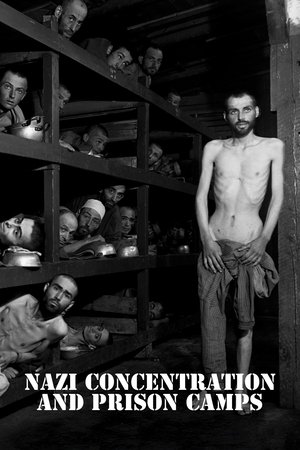
Nazi Concentration Camps(en)
1945-11-29
Produced and presented as evidence at the Nuremberg war crimes trial of Hermann Göring and twenty other Nazi leaders, this film consists primarily of dead and surviving prisoners and of facilities used to kill and torture during the World War II.

69%
Triumph of the Will(de)
1935-03-28
A showcase of German chancellor and Nazi Party leader Adolf Hitler at the 1934 Nuremberg Rally.

76%
Night Will Fall(en)
2014-06-07
When Allied forces liberated the Nazi concentration camps in 1944-45, their terrible discoveries were recorded by army and newsreel cameramen, revealing for the first time the full horror of what had happened. Making use of British, Soviet and American footage, the Ministry of Information’s Sidney Bernstein (later founder of Granada Television) aimed to create a documentary that would provide lasting, undeniable evidence of the Nazis’ unspeakable crimes. He commissioned a wealth of British talent, including editor Stewart McAllister, writer and future cabinet minister Richard Crossman – and, as treatment advisor, his friend Alfred Hitchcock. Yet, despite initial support from the British and US Governments, the film was shelved, and only now, 70 years on, has it been restored and completed by Imperial War Museums under its original title "German Concentration Camps Factual Survey".

74%
Red Army(en)
2015-01-23
A documentary highlighting the Soviet Union's legendary and enigmatic hockey training culture and world-dominating team through the eyes of the team's Captain Slava Fetisov, following his shift from hockey star and celebrated national hero to political enemy.

70%
What We Left Behind: Looking Back at Star Trek: Deep Space Nine(en)
2018-10-12
A documentary exploring the legacy of Star Trek: Deep Space Nine, the reasons it went from the black sheep of Star Trek to a beloved mainstay of the franchise, and a brainstorm with the original writers on what a theoretical eighth season of the show could look like.
70%
Visions of Light(en)
1992-09-17
Cameramen and women discuss the craft and art of cinematography and of the "DP" (the director of photography), illustrating their points with clips from 100 films, from Birth of a Nation to Do the Right Thing. Themes: the DP tells people where to look; changes in movies (the arrival of sound, color, and wide screens) required creative responses from DPs; and, these artisans constantly invent new equipment and try new things, with wonderful results. The narration takes us through the identifiable studio styles of the 30s, the emergence of noir, the New York look, and the impact of Europeans. Citizen Kane, The Conformist, and Gordon Willis get special attention.

63%
Banking on Bitcoin(en)
2016-12-30
Not since the invention of the Internet has there been such a disruptive technology as Bitcoin. Bitcoin's early pioneers sought to blur the lines of sovereignty and the financial status quo. After years of underground development Bitcoin grabbed the attention of a curious public, and the ire of the regulators the technology had subverted. After landmark arrests of prominent cyber criminals Bitcoin faces its most severe adversary yet, the very banks it was built to destroy.
68%
The War Room(en)
1993-11-03
A behind-the-scenes documentary about the Clinton for President campaign, focusing on the adventures of spin doctors James Carville and George Stephanopoulos.

73%
Eldorado: Everything the Nazis Hate(de)
2023-06-27
A glittery nightclub in 1920s Berlin becomes a haven for the queer community in this documentary exploring the freedoms lost amid Hitler’s rise to power.

70%
Zeitgeist: The Movie(en)
2007-06-01
A documentary examining possible historical and modern conspiracies surrounding Christianity, the 9/11 terrorist attacks, and the Federal Reserve bank.
72%
Best of Enemies(en)
2015-07-31
A documentary about the legendary series of nationally televised debates in 1968 between two great public intellectuals, the liberal Gore Vidal and the conservative William F. Buckley Jr. Intended as commentary on the issues of their day, these vitriolic and explosive encounters came to define the modern era of public discourse in the media, marking the big bang moment of our contemporary media landscape when spectacle trumped content and argument replaced substance. Best of Enemies delves into the entangled biographies of these two great thinkers, and luxuriates in the language and the theater of their debates, begging the question, "What has television done to the way we discuss politics in our democracy today?"

71%
Lucy and Desi(en)
2022-01-21
Explore the unlikely partnership and enduring legacy of one of the most prolific power couples in entertainment history. Lucille Ball and Desi Arnaz risked everything to be together.
72%
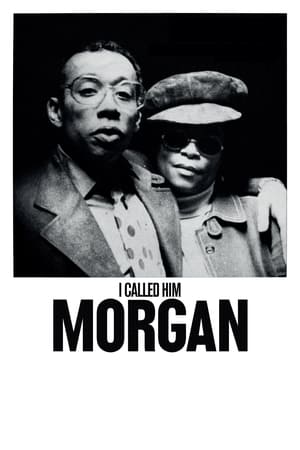
I Called Him Morgan(en)
2016-09-05
Part jazz history, part true-crime tale, Kasper Collin’s new documentary employs extensive archival footage and new interviews to tell the tragic story of the magnificently talented trumpeter Lee Morgan and his common-law wife Helen, who murdered him in a New York bar in 1972.

75%
McQueen(en)
2018-06-08
Alexander McQueen's rags-to-riches story is a modern-day fairy tale, laced with the gothic. Mirroring the savage beauty, boldness and vivacity of his design, this documentary is an intimate revelation of McQueen's own world, both tortured and inspired, which celebrates a radical and mesmerizing genius of profound influence.

75%
The War on Democracy(en)
2007-06-15
Set both in Latin America and the United States, the film explores the historic and current relationship of Washington with countries such as Venezuela, Bolivia and Chile. Pilger says that the film "...tells a universal story... analysing and revealing, through vivid testimony, the story of great power behind its venerable myths. It allows us to understand the true nature of the so-called "war on terror". According to Pilger, the film’s message is that the greed and power of empire is not invincible and that people power is always the "seed beneath the snow".
Similar Movies

0%
The Grove, Texas(en)
2014-05-02
In 1972, Moody Anderson bought a ghost town and brought it back to life. Nearly four decades later, Moody faces the heart-wrenching task of dismantling and selling his collection of Americana artifacts used in hundreds of films, from Lonesome Dove and The Texas Chainsaw Massacre to the Coen Brothers' remake of True Grit.
60%
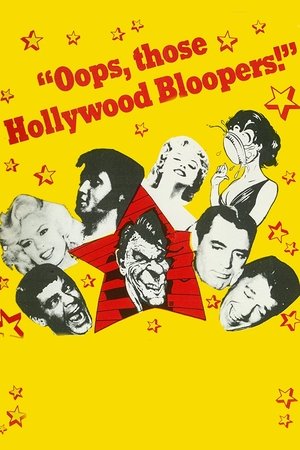
Oops, Those Hollywood Bloopers!(en)
1982-01-01
A collection of bloopers and outtakes from an enormous selection of Hollywood classic productions spanning from the 1930s through the 1980s.

72%
Is Paris Burning?(fr)
1966-10-26
Near the end of World War II, Gen. Dietrich von Choltitz receives orders to burn down Paris if it becomes clear the Allies are going to invade, or if he cannot maintain control of the city. After much contemplation Choltitz decides to ignore his orders, enraging the Germans and giving hope to various resistance factions that the city will be liberated. Choltitz, along with Swedish diplomat Raoul Nordling, helps a resistance leader organize his forces.

74%
The Mongols(fa)
1973-10-01
A director of a television series on the history of cinema, who has been grappling with the screenplay of his first feature film, receives an assignment to oversee the installation of a television relay station in a remote region of Zahedan province. He has already hired Turkmen tribespeople for his film and selected his filming location. Meanwhile his wife, who is working on her Ph.D. dissertation about the Mongol invasion of Iran, attempts to dissuade him from accepting the assignment. One night, while working on his history of the cinema series, the director fantasizes a diegetic world that consists of clever juxtapositions of his different worlds: the history of cinema, the history of the mongol invasion, his own film idea and his imminent assignment to the desert.

45%
Blackadder's Most Cunning Moments(en)
2008-10-16
A countdown of the top 40 "Blackadder" moments chosen by cast and crew members, celebrity fans and 15 genuine Blackadders.

0%
Doc Emrick - The Voice of Hockey(en)
2021-02-21
A retrospective on the career of Doc Emrick featuring interviews of those who worked with him.

40%
Liberators Take Liberties(de)
1992-02-22
Helke Sander interviews multiple German women who were raped in Berlin by Soviet soldiers in May 1945. Most women never spoke of their experience to anyone, due largely to the shame attached to rape in German culture at that time.

62%
VHS Revolution(fr)
2017-08-28
Using testimonies by pioneers and witnesses of the times, delve into the feverish visual culture the media generated – with far-fetched examples of canine television games, seduction manuals, aerobics class while holding a baby, among others.
73%
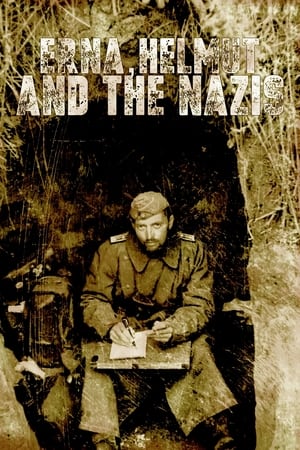
Erna, Helmut and the Nazis(de)
2021-04-29
Germany, 1929. Helmut Machemer and Erna Schwalbe fall madly in love and marry in 1932. Everything indicates that a bright future awaits them; but then, in 1933, Adolf Hitler and the Nazi Party rise to power and their lives are suddenly put in danger because of Erna's Jewish ancestry.

100%
Language Of Mules(en)
2020-05-08
Language of Mules is a poignant exploration of the haunting legacy of the Holocaust through the eyes and words of poet and author John Guzlowski. Born to Polish parents who survived the unimaginable horrors of Nazi concentration camps, Guzlowski's poems give voice to the stories passed down from his parents, stories of suffering, resilience, and survival. The film interweaves interviews with Guzlowski in his home in Virginia, with vivid poetic depictions of his parents' harrowing experiences: the brutality of the German soldiers, the daily horrors of camp life, physical torture, and enslavement in conditions that dehumanized those who endured them. With profound sensitivity and depth, Language of Mules becomes not just a retelling of history, but a meditation on the enduring impact of war on the human psyche.
75%
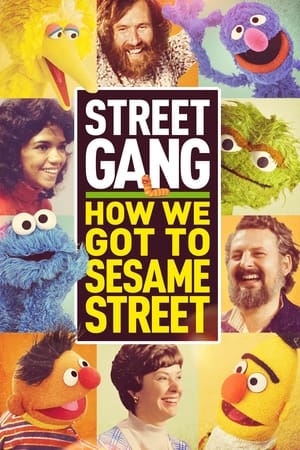
Street Gang: How We Got to Sesame Street(en)
2021-04-23
Take a stroll down Sesame Street and witness the birth of the most influential children's show in television history. From the iconic furry characters to the classic songs you know by heart, learn how a gang of visionary creators changed the world.

100%
Status and Terrain(de)
2019-07-13
Exploring the mechanisms of the Nazi seizure of power and focusing on forgotten sites in Saxony and Thuringia, the film investigates early "wild" concentration camps established after 1933 for the suppression of political opponents.

70%
Shari & Lamb Chop(en)
2025-07-18
Shari Lewis was a dancer, singer, and magician but is best known as the ventriloquist behind sock puppets Charlie Horse, Hush Puppy and, of course, Lamb Chop. This lively doc charts the life, loves, and career hits and misses of this spunky perfectionist, who forever changed the face of children’s television.

57%
Warren Oates: Across the Border(en)
1993-11-10
A retrospective of the work of the late actor Warren Oates, with clips from his films and interviews with cast and crew members who worked with him.

72%
Olga(pt)
2004-08-20
Based upon the true story of Olga Benário, the German-born wife of Brazilian communist leader Luís Carlos Prestes. During the dictatorship of Getúlio Vargas (1930-1945) she was arrested and sent to Nazi Germany, where she was put to death in a concentration camp. After World War II began, Vargas decided to uphold the Allies.

66%
The Memphis Belle(en)
1944-04-13
This WW2 documentary centers on the crew of the American B-17 Flying Fortress Memphis Belle as it prepares to execute a strategic bombing raid on Nazi submarine pens in Wilhelmshaven, Germany.
73%
The Damned(it)
1969-10-30
In the early days of Nazi Germany, a powerful noble family must adjust to life under the new dictatorship regime.

0%
Life on the V: The Story of V66(en)
2014-04-27
Boston's V66 music video station came and went in the mid-1980s but in the 18 months on the air, it was one of the only over-the-air music video channels ever created. But even popular success didn't mean it was going to last...
0%
JO de Berlin 36, la grande illusion(fr)
2015-03-15
In August 1936, the Olympic Games, orchestrated by Joseph Goebbels, the Third Reich's Minister of Propaganda, took place in Berlin. This was a vast charm offensive designed to present Germany as a nation that respected the Olympic principles of equality and fraternity. This documentary reveals the political strategies of the Third Reich, which benefited from the complicity of the International Olympic Committee in thwarting calls for a boycott by several countries. Once the games were over, Nazi policy intensified. How could the civilized world turn a blind eye to this "great illusion"? Gretel Bergmann, the German Jewish athlete at the center of a bargaining chip between the German authorities and the US government, and Noël Vandernotte, who won a bronze medal in rowing, share their stories.

69%
The Contestant(en)
2023-09-08
The incredible true story of a man who lived for 15 months trapped inside a small room, naked, starving and alone... and completely unaware that his life was being broadcast on national TV in Japan, to over 15 million viewers a week.