Loading Page

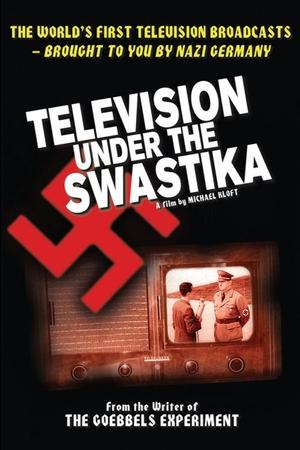
Television Under the Swastika(1999)
Status: Released
Date: 1999-06-21
68%
5 Votes
Time: 0h 55m
Overview:
A history of Nazi television programming and technology, from 1935 to 1944.
Languages: German.
Countries:
Germany
ProductionCompanies: 
Movie: Television Under the Swastika
Top 1 Billed Cast

Peter Buchholz
Self - Narrator (voice)
Loading Photos
Photo Type :Total items
Recommendations Movies
74%
Hitler: A Career(de)
1977-07-08
A keen chronicle of the unlikely rise to power of Adolf Hitler (1889-1945) and a dissection of the Third Reich (1933-1945), but also an analysis of mass psychology and how the desperate crowd can be deceived and shepherded to the slaughterhouse.
66%
The Eichmann Show(en)
2015-01-20
The behind-the-scenes true life story of a groundbreaking producer, Milton Fruchtman, and blacklisted TV director Leo Hurwitz who, overcoming enormous obstacles, set out to capture the testimony of one of the war's most notorious Nazis, Adolf Eichmann, who is accused of executing the 'final solution' and organising the murder of 6 million Jews. This is the extraordinary story of how the trial came to be televised and the team that made it happen.
73%
Riefenstahl(de)
2024-08-29
Explores Leni Riefenstahl's artistic legacy and her complex ties to the Nazi regime, juxtaposing her self-portrayal with evidence suggesting awareness of the regime's atrocities.
66%
Mother Night(en)
1996-11-01
An American spy behind the lines during WWII serves as a Nazi propagandist, a role he cannot escape in his future life as he can never reveal his real role in the war.
68%
Making Waves: The Art of Cinematic Sound(en)
2019-10-25
The history of cinematic sound, told by legendary sound designers and visionary filmmakers.
67%
Goebbels and the Führer(de)
2024-07-11
As Minister of Propaganda, Joseph Goebbels creates films and pictures used to prepare the Germans for Total War and the Holocaust. When the war is lost, he conceives his last staging, the most radical propaganda act still possible to him.
68%
The Unknown Known(en)
2013-08-29
Former United States Secretary of Defense, Donald Rumsfeld, discusses his career in Washington D.C. from his days as a congressman in the early 1960s to planning the invasion of Iraq in 2003.
77%
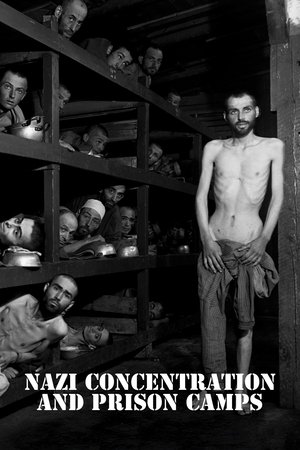
Nazi Concentration Camps(en)
1945-11-29
Produced and presented as evidence at the Nuremberg war crimes trial of Hermann Göring and twenty other Nazi leaders, this film consists primarily of dead and surviving prisoners and of facilities used to kill and torture during the World War II.

82%
The Untold History Of The United States(en)
2012-11-12
Oliver Stone charts the history of the United States from the Second World War to the present.
69%
Triumph of the Will(de)
1935-03-28
A showcase of German chancellor and Nazi Party leader Adolf Hitler at the 1934 Nuremberg Rally.

74%
Red Army(en)
2015-01-23
A documentary highlighting the Soviet Union's legendary and enigmatic hockey training culture and world-dominating team through the eyes of the team's Captain Slava Fetisov, following his shift from hockey star and celebrated national hero to political enemy.

76%
Night Will Fall(en)
2014-06-07
When Allied forces liberated the Nazi concentration camps in 1944-45, their terrible discoveries were recorded by army and newsreel cameramen, revealing for the first time the full horror of what had happened. Making use of British, Soviet and American footage, the Ministry of Information’s Sidney Bernstein (later founder of Granada Television) aimed to create a documentary that would provide lasting, undeniable evidence of the Nazis’ unspeakable crimes. He commissioned a wealth of British talent, including editor Stewart McAllister, writer and future cabinet minister Richard Crossman – and, as treatment advisor, his friend Alfred Hitchcock. Yet, despite initial support from the British and US Governments, the film was shelved, and only now, 70 years on, has it been restored and completed by Imperial War Museums under its original title "German Concentration Camps Factual Survey".

69%
Munich – The Edge of War(en)
2021-12-31
At the tense 1938 Munich Conference, former friends who now work for opposing governments become reluctant spies racing to expose a Nazi secret.
70%
Visions of Light(en)
1992-09-17
Cameramen and women discuss the craft and art of cinematography and of the "DP" (the director of photography), illustrating their points with clips from 100 films, from Birth of a Nation to Do the Right Thing. Themes: the DP tells people where to look; changes in movies (the arrival of sound, color, and wide screens) required creative responses from DPs; and, these artisans constantly invent new equipment and try new things, with wonderful results. The narration takes us through the identifiable studio styles of the 30s, the emergence of noir, the New York look, and the impact of Europeans. Citizen Kane, The Conformist, and Gordon Willis get special attention.
70%
What We Left Behind: Looking Back at Star Trek: Deep Space Nine(en)
2018-10-12
A documentary exploring the legacy of Star Trek: Deep Space Nine, the reasons it went from the black sheep of Star Trek to a beloved mainstay of the franchise, and a brainstorm with the original writers on what a theoretical eighth season of the show could look like.
60%
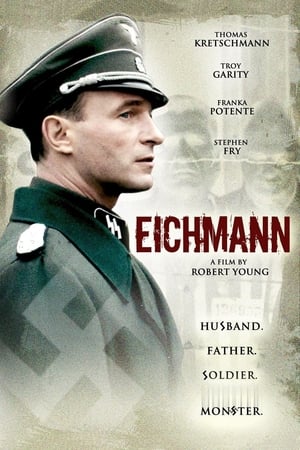
Eichmann(en)
2007-09-22
Based upon the final confession of Adolf Eichmann, made before his execution in Israel, of his role in Hitler's plan for the final solution.

63%
Banking on Bitcoin(en)
2016-12-30
Not since the invention of the Internet has there been such a disruptive technology as Bitcoin. Bitcoin's early pioneers sought to blur the lines of sovereignty and the financial status quo. After years of underground development Bitcoin grabbed the attention of a curious public, and the ire of the regulators the technology had subverted. After landmark arrests of prominent cyber criminals Bitcoin faces its most severe adversary yet, the very banks it was built to destroy.
66%
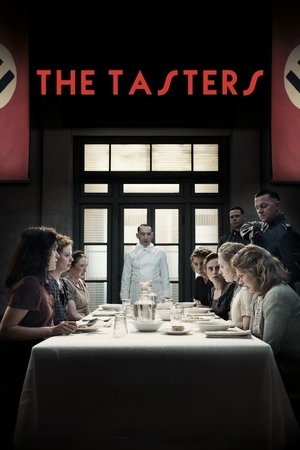
The Tasters(de)
2025-03-27
In autumn 1943, in Gross-Partsch, 26-year-old Rosa, who had come from Berlin to stay with the parents of her husband Gregor, who was fighting on the Russian front, was taken by the SS to a mysterious place. Forced to taste a dish, she joins the group of tasters responsible for checking that the food destined for Hitler is not poisoned.
68%
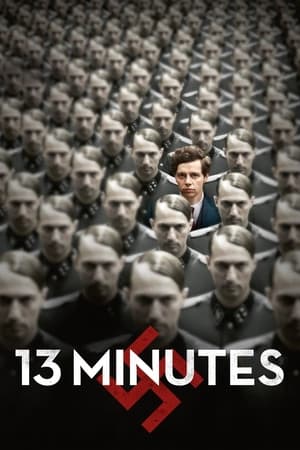
13 Minutes(de)
2015-04-09
The breathtaking story of a man who nearly would have changed the world. In 1939, when Hitler tricked millions of people at the height of his power, radical Georg Elser — disparaged as an assassin — is one of the greatest resistance fighters.
Similar Movies

74%
The Mongols(fa)
1973-10-01
A director of a television series on the history of cinema, who has been grappling with the screenplay of his first feature film, receives an assignment to oversee the installation of a television relay station in a remote region of Zahedan province. He has already hired Turkmen tribespeople for his film and selected his filming location. Meanwhile his wife, who is working on her Ph.D. dissertation about the Mongol invasion of Iran, attempts to dissuade him from accepting the assignment. One night, while working on his history of the cinema series, the director fantasizes a diegetic world that consists of clever juxtapositions of his different worlds: the history of cinema, the history of the mongol invasion, his own film idea and his imminent assignment to the desert.
0%
JO de Berlin 36, la grande illusion(fr)
2015-03-15
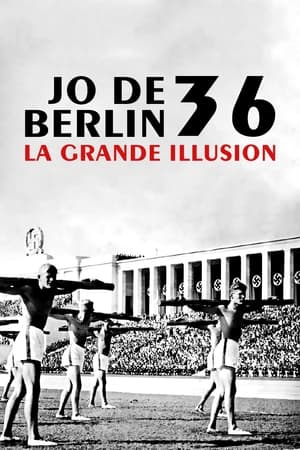
In August 1936, the Olympic Games, orchestrated by Joseph Goebbels, the Third Reich's Minister of Propaganda, took place in Berlin. This was a vast charm offensive designed to present Germany as a nation that respected the Olympic principles of equality and fraternity. This documentary reveals the political strategies of the Third Reich, which benefited from the complicity of the International Olympic Committee in thwarting calls for a boycott by several countries. Once the games were over, Nazi policy intensified. How could the civilized world turn a blind eye to this "great illusion"? Gretel Bergmann, the German Jewish athlete at the center of a bargaining chip between the German authorities and the US government, and Noël Vandernotte, who won a bronze medal in rowing, share their stories.
72%
Is Paris Burning?(fr)
1966-10-26
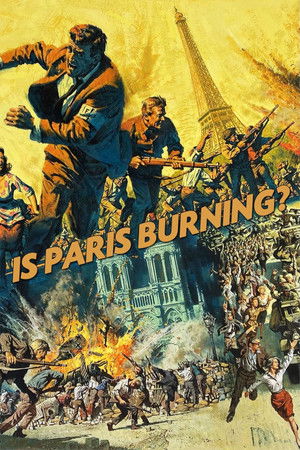
Near the end of World War II, Gen. Dietrich von Choltitz receives orders to burn down Paris if it becomes clear the Allies are going to invade, or if he cannot maintain control of the city. After much contemplation Choltitz decides to ignore his orders, enraging the Germans and giving hope to various resistance factions that the city will be liberated. Choltitz, along with Swedish diplomat Raoul Nordling, helps a resistance leader organize his forces.

0%
The Grove, Texas(en)
2014-05-02
In 1972, Moody Anderson bought a ghost town and brought it back to life. Nearly four decades later, Moody faces the heart-wrenching task of dismantling and selling his collection of Americana artifacts used in hundreds of films, from Lonesome Dove and The Texas Chainsaw Massacre to the Coen Brothers' remake of True Grit.
60%
Oops, Those Hollywood Bloopers!(en)
1982-01-01
A collection of bloopers and outtakes from an enormous selection of Hollywood classic productions spanning from the 1930s through the 1980s.

59%
Stella. A Life.(de)
2024-01-17
Stella, grows up in Berlin during the rule of the Nazi regime. She dreams of a career as a jazz singer, despite all the repressive measures she is forced to go into hiding with her parents in 1944, her life turns into a culpable tragedy.

65%
Martha Liebermann(de)
2022-06-01
Berlin, 1943, during World War II. Martha Liebermann, an elderly upper-class Jewish woman, faces the decision of her life: should the widow of the world-famous and revered painter Max Liebermann continue to try to obtain an exit permit from the Nazis or, with the help of a resistance group, should she flee to Switzerland?

80%
Mengele, the hunt for a Nazi criminal(fr)
2017-06-18
He was one of the most notorious Nazi war criminals, infamous for his assassination attempts on twins. But at the end of World War II, he simply disappeared...

69%
The Contestant(en)
2023-09-08
The incredible true story of a man who lived for 15 months trapped inside a small room, naked, starving and alone... and completely unaware that his life was being broadcast on national TV in Japan, to over 15 million viewers a week.
100%
Status and Terrain(de)
2019-07-13
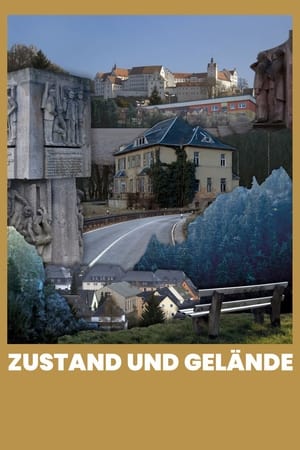
Exploring the mechanisms of the Nazi seizure of power and focusing on forgotten sites in Saxony and Thuringia, the film investigates early "wild" concentration camps established after 1933 for the suppression of political opponents.

40%
Liberators Take Liberties(de)
1992-02-22
Helke Sander interviews multiple German women who were raped in Berlin by Soviet soldiers in May 1945. Most women never spoke of their experience to anyone, due largely to the shame attached to rape in German culture at that time.

70%
Shari & Lamb Chop(en)
2025-07-18
Shari Lewis was a dancer, singer, and magician but is best known as the ventriloquist behind sock puppets Charlie Horse, Hush Puppy and, of course, Lamb Chop. This lively doc charts the life, loves, and career hits and misses of this spunky perfectionist, who forever changed the face of children’s television.

57%
Warren Oates: Across the Border(en)
1993-11-10
A retrospective of the work of the late actor Warren Oates, with clips from his films and interviews with cast and crew members who worked with him.

62%
VHS Revolution(fr)
2017-08-28
Using testimonies by pioneers and witnesses of the times, delve into the feverish visual culture the media generated – with far-fetched examples of canine television games, seduction manuals, aerobics class while holding a baby, among others.

0%
Der dritte Bruder(de)
2025-05-01
While searching for her grandmother, the director comes across the story of three brothers who are torn between the fronts of political ideologies in the Third Reich and divided Germany: "the third brother" is the filmmaker's grandfather, who, in confronting her father, tries to overcome decades of speechlessness and, in the process, to understand where in the past her father's sense of family fell by the wayside.
73%
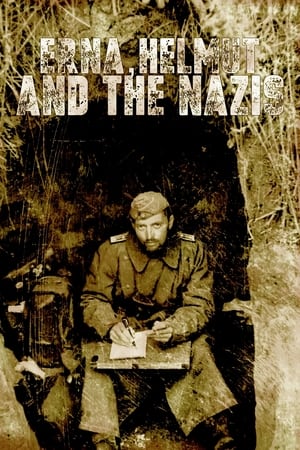
Erna, Helmut and the Nazis(de)
2021-04-29
Germany, 1929. Helmut Machemer and Erna Schwalbe fall madly in love and marry in 1932. Everything indicates that a bright future awaits them; but then, in 1933, Adolf Hitler and the Nazi Party rise to power and their lives are suddenly put in danger because of Erna's Jewish ancestry.
75%
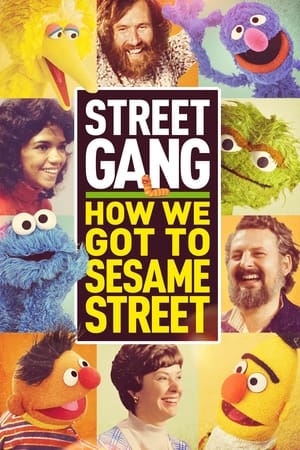
Street Gang: How We Got to Sesame Street(en)
2021-04-23
Take a stroll down Sesame Street and witness the birth of the most influential children's show in television history. From the iconic furry characters to the classic songs you know by heart, learn how a gang of visionary creators changed the world.

0%
Bullets And Blueberries(en)
2025-09-23
The Holocaust began with the indiscriminate mass shootings by the Einsatzgruppen in the bloodlands of Eastern Europe and was perfected in the gas chambers at Auschwitz. “Bullets And Blueberries” explores the motives, methods and madness of the perpetrators, using never-before-seen images captured by the killers themselves — images that fully capture the banality of evil.
71%
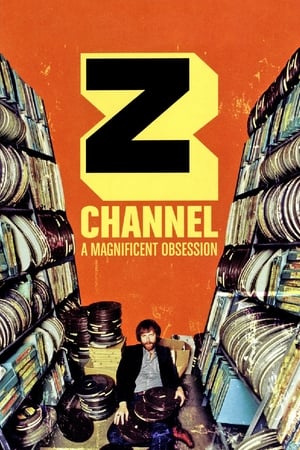
Z Channel: A Magnificent Obsession(en)
2004-05-16
A documentary on the Z Channel, one of the first pay cable stations in the US, and its programming chief, Jerry Harvey. Debuting in 1974, the LA-based channel's eclectic slate of movies became a prime example of the untapped power of cable television.