Last Room
Top 10 Billed Cast

HomePage
Overview
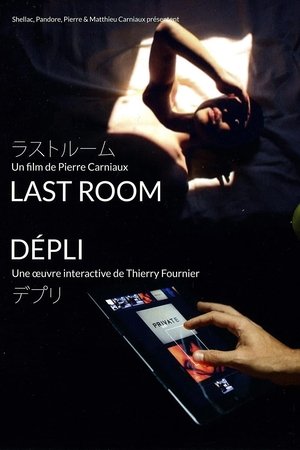
Made in Japan, Last Room is both fiction and documentary. The occupants of the love-hotels and capsule-hotels tell their own intimate, dreamlike stories, interspersed with journeys through the archipelago's landscapes. Soon, these personal stories resonate with a collective history: that of Gunkanjima, the abandoned ghost island of Nagasaki, and then that of Japan as a whole.
Release Date
2011-07-06
Average
10
Rating:
5.0 startsTagline
Genres
Languages:
日本語Keywords
Similar Movies
The King Without a Crown(en)
This short explores the possibility that Louis XVII, son of King Louis XVI and Marie Antoinette, escaped death during the French Revolution and was raised by Indians in America.
Shapeless Tracking(es)
Inside a computer a space-time is revealed in which image and sound become numbers and motion manifests as rhythm, flow and chaos. This tracking and integration experiment removes the superficial identity of video to detect kinetic disturbances in everyday environment.
Art: By Any Means Necessary(ht)
Follows the defiance of two art institutions in the Caribbean: one closed but squatted by artists, the other fighting to stay open. Against the backdrop of political strife, Haitian and Guadeloupean artists grapple with the concept of freedom in their battle to preserve their spaces.
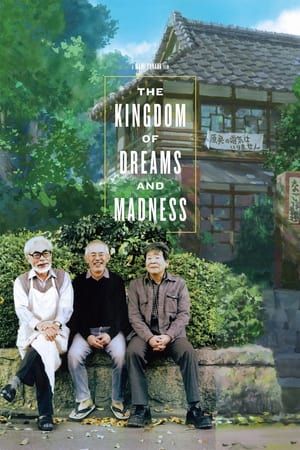
The Kingdom of Dreams and Madness(ja)
Follows the behind-the-scenes work of Studio Ghibli, focusing on the notable figures Hayao Miyazaki, Isao Takahata, and Toshio Suzuki.

OKINAWA PHILADELPHIA(en)
An Okinawan photographer, Mao Ishikawa was 33 years old when she crossed the ocean to Philadelphia in order to photograph the life of her friend, Myron Carr, a former US marine whom she met during his service in Okinawa in the 1970s. The subsequent photo book, “Life in Philly”, is filled with raw and vivid images, capturing the atmosphere and the culture of the predominantly African American neighborhood of downtown Philadelphia in the late 80s. This film looks back on those days, bringing Myron to remembrance as Mao and his surviving family try to find the missing pieces.
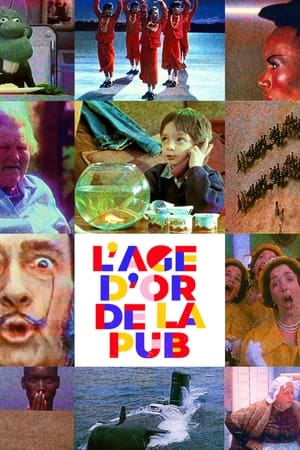
L'Âge d'or de la pub(fr)
55 years ago, on October 1 1968, the first brand advertising spot appeared on the French television screen. Over the next three decades, thousands of creative little films would seduce and build our collective memory. Kitschy or cult spots, humor, slogans, music, stars, gimmicks, grand spectacle or sex appeal: during its golden age, how did advertising convince? Thierry Ardisson has brought together almost 400 advertising clips to relive the era of the conquest of minds and wallets.
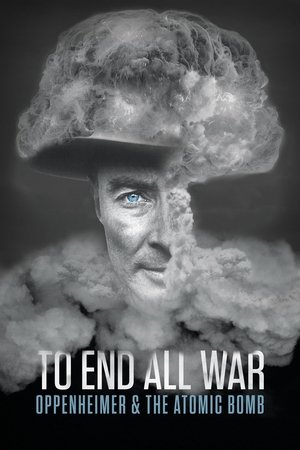
To End All War: Oppenheimer & the Atomic Bomb(en)
Explore how one man's relentless drive and invention of the atomic bomb changed the nature of war forever, led to the deaths of hundreds of thousands of people and unleashed mass hysteria.
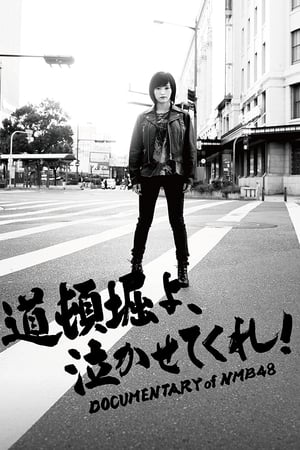
Raise Your Arms and Twist! Documentary of NMB48(ja)
Launched in 2011 as a sister group to girl band behemoth AKB48, the Osaka-based NMB48 has become a musical force itself. With a string of No.1 hit singles and albums, not to mention sell-out performances, NMB48 continues Japan’s pop-music phenomena. Director Funahashi Atsushi, whose documentary work has previously chronicled such harrowing events as the Fukushima nuclear meltdown, pulls back the curtain on the life and struggles of the band members and the workings of the idol-making industry.

Children playing with skipping rope(en)
A group of children are encouraged to play in a park by two men. Some play a skipping game. One of the other children refuses and eventually runs away. Another child is fascinated by the camera and stares at it throughout, even when encouraged by one of the men to play. IN the background, traffic passes and pedestrians stroll past behind a railing on an upper level. The children wear sunhats, indicating the weather is very sunny.
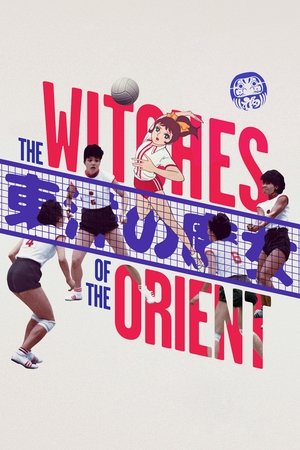
The Witches of the Orient(fr)
The Japanese volleyball players called the “Oriental Witches” are now in their 70s. From the formation of the team at the factory until their victory at the Tokyo Olympics in 1964, memories and legends rise to the surface and blend inextricably.

Ancient Caves(en)
Ancient Caves brings science and adventure together as it follows paleoclimatologist Dr. Gina Moseley on a mission to unlock the secrets of the Earth’s climate in the most unlikely of places: caves. Moseley and her team of cave explorers travel the world exploring vast underground worlds in search of stalagmite samples – geologic “fingerprints” – that reveal clues about the planet’s climate history. Their quest leads them to some of the world’s most remote caves, both above and below the water, in France, Iceland, the Bahamas, the U.S. and Mexico’s Yucatan Peninsula. Together, they go where very few humans will ever go, revealing the incredible lengths scientists will go to study the unknown.
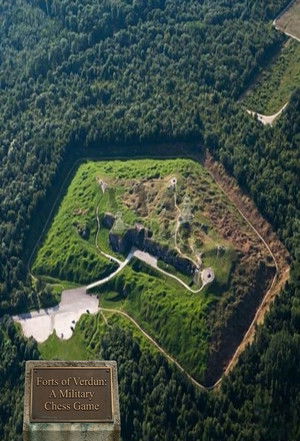
Forts of Verdun: A Military Chess Game(en)
With 38 forts at stake, Verdun was highly strategic during WWI. Through rare archives, 3D animations and interviews with historians and scientists, we plunge inside the walls of these coveted fortifications.
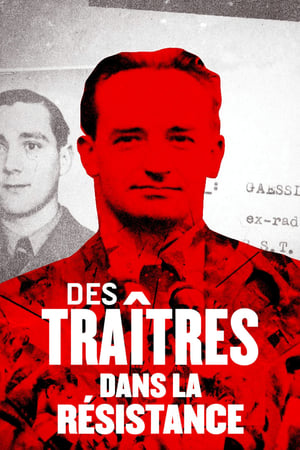
Des traîtres dans la Résistance(fr)
In May 1943, Ernst Kaltenbrunner, the new head of the Reich Central Security Office, gave Hitler a report describing in detail the organization of the French Resistance. Indeed, during the Second World War, most of the Resistance networks had been infiltrated by traitors, the "V Man" (trusted men) in the service of the occupier. The Germans had established treason as a system and recruiting Frenchmen ready to inform on them was one of their priorities. It was these Frenchmen, whose number is estimated at between 20,000 and 30,000, who dealt terrible blows to the Resistance.

Japon : L'Empire du sexe virtuel(fr)

Wounded Edges(de)
In July 2022, a forest fire broke out on Monte Gambarogno in Ticino, Switzerland. Wound Edges is my emotional response to this landscape, filmed on 16mm and hand-developed with the forest’s ashes. Each frame carries physical traces of the land’s memory, blending destruction with resilience. The soundscape—field recordings, burned wood, contact microphones on trees, and the presence of fire—echoes the forest’s wounds. A reflection on human impact, impermanence, and the haunting beauty of transformation.
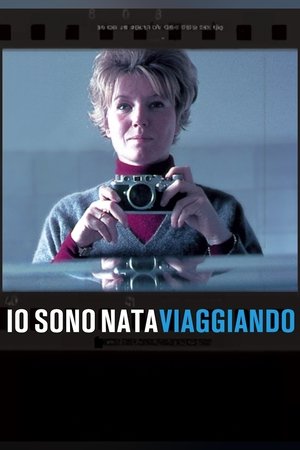
Io sono nata viaggiando(it)
A journey back through Dacia Maraini's and her trips around the world with her close friends cinema director Pier Paolo Pasolini and opera singer Maria Callas. An in-depth story of this fascinating woman's life. Maraini's memories come alive through personal photographs taken on the road as well as her own Super 8 films shot almost thirty years ago.
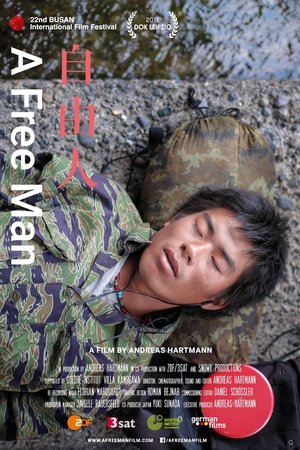
A Free Man(de)
22-year-old Kei refuses to conform to the Japanese achievement-oriented society. He is homeless by choice, living on the streets and under the bridges of Kyoto. His love for nature and music keeps him afloat in his dream world. However, when he runs out of money, he is forced to face reality.
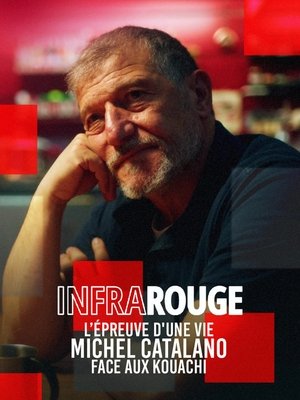
L'épreuve d'une vie - Michel Catalano face aux Kouachi(fr)
Romain Verley has known Michel Catalano since 2015. After January 9, he was the first journalist to interview him and film his devastated printing shop. For nearly 10 years, he has been a regular witness to its reconstruction. Yes, he survived the Kouachi brothers that day. Today, he is ready to tell his story. To deliver his truth since the attacks. This film follows his journey of resilience and sharing, punctuated by images and sounds from the 2015 attacks. It evokes a daily life that has been rebuilt around this event and looks back on the extreme violence of that day and the widespread violence of all those that followed.
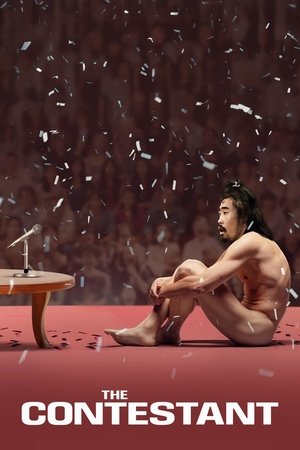
The Contestant(en)
The incredible true story of a man who lived for 15 months trapped inside a small room, naked, starving and alone... and completely unaware that his life was being broadcast on national TV in Japan, to over 15 million viewers a week.
Recommendations Movies
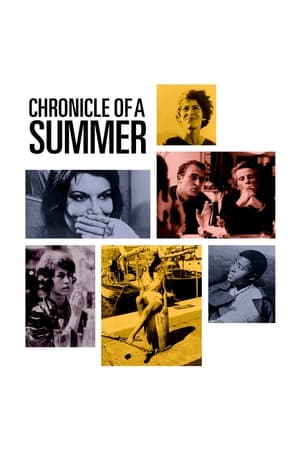
Chronicle of a Summer(fr)
Paris, summer 1960. Anthropologist and filmmaker Jean Rouch and sociologist and film critic Edgar Morin wander through the crowded streets asking passersby how they cope with life's misfortunes.
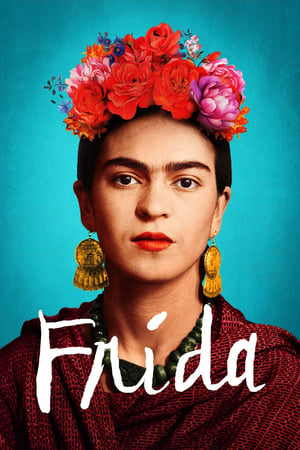
Frida(en)
An intimately raw and magical journey through the life, mind, and heart of iconic artist Frida Kahlo. Told through her own words for the very first time — drawn from her diary, revealing letters, essays, and print interviews — and brought vividly to life by lyrical animation inspired by her unforgettable artwork.
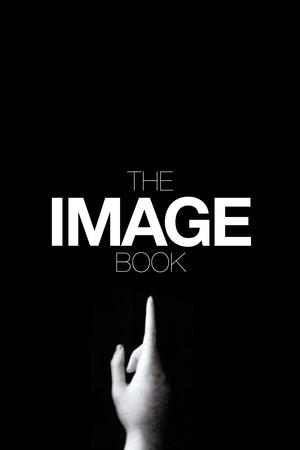
The Image Book(fr)
In Le Livre d’Image, Jean-Luc Godard recycles existing images (films, documentaries, paintings, television archives, etc.), quotes excerpts from books, uses fragments of music. The driving force is poetic rhyme, the association or opposition of ideas, the aesthetic spark through editing, the keystone. The author performs the work of a sculptor. The hand, for this, is essential. He praises it at the start. “There are the five fingers. The five senses. The five parts of the world (…). The true condition of man is to think with his hands. Jean-Luc Godard composes a dazzling syncopation of sequences, the surge of which evokes the violence of the flows of our contemporary screens, taken to a level of incandescence rarely achieved. Crowned at Cannes, the last Godard is a shock film, with twilight beauty.
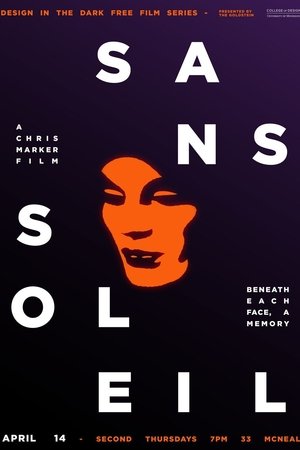
Sans Soleil(fr)
A woman narrates the thoughts of a world traveler, meditations on time and memory expressed in words and images from places as far-flung as Japan, Guinea-Bissau, Iceland, and San Francisco.
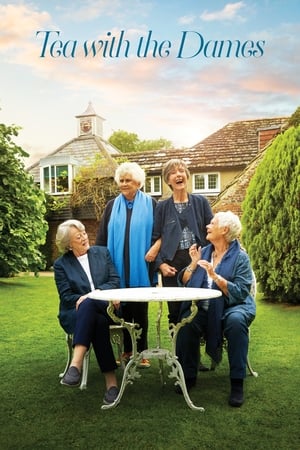
Nothing Like a Dame(en)
BBC Arena's documentary on the Dames of British Theatre and film featuring Maggie Smith, Eileen Atkins, Judi Dench and Joan Plowright on screen together for the first time as they reminisce over a long summer weekend in a house Joan once shared with Sir Laurence Olivier.
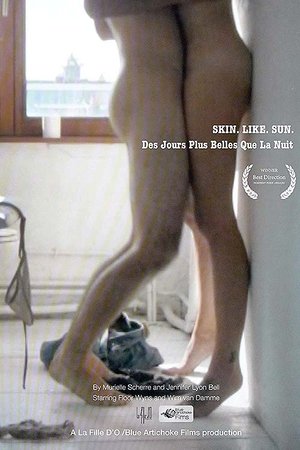
Skin. Like. Sun.(fr)
Real-life young couple Wim and Floor spend an afternoon in the sunwashed rooms of a crumbling home in Belgium. In a unique twist, this artistic erotic documentary is edited in nearly real-time. In the slowness, we get the build, the sweetness, and the sexiness. Forget about fingersnapping fast editing. Slow is where it’s at.
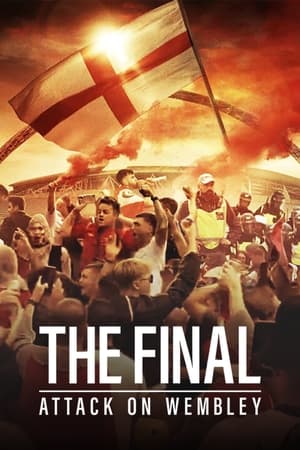
The Final: Attack on Wembley(en)
As England reach the final of the Euros at last, 6,000 ticketless football fans storm Wembley stadium, leaving destruction in their wake.

In the Realms of the Unreal(en)
In the Realms of the Unreal is a documentary about the reclusive Chicago-based artist Henry Darger. Henry Darger was so reclusive that when he died his neighbors were surprised to find a 15,145-page manuscript along with hundreds of paintings depicting The Story of the Vivian Girls, in What is Known as the Realms of the Unreal, of the Glodeco-Angelinnian War Storm, Cased by the Child Slave Rebellion.
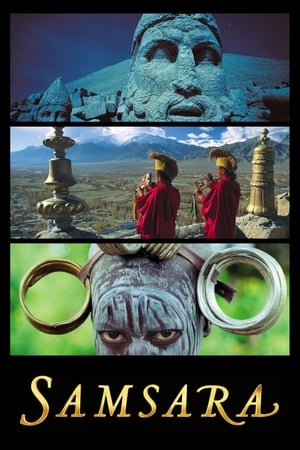
Samsara(en)
Filmed over nearly five years in twenty-five countries on five continents, and shot on seventy-millimetre film, Samsara transports us to the varied worlds of sacred grounds, disaster zones, industrial complexes, and natural wonders.
The Contestant(en)
The incredible true story of a man who lived for 15 months trapped inside a small room, naked, starving and alone... and completely unaware that his life was being broadcast on national TV in Japan, to over 15 million viewers a week.
Koyaanisqatsi(en)
Takes us to locations all around the US and shows us the heavy toll that modern technology is having on humans and the earth. The visual tone poem contains neither dialogue nor a vocalized narration: its tone is set by the juxtaposition of images and the exceptional music by Philip Glass.
Grey Gardens(en)
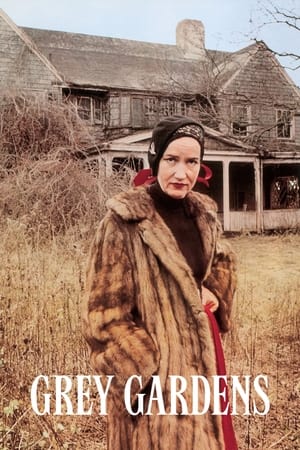
Edie Bouvier Beale and her mother, Edith, two aging, eccentric relatives of Jackie Kennedy Onassis, are the sole inhabitants of a Long Island estate. The women reveal themselves to be misfits with outsized, engaging personalities. Much of the conversation is centered on their pasts, as mother and daughter now rarely leave home.
Uncle Yanco(fr)
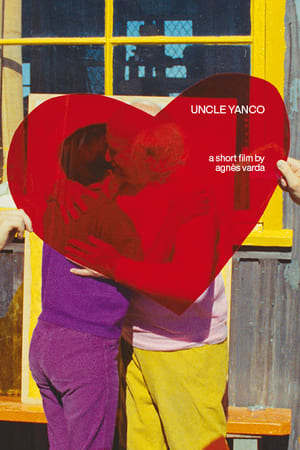
While in San Francisco for the promotion of her last film in October 1967, Agnès Varda, tipped by her friend Tom Luddy, gets to know a relative she had never heard of before, Jean Varda, nicknamed "Yanco". This hitherto unknown uncle lives on a boat in Sausalito, is a painter, has adopted a hippie lifestyle and loves life. The meeting is a very happy one.
Overnight(en)
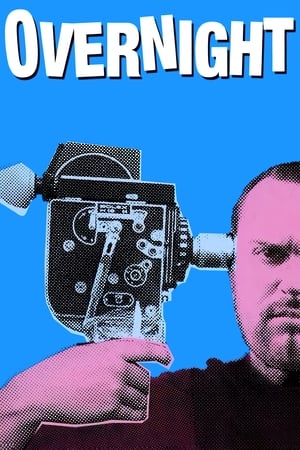
Alternately hilarious and horrifying, Overnight chronicles one man's misadventures of making a Hollywood movie. It starts out as a rags to riches story as Troy Duffy, a Boston-bred bartender, sells his first screenplay for The Boondock Saints.
Powaqqatsi(en)
An exploration of technologically developing nations and the effect the transition to Western-style modernization has had on them.
Faces Places(fr)
Director Agnès Varda and photographer/muralist JR journey through rural France and form an unlikely friendship.
Hearts of Darkness: A Filmmaker's Apocalypse(en)
A chronicle of the production problems — including bad weather, actors' health, war near the filming locations, and more — which plagued the filming of Apocalypse Now, increasing costs and nearly destroying the life and career of Francis Ford Coppola.
Symbiopsychotaxiplasm: Take One(en)
In Manhattan's Central Park, a film crew directed by William Greaves is shooting a screen test with various pairs of actors. It's a confrontation between a couple: he demands to know what's wrong, she challenges his sexual orientation. Cameras shoot the exchange, and another camera records Greaves and his crew. Sometimes we watch the crew discussing this scene, its language, and the process of making a movie. Is there such a thing as natural language? Are all things related to sex? The camera records distractions - a woman rides horseback past them; a garrulous homeless vet who sleeps in the park chats them up. What's the nature of making a movie?
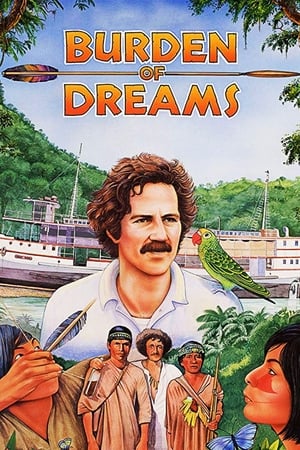
Burden of Dreams(en)
The Amazon rain forest, 1979. The crew of Fitzcarraldo (1982), a film directed by German director Werner Herzog, soon finds itself with problems related to casting, tribal struggles and accidents, among many other setbacks; but nothing compared to dragging a huge steamboat up a mountain, while Herzog embraces the path of a certain madness to make his vision come true.