Loading Page
The Forgotten Battle of Fort Pillow
Loading Trailer Videos...
Loading Photos
Photo Type :Total items
Similar Movies
65%
Rosewood(en)
1997-02-21
Spurred by a white woman's lie, vigilantes destroy a black Florida town and slay inhabitants in 1923.
70%
Ragtime(en)
1981-11-20
A young black pianist becomes embroiled in the lives of an upper-class white family set among the racial tensions, infidelity, violence, and other nostalgic events in early 1900s New York City.
80%
June 1940, the Great Chaos(fr)
2010-06-14
From May 10, 1940, France is living one of the worst tragedies of it history. In a few weeks, the country folds, and then collapsed in facing the attack of the Nazi Germany. On June 1940, each day is a tragedy. For the first time, thanks to historic revelations, and to numerous never seen before images and documents and reenacted situations of the time, this film recounts the incredible stories of those men and women trapped in the torment of this great chaos.
0%
Men with Cameras - Capture the Great Kanto Earthquake(ja)
2023-08-26
The film is set on September 1th, 1923 , when a huge earthquake hits Tokyo . The quake caused buildings to collapse, and the city was reduced to ashes by fire. The Great Kanto Earthquake killed more than 105,000 people. 100-year-old films recording this catastrophe have been found all over the country.But who filmed the turmoil of Tokyo, chased by raging fires?After investigating, I come across three cameramen. They turned the hand-cranked camera in a trance without being ordered by anyone.
90%
Je vais tuer Hitler(fr)
2023-07-26
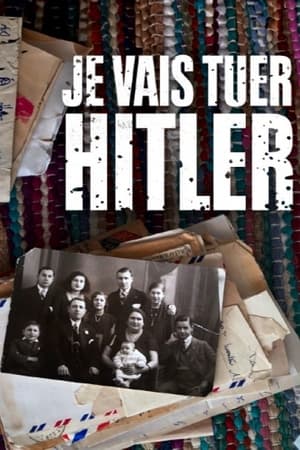
One day, in Savigny, an 18-year-old boy left his house in the middle of the war, saying: "I'm leaving, I'm going to kill Hitler." His name was Joseph, he was Jewish, he was my great-uncle. He disappeared during the night of the Occupation, and his existence became a family secret. He disappeared from history, the small as well as the big: he is not on any deportation list, and the only archive where he appears is a family photo of him as a child. It disappeared like a stone at the bottom of the water, instead of going up in smoke in the sky of Poland. What did he become? And why didn't anyone mention his name anymore?
79%
Where Hands Touch(en)
2018-09-14
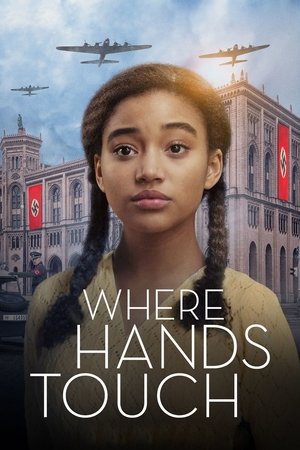
Germany, 1944. Leyna, the 15-year old daughter of a white German mother and a black African father, meets Lutz, a compassionate member of the Hitler Youth whose father is a prominent Nazi soldier, and they form an unlikely connection in this quickly changing world.
60%
The Birth of a Nation(en)
1915-03-08
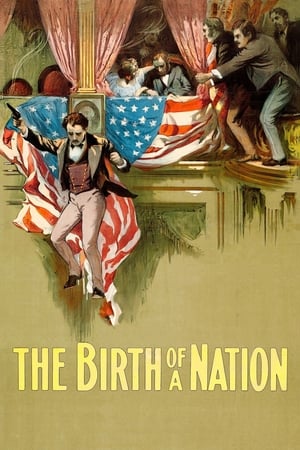
Two families, abolitionist Northerners the Stonemans and Southern landowners the Camerons, intertwine. When Confederate colonel Ben Cameron is captured in battle, nurse Elsie Stoneman petitions for his pardon. In Reconstruction-era South Carolina, Cameron founds the Ku Klux Klan, battling Elsie's congressman father and his African-American protégé, Silas Lynch.
79%
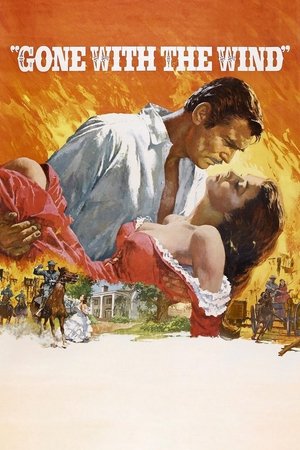
Gone with the Wind(en)
1939-12-15
The spoiled daughter of a Georgia plantation owner conducts a tumultuous romance with a cynical profiteer during the American Civil War and Reconstruction Era.
79%
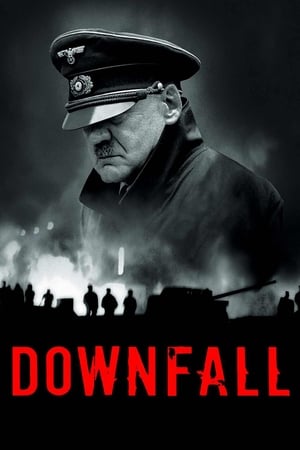
Downfall(de)
2004-09-16
In April of 1945, Germany stands at the brink of defeat with the Russian Army closing in from the east and the Allied Expeditionary Force attacking from the west. In Berlin, capital of the Third Reich, Adolf Hitler proclaims that Germany will still achieve victory and orders his generals and advisers to fight to the last man. When the end finally does come, and Hitler lies dead by his own hand, what is left of his military must find a way to end the killing that is the Battle of Berlin, and lay down their arms in surrender.
72%
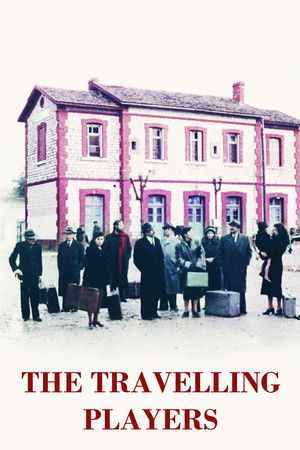
The Travelling Players(el)
1975-07-01
A traveling theatre troupe tours the Greek countryside from 1939 to the early 1950s, staging “Golfo the Shepherdess”. As the years pass, its members endure persecution, betrayal, executions, and exile. Their personal stories become entangled with the country’s major historical events, in a seemingly endless cycle of violence and loss.
57%
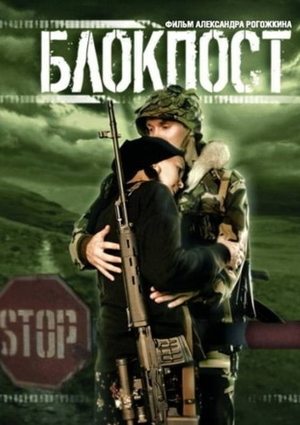
Checkpoint(ru)
1998-08-15
A group Russian soldiers is send to an outpost to guard the area. They pass the day patroulling the area, while being shot at from the forest. They never know if the civillions are hostile or friendly to them.
73%
Land of Bad(en)
2024-02-09
When a Delta Force special ops mission goes terribly wrong, Air Force drone pilot Reaper has 48 hours to remedy what has devolved into a wild rescue operation. With no weapons and no communication other than the drone above, the ground mission suddenly becomes a full-scale battle when the team is discovered by the enemy.

100%
Rap Dixon: Beyond Baseball(en)
2025-06-07
Rap Dixon was a legendary African American baseball player who played in what were known as the Negro Leagues. This film chronicles his life and baseball accomplishments while exploring how racism and segregation affect how people are remembered in history.
48%
The Truth lies in Rostock(de)
1993-01-01
August 1992, Rostock-Lichtenhagen. The police look on as fascists bomb the Central Reception Center for Refugees (ZAST) and a hostel for Vietnamese contract workers with Molotov cocktails. A montage of video footage shot from the attacked houses, interviews with anti-fascists, the Vietnamese contract workers, the police, bureaucrats, neo-Nazis and local residents. A documentary about the collusion of politics and widespread fear.
66%
American Torso(hu)
1975-01-01
In the final days of the American Civil War, an emigre Hungarian military officer attempts to map the situation of the enemy. Many veterans of the 1848 War of Independence in Hungary fought on the northern side. Experienced Fiala, Boldogh who struggles with homesickness and the reckless Vereczky all experience their enforced emigration in different ways and news of impending peace elicits different reactions from them all.
72%
The Sand Pebbles(en)
1966-12-20
Engineer Jake Holman arrives aboard the gunboat USS San Pablo, assigned to patrol a tributary of the Yangtze in the middle of exploited and revolution-torn 1926 China. His iconoclasm and cynical nature soon clash with the 'rice-bowl' system which runs the ship and the uneasy symbiosis between Chinese and foreigner on the river. Hostility towards the gunboat's presence reaches a climax when the boat must crash through a river-boom and rescue missionaries upriver at China Light Mission.
71%
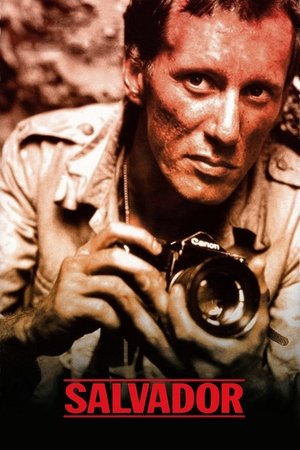
Salvador(en)
1986-04-23
In 1980, an American journalist covering the Salvadoran Civil War becomes entangled with both the leftist guerrilla groups and the right-wing military dictatorship while trying to rescue his girlfriend and her children.

0%
The Lincoln League(en)
Based on the true story of John Scobell, one of the first African American spies in our nation’s intelligence service. In 1861, President Lincoln commissions his spymaster Allan Pinkerton to incorporate a new network of African American spies. This group, operating right under the noses of their Southern masters, comes to be known as The Royal Lincoln League.
Recommendations Movies
60%
The Birth of a Nation(en)
1915-03-08
Two families, abolitionist Northerners the Stonemans and Southern landowners the Camerons, intertwine. When Confederate colonel Ben Cameron is captured in battle, nurse Elsie Stoneman petitions for his pardon. In Reconstruction-era South Carolina, Cameron founds the Ku Klux Klan, battling Elsie's congressman father and his African-American protégé, Silas Lynch.
68%
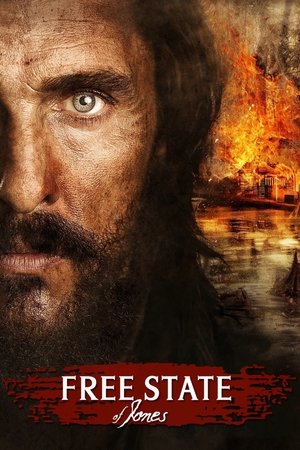
Free State of Jones(en)
2016-06-24
In 1863, Mississippi farmer Newt Knight serves as a medic for the Confederate Army. Opposed to slavery, Knight would rather help the wounded than fight the Union. After his nephew dies in battle, Newt returns home to Jones County to safeguard his family but is soon branded an outlaw deserter. Forced to flee, he finds refuge with a group of runaway slaves hiding out in the swamps. Forging an alliance with the slaves and other farmers, Knight leads a rebellion that would forever change history.
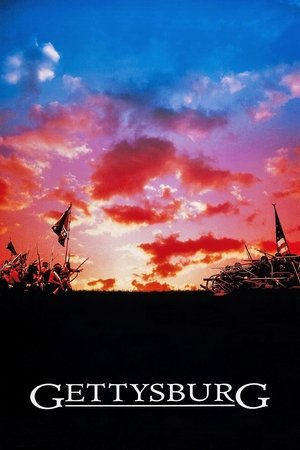
70%
Gettysburg(en)
1993-10-08
In the summer of 1863, General Robert E. Lee leads the Confederate Army of Northern Virginia into Gettysburg, Pennsylvania with the goal of marching through to Washington, D.C. The Union Army of the Potomac, under the command of General George G. Meade, forms a defensive position to confront the rebel forces in what will prove to be the decisive battle of the American Civil War.
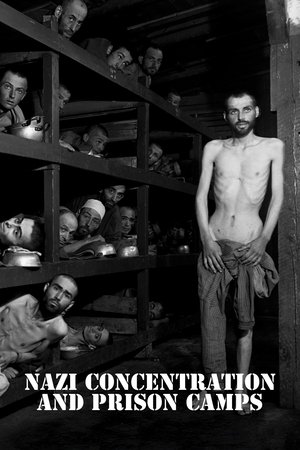
77%
Nazi Concentration Camps(en)
1945-11-29
Produced and presented as evidence at the Nuremberg war crimes trial of Hermann Göring and twenty other Nazi leaders, this film consists primarily of dead and surviving prisoners and of facilities used to kill and torture during the World War II.
75%
The War on Democracy(en)
2007-06-15
Set both in Latin America and the United States, the film explores the historic and current relationship of Washington with countries such as Venezuela, Bolivia and Chile. Pilger says that the film "...tells a universal story... analysing and revealing, through vivid testimony, the story of great power behind its venerable myths. It allows us to understand the true nature of the so-called "war on terror". According to Pilger, the film’s message is that the greed and power of empire is not invincible and that people power is always the "seed beneath the snow".
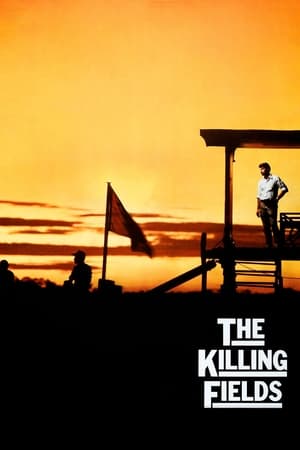
75%
The Killing Fields(en)
1984-11-23
New York Times reporter Sydney Schanberg is on assignment covering the Cambodian Civil War, with the help of local interpreter Dith Pran and American photojournalist Al Rockoff. When the U.S. Army pulls out amid escalating violence, Schanberg makes exit arrangements for Pran and his family. Pran, however, tells Schanberg he intends to stay in Cambodia to help cover the unfolding story — a decision he may regret as the Khmer Rouge rebels move in.
65%
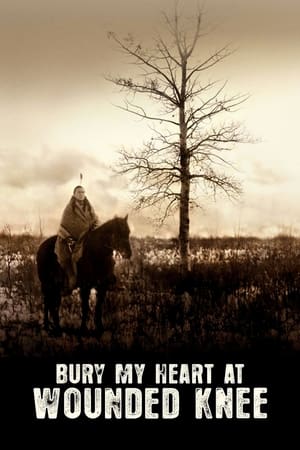
Bury My Heart at Wounded Knee(en)
2007-05-27
Beginning just after the bloody Sioux victory over General Custer at Little Big Horn, the story is told through two unique perspectives: Charles Eastman, a young, white-educated Sioux doctor held up as living proof of the alleged success of assimilation, and Sitting Bull the proud Lakota chief whose tribe won the American Indians’ last major victory at Little Big Horn.
65%
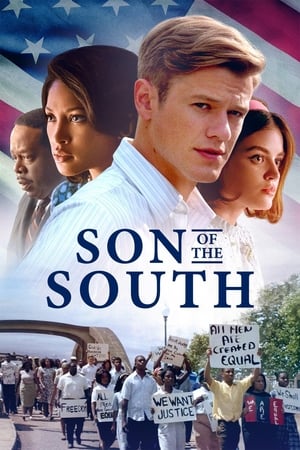
Son of the South(en)
2021-02-05
In civil rights era Montgomery, Alabama, Klansman's grandson Bob Zellner must choose which side of history to be on during the Movement. Defying his family and white Southern norms, he fought against social injustice, repression and violence to change the world around him
75%
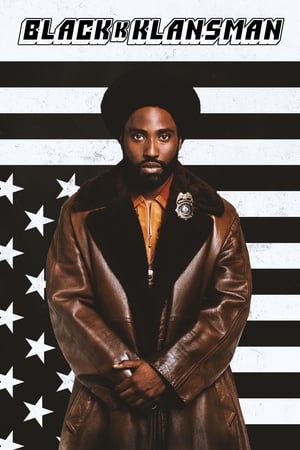
BlacKkKlansman(en)
2018-08-09
Colorado Springs, late 1970s. Ron Stallworth, an African American police officer, and Flip Zimmerman, his Jewish colleague, run an undercover operation to infiltrate the Ku Klux Klan.
65%
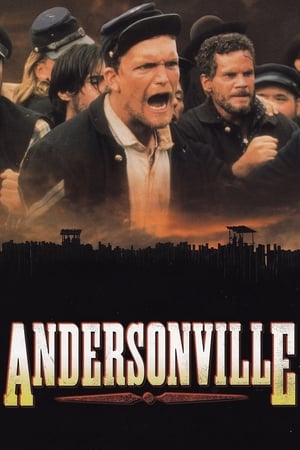
Andersonville(en)
1996-03-03
This lengthy docudrama records the harrowing conditions at the Confederacy's most notorious prisoner-of-war camp. The drama unfolds through the eyes of a company of Union soldiers captured at the Battle of Cold Harbor, VA, in June 1864, and shipped to the camp in southern Georgia. A private, Josiah Day, and his sergeant try to hold their company together in the face of squalid living conditions, inhumane punishments, and a gang of predatory fellow prisoners called the Raiders.
66%
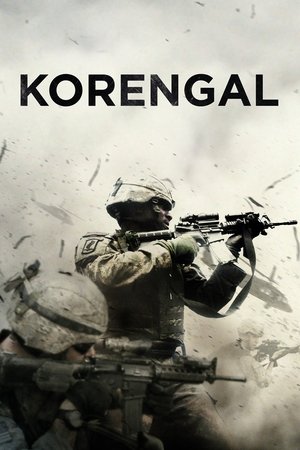
Korengal(en)
2014-05-30
Korengal picks up where Restrepo left off; the same men, the same valley, the same commanders, but a very different look at the experience of war.
63%
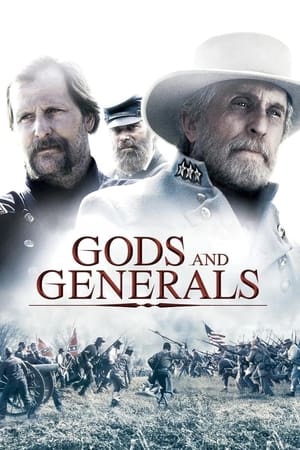
Gods and Generals(en)
2003-02-21
The film centers mostly around the personal and professional life of Thomas "Stonewall" Jackson, a brilliant if eccentric Confederate general, from the outbreak of the American Civil War until its halfway point.
60%
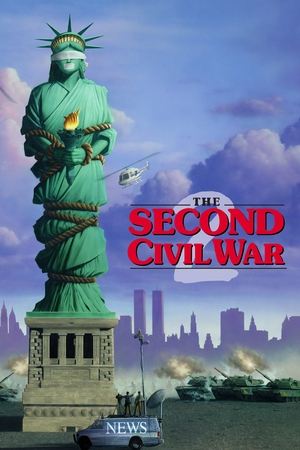
The Second Civil War(en)
1997-12-04
When a planeload of Pakistani orphans are shipped to his state for permanent relocation, the governor of Idaho defies the president and closes the state's border. News Net Television, a cable news program that makes hay by reporting on political scandals, quickly spins the racist act into an overnight media sensation, creating a divide in national opinion over the issue.
64%
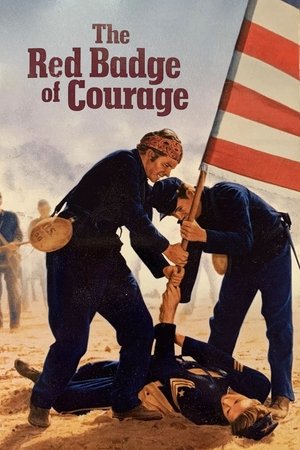
The Red Badge of Courage(en)
1951-09-27
Henry Fleming is a young Union soldier in the American Civil War. During his unit's first engagement, Henry flees the battlefield in fear. When he learns that the Union actually won the battle, shame over his cowardice leads him to lie to his friend Tom and the other soldiers, saying that he had been injured in battle. However, when he learns that his unit will be leading a charge against the enemy, Henry takes the opportunity to face his fears and redeem himself.
70%
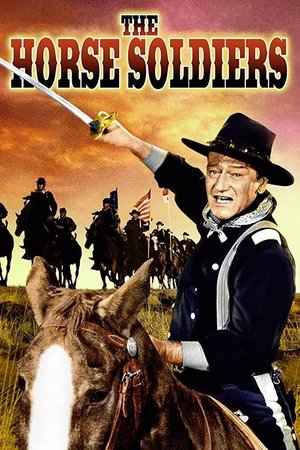
The Horse Soldiers(en)
1959-06-11
A Union Cavalry outfit is sent behind confederate lines in strength to destroy a rail supply center. Along with them is sent a doctor who causes instant antipathy between him and the commander. The secret plan for the mission is overheard by a southern belle who must be taken along to assure her silence.

76%
Night Will Fall(en)
2014-06-07
When Allied forces liberated the Nazi concentration camps in 1944-45, their terrible discoveries were recorded by army and newsreel cameramen, revealing for the first time the full horror of what had happened. Making use of British, Soviet and American footage, the Ministry of Information’s Sidney Bernstein (later founder of Granada Television) aimed to create a documentary that would provide lasting, undeniable evidence of the Nazis’ unspeakable crimes. He commissioned a wealth of British talent, including editor Stewart McAllister, writer and future cabinet minister Richard Crossman – and, as treatment advisor, his friend Alfred Hitchcock. Yet, despite initial support from the British and US Governments, the film was shelved, and only now, 70 years on, has it been restored and completed by Imperial War Museums under its original title "German Concentration Camps Factual Survey".
64%
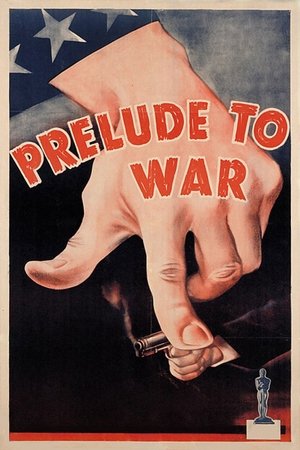
Why We Fight: Prelude to War(en)
1942-05-27
Prelude to War was the first film of Frank Capra's Why We Fight propaganda film series, commissioned by the Pentagon and George C. Marshall. It was made to convince American troops of the necessity of combating the Axis Powers during World War II. This film examines the differences between democratic and fascist states.
78%
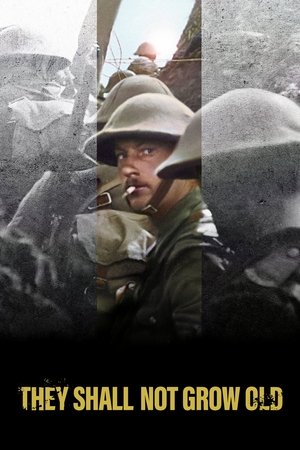
They Shall Not Grow Old(en)
2018-11-09
A documentary about World War I with never-before-seen footage to commemorate the centennial of Armistice Day, and the end of the war.