Loading Page

History of Pottery and Ceramics in Algeria
Top 1 Billed Cast
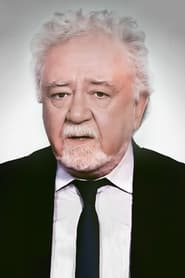
Slimane Hachi
Self
Loading Trailer Videos...

HomePage
Overview
In Algeria, pottery is different from one region to another, the result of the various influences it has undergone throughout history. If the manufacturing steps are substantially the same, the result is far from identical. In Kabylia, for example, the pottery, decorated with patterns, is red in color. In the south of Adrar, there are objects with rather original shapes and black in color. The pottery of the Nementcha Mountains is fashioned in clay with pink tones and decorated with brown designs. Originally, objects were made in families and exchanged between neighbours...
Release Date
2004-10-22
Average
10
Rating:
5.0 startsTagline
Genres
Languages:
العربيةKeywords
Similar Movies
100%
Frantz Fanon: His Life, His Struggle, His Work(fr)
2001-11-30
It is the evocation of a life as brief as it is dense. An encounter with a dazzling thought, that of Frantz Fanon, a psychiatrist of West Indian origin, who will reflect on the alienation of black people. It is the evocation of a man of reflection who refuses to close his eyes, of the man of action who devoted himself body and soul to the liberation struggle of the Algerian people and who will become, through his political commitment, his fight, and his writings, one of the figures of the anti-colonialist struggle. Before being killed at the age of 36 by leukemia, on December 6, 1961. His body was buried by Chadli Bendjedid, who later became Algerian president, in Algeria, at the Chouhadas cemetery (cemetery of war martyrs ). With him, three of his works are buried: “Black Skin, White Masks”, “L’An V De La Révolution Algérien” and “The Wretched of the Earth”.
0%
The Best of ABC's Wide World of Sports: The 60's(en)
1990-01-29
ABC's Wide World of Sports first started spanning the globe in 1960, and a generation of sports fans and weekend TV viewers were hooked from the start. In this videocassette, featuring highlights of that first decade, Wide World captured the famous moments of competition all over the globe.
60%
Many Beautiful Things(en)
2015-10-17
In an age when women were incapable of joining the artistic dialogue, Lilias Trotter managed to win the favour of celebrated critics.
100%
Algérie Tours Détours(fr)
2007-11-11
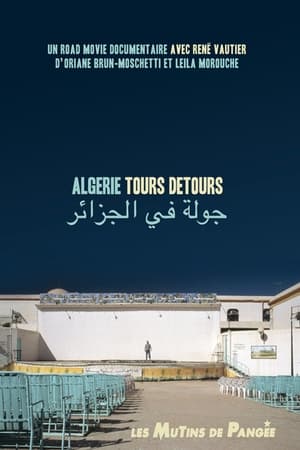
A documentary road movie with René Vautier In the aftermath of Algeria's independence, René Vautier, a militant filmmaker, considered "the dad" of Algerian cinema, set up the cine-pops. We recreate with him the device of itinerant projections and we travel the country in ciné-bus (Algiers, Béjaïa, Tizi Ouzou, Tébessa) to hear the voices of the spectators on the political situation, youth and living conditions of men and Of women today.
0%
But They Did: The Re-entry Of The Pike River Mine(en)
2025-11-19
Anna Osborn and Sonia Rockhouse were forever changed when the Pike River Mine Disaster stole their loved ones, but instead of sitting down, they stood up! But They Did tells Anna and Sonia's story, following them through the period of time before and during the re-entry of the mine.
0%
Il fare politica(it)
2005-05-13
Fabiana, Carlo, Claudio and Vincenzo… I met them in 1982 in Mercatale, their village in Tuscany, near Florence. They were aged between 25 and 45 and were cheerful militants in the Italian Communist Party, that strange party which has made its mark on history and which was both a school and a family for them. I have filmed in Mercatale every two or three years for over 20 years (1982/2004). The fi lm takes the “long view” of their political and personal development against the backdrop of village life. Stories with both human and political interest spanning over a quarter of a century with relevance for present day issues: what has become of the plans to change the world in Berlusconi’s Italy? From a more global perspective: what else can politics do? When the time comes to take stock the paths of their rich and varied personal lives cross once more with all their doubts and allegiances.

0%
Elizabeth II, 70 ans de règne de secrets et de scandales(fr)
2022-05-18
Elizabeth II has reigned over Great Britain for 70 years and is preparing to celebrate her platinum jubilee. Having become the heroine of one of the world's most watched television series during her lifetime, the Queen of England is the greatest star in history. At 96, the Queen is known to be in fragile health. With each new health scare, the world is in turmoil. Here is a portrait of this iconic figure of British royalty.
60%
Glimpses of Morocco and Algiers(en)
1951-08-04
This FitzPatrick Traveltalk short visits the cities of Casablanca, Rabat, and Marrakesh in Morocco, as well as the city of Algiers in Algeria.

100%
Anne Frank's Holocaust(en)
2015-06-21
Anne Frank's world famous diary came to an abrupt end shortly before she and her family were discovered hiding from the Nazis in a secret annex at the top of Otto Frank's office building, on August 4, 1944. While her diary tells the story of Anne's life, the story of her death reveals the atrocities encountered by millions of Jews during the Holocaust. In a solemn remembrance of the horrors that Anne Frank and these millions of others suffered during the dark days of World War II, National Geographic Channel (NGC) takes viewers inside the concentration camps in a two-hour special. In keeping with NGC's tradition of unparalleled storytelling, Anne Frank's Holocaust incorporates new findings and rarely seen photographs to reintroduce the story of the massacre of Jews in one of the most comprehensive documentaries on the subject to date.
60%
Nubia: The Forgotten Kingdom(en)
2003-12-10
Once a powerful, sprawling presence in Northern Africa, the ancient kingdom of Nubia now lies buried beneath mounds of red brick rubble in the Sudan. Forgotten by history and largely neglected by archaeology, its cities have lain buried for centuries, harboring priceless secrets of a civilization that once rivaled Egypt. Join world-renowned archaeologists Julie Andersen and Salah Ahmed as they unearth Dangeil - a thriving Nubian city that once sat at the juncture of several prominent trade routes. While excavating a massive temple to the god Amun, the team makes a surprising discovery that could solve the mystery of why the city was abandoned.

0%
Nothing's for Free: The History of Freeride Mountain Biking(en)
2023-07-28
The story of the birth and legacy of freeride mountain biking. Every sport has its Dog Town and Z Boys or Riding Giants. Nothing’s For Free is the real story of the birth and legacy of freeride mountain biking. Chronicling the blue-collar story and rise of a cult sport to a global phenomenon that put the race-driven sport of mountain biking on the map in the world of action sports and the mainstream. Outside Studios, in association with Freeride Entertainment, breaks boundaries in documentary filmmaking, taking a step beyond the talking head interview and deep into the mindset of its cast. Nothing’s for Free features the biggest names in mountain biking, from the early pioneers of adventure to modern-day internet superstars like Danny Macaskill and Brandon Semenuk.

100%
Personal Che(en)
2007-09-01
A documentary that explores the myth behind the truth. Different people around the globe reinterpret the legend of Che Guevara at will: from the rebel living in Hong Kong fighting Chinese domination, to the German neonazi preaching revolution and the Castro-hating Cuban. Their testimonies prove that the Argentinian revolutionary's historical impact reverberates still. But like with all legends, each sees what he will, in often contradictory perspectives.

60%
The Panafrican Festival in Algiers(ar)
1969-01-01
Festival panafricain d'Alger is a documentary by William Klein of the music and dance festival held 40 years ago in the streets and in venues all across Algiers. Klein follows the preparations, the rehearsals, the concerts… He blends images of interviews made to writers and advocates of the freedom movements with stock images, thus allowing him to touch on such matters as colonialism, neocolonialism, colonial exploitation, the struggles and battles of the revolutionary movements for Independence.

100%
Algerian Refugees(fr)
1958-01-01
Directed by Pierre Clément and Djamel-Eddine Chanderli, produced by the FLN Information Service in 1958, this film is a rare document. Pierre Clément is considered one of the founders of Algerian cinema. In this film he shows images of Algerian refugee camps in Tunisia and their living conditions. A restored DVD version released in 2016, from the 35 mm original donated by Pierre Clément to the Contemporary International Documentation Library (BDIC).
70%
143 Sahara Street(fr)
2021-06-16
Alone in a small white house on the edge of national road 1, the Trans-Saharan road, which connects Algiers to Tamanrasset crossing the immensity of the desert, Malika, 74, one day opened her door to the director Hassen Ferhani, who came there to scout with his friend Chawki Amari, journalist at El Watan and author of the story Nationale 1 which relates his journey on this north-south axis of more than 2000 km. The Malika of Amari's novel, which Ferhani admits to having first perceived as a "literary fantasy", suddenly takes on an unsuspected human depth in this environment naturally hostile to man. She lends herself to the film project as she welcomes her clients, with an economy of gestures and words, an impression reinforced by the mystery that surrounds her and the rare elements of her biography which suggest that she is not from the region, that she left the fertile north of Algeria to settle in the desert where she lives with a dog and a cat.
0%
Mururoa 1973(en)
1973-10-08
In 1973 Alister Barry joined the crew of a protest boat (The Fri) to Mururoa Atoll, where the French Government were testing nuclear weapons. Barry records the assembly of the crew, the long journey from Northland, and their reception in the test zone; when The Fri was boarded and impounded by French military he had to hide his camera in a barrel of oranges.
80%
Attenborough at 90(en)
2016-05-08
In celebration of his ninetieth birthday, Sir David Attenborough shares extraordinary highlights of his life and career with broadcaster Kirsty Young, including the inspiring people he has met, the extraordinary journeys he has made and the remarkable animal encounters he has had across the globe. Joined by colleagues and friends, including Michael Palin and Chris Packham, Sir David shares some of the unforgettable moments from his unparalleled career, from capturing unique animal behaviour for the first time to the fast-paced advances in wildlife filming technology, as well as stories of the wonder and fragility of the natural world - stories that Sir David has spent his life exploring and championing.
82%
Aghet(de)
2010-04-09
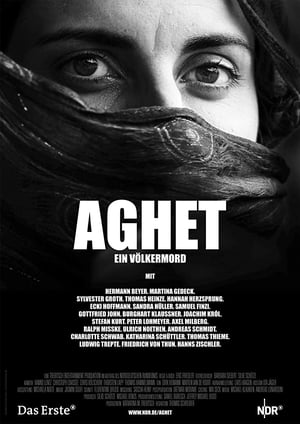
2010 documentary film on the Armenian Genocide by the Young Turk government of the Ottoman Empire during World War I. It is based on eyewitness reports by European and American personnel stationed in the Near East at the time, Armenian survivors and other contemporary witnesses which are recited by modern German actors.
60%
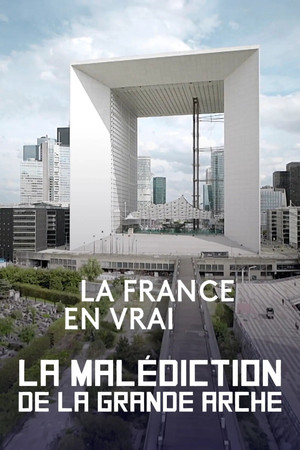
La Malédiction de la Grande Arche(fr)
2023-01-01
Recommendations Movies
70%
Surviving Paradise: A Family Tale(en)
2022-03-02
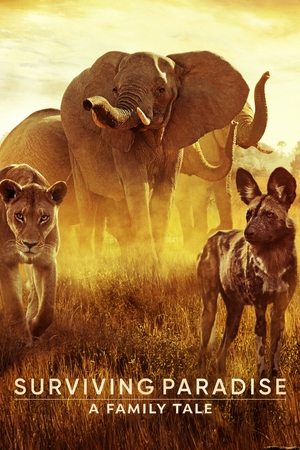
In this wildlife drama, a worsening dry season in the Kalahari Desert leaves prides, packs and herds to rely on the power of family to survive.

72%
Sahara(en)
1943-09-22
In Libya, an American tank commander, along with a handful of Allied soldiers, tries to defend an isolated well with a limited supply of water from a German Afrika Korps battalion during the Western Desert Campaign of World War II.
72%
4 Little Girls(en)
1997-07-09
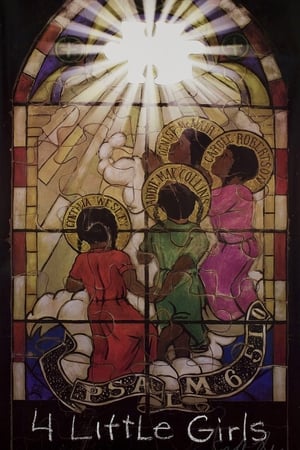
On September 15, 1963, a bomb destroyed a black church in Birmingham, Alabama, killing four young girls who were there for Sunday school. It was a crime that shocked the nation--and a defining moment in the history of the civil-rights movement. Spike Lee re-examines the full story of the bombing, including a revealing interview with former Alabama Governor George Wallace.
61%
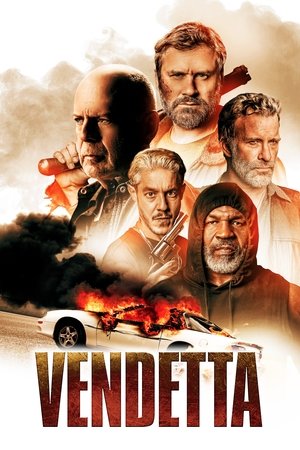
Vendetta(en)
2022-05-17
When his daughter is murdered, William Duncan takes the law into his own hands, setting out on a quest for retribution. After killing the street thug responsible for her death, he finds himself in the middle of a war with the thug's brother, father, and their gang, who are equally hell-bent on getting even. What ensues is a tense back-and-forth game of vengeance. By the end, William comes to find that the quest for revenge never has a winner.
70%
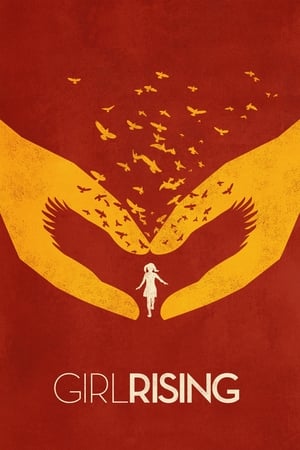
Girl Rising(en)
2013-03-07
Nine filmmakers each profile a young girl from a different part of the world to weave a global tapestry of youth in the 21st century.


73%
Street Fighter: Assassin's Fist The Movie(en)
2014-05-24
If one man changes his path, will he be able to change his destiny...or will he only delay the inevitable? Ryu and Ken are two traditional warriors who find themselves isolated in some corner of Japan to carry out their training as fighters, trying to master an ancient style of fighting, known as "Ansatsuken" (The Killing Fist). There they will begin to learn about the mysterious past of their trainer, Goken, and the tragic and dark legacy that the Ansatsuken style hides. Will they be able to choose their destiny or will history repeat itself once again?
70%
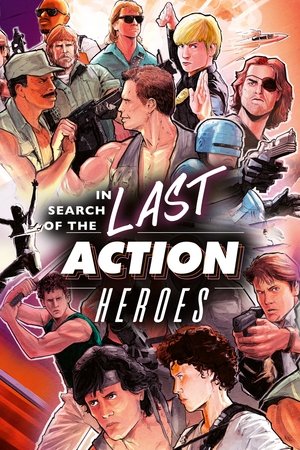
In Search of the Last Action Heroes(en)
2019-09-01
The most comprehensive retrospective of the '80s action film genre ever made.
63%
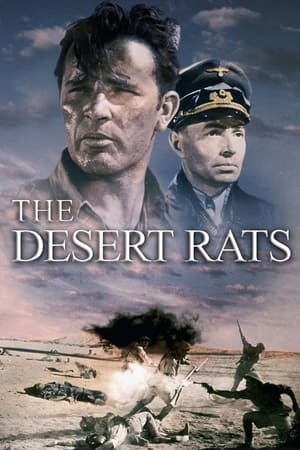
The Desert Rats(en)
1953-03-26
In North Africa, German Field Marshal Rommel and his troops have successfully fended off British forces, and now intend to take Tobruk, an important port city. A ramshackle group of Australian reinforcements sent to combat the Germans is put under the command of British Captain MacRoberts. The unruly Aussies immediately clash with MacRoberts, a gruff, strict disciplinarian, however this unorthodox team must band together to protect Tobruk from the German forces.

61%
Yu-Gi-Oh! The Movie(en)
2004-08-13
After the conclusion of the Battle City Tournament, deep below the sands of Egypt, an ancient evil has awakened. Anubis, who was defeated centuries ago by Yugi’s mysterious alter ego – the ancient Pharaoh – has returned for revenge. Wielding the power of the Eighth Millennium Item, Anubis is determined to destroy Yugi and take over the world.

74%
Sidney(en)
2022-09-10
This revealing documentary honors the legendary Sidney Poitier—iconic actor, filmmaker, and civil rights activist. Featuring interviews with Denzel Washington, Spike Lee, Halle Berry, and more.
61%
Lost Command(en)
1966-05-01
After being freed from a Vietnamese war prison, French Lt. Col. Pierre Raspeguy is sent to help quell resistance forces in Algeria. With the help of the Capt. Esclavier, who has grown weary of war, and Capt. Boisfeuras, who lives for it, Raspeguy attempts to convert a rugged band of soldiers into a formidable fighting unit, with the promise of marrying a beautiful countess if he's made a general.

60%
Anna Nicole Smith: You Don't Know Me(en)
2023-05-16
From the heights of her modeling fame to her tragic death, this documentary reveals Anna Nicole Smith through the eyes of the people closest to her.

76%
Night Will Fall(en)
2014-06-07
When Allied forces liberated the Nazi concentration camps in 1944-45, their terrible discoveries were recorded by army and newsreel cameramen, revealing for the first time the full horror of what had happened. Making use of British, Soviet and American footage, the Ministry of Information’s Sidney Bernstein (later founder of Granada Television) aimed to create a documentary that would provide lasting, undeniable evidence of the Nazis’ unspeakable crimes. He commissioned a wealth of British talent, including editor Stewart McAllister, writer and future cabinet minister Richard Crossman – and, as treatment advisor, his friend Alfred Hitchcock. Yet, despite initial support from the British and US Governments, the film was shelved, and only now, 70 years on, has it been restored and completed by Imperial War Museums under its original title "German Concentration Camps Factual Survey".
64%
Jack Hunter and the Lost Treasure of Ugarit(en)
2010-03-01
Jack Hunter, an adventurous treasure seeker, goes to Syria after his mentor and father figure Professor Fredrick Shaffer is killed. Professor Frederick Shaffer believed that the people of Ugarit, a town in Syria that existed during the Pharoah’s reign, had buried a treasure before they were wiped out by the Pharoahs. Jack Hunter is one of the few archaeologists in the world who can interpret Ugarit writings
58%
Raid on Rommel(en)
1971-02-12
Captain Foster plans on raiding German-occupied Tobruk with hand- picked commandos, but a mixup leaves him with a medical unit led by a Quaker conscientious objector.

64%
Ex Libris: The New York Public Library(en)
2017-09-13
A documentary about how a dominant cultural and demographic institution both sustains their traditional activities and adapts to the digital revolution.
58%
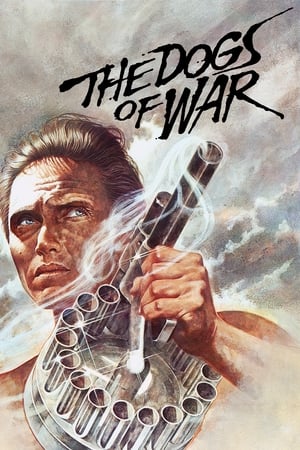
The Dogs of War(en)
1980-12-17
Mercenary soldiers Jamie and Drew are hired by a large corporation to liberate Zangaro, a small African nation, from an despot. Havoc ensues.
67%
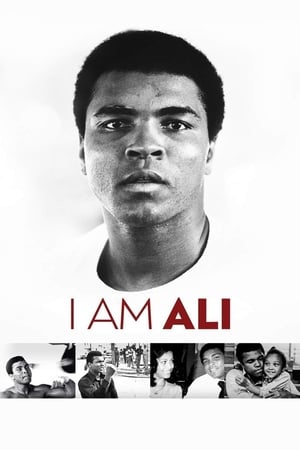
I Am Ali(en)
2014-10-10
Unprecedented access to Muhammad Ali's personal archive of "audio journals" as well as interviews and testimonials from his inner circle of family and friends are used to tell the legend's life story.