Loading Page
Voices of Auschwitz
Top 1 Billed Cast
Wolf Blitzer
Loading Trailer Videos...

HomePage
Overview
For the 75th anniversary of the liberation of Auschwitz, CNN’s Wolf Blitzer looks back through the eyes of those who were imprisoned there.
Release Date
Average
0
Rating:
0.0 startsTagline
Genres
Languages:
EnglishKeywords
Similar Movies
65%
Filmmakers for the Prosecution(fr)
2023-01-27
In 1945, two young American soldiers, brothers Budd and Stuart Schulberg, are commissioned to collect filmed and recorded evidence of the horrors committed by the infamous Third Reich in order to prove Nazi war crimes during the Nuremberg trials (1945-46). The story of the making of Nuremberg: Its Lesson for Today, a paramount historic documentary, released in 1948.
62%
Babi Yar. Context(ru)
2021-11-04
Nazi troops massacre 30,000 Jews over a three-day period in September 1941. Babyn Yar ravine in Kyiv, Ukraine.
68%
The Survivor(en)
2022-04-07
Harry Haft is a boxer who fought fellow prisoners in the concentration camps to survive. Haunted by the memories and his guilt, he attempts to use high-profile fights against boxing legends like Rocky Marciano as a way to find his first love again.
90%
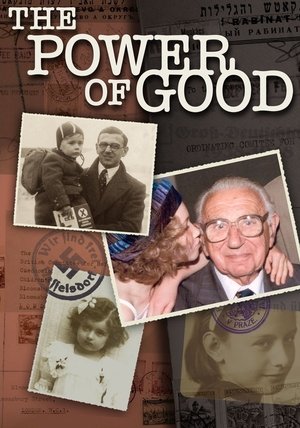
The Power of Good: Nicholas Winton(cs)
2003-03-27
A gripping documentary about the courage and determination of a young English stockbroker who saved the lives of 669 children. Between March 13 and August 2, 1939, Nicholas Winton organized 8 transports to take children from Prague to new homes in Great Britain, and kept quiet about it until his wife discovered a scrapbook documenting his unique mission in 1988. Winton was a successful 29-year-old stockbroker in London who "had an intuition" about the fate of the Jews when he visited Prague in 1939. He quietly but decisively got down to the business of saving lives. We learn how only two countries, Sweden and Britain, answered his call to harbor the young refugees; how documents had to be forged and how once foster parents signed for the children on delivery, that was the last he saw of them.

70%
Hitler's Evil Science(fr)
2019-05-25
In 1935, German scientists dug for bones; in 1943, they murdered to get them. How the German scientific community supported Nazism, distorted history to legitimize a hideous system and was an accomplice to its unspeakable crimes. The story of the Ahnenerbe, a sinister organization created to rewrite the obscure origins of a nation.
80%
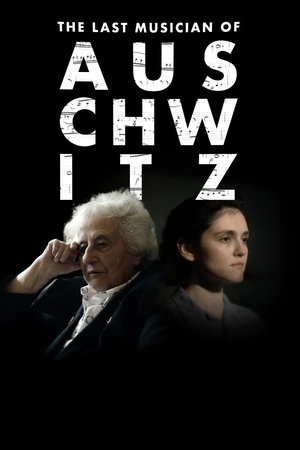
The Last Musician of Auschwitz(en)
2025-05-09
Tells the extraordinary story of Anita Lasker-Wallfisch who, along with other victims of Auschwitz, played and created music amidst the terrors of the Holocaust.
70%
Amen.(fr)
2002-02-27
Kurt Gerstein—a member of the Institute for Hygiene of the Waffen-SS—is appalled to discover that a poison gas he helped discover is being used to kill Jews. Driven by his conscience to alert the rest of the world, Gerstein teams up with a young Jesuit priest, Riccardo Fontana, but their protestations fall on deaf ears in the Vatican.
64%
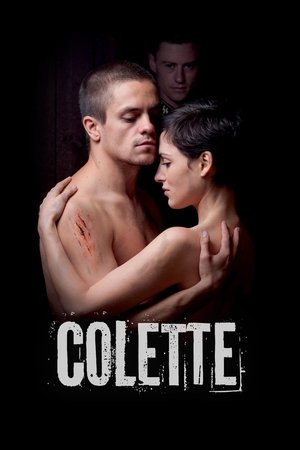
Colette(cs)
2013-09-12
As World War II rages on, Villi and Colette are captured and sent to Auschwitz concentration camp. Imprisoned within separate compounds, the lovers must risk their lives to be together again.

66%
Adolf Island(en)
2019-06-23
Caroline Sturdy Colls, a world leader in the forensic investigation of Nazi crime scenes, is chasing clues to an unsolved case: a concentration camp that existed on the British island of Alderney. Witnesses and survivors claimed that thousands died there, but only 389 bodies have ever been found. Under heavy restrictions imposed by the local government, which may not want its buried secrets revealed, Colls must uncover the truth using revolutionary techniques and technologies.

0%
Ambassador of Remembrance(pl)
In September 1943, 17-year-old Stanisław Zalewski was arrested in Warsaw as a member of a Polish resistance group and taken to the Auschwitz-Birkenau extermination camp for labour service. From there, he was sent to Mauthausen and finally to the Gusen camp, where the prisoners were forced to work for the German armaments industry under inhumane conditions. For a long time, Stanisław Zalewski, like many other victims of Nazi terror, remained silent about his painful experiences. It was only after forty years that he began to talk about it, at events, memorial services, and in schools, and he continues to do so to this day, even at the age of 99. Now, for the first time, he tells his stirring life story in a film as a deeply impressive ‘ambassador of remembrance’.
90%
Monument to the Murderers(hu)
2021-01-26
A film about a district in Buda, which to this day cannot face the inconceivably cruel crimes committed by its former inhabitants.
0%
The Holocaust. Certified crime(uk)
2021-01-27
The documentary tells the stories of people who were just children during the Second World War and the Nazi occupation of Ukraine. Its protagonists now live in Kyiv, Dnipro, and Odesa, where the filming took place. They survived the ghetto and also witnessed mass shootings that took place, according to researchers, in about five thousand locations across Ukraine. Each of the heroes lost loved ones. Parents, brothers, sisters, loved ones. Everyone had a single task during these terrible years - to survive. The entire mosaic of terrible memories collected in the film is part of a story of survival.
73%
A Journey Into the Holocaust(en)
2015-01-22
A detailed and deeply personal exploration into genocide and how something this atrocious happened, and continues to happen again and again - even in modern times. First-time filmmaker, Paul Bachow, travels around the world and taps into a vast knowledge base of historians, psychology practitioners, and data derived from countless interviews with experts from around the world.
67%
Jakob the Liar(en)
1999-09-16
In 1944 Poland, a Jewish shop keeper named Jakob is summoned to ghetto headquarters after being caught out after curfew. While waiting for the German Kommondant, Jakob overhears a German radio broadcast about Russian troop movements. Returned to the ghetto, the shopkeeper shares his information with a friend and then rumors fly that there is a secret radio within the ghetto.
100%
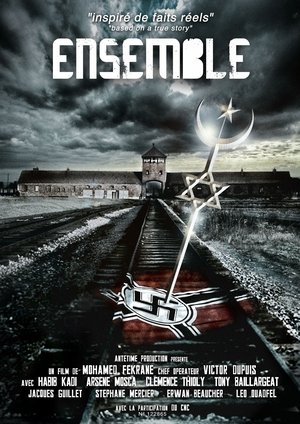
Ensemble(fr)
2010-01-01
In Paris in full German occupation in 1942, a Jewish child Isaac escapes a raid organized by the SS. He then took refuge in the Great Mosque of Paris. The imam decides to protect him by passing him off as a Muslim, as well as the other Jewish children that he manages to free with the help of the resistance networks. The French militia and the Gestapo have suspicions... This fiction film is based on the true story of the rector of the Paris mosque, Si Kaddour Benghabrit, who saved several Jews from deportation during the Second World War.
86%
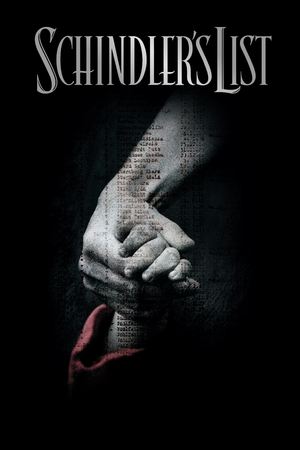
Schindler's List(en)
1993-12-15
The true story of how businessman Oskar Schindler saved over a thousand Jewish lives from the Nazis while they worked as slaves in his factory during World War II.
70%
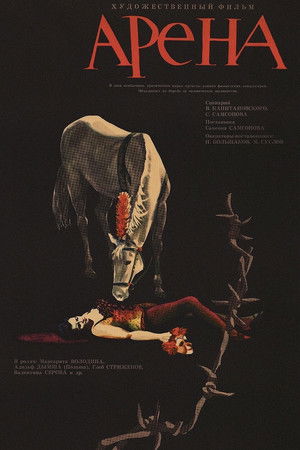
Arena(ru)
1967-08-30
In one of the occupied European cities, the commandant of the garrison gathers a troupe of circus performers. Coming from different countries, they are in the humiliating position of people forced to serve their enslavers. Many of them, recruited from camps and workhouses, were quite content with their lot. Only after a chain of subsequent events, the artists raise an uprising. Unarmed people are not able to resist the arrived guards. They die, but at the cost of their lives they regain their lost human dignity.
83%
Night and Fog(fr)
1956-01-29
Filmmaker Alain Resnais documents the atrocities behind the walls of Hitler's concentration camps.
80%
Judgment at Nuremberg(en)
1961-12-18
In 1947, four German judges who served on the bench during the Nazi regime face a military tribunal to answer charges of crimes against humanity. Chief Justice Haywood hears evidence and testimony not only from lead defendant Ernst Janning and his defense attorney Hans Rolfe, but also from the widow of a Nazi general, an idealistic U.S. Army captain and reluctant witness Irene Wallner.
72%
The Diary of Anne Frank(en)
1959-03-18
The true, harrowing story of a young Jewish girl who, with her family and their friends, is forced into hiding in an attic in Nazi-occupied Amsterdam.
Recommendations Movies
68%
God on Trial(en)
2008-09-03
In the Jewish tradition of arguing with God, Jewish prisoners in Auschwitz decide to put God on Trial.

70%
The Zone of Interest(en)
2023-12-15
The commandant of Auschwitz, Rudolf Höss, and his wife Hedwig, strive to build a dream life for their family in a house and garden next to the camp.
69%
The Boy in the Woods(en)
2023-09-19
The remarkable true-life survival story of a Jewish boy hiding and being hunted in the forests of Nazi-occupied Eastern Europe, based on Maxwell Smart's memoir.
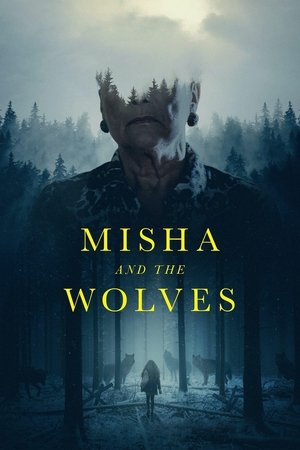
68%
Misha and the Wolves(en)
2021-09-03
A woman’s Holocaust memoir takes the world by storm, but a fallout with her publisher-turned-detective reveals her story as an audacious deception created to hide a darker truth.
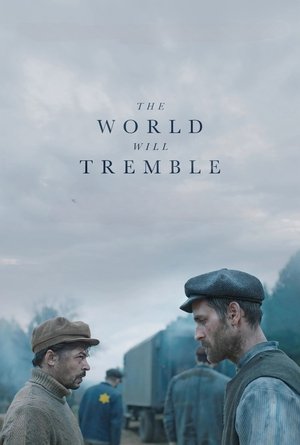
75%
The World Will Tremble(en)
2025-03-14
The incredible, untold true story of how a group of prisoners attempt a seemingly impossible escape from the first Nazi death camp in order to provide the first eyewitness account of the Holocaust.
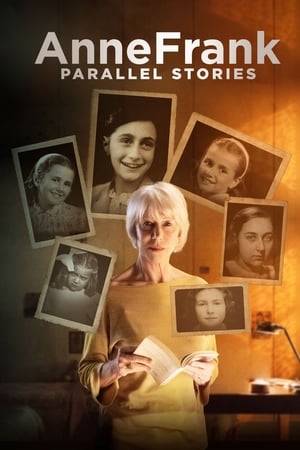
70%
#AnneFrank. Parallel Stories(en)
2019-10-18
One single Anne Frank moves us more than the countless others who suffered just as she did but whose faces have remained in the shadows-Primo Levi. The Oscar®-winning Helen Mirren will introduce audiences to Anne Frank's story through the words in her diary. The set will be her room in the secret refuge in Amsterdam, reconstructed in every detail by set designers from the Piccolo Theatre in Milan. Anne Frank this year would have been 90 years old. Anne's story is intertwined with that of five Holocaust survivors, teenage girls just like her, with the same ideals, the same desire to live: Arianna Szörenyi, Sarah Lichtsztejn-Montard, Helga Weiss and sisters Andra and Tatiana Bucci. Their testimonies alternate with those of their children and grandchildren.

76%
Night Will Fall(en)
2014-06-07
When Allied forces liberated the Nazi concentration camps in 1944-45, their terrible discoveries were recorded by army and newsreel cameramen, revealing for the first time the full horror of what had happened. Making use of British, Soviet and American footage, the Ministry of Information’s Sidney Bernstein (later founder of Granada Television) aimed to create a documentary that would provide lasting, undeniable evidence of the Nazis’ unspeakable crimes. He commissioned a wealth of British talent, including editor Stewart McAllister, writer and future cabinet minister Richard Crossman – and, as treatment advisor, his friend Alfred Hitchcock. Yet, despite initial support from the British and US Governments, the film was shelved, and only now, 70 years on, has it been restored and completed by Imperial War Museums under its original title "German Concentration Camps Factual Survey".
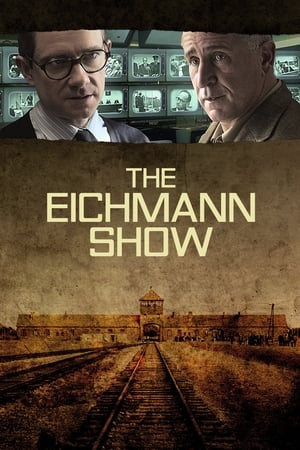
66%
The Eichmann Show(en)
2015-01-20
The behind-the-scenes true life story of a groundbreaking producer, Milton Fruchtman, and blacklisted TV director Leo Hurwitz who, overcoming enormous obstacles, set out to capture the testimony of one of the war's most notorious Nazis, Adolf Eichmann, who is accused of executing the 'final solution' and organising the murder of 6 million Jews. This is the extraordinary story of how the trial came to be televised and the team that made it happen.
66%
The Grey Zone(en)
2001-09-13
The story of Auschwitz's twelfth Sonderkommando — one of the thirteen consecutive "Special Squads" of Jewish prisoners placed by the Nazis in the excruciating moral dilemma of assisting in the extermination of fellow Jews in exchange for a few more months of life.
77%
Nazi Concentration Camps(en)
1945-11-29
Produced and presented as evidence at the Nuremberg war crimes trial of Hermann Göring and twenty other Nazi leaders, this film consists primarily of dead and surviving prisoners and of facilities used to kill and torture during the World War II.
73%
Conspiracy(en)
2001-05-19
At the Wannsee Conference on January 20, 1942, senior Nazi officials meet to determine the manner in which the so-called "Final Solution to the Jewish Question" can be best implemented.
69%
Mr. Death: The Rise and Fall of Fred A. Leuchter, Jr.(en)
1999-12-29
A portrait of the life and career of the infamous American execution device designer Fred A. Leuchter, Jr. Mr. Leuchter was an engineer who became an expert on execution devices and was later hired by holocaust revisionist historian Ernst Zundel to "prove" that there were no gas chambers at Auschwitz. Leuchter published a controversial report confirming Zundel's position, which ultimately ruined his own career. Most of the footage is of Leuchter, working in and around execution facilities or chipping away at the walls of Auschwitz, but Morris also interviews various historians, associates, and neighbors.

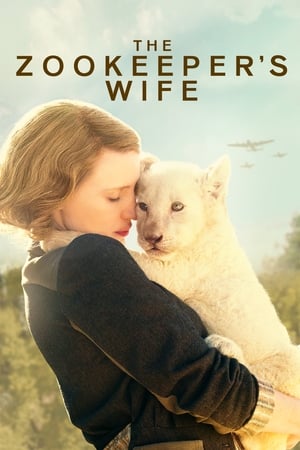
73%
The Zookeeper's Wife(en)
2017-03-24
The account of keepers of the Warsaw Zoo, Jan and Antonina Zabinski, who helped save hundreds of people and animals during the Nazi invasion.
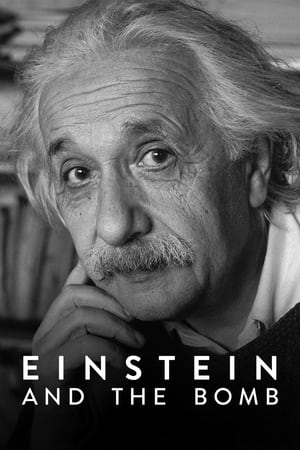
62%
Einstein and the Bomb(en)
2024-02-16
What happened after Einstein fled Nazi Germany? Using archival footage and his own words, this docudrama dives into the mind of a tortured genius.
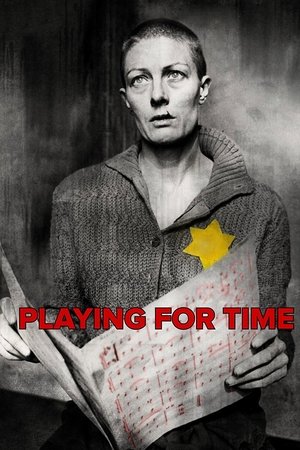
68%
Playing for Time(en)
1980-09-30
When a Jewish songstress is plucked from the stage and sent to Auschwitz, she and other musicians find themselves assigned to a terrible task—using their talents to soothe fellow prisoners who are sentenced to die in the gas chambers.
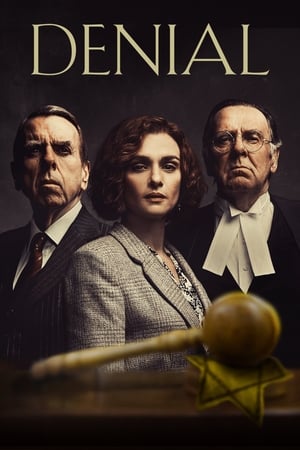
68%
Denial(en)
2016-09-30
Acclaimed writer and historian Deborah E. Lipstadt must battle for historical truth to prove the Holocaust actually occurred when David Irving, a renowned denier, sues her for libel.
75%
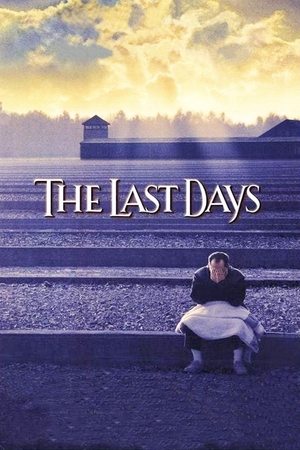
The Last Days(en)
1998-10-23
Five Jewish Hungarians, now US citizens, tell their stories: before March 1944, when Nazis began to exterminate Hungarian Jews, months in concentration camps, and visiting childhood homes more than 50 years later. An historian, a Sonderkommando, a doctor who experimented on Auschwitz prisoners, and US soldiers who were part of the liberation in April 1945.
70%
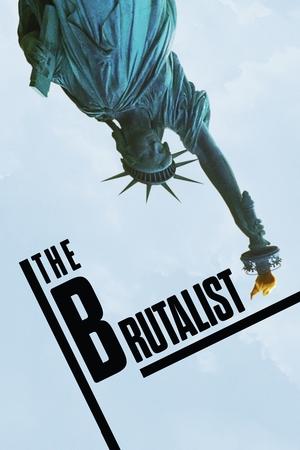
The Brutalist(en)
2024-12-20
When an innovative modern architect flees post-war Europe, he is given the opportunity to rebuild his legacy. Set during the dawn of the modern United States (in Pennsylvania), his wife joins him, and their lives are forever changed by a demanding, wealthy patron.