Loading Page
Zeit der Verleumder
Loading Trailer Videos...
All 1 videos

Trailer »The Time of Slanderers« - A Critical Intervention, 2022 - YouTube Release 13 November 2022 - Trailer
Similar Movies

68%
Germany: A Summer's Fairytale(de)
2006-10-03
A documentary of the German national soccer team’s 2006 World Cup experience that changed the face of modern Germany.
67%
Fertile Memory(ar)
1981-05-15
A portrait of two Palestinian women whose individual struggles both define and transcend the politics that have torn apart their homes and their lives. Farah Hatoum, a widow living with her children and grandchildren, and Sahar Khalifeh, a novelist from the West Bank.

90%
Wild Women(fr)
2022-11-30
At the beginning of winter, a filmmaker retires for six months to a hermit's cabin in the middle of the forest, cut off from the world and its means of communication. Through the words of four women she has filmed previously, all of whom have dedicated their lives to different forms of spirituality, she embarks on a mysterious inner adventure, on the edge of solitude and nature. A journey that invites us to connect with the world in a different way.
62%
Germany in Autumn(de)
1978-03-03
Nine fictitious documentaries and films reflect the mood of late 1970s Germany, particularly the two-month period in 1977 when a businessman was kidnapped by the RAF (Red Army Faction). The kidnap had been made to orchestrate the release of the original leaders of the RAF, aka the Baader-Meinhof.
100%
White Winter(de)
2022-12-27
In southern Germany, winter can still be admired in all its glory every year. With its white coat of snow and icicles and myriads of small crystals that look like geometric works of art. In the valleys and on the slopes the snow is still so thick every year that the alpine huts are snowed in up to the windows. Cows and dairymen are safe in their farms at lower altitudes. But not the wild creatures of the mountains! They need strategies to survive the cold season and to defy snow masses, cold and ice. And some seem to do it so easily that they even raise their young in the middle of winter. But how do animals, plants and fungi cope with the annually recurring ice age, which from our perspective is a time of need? The many adaptations in nature prove that winter is an integral part of the natural cycle of the year and the living environment of species. They are adapted to cold and frost. That is why the animals and plants at the edge of the Alps suffer particularly from climate change!
74%
War Photographer(de)
2001-11-01
Documentary about war photographer James Nachtwey, considered by many the greatest war photographer ever.

70%
Merkel-Jahre - Am Ende einer Ära(de)
2021-08-30
The film shines a light onto federal chancellor Angela Merkel and her now ending 16-year-long tenure. An era, not an episode. And a vagarious relationship history between the chancellor and the Germans. Who has changed whom here?
0%
Ich. Immendorff(de)
2007-05-31
Documentary film about the painter and sculptor Jörg Immendorff who ranks among the most important German artists. The filmmakers accompanied Immendorff over a period of two years – until his death in May 2007. The artist had been living for nine years knowing that he was terminally ill with ALS. The film shows how Immendorff continued to work with unabated energy and how he tried not to let himself be restrained by his deteriorating health.

86%
Louis Theroux: The Settlers(en)
2025-04-27
14 years after his first visit, Louis Theroux meets some of the growing community of religious-nationalist Israelis who have settled in the occupied West Bank.
77%
Waltz with Bashir(he)
2008-06-12
An Israeli film director interviews fellow veterans of the 1982 invasion of Lebanon to reconstruct his own memories of his term of service in that conflict.
70%
Martin Luther: The Idea that Changed the World(en)
2017-02-15
The year 2017 marks the 500th anniversary of one on the most important events in Western civilization: the birth of an idea that continues to shape the life of every American today. In 1517, power was in the hands of the few, thought was controlled by the chosen, and common people lived lives without hope. On October 31 of that year, a penniless monk named Martin Luther sparked the revolution that would change everything. He had no army. In fact, he preached nonviolence so powerfully that — 400 years later — Michael King would change his name to Martin Luther King to show solidarity with the original movement. This movement, the Protestant Reformation, changed Western culture at its core, sparking the drive toward individualism, freedom of religion, women's rights, separation of church and state, and even free public education. Without the Reformation, there would have been no pilgrims, no Puritans, and no America in the way we know it.
0%
The Eichmann Trial(en)
2025-10-22
In 1961, history was on trial... in a trial that made history. Just 15 years after the end of WWII, the Holocaust had been largely forgotten. That changed with the capture of Adolf Eichmann, a former Nazi officer hiding in Argentina. Through rarely-seen archival footage, The Eichmann Trial documents one of the most shocking trials ever recorded, and the birth of Holocaust awareness and education.
0%
The 43 Group: The Unfinished War(en)
2000-09-02
The 43 Group was an English anti-fascist group set up by Jewish ex-servicemen in the immediate wake of World War II when, on their return to London, they encountered British fascist organisations such as Jeffrey Hamm’s “British League of Ex-Servicemen” and later Oswald Mosley’s reformed fascist party, the Union Movement.
0%
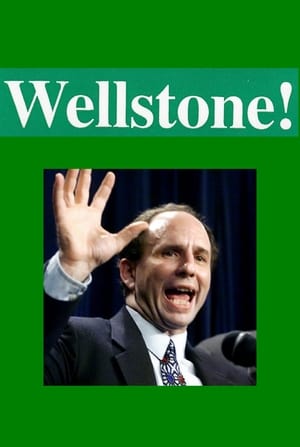
Wellstone!(en)
2004-10-17
Paul Wellstone was the charismatic Minnesota progressive who used grassroots organizing to get elected and give ordinary people a stake in government. His 3rd election campaign was cut short when his small plane crashed into the north woods of Minnesota just 11 days before the 2002 election. Wellstone! explores the origin of his politics, his controversial road to the United States Senate, his deep bond with his wife and 'co-senator' Sheila, and the legacy of a life of progressive populism.
60%
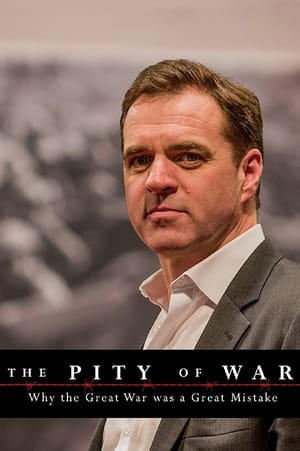
The Pity of War(en)
2014-02-28
Professor Niall Ferguson argues that Britain's decision to enter the First World War was a catastrophic error that unleashed an era of totalitarianism and genocide.
82%
Night and Fog(fr)
1956-01-29
Filmmaker Alain Resnais documents the atrocities behind the walls of Hitler's concentration camps.
67%
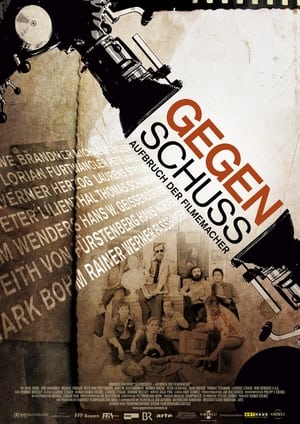
Counter Shot: Departure of the Filmmakers(de)
2008-02-14
Documentary about filmmakers of the New German Cinema who were members of the legendary Filmverlag für Autoren (Film Publishing House for Authors). Among them are Werner Herzog, Rainer Werner Fassbinder, and Wim Wenders.

70%
Put Your Soul on Your Hand and Walk(fr)
2025-08-22
An Iranian filmmaker participates in a series of video calls with a young Palestinian photojournalist who describes her life confined in Gaza during the current regional conflict.