Loading Page
British Union of Fascists March
Loading Trailer Videos...
Loading Photos
Photo Type :Total items
Similar Movies
0%
Munich, or Peace in Our Time(fr)
1967-09-03
A television documentary directed by Marcel Ophüls examining the Munich Conference of September 28, 1938, when European leaders met to avert the outbreak of war. Through archival documents and interviews, the film reconstructs the political atmosphere surrounding negotiations between Britain and France on one side and Nazi Germany and Fascist Italy on the other, situating the agreement within the broader context of European appeasement in the face of fascism.
56%
Fascism Inc.(el)
2014-04-10
Unknown short stories from the past, the present and the future of fascism and its relation to the economic interests of each era. We will travel from Mussolini’s Italy to Greece under the Nazi occupation, the civil war and the dictatorship; and from Hitler’s Germany to the modern European and Greek fascism.
0%
The Undamaged(sl)
2018-10-06
The Balkans cradles Europe's last wild rivers and supports abundant wildlife and healthy, intact ecosystems. These rivers are "The Undamaged" – clean, pristine, and undammed. With over 2,700 small and large hydro power plants planned or under construction in the Balkans, corruption and greed are destroying the last free-flowing rivers of Europe. Follow the Balkan Rivers Tour, a rowdy crew of whitewater kayakers, filmers, photographers and friends who decided to stand up for the rivers, travelling from Slovenia to Albania for 36 days, kayaking 23 rivers in 6 countries to protest the dams and show the world the secret wild rivers of the Balkans. The film honours everyday people and local activists who are fighting to defend rivers and aims to spread the word of the plight of these rivers, showing a new style of nature conservation that is fun, energetic and effective.

70%
Front Row(uk)
2024-11-16
Bertolt Brecht asked whether there would be singing in the dark times. In the throes of war, the United Ukrainian Ballet Company defiantly insists there will be dancing, too. Far from the land they call home, young dancers take quiet comfort from art. For a while, their work feels like the old days, except there is a new troupe member: a soldier learning to dance with prosthetic legs.
0%
The Luddites(en)
1988-06-23
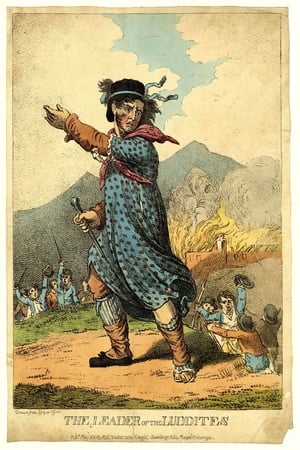
In 1812 there were violent disturbances in Yorkshire when new machines were introduced into the wool industry. This film is an interpretation of those events made in the style of a documentary.
66%
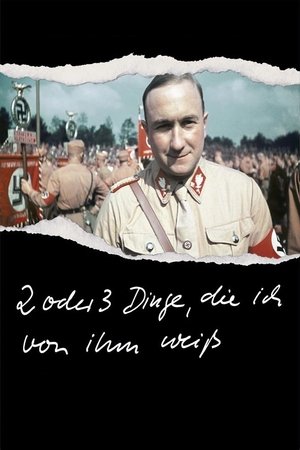
2 or 3 Things I Know About Him(de)
2005-04-07
What would your family reminiscences about dad sound like if he had been an early supporter of Hitler’s, a leader of the notorious SA and the Third Reich’s minister in charge of Slovakia, including its Final Solution? Executed as a war criminal in 1947, Hanns Ludin left behind a grieving widow and six young children, the youngest of whom became a filmmaker. It's a fascinating, maddening, sometimes even humorous look at what the director calls "a typical German story." (Film Forum)
65%
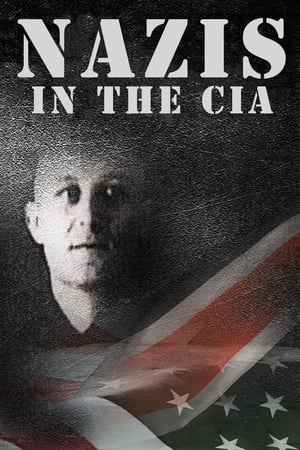
Nazis in the CIA(de)
2013-10-15
Florian Hartung and Dirk Pohlmann have reconstructed a previously unknown dimension of the collaboration between Nazis and the CIA in the Cold War. Drawing upon recently released documents, the film exposes for the first time a perfidious, worldwide net that reaches deep into the power structures of the Federal Republic of Germany. Lending their authority to the fact-finders’ mission are high-ranking statesmen, journalists and historians.
58%
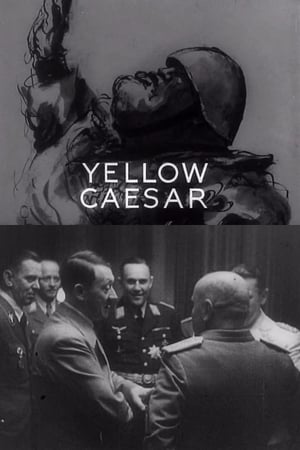
Yellow Caesar(en)
1941-05-24
Using edited archive footage, mockery is made of Italy's dictator Benito Mussolini.
0%
Xondaros - Guarani Resistance(gn)
2023-06-08
The 6 Guarani villages of Jaraguá, in São Paulo, fight for land rights, for human rights and for the preservation of nature. They suffer from the proximity to the city, which brings lack of resources, pollution of rivers and springs, racism, police violence, fires, lack of infrastructure and sanitation, among others. Unable to live like their ancestors, their millenary culture is lost as it merges with the urban culture.
0%
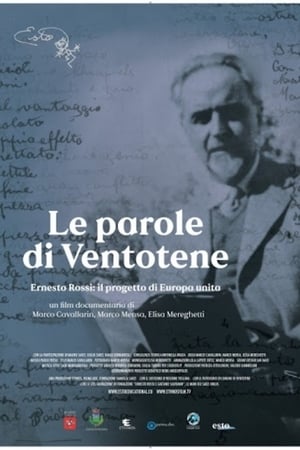
The words of Ventotene(it)
2019-06-22
The film focuses on Ernesto Rossi (1897 – 1967), who was imprisoned by the fascist regime between 1930 and 1943 for his political ideas. Exiled on the island of Ventotene, he co-authored the Ventotene manifesto.
80%
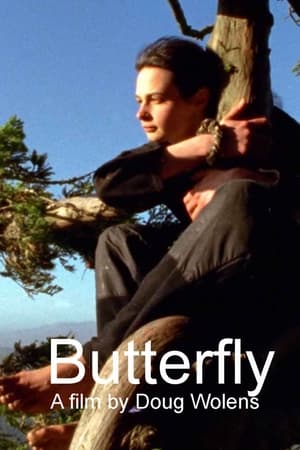
Butterfly(en)
2001-03-30
Living in an ancient redwood tree for more than two years to prevent the tree from being clear-cut, Julia Butterfly Hill captured our hearts and minds by showing us that one person can make a difference. Through interviews with Hill, filmmaker Doug Wolens paints a portrait of an intensely spiritual and articulate woman who encountered both beauty and horror (she was assaulted by lumber company helicopters at one point) during her time above ground.
0%
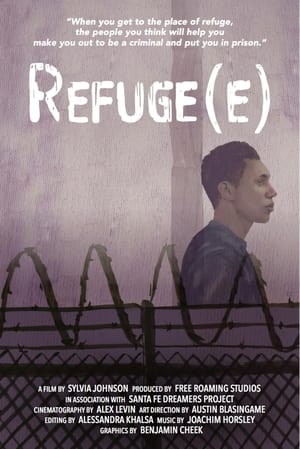
Refuge(e)(en)
2019-03-14
Refuge(e) traces the incredible journey of two refugees, Alpha and Zeferino. Each fled violent threats to their lives in their home countries and presented themselves at the US border asking for political asylum, only to be incarcerated in a for-profit prison for months on end without having committed any crime. Thousands more like them can't tell their stories.

0%
Atención! Murderer Next Door(es)
2020-12-04
Faced with a lack of prosecution of those accused of crimes against humanity committed during Argentina’s military dictatorship, family members and descendants of the country’s estimated 30,000 disappeared took action. In the mid-1990s, they began gathering outside of accused perpetrators’ homes and workplaces to publicly shame them and raise awareness about the government’s systematic and brutal targeting of its people — and how it had gone unpunished. The human rights group HIJOS (Sons and Daughters for Identity and Justice Against Forgetfulness and Silence) led and labeled this direct-action style of protest “escrache,” or exposure.
80%
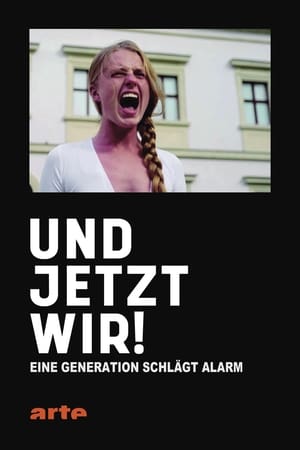
It's Our Time!(de)
2020-11-21
The young generation sees their future at risk. They rebel against a lifestyle that threatens to destroy the world. The corona crisis also highlighted the deficits of our globalized economy and society. Does this crisis hold a chance for change for the better? The film draws a picture of the mood of the young generation and goes on a search for traces of ideas and concepts for a world after Corona in France, Germany and Poland. What is really important for young Europeans and how do they assess their future prospects? What scares them and what makes them hope? And who stands in their way and brakes? The TV presenter Aline Abboud meets young activists and artists for this, but she also listens to the opposing voices. Especially in Poland the youth are deeply divided, more and more are getting involved in conservative or nationalist right-wing organizations, while the country is slowly drifting into an anti-democratic dictatorship.
70%
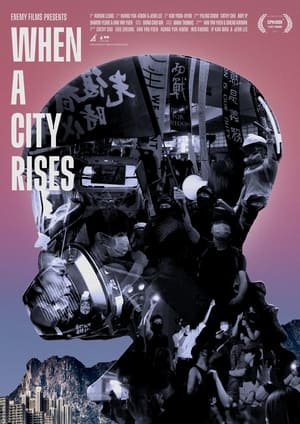
When a City Rises(cn)
2021-04-23
Behind the gas masks of Hong Kong’s democracy movement, the often very young activists are just as diverse as the youths of the rest of the world. But they share a demand for democracy and freedom. They have the will and the courage to fight – and they can see that things are going in the wrong direction in the small island city, which officially has autonomy under China but is now tightening its grip and demanding that ‘troublemakers’ be put away or silenced. Amid the violent protests, we meet a 21-year-old student, a teenage couple and a new father.
68%
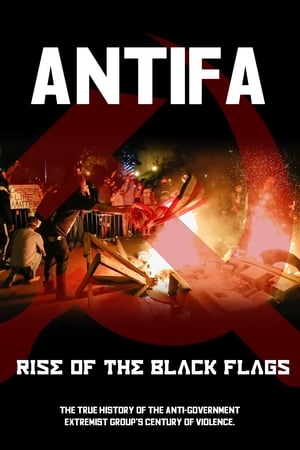
Antifa: Rise of the Black Flags(en)
2020-10-30
The true history of the anti-government extremist terrorist group's century of violence. Focusing on the group which has caused nationwide rioting and violence, The film – which undermines the mainstream media’s depiction of the group as “just an idea” – has already been censored by YouTube and Vimeo.
Recommendations Movies

76%
Night Will Fall(en)
2014-06-07
When Allied forces liberated the Nazi concentration camps in 1944-45, their terrible discoveries were recorded by army and newsreel cameramen, revealing for the first time the full horror of what had happened. Making use of British, Soviet and American footage, the Ministry of Information’s Sidney Bernstein (later founder of Granada Television) aimed to create a documentary that would provide lasting, undeniable evidence of the Nazis’ unspeakable crimes. He commissioned a wealth of British talent, including editor Stewart McAllister, writer and future cabinet minister Richard Crossman – and, as treatment advisor, his friend Alfred Hitchcock. Yet, despite initial support from the British and US Governments, the film was shelved, and only now, 70 years on, has it been restored and completed by Imperial War Museums under its original title "German Concentration Camps Factual Survey".
59%
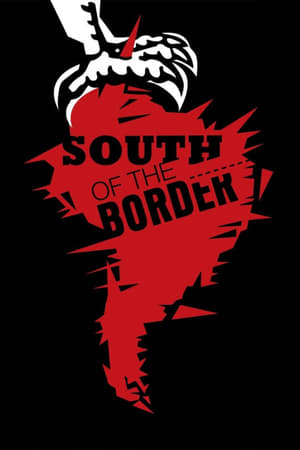
South of the Border(en)
2009-09-07
A road trip across five countries to explore the social and political movements as well as the mainstream media's misperception of South America while interviewing seven of its elected presidents.
74%
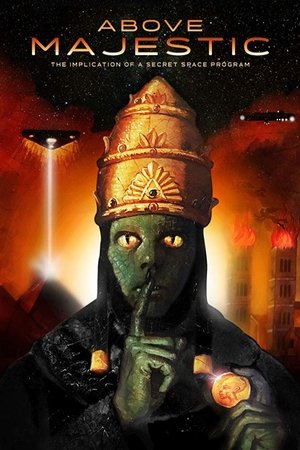
Above Majestic(en)
2018-10-30
A look at the origins, history and conspiracies behind the "Majestic 12", a clandestine group of military and corporate figureheads charged with reverse-engineering extraterrestrial technology.
71%
Zeitgeist: Moving Forward(en)
2011-01-15
A presentation of a case for a needed transition out of the current socioeconomic monetary paradigm which governs the entire world society. This subject matter will transcend the issues of cultural relativism and traditional ideology and move to relate the core, empirical 'life ground' attributes of human and social survival, extrapolating those immutable natural laws into a new sustainable social paradigm called a 'Resource-Based Economy'.

65%
Downloaded(en)
2013-06-20
A documentary that explores the downloading revolution; the kids that created it, the bands and the businesses that were affected by it, and its impact on the world at large.


61%
Naqoyqatsi(en)
2002-09-02
A visual montage portrait of our contemporary world dominated by globalized technology and violence.

71%
The Class of ‘92(en)
2013-12-01
A detailing of the rise to prominence and global sporting superstardom of six supremely talented young Manchester United football players (David Beckham, Nicky Butt, Ryan Giggs, Paul Scholes, Phil and Gary Neville). The film covers the period 1992-1999, culminating in Manchester United's European Cup triumph.

68%
Spider-Man: All Roads Lead to No Way Home(en)
2022-05-03
JB Smoove and Martin Starr host a celebration of 20 years of "Spider-Man" movies, from the Sam Raimi trilogy to Marc Webb's movies and the trio from Jon Watts.
70%
The Making of 'Terminator 2: Judgment Day'(en)
1991-09-10
Documentary of the making of the sequel to the popular Schwarzenegger film, The Terminator.
65%
Superheroes(en)
2011-08-08
A journey inside the world of real life caped crusaders. From all over America, these self-proclaimed crime fighters, don masks, homemade costumes and elaborate utility belts in an attempt to bring justice to evildoers everywhere.
64%
Avatar: Creating the World of Pandora(en)
2010-02-07
The Making-of James Cameron's Avatar. It shows interesting parts of the work on the set.

79%
V for Vendetta(en)
2006-02-23
In a world in which Great Britain has become a fascist state, a masked vigilante known only as “V” conducts guerrilla warfare against the oppressive British government. When V rescues a young woman from the secret police, he finds in her an ally with whom he can continue his fight to free the people of Britain.
65%
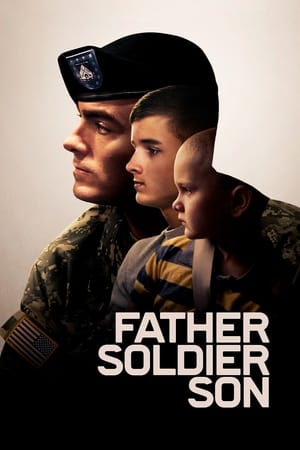
Father Soldier Son(en)
2020-04-15
When Sgt. First Class Brian Eisch is critically wounded in Afghanistan, it sets him and his sons on a journey of love, loss, redemption and legacy.
67%
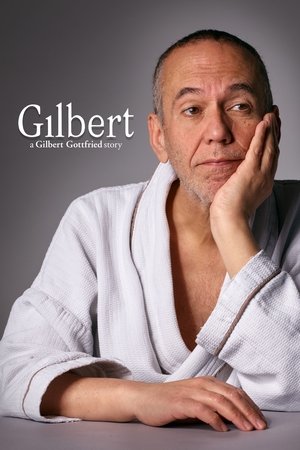
Gilbert(en)
2017-04-20
The life and career of one of comedy's most inimitable modern voices, Mr. Gilbert Gottfried.

76%
As I Was Moving Ahead, Occasionally I Saw Brief Glimpses of Beauty(en)
2000-11-05
A compilation of over 30 years of private home movie footage shot by Lithuanian-American avant-garde director Jonas Mekas, assembled by Mekas "purely by chance", without concern for chronological order.


71%
We Are Legion: The Story of the Hacktivists(en)
2012-01-20
Takes us inside the world of Anonymous, the radical "hacktivist" collective that has redefined civil disobedience for the digital age. The film explores early hacktivist groups like Cult of the Dead Cow and Electronic Disturbance Theater, then moves to Anonymous' raucous beginnings on the website 4chan. Through interviews with current members, people recently returned from prison or facing trial, writers, academics, activists and major players in various "raids," the documentary traces Anonymous’ evolution from merry pranksters to a full-blown movement with a global reach, the most transformative civil disobedience of our time.
73%
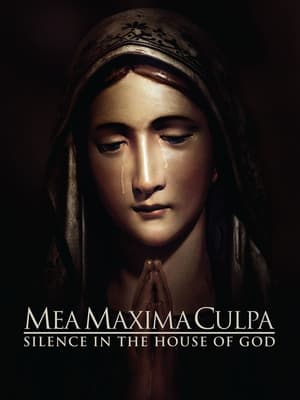
Mea Maxima Culpa: Silence in the House of God(en)
2012-11-16
Alex Gibney explores the charged issue of pedophilia in the Catholic Church, following a trail from the first known protest against clerical sexual abuse in the United States and all way to the Vatican.
70%
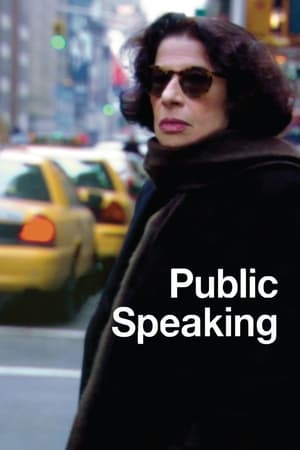
Public Speaking(en)
2011-02-23
Martin Scorsese’s portrait of writer and social commentator Fran Lebowitz, celebrated for her sharp wit and observations on modern life. Filmed at New York’s Waverly Inn and intercut with archival footage and interviews, the documentary captures Lebowitz’s distinctive worldview through her spontaneous monologues and public appearances.