Loading Page
An Island Invaded
Top 5 Billed Cast
Loading Trailer Videos...

HomePage
Overview
Five Guamanians interviewed in the early 2000s recall the Japanese bombing of Guam on 7 December 1941, and the years of food shortages, abuses, and other hardships that followed. They describe their childhood lives before, during, and after the island's occupation by Japanese soldiers.
Release Date
2004-01-01
Average
0
Rating:
0.0 startsTagline
Genres
Languages:
EnglishKeywords
Similar Movies
90%
The Last Ring Home(en)
2016-09-05
The Last Ring Home is a made-for-TV documentary that recounts the story of how a WWII hero's last wish was lost, found, finally fulfilled and then lost again. The discovery of the story by the hero's grandson is as big as the discovery of the ring.
70%
Des traîtres dans la Résistance(fr)
2021-11-18
In May 1943, Ernst Kaltenbrunner, the new head of the Reich Central Security Office, gave Hitler a report describing in detail the organization of the French Resistance. Indeed, during the Second World War, most of the Resistance networks had been infiltrated by traitors, the "V Man" (trusted men) in the service of the occupier. The Germans had established treason as a system and recruiting Frenchmen ready to inform on them was one of their priorities. It was these Frenchmen, whose number is estimated at between 20,000 and 30,000, who dealt terrible blows to the Resistance.

0%
The American St. Nick(en)
2015-11-10
On Dec. 5, 1944, American soldiers, led by Harry Stuts, put their guns down for one day and organized a party celebrating the town's centuries-old Saint Nick tradition. Soldiers made hot chocolate from their D-rations, company cooks made donuts and cookies for the children, and 22-year-old corporal Richard Brookins from Rochester, NY played the role of Saint Nick. An emotional and heartfelt story, THE AMERICAN SAINT NICK illustrates how American soldiers and residents of the hamlet were able to bond over a moment in time, creating a tradition that continues to this day.

100%
Boy Soldiers: The Secret War In Okinawa(ja)
2018-07-21
The greatest taboo of the Battle of Okinawa were Guerrilla units composed of boy soldiers. Until now, not even the Japanese people knew the full scope of these secret troops, and survivors have been afraid to share their tragic details. Okinawa became the bulwark to protect the Japanese mainland toward the end of World War II. After the Americans landed, a violent battle ensued resulting in the loss of over 200,000 lives – many of them civilian. This documentary uncovers Japan’s deepest secrets concerning the Battle of Okinawa, and also sounds alarms about modern Japan’s recent steps toward remilitarization.
65%
Filmmakers for the Prosecution(fr)
2023-01-27
In 1945, two young American soldiers, brothers Budd and Stuart Schulberg, are commissioned to collect filmed and recorded evidence of the horrors committed by the infamous Third Reich in order to prove Nazi war crimes during the Nuremberg trials (1945-46). The story of the making of Nuremberg: Its Lesson for Today, a paramount historic documentary, released in 1948.
53%
John Ford Goes to War(en)
2002-01-01
When World War II broke out, John Ford, in his forties, commissioned in the Naval Reserve, was put in charge of the Field Photographic Unit by Bill Donavan, director of the soon-to-be-OSS. During the war, Field Photo made at least 87 documentaries, many with Ford's signature attention to heroism and loss, and many from the point of view of the fighting soldier and sailor. Talking heads discuss Ford's life and personality, the ways that the war gave him fulfillment, and the ways that his war films embodied the same values and conflicts that his Hollywood films did. Among the films profiled are "Battle of Midway," "Torpedo Squadron," "Sexual Hygiene," and "December 7."
85%
D-Day: The Untold Stories(en)
2019-06-02
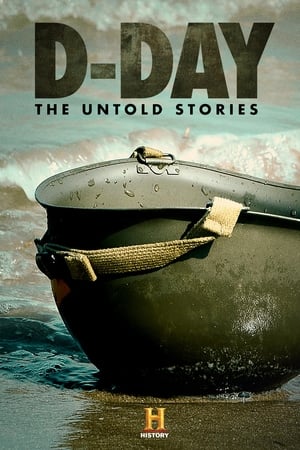
To commemorate the 75th anniversary of D-Day, this special presents the key events of the Allied invasion of Nazi-held Europe and the subsequent battles that captured the control of the Normandy coast. Some of the last surviving veterans recall in detail the terror, patriotism and drama from the frontlines of war. This special also honors the diverse backgrounds of all who served.
59%
Shooting War(en)
2000-12-07
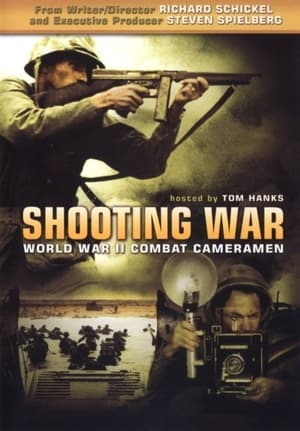
A remarkable film that takes a special look at the first war to be truly reported and recorded by one of the more unsung heroes of World War II: the combat photographer. Through the unflinching eye of their camera's lenses, these courageous soldiers continually risked their lives in their brave attempts to capture history.

65%
If Only I Were That Warrior(it)
2015-11-28
If Only I Were That Warrior is a feature documentary film focusing on the Italian occupation of Ethiopia in 1935. Following the recent construction of a monument dedicated to Fascist general Rodolfo Graziani, the film addresses the unpunished war crimes he and others committed in the name of Mussolini’s imperial ambitions. The stories of three characters, filmed in present day Ethiopia, Italy and the United States, take the audience on a journey through the living memories and the tangible remains of the Italian occupation of Ethiopia — a journey that crosses generations and continents to today, where this often overlooked legacy still ties the fates of two nations and their people.

70%
The Liberation of Auschwitz(de)
1986-08-13
This chilling, vitally important documentary was produced to mark the 40th anniversary of the liberation of Auschwitz Concentration Camp. The film contains unedited, previously unavailable film footage of Auschwitz shot by the Soviet military forces between January 27 and February 28, 1945 and includes an interview with Alexander Voronsov, the cameraman who shot the footage. The horrifying images include: survivors; camp visit by Soviet investigation commission; criminal experiments; forced laborers; evacuation of ill and weak prisoners with the aid of Russian and Polish volunteers; aerial photos of the IG Farben Works in Monowitz; and pictures of local people cleaning up the camp under Soviet supervision. - Written by National Center for Jewish Film
77%
No End in Sight(en)
2007-07-27
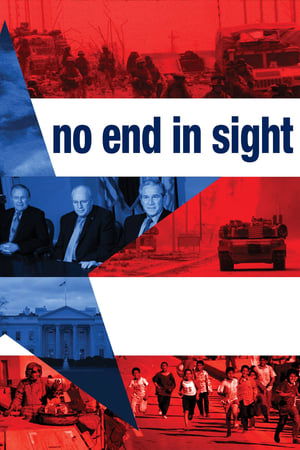
Chronological look at the fiasco in Iraq, especially decisions made in the spring of 2003 - and the backgrounds of those making decisions - immediately following the overthrow of Saddam: no occupation plan, an inadequate team to run the country, insufficient troops to keep order, and three edicts from the White House announced by Bremmer when he took over.

70%
Zeitgeist: The Movie(en)
2007-06-01
A documentary examining possible historical and modern conspiracies surrounding Christianity, the 9/11 terrorist attacks, and the Federal Reserve bank.

0%
Rosies of the North(en)
1999-11-10
They raised children, baked cakes... and built world-class fighter planes. Sixty years ago, thousands of women from Thunder Bay and the Prairies donned trousers, packed lunch pails and took up rivet guns to participate in the greatest industrial war effort in Canadian history. Like many other factories across the country from 1939 to 1945, the shop floor at Fort William's Canadian Car and Foundry was transformed from an all-male workforce to one with forty percent female workers.

0%
The Unknown Woman(fi)
2011-02-04
The Unknown Woman is a documentary film scripted and directed by Elina Kivihalme. It depicts the reality of Finnish agriculture and forestry during the war years, when the home front relied entirely upon the work and endurance of the women. All farm work, caring for the children, woodcutting and other forestry operations were undertaken by the civilians, as the men in their prime were on the front.

70%
Hitler's Evil Science(fr)
2019-05-25
In 1935, German scientists dug for bones; in 1943, they murdered to get them. How the German scientific community supported Nazism, distorted history to legitimize a hideous system and was an accomplice to its unspeakable crimes. The story of the Ahnenerbe, a sinister organization created to rewrite the obscure origins of a nation.
0%
Alene B. Duerk: The First Woman Admiral(en)
2020-01-01
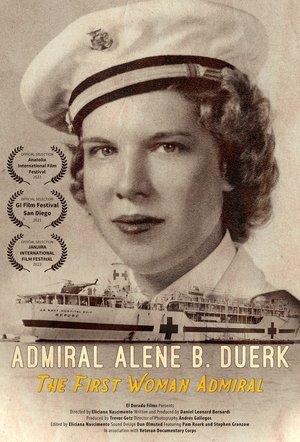
Following the tradition of military service in her family, Alene Duerk enlisted as a Navy nurse in 1943. During her eventful 32 year career, she served in WWII on a hospital ship in the Sea of Japan, and trained others in the Korean War. She became the Director of the Navy Nursing Corps during the Vietnam War before finally attaining the rank of Admiral in the U.S. Navy. Despite having no other women as mentors (or peers), Admiral Duerk always looked for challenging opportunities that women had not previously held. Her consistently high level of performance led to her ultimate rise to become the first woman Admiral.
Recommendations Movies

76%
Night Will Fall(en)
2014-06-07
When Allied forces liberated the Nazi concentration camps in 1944-45, their terrible discoveries were recorded by army and newsreel cameramen, revealing for the first time the full horror of what had happened. Making use of British, Soviet and American footage, the Ministry of Information’s Sidney Bernstein (later founder of Granada Television) aimed to create a documentary that would provide lasting, undeniable evidence of the Nazis’ unspeakable crimes. He commissioned a wealth of British talent, including editor Stewart McAllister, writer and future cabinet minister Richard Crossman – and, as treatment advisor, his friend Alfred Hitchcock. Yet, despite initial support from the British and US Governments, the film was shelved, and only now, 70 years on, has it been restored and completed by Imperial War Museums under its original title "German Concentration Camps Factual Survey".
72%
Burma VJ: Reporting from a Closed Country(en)
2008-11-12
Going beyond the occasional news clip from Burma, the acclaimed filmmaker, Anders Østergaard, brings us close to the video journalists who deliver the footage. Though risking torture and life in jail, courageous young citizens of Burma live the essence of journalism as they insist on keeping up the flow of news from their closed country.

80%
My Mom Jayne(en)
2025-06-20
Through deeply personal interviews with her siblings and an examination of the photographs, letters, and belongings left behind, Mariska assembles a new portrait of her mother Jayne Mansfield, an extraordinary and complex woman.
75%
The Last Days(en)
1998-10-23
Five Jewish Hungarians, now US citizens, tell their stories: before March 1944, when Nazis began to exterminate Hungarian Jews, months in concentration camps, and visiting childhood homes more than 50 years later. An historian, a Sonderkommando, a doctor who experimented on Auschwitz prisoners, and US soldiers who were part of the liberation in April 1945.
72%
The Bloody Hundredth(en)
2024-03-14
Meet the real-life airmen who inspired Masters of the Air as they share the harrowing and transformative events of the 100th Bomb Group.
79%
Five Came Back(en)
2017-03-31
The extraordinary story of how Hollywood changed World War II – and how World War II changed Hollywood, through the interwoven experiences of five legendary filmmakers who went to war to serve their country and bring the truth to the American people: John Ford, William Wyler, John Huston, Frank Capra, and George Stevens. Based on Mark Harris’ best-selling book, “Five Came Back: A Story of Hollywood and the Second World War.”
71%
Hiroshima(en)
2005-08-06
The documentary recounts the world's first nuclear attack and examines the alarming repercussions. Covering a three-week period from the Trinity test to the atomic bombing of Hiroshima, the program chronicles America's political gamble and the planning for the momentous event. Archival film, dramatizations, and special effects feature what occurred aboard the Enola Gay (the aircraft that dropped the bomb) and inside the exploding bomb.

61%
Naqoyqatsi(en)
2002-09-02
A visual montage portrait of our contemporary world dominated by globalized technology and violence.
77%
To End All War: Oppenheimer & the Atomic Bomb(en)
2023-07-09
Explore how one man's relentless drive and invention of the atomic bomb changed the nature of war forever, led to the deaths of hundreds of thousands of people and unleashed mass hysteria.

60%
Anna Nicole Smith: You Don't Know Me(en)
2023-05-16
From the heights of her modeling fame to her tragic death, this documentary reveals Anna Nicole Smith through the eyes of the people closest to her.


72%
Life in a Day(en)
2011-01-27
A documentary shot by filmmakers all over the world that serves as a time capsule to show future generations what it was like to be alive on the 24th of July, 2010.
72%
The Volcano: Rescue from Whakaari(en)
2022-11-03
A close examination of the Whakaari / White Island volcanic eruption of 2019 in which 22 lives were lost, the film viscerally recounts a day when ordinary people were called upon to do extraordinary things, placing this tragic event within the larger context of nature, resilience, and the power of our shared humanity.

62%
Einstein and the Bomb(en)
2024-02-16
What happened after Einstein fled Nazi Germany? Using archival footage and his own words, this docudrama dives into the mind of a tortured genius.
72%
To Be Takei(en)
2014-08-22
Over seven decades, actor and activist George Takei journeyed from a World War II internment camp to the helm of the Starship Enterprise, and then to the daily news feeds of five million Facebook fans. Join George and his husband, Brad, on a wacky and profound trek for life, liberty, and love.

78%
The Godfather Family: A Look Inside(en)
1990-07-12
A documentary on the making of the three Godfather films, with interviews and recollections from the film makers and cast. This feature also includes the original screen tests of some of the actors for "The Godfather" film, and some candid moments on the set of "The Godfather: Part III."

73%
A Secret Love(en)
2020-04-06
Amid shifting times, two women kept their decades-long love a secret. But coming out later in life comes with its own set of challenges.

66%
Champs(en)
2015-03-13
A documentary about the sport of boxing, as seen through the eyes of champions Mike Tyson, Evander Holyfield and Bernard Hopkins.

75%
RBG(en)
2018-05-04
Justice Ruth Bader Ginsburg now 84, and still inspired by the lawyers who defended free speech during the Red Scare, Ginsburg refuses to relinquish her passionate duty, steadily fighting for equal rights for all citizens under the law. Through intimate interviews and unprecedented access to Ginsburg’s life outside the court, RBG tells the electric story of Ginsburg’s consuming love affairs with both the Constitution and her beloved husband Marty—and of a life’s work that led her to become an icon of justice in the highest court in the land.

58%
Trainwreck: Poop Cruise(en)
2025-06-23
An engine fire leaves 4,000 passengers stranded at sea without power and plumbing in this wild documentary about the infamous "poop cruise" of 2013.