Loading Page
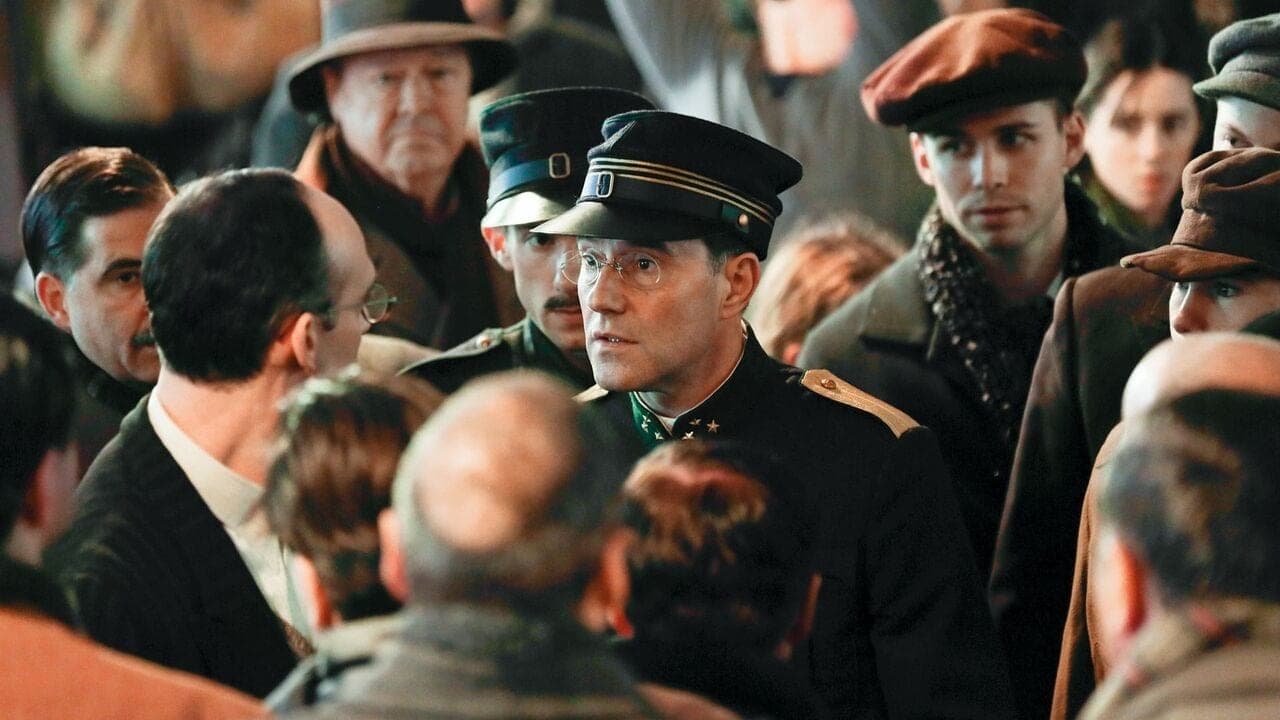
Grüningers Fall
Loading Trailer Videos...

HomePage
Overview
The Grüninger case from Switzerland. This is a documentary about a police officer who showed civil courage back in the forties when he led many refugees fleeing German Nazi terror immigrate to Switzerland, although he was advised not to do so. Grüninger later was sued by the state of Switzerland, lost his job and died in the early seventies. The film constructs a just lawsuit with eye-witnesses and thus fully legitimates what Grüninger did.
Release Date
1998-02-16
Average
9
Rating:
4.5 startsTagline
Genres
Languages:
DeutschKeywords
Similar Movies
70%
Alexandre Tharaud, le temps dérobé(fr)
2013-11-20
Atypical dive into the world of a particularly talented artist of today: Alexandre Tharaud. Born of parents who were themselves familiar with the stage, Alexandre combines his passion for the piano and his fertile intranquillity under the eye of an intimate camera. A film conducted in the form of an exploration of intimate moments where the artist is much more in front of himself than the public, a confrontation at once gentle and brutal to his passion, to his unattainable star. Translated with www.DeepL.com/Translator (free version)
62%
Special Flight(fr)
2011-08-06
Switzerland still carries out special flights, where passengers, dressed in diapers and helmets, are chained to their seats for 40 hours at worst. They are accompanied by police officers and immigration officials. The passengers are flown to their native countries, where they haven't set foot in in up to twenty years, and where their lives might be in danger. Children, wives and work are left behind in Switzerland. Near Geneva, in Frambois prison, live 25 illegal immigrants waiting for deportation. They are offered an opportunity to say goodbye to their families and return to their native countries on a regular flight, escorted by plain-clothes police officers. If they refuse this offer, the special flight is arranged fast and unexpectedly. The stories behind the locked cells are truly heartbreaking.
0%
Gyrischachen - von Sünden, Sofas und Cervelats(en)
2016-05-05
A high-rise apartment built in the 1960s provides housing for 2500 people from 42 nations. Separated from the city by a river and bounded by towering sandstone cliffs, everyone attempts to live and survive in their own way. Foreigners who have a go at being Swiss, and Swiss who observe with scepticism. They meet in the corner shop run by an Iraqi living in exile, send their kids to a children’s club managed by a missionary, and old drinking mates meet regularly over a beer in the neighbourhood’s only bar. Despite all the differences, they are rather proud of the fact that they come from here.

70%
A Home Far Away(en)
2012-04-01
The extraordinary destiny of two people. After the Second World War, Lois is an actress in Broadway theatre, television and Hollywood films. Her husband, Edgar Snow, is world famous. A pioneer fascinated by China, he is the first journalist to film and interview Mao Tse-tung. Suspected by the American authorities of Communist sympathies, Ed and Lois are blacklisted. Together with their two small children, they go to Switzerland, mid-way between China and America, where they find a new home. A story of revolution, utopia, disillusionment, and hope.
67%
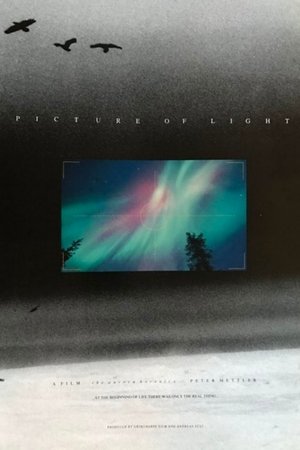
Picture of Light(en)
1994-06-10
A documentary of an expedition to Churchill, Manitoba to film the Northern Lights.
63%
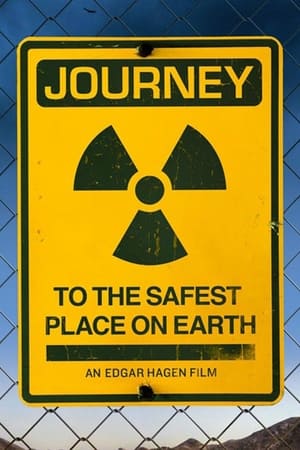
Journey to the Safest Place on Earth(de)
2013-10-10
Over 350,000 tons of highly radioactive waste and spent fuel rods are in temporary storage on site at nuclear power complexes and at intermediate storage sites all over the world. More than 10,000 additional tons join them every year. It is the most dangerous waste man has ever produced. Waste that requires storage in a safe final repository for hundreds of thousands of years. Out of reach of humanity and other living creatures. The question is, where? Together with Swiss-British nuclear physicist Charles McCombie, who has been searching for a safe final storage site for highly radioactive nuclear waste for thirty-five years, director Edgar Hagen investigates the limitations and contradictions involved in this project of global significance. Supporters and opponents of nuclear energy struggle for solutions whilst dogmatic worldviews are assailed by doubt
60%
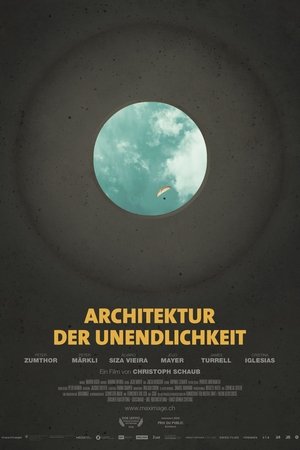
Architecture of Infinity(de)
2019-01-31
How can structures, which take up defined, rigid portions of space, make us feel transcendence? How can chapels turn into places of introspection? How can walls grant boundless freedom? Driven by intense childhood impressions, director Christoph Schaub visits extraordinary churches, both ancient and futuristic, and discovers works of art that take him up to the skies and all the way down to the bottom of the ocean. With the help of architects Peter Zumthor, Peter Märkli, and Álvaro Siza Vieira, artists James Turrell and Cristina Iglesias, and drummer Sergé “Jojo” Mayer, he tries to make sense of the world and decipher our spiritual experiences using the seemingly abstract concepts of light, time, rhythm, sound, and shape. The superb cinematography turns this contemplative search into a multi-sensory experience.
69%
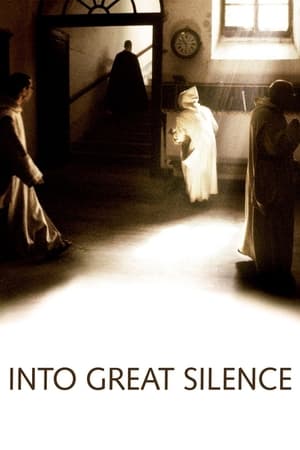
Into Great Silence(de)
2005-09-04
An intimate portrayal of the everyday lives of Carthusian monks of the Grande Chartreuse, high in the French Alps (Chartreuse Mountains). The idea for the film was proposed to the monks in 1984, but the Carthusians said they wanted time to think about it. The Carthusians finally contacted Gröning 16 years later to say they were now willing to permit Gröning to shoot the movie, if he was still interested.

0%
The Laundry Room(fr)
2013-04-24
The key to the communal laundry room in the block of flats on the Rue de Genève 85 in Lausanne serves a much greater function than merely unlocking the door. This encounter between a symbol of typical Swiss mentality with a penchant for order and the tenants who have been housed here by the city’s social services department is not something to be taken for granted. Although the laundry room is normally located in the cellar, the tenants in this building share a tiny laundry room off the entrance hall because the cellar is reserved for prostitution. To maintain order and cleanliness, the landlord hires Claudina, a new “laundry woman”.
60%
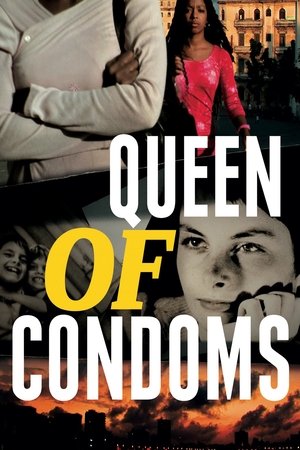
Queen of Condoms(es)
2007-08-29
Ceschi and Stamm's documentary tells the incredible story of Monika Krause, a former East German citizen, who became Fidel Castro's Sexual Education Minister. After 20 years in Cuba, Krause set the Cuban sexual revolution in motion: in favor of a woman's right to sexual fulfillment and legal abortion, and against exclusion of homosexuals, she acquired the title "Queen of Condoms". A film about potent female agitators, staunch macho men and Caribbean love lives.
72%
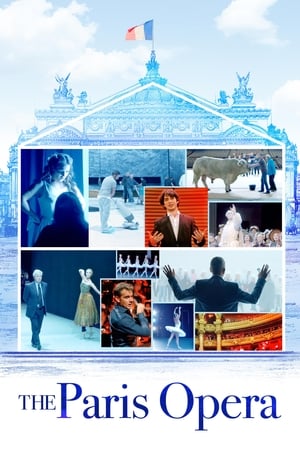
The Paris Opera(fr)
2017-04-05
A behind-the-scenes look at the of how the Paris Opera is run under the direction of Stephane Lissner.
0%
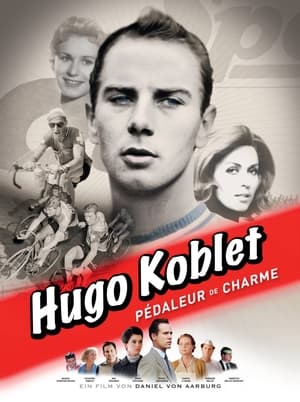
Hugo Koblet - The Charming Cyclist(de)
2010-09-16
Zurich-born Hugo Koblet was the first international cycling star of the post-war period. He was a stylist on the bicycle and in life, and a huge heartthrob. Koblet had a meteoric rise and won the Giro d'Italia in 1950. Once he had reached the zenith of his career, Koblet was put under pressure by overly ambitious officials and ended up ruining his health with drugs. In 1954, he married a well-known model and they became a celebrity dream couple. After his athletic career ended, Koblet began to lose his footing. Threatened by bankruptcy, he crashed his Alfa into a tree.
0%
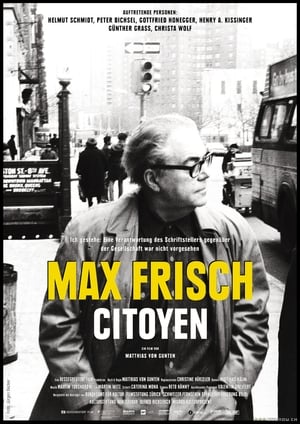
Max Frisch, Citoyen(de)
2008-03-20
Max Frisch was the last big Swiss intellectual widely respected as a “voice” in its own right – a character hardly found today. The film retells Frisch’s story as a witness of the unfolding 20th century, wondering if such “voices” are needed at all, or if we could do without them.
70%
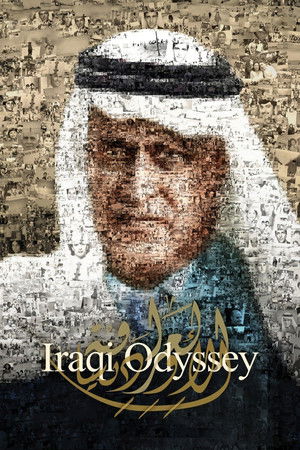
Iraqi Odyssey(en)
2014-09-06
Tracing the emigrations of his family over more than half a century, this riveting documentary epic from acclaimed expatriate Iraqi filmmaker Samir pays moving homage to the frustrated democratic dreams of a people successively plagued by the horrors of dictatorship, war and foreign occupation of Iraq.

0%
Von heute auf morgen(de)
2013-01-25
'From One Day To The Next' follows four elderly people through their everyday lives, observing how they cope with a gradual loss of autonomy.
71%
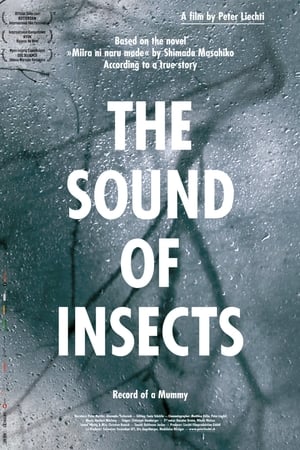
The Sound of Insects: Record of a Mummy(de)
2009-01-21
The incredible story of how the mummified corpse of a 40-year-old man was discovered by a hunter in one of the most remote parts of the country. The dead man's detailed notes reveal that he actually committed suicide through self-imposed starvation only the summer before. Liechti's film is a stunning rapprochement of a fictional text, which itself is based upon a true event: a cinematic manifesto for life, challenged by the main character's radical renunciation of life itself.

0%
GLOW(de)
2023-06-15
She was a muse, model and performer – a star, dazzling and intense. Lady Shiva managed to rise from street prostitution to the top. She lived in the fast lane and died tragically young. Her dream was to become a singer. With her companions, we trace her life during a vibrant time that kindles a yearning and provokes until today. The story of a woman’s meteoric fate and a great dream. An irrepressible desire for freedom in all its beauty and destructive force - and a stirring friendship and love.
70%
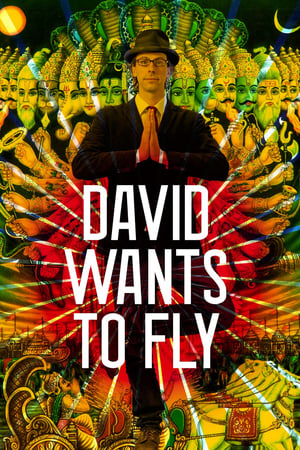
David Wants to Fly(en)
2010-05-06
A documentary. David Sieveking takes the advice of his idol, David Lynch and tries out Maharishi Mahesh Yogi's transcendental meditation technique.
62%
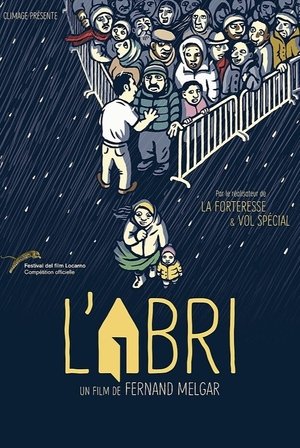
The Shelter(fr)
2014-08-10
It is winter at an emergency shelter for the homeless in Lausanne. Every night at the door of this little-known basement facility the same entry ritual takes place, resulting in confrontations which can sometimes turn violent. Those on duty at the shelter have the difficult task of “triaging the poor”: the women and children first, then the men. Although the total capacity at the shelter is 100, only 50 “chosen ones” will be admitted inside and granted a warm meal and a bed. The others know it will be a long night.
66%
Sounds and Silence - Travels with Manfred Eicher(de)
2009-11-19
On the way through a world of sounds and noise – with Manfred Eicher, the oustanding discoverer and mediator of contemporary music and founder of the music label ECM. On this journey we are meeting musicians and composers, but also people and places which are connected with him and with each other. We are encountering stories, landscapes, cities, disputes and hugs, tranquillity, hectic pace, work, self-doubt, joy, passion.
Recommendations Movies

67%
Anselm(de)
2023-10-12
This unique cinematic experience dives deep into an artist’s work and reveals his life path, inspiration, and creative process. It explores his fascination with myth and history. Past and present are interwoven to diffuse the line between film and painting, allowing the audience to be completely immersed in the remarkable world of one of the greatest contemporary artists, Anselm Kiefer. Wim Wenders shot this unique portrait over the course of two years in stunning 3D.

62%
Seduced and Abandoned(en)
2013-05-20
SEDUCED AND ABANDONED combines acting legend Alec Baldwin with director James Toback as they lead us on a troublesome and often hilarious journey of raising financing for their next feature film. Moving from director to financier to star actor, the two players provide us with a unique look behind the curtain at the world's biggest and most glamourous film festival, shining a light on the bitter-sweet relationship filmmakers have with Cannes and the film business. Featuring insights from directors Martin Scorsese, 'Bernando Bertolucci' and Roman Polanski; actors Ryan Gosling and Jessica Chastain and a host of film distribution luminaries.
75%
Jim & Andy: The Great Beyond(en)
2017-09-05
Offbeat documentarian Chris Smith provides a behind-the-scenes look at how Jim Carrey adopted the persona of idiosyncratic comedian Andy Kaufman on the set of Man on the Moon.
69%
In Search of the Last Action Heroes(en)
2019-09-01
The most comprehensive retrospective of the '80s action film genre ever made.

76%
Night Will Fall(en)
2014-06-07
When Allied forces liberated the Nazi concentration camps in 1944-45, their terrible discoveries were recorded by army and newsreel cameramen, revealing for the first time the full horror of what had happened. Making use of British, Soviet and American footage, the Ministry of Information’s Sidney Bernstein (later founder of Granada Television) aimed to create a documentary that would provide lasting, undeniable evidence of the Nazis’ unspeakable crimes. He commissioned a wealth of British talent, including editor Stewart McAllister, writer and future cabinet minister Richard Crossman – and, as treatment advisor, his friend Alfred Hitchcock. Yet, despite initial support from the British and US Governments, the film was shelved, and only now, 70 years on, has it been restored and completed by Imperial War Museums under its original title "German Concentration Camps Factual Survey".

61%
Naqoyqatsi(en)
2002-09-02
A visual montage portrait of our contemporary world dominated by globalized technology and violence.

60%
Anna Nicole Smith: You Don't Know Me(en)
2023-05-16
From the heights of her modeling fame to her tragic death, this documentary reveals Anna Nicole Smith through the eyes of the people closest to her.
65%
Room 666(en)
1982-06-02
During the 1982 Cannes Film Festival, Wim Wenders asked a number of global film directors to, one at a time, go into a hotel room, turn on the camera, and answer a simple question: "What is the future of cinema?"

71%
Deliver Us from Evil(en)
2006-06-24
Documentary filmmaker Amy Berg investigates the life of 30-year pedophile Father Oliver O'Grady and exposes the corruption inside the Catholic Church that allowed him to abuse countless children. Victims' stories and a disturbing interview with O'Grady offer a view into the troubled mind of the spiritual leader who moved from parish to parish gaining trust ... all the while betraying so many.
74%
More Brains! A Return to the Living Dead(en)
2011-10-18
Retrospective documentary about the making of the horror cult classic "The Return of the Living Dead."
84%
No Half Measures: Creating the Final Season of Breaking Bad(en)
2013-11-26
A documentary about the making of season five of the acclaimed AMC series Breaking Bad.
79%
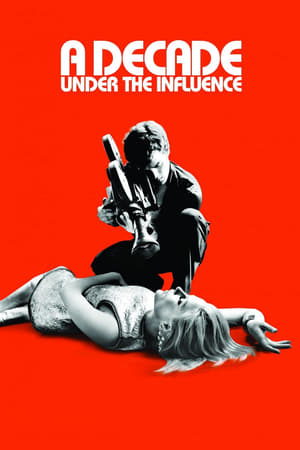
A Decade Under the Influence(en)
2003-04-25
A documentary examining the decade of the 1970s as a turning point in American cinema. Some of today's best filmmakers interview the influential directors of that time.

72%
Hitchcock/Truffaut(en)
2015-09-05
Filmmakers discuss the legacy of Alfred Hitchcock and the book “Hitchcock/Truffaut” (“Le cinéma selon Hitchcock”), written by François Truffaut and published in 1966.

67%
Frida(en)
2024-03-08
An intimately raw and magical journey through the life, mind, and heart of iconic artist Frida Kahlo. Told through her own words for the very first time — drawn from her diary, revealing letters, essays, and print interviews — and brought vividly to life by lyrical animation inspired by her unforgettable artwork.

76%
As I Was Moving Ahead, Occasionally I Saw Brief Glimpses of Beauty(en)
2000-11-05
A compilation of over 30 years of private home movie footage shot by Lithuanian-American avant-garde director Jonas Mekas, assembled by Mekas "purely by chance", without concern for chronological order.
70%
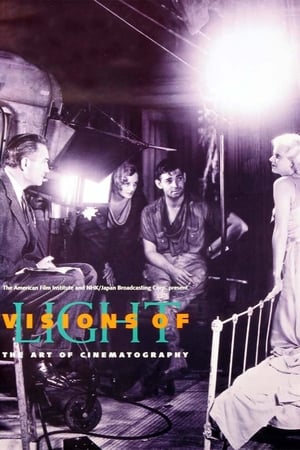
Visions of Light(en)
1992-09-17
Cameramen and women discuss the craft and art of cinematography and of the "DP" (the director of photography), illustrating their points with clips from 100 films, from Birth of a Nation to Do the Right Thing. Themes: the DP tells people where to look; changes in movies (the arrival of sound, color, and wide screens) required creative responses from DPs; and, these artisans constantly invent new equipment and try new things, with wonderful results. The narration takes us through the identifiable studio styles of the 30s, the emergence of noir, the New York look, and the impact of Europeans. Citizen Kane, The Conformist, and Gordon Willis get special attention.
69%
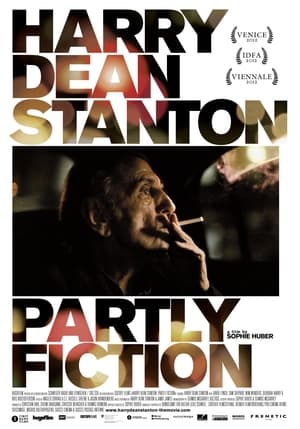
Harry Dean Stanton: Partly Fiction(en)
2013-09-11
An impressionistic portrait of the iconic actor Harry Dean Stanton comprised of intimate moments, film clips from some of his 250 films and his renditions of American folk songs.