Crossroads at the Edge of Worlds
Top 10 Billed Cast
HomePage
Overview
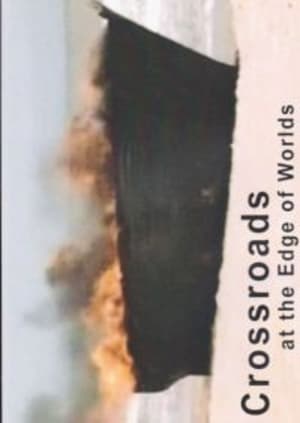
This video research is based on a trip to Morocco in July 2005, during which the director documented irregular migration transiting through Morocco, as well as their control. This geographical project focuses on the main migratory axes: Oujda, entry point for migrants in Morocco; Tangier, from where migrants can try to cross the strait or the fences of Ceuta; Rabat, organization space; and Laayoune, the closest point to the Canaries. The video questions the nature and meaning of these extraterritorial enclaves that structure the Moroccan territory.
Release Date
2005-01-01
Average
0
Rating:
0.0 startsTagline
Genres
Languages:
EnglishFrançaisKeywords
Similar Movies
Memory Books(en)
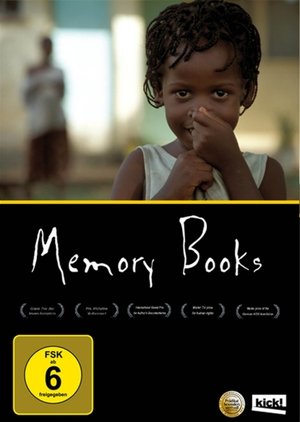
In Uganda, AIDS-infected mothers have begun writing what they call Memory Books for their children. Aware of the illness, it is a way for the family to come to terms with the inevitable death that it faces. Hopelessness and desperation are confronted through the collaborative effort of remembering and recording, a process that inspires unexpected strength and even solace in the face of death.
Our Forbidden Places(ar)
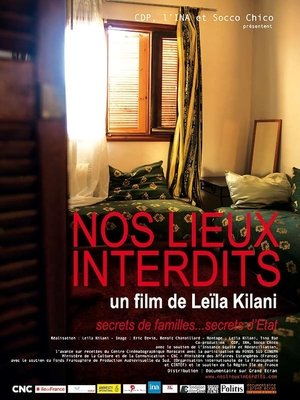
During the oppressive reign of Moroccan King Hassan II in the 70s and 80s (Years of Lead), many dissidents went missing. After the throning of a new king, a truth commission was formed in the 2000's. Families of the missing speak.
Banlie.ue(fr)
The Wildebeest Migration: Nature's Greatest Journey(en)
Every year, on the steppes of the Serengeti, the most spectacular migration of animals on our planet: Around two million wildebeest, Burchell's zebra and Thomson's gazelles begin their tour of nearly 2,000 miles across the almost treeless savannah. For the first time, a documentary captures stunning footage in the midst of this demanding journey. The documentary starts at the beginning of the year, when more than two million animals gather in the shadow of the volcanoes on the southern edge of the Serengeti in order to birth their offspring. In just two weeks, the animal herd's population has increased by one third, and after only two days, the calves can already run as fast as the adults The young wildebeest in this phase of their life are the most vulnerable to attacks by lions, cheetahs, leopards or hyenas. The film then follows the survivors of these attacks through the next three months on their incredible journey, a trip so long that 200,000 wildebeest will not reach the end.
Mondo Topless(en)
Completely topless. Completely uninhibited. The craze that began in San Francisco is now exploding across the USA and Europe.

Marfil(es)
The first filmmaker arrived in Equatorial Guinea in 1904. The last movie theatre closed in Malabo in the 1990s. In 2011, during the II African Film Festival of Equatorial Guinea, the Marfil Movie Theatre reopened its doors. Florencio, Ángel and Estrada tells us how cinema has been, and is still, present in their lives.
The Hunters(en)
An ethnographic documentary following four Ju/’hoansi (!Kung) men during a multi-day giraffe hunt in the Kalahari Desert, filmed during the Smithsonian–Harvard Peabody expedition of 1952–53.

Der lange Weg ans Licht(de)
Edeltraut Hertel - a midwife caught between two worlds. She has been working as a midwife in a small village near Chemnitz for almost 20 years, supporting expectant mothers before, during and after the birth of their offspring. However, working as a midwife brings with it social problems such as a decline in birth rates and migration from the provinces. Competition for babies between birthing centers has become fierce, particularly in financial terms. Obstetrics in Tanzania, Africa, Edeltraud's second place of work, is completely different. Here, the midwife not only delivers babies, she also trains successors, carries out educational and development work and struggles with the country's cultural and social problems.
Lost Mountain(fr)
On November 1, 1954, the National Liberation Front of Algeria announced the war for the country's independence. France, colonizer since 1830, hastened to reinforce its military contingent in the four corners of the country and to prevent the advance of the rebels. A little Chaoui, born in a mountainous region of the country, sees his placid childhood collapse in the middle of a crossfire that he does not understand. The story, inspired by real testimonies, is constructed with images from the archives of the French army. From this apparently dissociated dialogue between image and word arises a sensitive homage to the memory that rests in the archives and to the ignored voice of its protagonists.
Visions of Europe(en)
Twenty-five films from twenty-five European countries by twenty-five European directors.
Khaïma(ar)
Algeria in Flames(ar)
These are the first images shot in the ALN maquis, camera in hand, at the end of 1956 and in 1957. These war images taken in the Aurès-Nementchas are intended to be the basis of a dialogue between French and Algerians for peace in Algeria, by demonstrating the existence of an armed organization close to the people. Three versions of Algeria in Flames are produced: French, German and Arabic. From the end of the editing, the film circulates without any cuts throughout the world, except in France where the first screening takes place in the occupied Sorbonne in 1968. Certain images of the film have circulated and are found in films, in particular Algerian films. Because of the excitement caused by this film, he was forced to go into hiding for 25 months. After the declaration of independence, he founded the first Algerian Audiovisual Center.
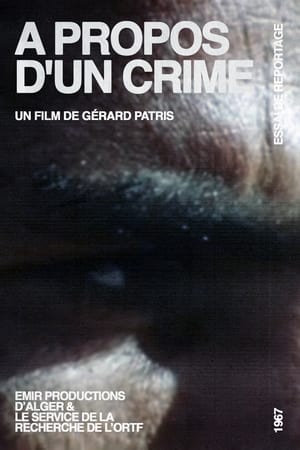
A Propos D'Un Crime(fr)
In 1967, Visconti came to Algiers for the filming of The Stranger with Mastroianni and Anna Karina. Camus, during his lifetime, had always refused to allow one of his novels to be brought to the screen. His family made another decision. The filming of the film was experienced in Algiers, like a posthumous return of the writer to Algiers. During filming, a young filmmaker specializing in documentaries Gérard Patris attempts a report on the impact of the filming of The Stranger on the Algerians. Interspersed with sequences from the shooting of Visconti's film, he films Poncet, Maisonseul, Bénisti and Sénac, friends of Camus, in full discussions to situate Camus and his work in a sociological and historical context. “The idea is for us to show people, others, ourselves as if they could all be Meursault, or at least the witnesses concerned to his drama.”
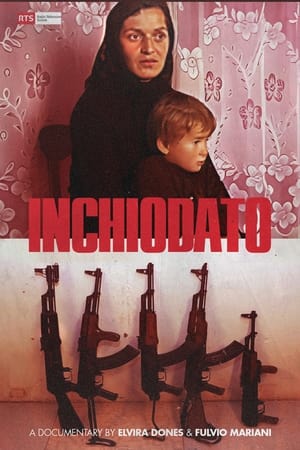
Inchiodato(sq)
In northern Albania, ancestral customs still exist, governing the laws of vendetta between families. Sometimes, for generations, an old feud has pitted two clans against each other, condemning them to take turns murdering a member of the opposing family. This blood code, known as the Kanoun, has painful consequences for many Albanians, who are condemned to live in seclusion to avoid being killed.

Memories to Choke On, Drinks to Wash Them Down(cn)
This anthology film, whose Chinese title begins with a romantic name for human excrement, premiered internationally at Rotterdam and won Best Screenplay from the Hong Kong Film Critics Society. A variety of Hong Kong people wrestle with nostalgia when facing an uncertain future. Their stories give way to a documentary featuring a young barista turned political candidate.
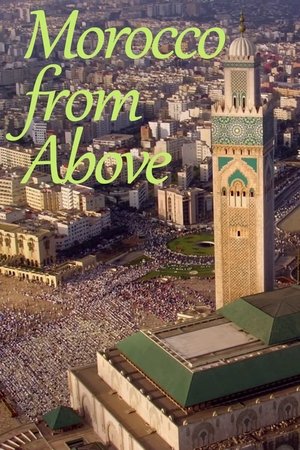
Morocco from Above(fr)
Yann Arthus-Bertrand flew over Morocco with his cameras and asked the journalist Ali Baddou to write and record the comment.
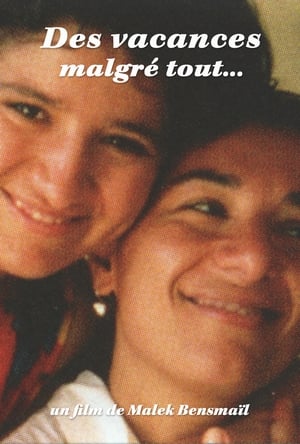
Holidays Despite All(fr)
Immigrated to the Paris region since 1964, Kader decides to spend the summer holidays with his family in his native village, not far from Algiers. These few weeks, so eagerly awaited by both sides, constitute a special moment full of strong emotions. The camera follows the family in their meetings, their reunions, their difficulties, their visions of the country and its region, the celebrations, the weddings, their return to France… This film raises many questions. Within this family itself, between those who stayed in the country and those who emigrated to France, how do we perceive the situation in Algeria? What hopes do each of them have for their country? What about the Franco-Algerian relationship? Contemporary immigration? The desire for exile of Algerians today? Different discourses on both sides of the Mediterranean? The desires of each of them…
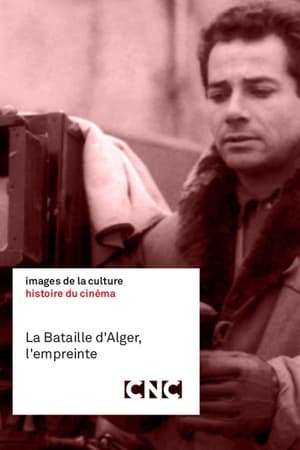
La Bataille d'Alger, l'empreinte(fr)
Cheikh Djemaï looks back on the genesis of Gillo Pontecorvo’s feature film, The Battle of Algiers (1965). Through archive images, extracts from the film and interviews with personalities, the filmmaker retraces the journey of a major work - from the events of the Algiers Casbah (1956-1957) to the presentation of the Lion of 'Or causing the anger of the French delegation in Venice - which left its mark as much in the history of cinema as in that of Algeria.
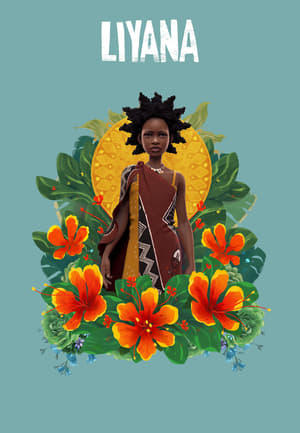
Liyana(en)
A talented group of orphaned children in Swaziland create a fictional heroine and send her on a dangerous quest.