Loading Page
IT'S ALL ABOUT ME
Top 4 Billed Cast

F.D Signifier
Additional Voices
Loading Trailer Videos...
All 1 videos
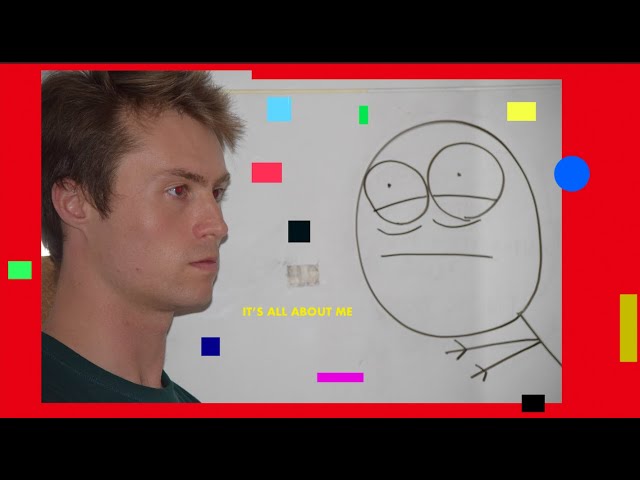
IT'S ALL ABOUT ME - Featurette
Similar Movies
0%
Michel Foucault par lui-même(fr)
2003-01-01
A voyage to the center of the thought of Michel Foucault (1926-1984), a tireless explorer of the margins, a brilliant and atypical thinker, through excerpts from his books and lectures, and the use of images that resonate with them.
74%
Belladonna of Sadness(ja)
1973-06-30
An evil feudal lord rapes a village girl on her wedding night and proceeds to ruin her and her husband's lives. After she's eventually banished from her village, the girl makes a pact with the devil to gain magical ability and take revenge.
0%
6W(es)
2023-12-15
In a space without limits, a being without identity confronts his own existence by asking himself six fundamental questions. In his search to define his essence, the protagonist enters an introspective journey marked by a lack of answers and uncertainty. Through this internal challenge, the character unravels the complexity of identity and self-awareness, inviting the viewer to plunge into the depths of existence, where unknowns and the absence of clear answers defy the limits of human understanding.
80%
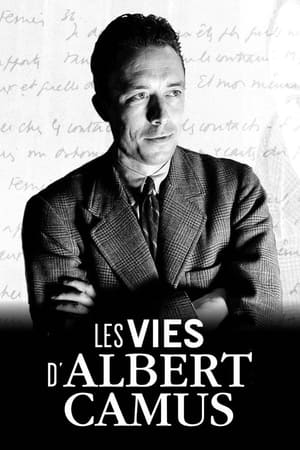
The Lives of Albert Camus(fr)
2020-01-22
Albert Camus died at 46 years old on January 4, 1960, two years after his Nobel Prize in literature. Author of “L'Etranger”, one of the most widely read novels in the world, philosopher of the absurd and of revolt, resistant, journalist, playwright, Albert Camus had an extraordinary destiny. Child of the poor districts of Algiers, tuberculosis patient, orphan of father, son of an illiterate and deaf mother, he tore himself away from his condition thanks to his teacher. French from Algeria, he never ceased to fight for equality with the Arabs and the Kabyle, while fearing the Independence of the FLN. Founded on restored and colorized archives, and first-hand accounts, this documentary attempts to paint the portrait of Camus as he was.

70%
Albert Schweitzer - The Man Behind the Myth(de)
2025-09-04
A famous figure of the 20th century, Albert Schweitzer was a tireless humanist and polymath who opened a hospital in the Gabonese jungle to bring healthcare to remote areas. But today the legacy of the winner of the Nobel Peace Prize in 1952 is being scrutinised. How important was his wife Hélène in his success? And was the virtuous man also racist?
60%
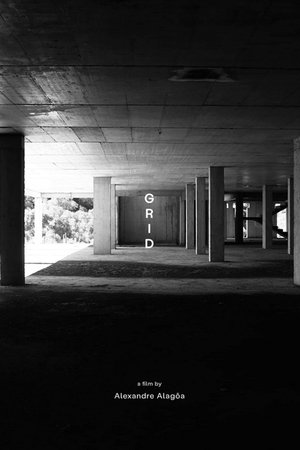
Grid(pt)
2021-10-22
A ritual of grids, reflections and chasms; a complete state of entropy; a space that devours itself; a vertigo that destroys the gravity of the Earth; a trap that captures us inside the voids of the screen of light: «That blank arena wherein converge at once the hundred spaces» (Hollis Frampton).
63%
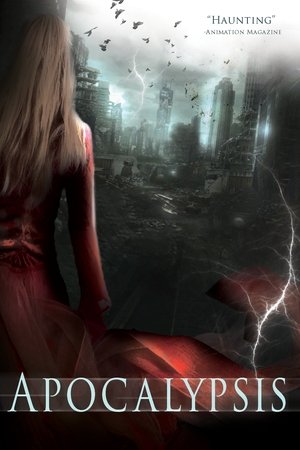
Apocalypsis(en)
2018-03-17
Set in a parallel universe entering a black hole, a woman reading the book of Revelation has visions of regeneration during Anthropocene.
61%
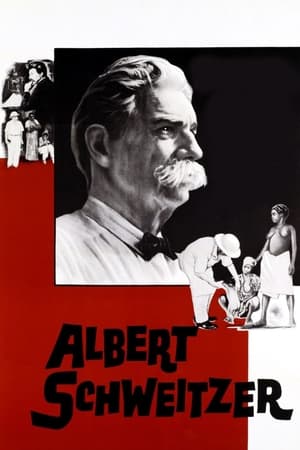
Albert Schweitzer(en)
1957-11-22
This biographical docudrama traces the life of Dr. Albert Schweitzer, from his birth in Alsace, up to the age of 30 when he made the decision to go to French Equatorial Africa and build his jungle hospital. The latter half of the film encompasses a full day in the hospital-village, following the octogenarian Samaritan in his daily rounds.
60%
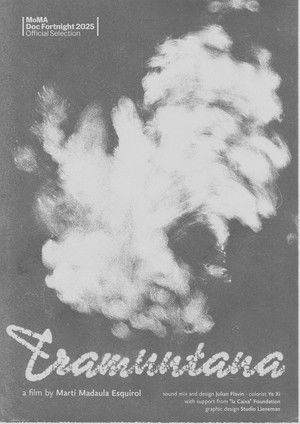
Tramuntana(ca)
2025-02-23
In a remote area of northern Spain, the wind has a name: Tramuntana. Tramuntana takes what it wants—clothes, trees, boats, and the people of the landscape who live with the endless threat of being carried away by its force. This film is a lyrical portrait of this furious wind, woven from the stories passed down by local villagers.
60%
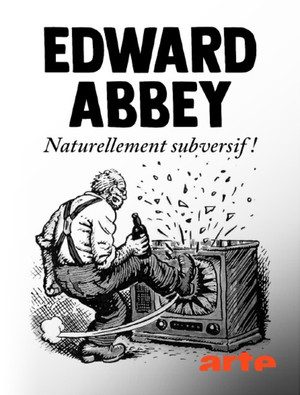
Edward Abbey, naturellement subversif !(fr)
2025-11-14
A resistance writer and pioneer of nature writing with a controversial personality, Edward Abbey wrote more than twenty books on the theme of eternal nature. A gem of counterculture, his 1975 novel The Monkey Wrench Gang inspired a generation of environmental activists and readers with rebellious souls. Portrait of a rebellious, lyrical, and rude writer.
0%
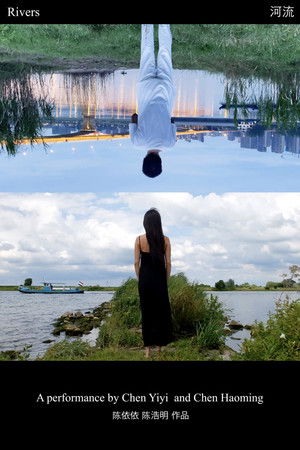
Rivers(zh)
2023-03-16
"The river Lek reminded me of the river Xiang in my hometown Changsha. I had not been home for 3 years and one of the connections with home was the poems my dad wrote me every day via WeChat. The rivers seemed equally significant for the people in the Netherlands and in Changsha. They are both a romantic connection and an important symbol of daily trade and industry. In a Wechat session my father and I simultaneously read three pairs of poems we wrote for this occasion, he by the Xiang and I by the Lek. Giving the words to the waters that ultimately will meet somewhere in the ocean. The video shows fragments of the performance which took place at the same time in Changsha and Culemborg in June. The full-length documentation is presented as a dual-screen video installation. The three poems written by me can be found on the page "Writing"."
73%
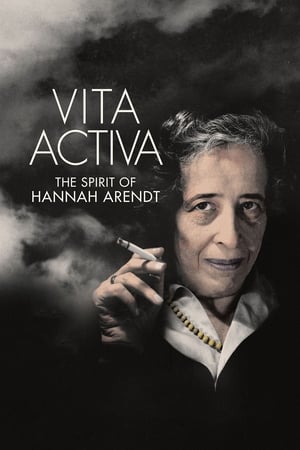
Vita Activa: The Spirit of Hannah Arendt(en)
2015-06-30
The life and work of German political philosopher of Jewish descent Hannah Arendt (1906-75), who caused a stir when she coined a subversive concept, the banality of evil, in her 1963 book on the trial of Nazi war criminal Adolph Eichmann (1906-62), held in Israel in 1961, which she covered for the New Yorker magazine.
80%
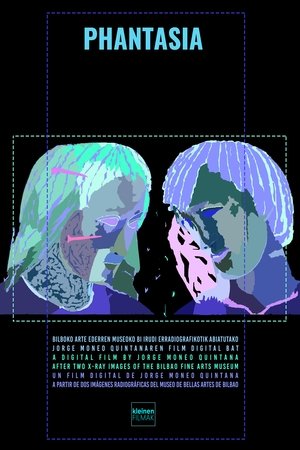
Phantasia(xx)
2024-03-13
X-ray images were invented in 1895, the same year in which the Lumière brothers presented their respective invention in what today is considered to be the first cinema screening. Thus, both cinema and radiography fall within the scopic regime inaugurated by modernity. The use of X-rays on two sculptures from the Bilbao Fine Arts Museum generates images that reveal certain elements of them that would otherwise be invisible to our eyes. These images, despite being generally created for technical or scientific purposes, seem to produce a certain form of 'photogénie': they lend the radiographed objects a new appearance that lies somewhere between the material and the ethereal, endowing them with a vaporous and spectral quality. It is not by chance that physics and phantasmagoria share the term 'spectrum' in their vocabulary.
0%
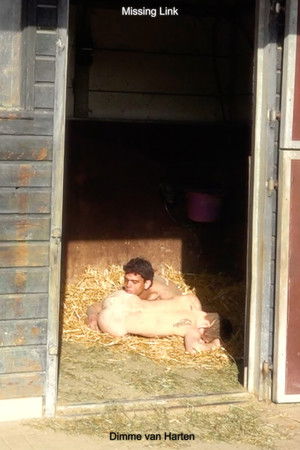
Missing Link(en)
2021-03-24
"Encouraged by a special encounter between myself and an animal, my research into the “humanimal” began. This is a performative exploration reflecting on the place of animals and humans in their changing relationships throughout time. The research spans from topics like the cohabitation of different human species, the prehuman, the posthuman, to domestication and the numerous animal watching webcams found in zoos and online. Missing Link reflects on the intimacy between the species and how it can be expressed through movement here and now. "
0%
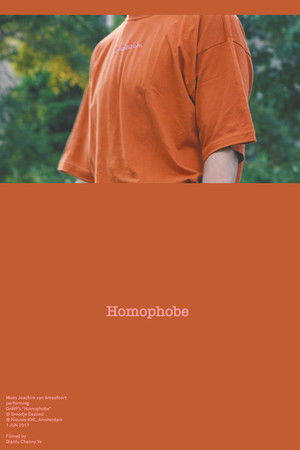
Homophobe(en)
2018-05-12
Performance documentation of Mees Joachim's 'Homophobe', a 10 minute live-reenactment of a scene from 'E Kolór Korrá' (2017). A juxtaposition performed as minimally as possible. A destructively interpretive dance, literally shattering bones whilst forcefully dropping on the ground. A pre-cursor to their 'The Scaphoid Fracture' (2017) performance.
0%
The Weight Of My Name(de)
2025-05-25
2-channel film installation 'Die Last meines Namens', wherein Heydt deals with an unpleasant part of his own family history. Heydt’s great-grandfather was a member of the NSDAP and mayor of the small town of Haselünne in Emsland for almost 10 years during the Third Reich. Based on interviews with his grandfather and research in various archives, Heydt develops a personal perspective on the subject. The film deals with how we construct identity from oral retellings, how we process family histories, and how we can find current and personal points of access to German remembrance culture. At the heart of the work are two conversations with his grandfather Heinrich Heydt, recorded at different points in the research process. In them, the grandfather describes his memories of his father, the time, and the two reflect on the subject and the results of the research.
0%
Laïcité, l'exception française - 120 ans, et maintenant ?(fr)
2025-12-09
The 1905 law proclaiming the separation of church and state is 120 years old. This law affirms freedom of conscience and religious freedom. It is considered the founding text of secularism. Secularism is the subject of endless controversy and debate.

0%
Objects of War(fr)
2000-01-01
‘Objects of War’ is a series of testimonials on the Lebanese war. Each person chooses an object, ordinary or unusual, which serves as a starting point for his / her story. These testimonials while helping to create a collective memory, also show the impossibility of telling a single History of this war. Only fragments of this History are recounted here, held as truth by those expressing them. In ‘Objects of War’, the aim is not to reveal a truth but rather to gather and confront many diverse versions and discourses on the subject. ‘Objects of War’ started in 1999 assembling the testimonials of eleven persons. It was first shown in 2000 . It continued in 2003 with ‘Objects of War n°2’, recording seven additional testimonials. This time however, and since then, the recorded material is left unedited, shown in its integrity. The work of collecting and assembling these stories continued with ‘Objects of War n°3 & n°4’ in 2006 and ‘n°5 & 6’ in 2014.
68%
Camus, l'icône de la révolte(fr)
2020-01-03
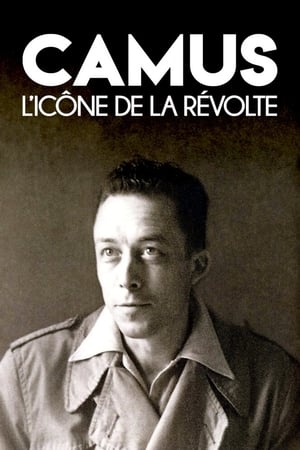
Albert Camus, who died 60 years ago, continues to inspire defenders of freedom and human rights activists around the world today. The Nobel Prize winner for literature is one of the most widely read French-language writers in the world. He continues to embody the rebellious man who opposes all forms of oppression and tyranny while refusing to compromise his human values.
Recommendations Movies
75%
Jim & Andy: The Great Beyond(en)
2017-09-05
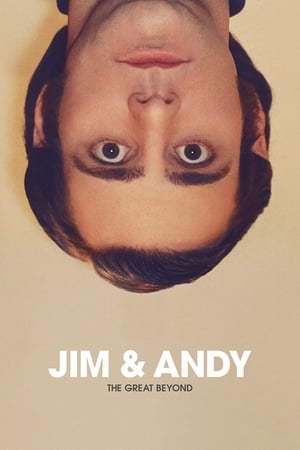
Offbeat documentarian Chris Smith provides a behind-the-scenes look at how Jim Carrey adopted the persona of idiosyncratic comedian Andy Kaufman on the set of Man on the Moon.
71%
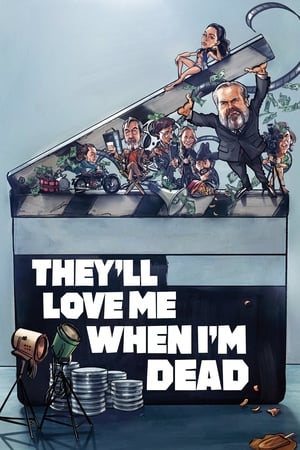
They'll Love Me When I'm Dead(en)
2018-08-31
As his life comes to its end, famous Hollywood director Orson Welles puts it all on the line at the chance for renewed success with the film The Other Side of the Wind.
75%
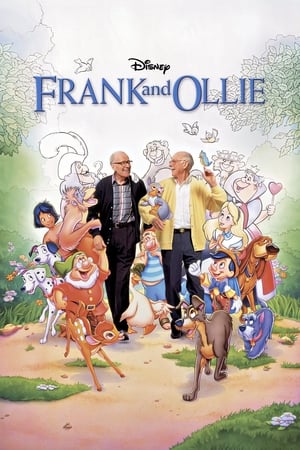
Frank and Ollie(en)
1995-10-20
Before computer graphics, special effects wizardry, and out-of-this world technology, the magic of animation flowed from the pencils of two of the greatest animators The Walt Disney Company ever produced -- Frank Thomas and Ollie Johnston. Frank and Ollie, the talent behind BAMBI, PINOCCHIO, LADY AND THE TRAMP, THE JUNGLE BOOK, and others, set the standard for such modern-day hits as THE LION KING. It was their creative genius that helped make Disney synonymous with brilliant animation, magnificent music, and emotional storytelling. Take a journey with these extraordinary artists as they share secrets, insights, and the inspiration behind some of the greatest animated movies the world has ever known!

65%
Heart of a Dog(en)
2015-10-21
Lyrical and powerfully personal essay film that reflects on the deaths of her husband Lou Reed, her mother, her beloved dog, and such diverse subjects as family memories, surveillance, and Buddhist teachings.
69%
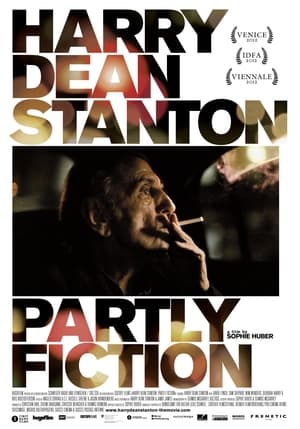
Harry Dean Stanton: Partly Fiction(en)
2013-09-11
An impressionistic portrait of the iconic actor Harry Dean Stanton comprised of intimate moments, film clips from some of his 250 films and his renditions of American folk songs.
71%
Blue(en)
1993-08-19
Against a plain, unchanging blue screen, a densely interwoven soundtrack of voices, sound effects and music attempt to convey a portrait of Derek Jarman's experiences with AIDS, both literally and allegorically, together with an exploration of the meanings associated with the colour blue.
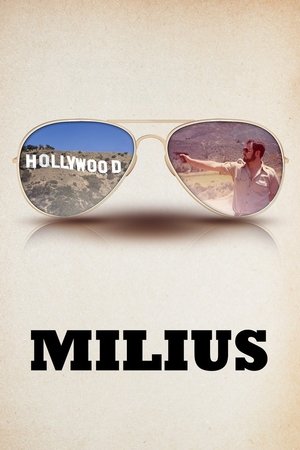
70%
Milius(en)
2013-03-09
The life story of ‘Zen Anarchist’ filmmaker John Milius, one of the most influential storytellers of his generation.
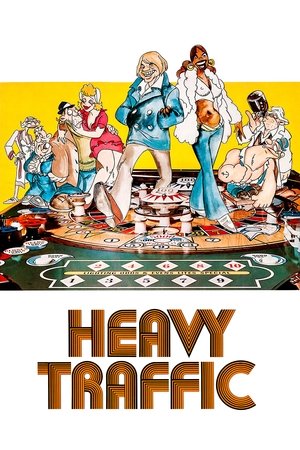
64%
Heavy Traffic(en)
1973-08-08
A white dropout struggles to become a cartoonist and filmmaker, drawing inspiration from the harsh, gritty world around him. Still sharing his rundown apartment with his middle-aged parents, an oafish slob of an Italian father and a ditzy nutcase of a Jewish mother, he's ridiculed and looked down upon by his friends, hypocrites who run with violent gangs and the Italian Mafia, and a shallow Black girl who makes her living downtown with the pimps and pushers. The cartoonist gets a chance to pitch a film idea to a movie mogul, but the story proves too outrageous: a far-future Earth, depleted by war and pollution, where a mutant antihero challenges and kills God.
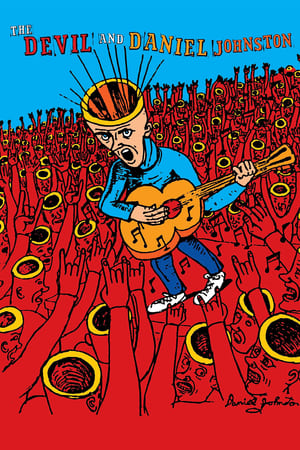
77%
The Devil and Daniel Johnston(en)
2006-03-31
This 2005 documentary film chronicles the life of Daniel Johnston, a manic-depressive genius singer/songwriter/artist, from childhood up to the present, with an emphasis on his mental illness and how it manifested itself in demonic self-obsession.
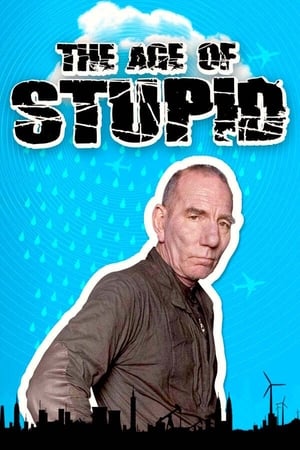
66%
The Age of Stupid(en)
2009-09-21
Pete Postlethwaite stars as a man living alone in the devastated future world of 2055, looking at old footage from 2008 and asking: why didn’t we stop climate change when we had the chance?
74%
Love, Antosha(en)
2019-08-02
From a prolific career in film and television, Anton Yelchin left an indelible legacy as an actor. Through his journals and other writings, his photography, the original music he wrote, and interviews with his family, friends, and colleagues, this film looks not just at Anton's impressive career, but at a broader portrait of the man.
70%
The House(en)
2022-01-14
Across different eras, a poor family, an anxious developer and a fed-up landlady become tied to the same mysterious house in this animated dark comedy.
75%
Waking Life(en)
2001-10-19
Waking Life is about a young man in a persistent lucid dream-like state. The film follows its protagonist as he initially observes and later participates in philosophical discussions that weave together issues like reality, free will, our relationships with others, and the meaning of life.
71%
End Game(en)
2018-01-21
Filmed and edited in intimate vérité style, this movie follows visionary medical practitioners who are working on the cutting edge of life and death and are dedicated to changing our thinking about both.
85%
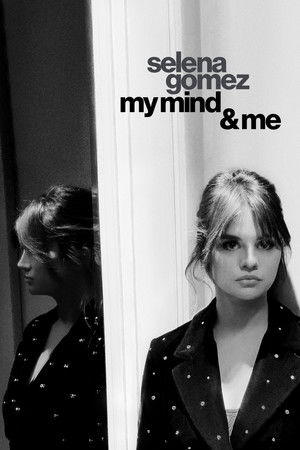
Selena Gomez: My Mind & Me(en)
2022-11-04
After years in the limelight, Selena Gomez achieves unimaginable stardom. But just as she reaches a new peak, an unexpected turn pulls her into darkness. This uniquely raw and intimate documentary spans her six-year journey into a new light.
61%
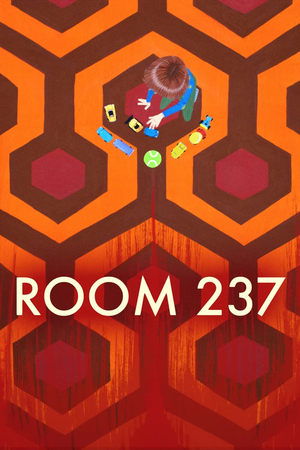
Room 237(en)
2012-10-26
A subjective documentary that explores various theories about hidden meanings in Stanley Kubrick's classic film The Shining. Five very different points of view are illuminated through voice over, film clips, animation and dramatic reenactments.
62%
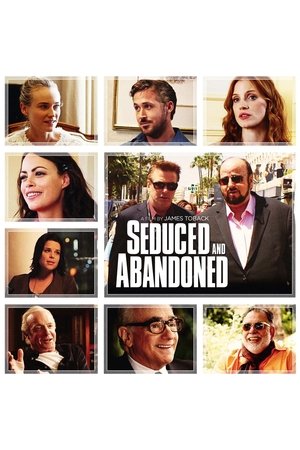
Seduced and Abandoned(en)
2013-05-20
SEDUCED AND ABANDONED combines acting legend Alec Baldwin with director James Toback as they lead us on a troublesome and often hilarious journey of raising financing for their next feature film. Moving from director to financier to star actor, the two players provide us with a unique look behind the curtain at the world's biggest and most glamourous film festival, shining a light on the bitter-sweet relationship filmmakers have with Cannes and the film business. Featuring insights from directors Martin Scorsese, 'Bernando Bertolucci' and Roman Polanski; actors Ryan Gosling and Jessica Chastain and a host of film distribution luminaries.
73%
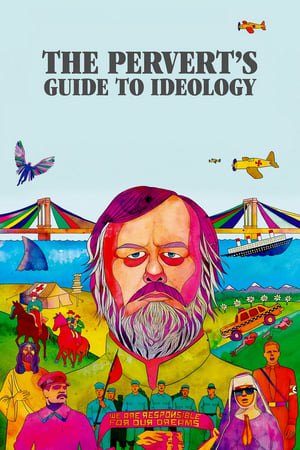
The Pervert's Guide to Ideology(en)
2012-11-15
A journey into the labyrinthine heart of ideology, which shapes and justifies both collective and personal beliefs and practices: with an infectious zeal and voracious appetite for popular culture, Slovenian philosopher and psychoanalyst Slavoj Žižek analyzes several of the most important films in the history of cinema to explain how cinematic narrative helps to reinforce prevailing ethics and political ideas.
78%
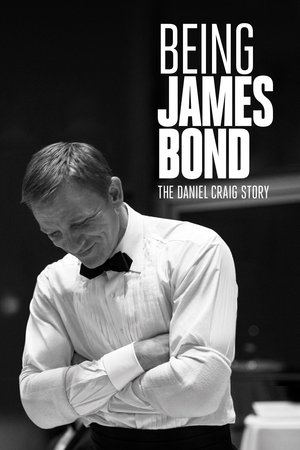
Being James Bond(en)
2021-08-29
Daniel Craig candidly reflects on his 15 year adventure as James Bond. Including never-before-seen archival footage from Casino Royale to the upcoming 25th film No Time To Die, Craig shares his personal memories in conversation with 007 producers, Michael G Wilson and Barbara Broccoli.
61%
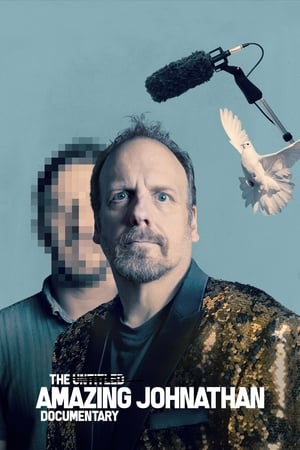
The Amazing Johnathan Documentary(en)
2019-08-16
What begins as a documentary following the final tour of a dying magician - "The Amazing Johnathan" - becomes an unexpected and increasingly bizarre journey as the filmmaker struggles to separate truth from illusion.