Loading Page

Flowers bloom prosperity, Clouds float with time
Top 2 Billed Cast

Yiyi Chen
Self (Granddaughter)
Loading Trailer Videos...
All 1 videos

Flowers bloom prosperity, Clouds float with time (trailer) - Trailer
Similar Movies
0%
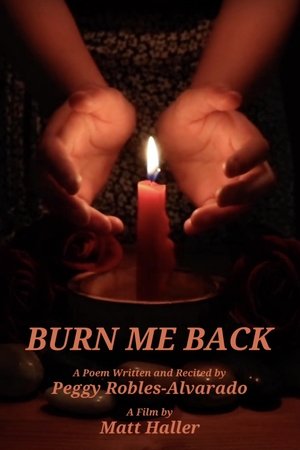
Burn Me Back(en)
2024-10-19
Peggy Robles-Alvarado is a Jerome Hill Foundation Fellow in Literature, a Latinx Playwrights Circle Fellow, and a three-time International Latino Book Award winner who authored Conversations With My Skin, and Homage To The Warrior Women. In this film by New York-based filmmaker Matt Haller, she recounts the grief and pain of losing her father, interwoven with her Puerto Rican heritage.
0%
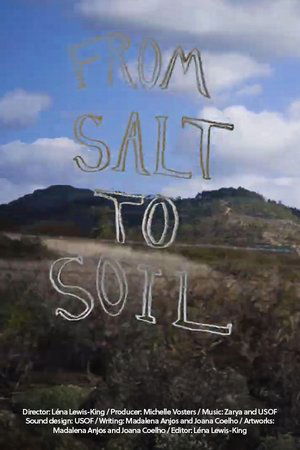
From Salt to Soil(en)
2025-06-18
From Salt to Soil is hour long audiovisual project bringing together the sounds of USOF & Zarya with the words of Joana Coelho and Madalena Anjos, directed and edited by Léna Lewis-King. The film follows the landscapes from Barreiro to Crato, layered with notations, inner and outer worlds - tracing the geographic / poetic, with transportive and hypnotic sound scapes. It was made for the 2025 edition of Waking Life festival, where it debuted as the opening event for their cinema programme, Moonscreen.
0%
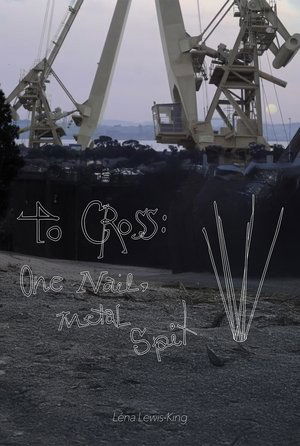
To Cross; One Nail, Metal Spit(en)
2025-03-12
Filmed over a period of 3 years, this video work is a meditation on the borderline of the river Tejo, between Marvila and Barreiro. A psychogeographic piece that seeks out a feeling of doubt, inertia, and waiting. "Two sides, along the boundary line All the weight of the water above Metal arms extended to the heavens As if the sky was tilting to meet them And those giants again; Four by four . . . . all in a line, up against the tide."
0%
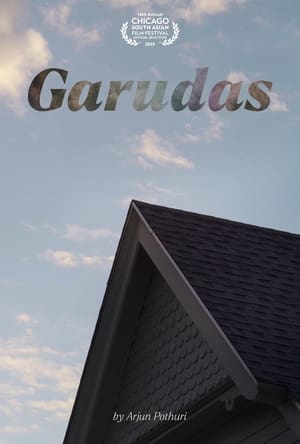
Garudas(en)
2023-09-22
After accidentally becoming the caretaker of a robin’s egg, I reach out to my grandmother for guidance. As we await the fate of the fragile, pale blue egg, we call from across the world to birdwatch together—a meditation on nature, nurture, and letting go.
0%
Afloat(en)
2017-11-16
'Afloat' is an experimental film that paints a portrait of Japanese performance artist: Ayumi Lanoire. The film opens as a telephone call between Ayumi and Person X, which meanders the audience through the various layers that make up her personas leading one to wonder whether she is in fact a myth or reality.
60%
Grid(pt)
2021-10-22
A ritual of grids, reflections and chasms; a complete state of entropy; a space that devours itself; a vertigo that destroys the gravity of the Earth; a trap that captures us inside the voids of the screen of light: «That blank arena wherein converge at once the hundred spaces» (Hollis Frampton).
0%
WINHANGANHA(en)
2023-11-10
WINHANGANHA (Wiradjuri language: Remember, know, think) - is a lyrical journey of archival footage and sound, poetry and original composition. It is an examination of how archives and the legacies of collection affect First Nations people and wider Australia, told through the lens of acclaimed Wiradjuri artist, Jazz Money.
0%
Objects of War(fr)
2000-01-01
‘Objects of War’ is a series of testimonials on the Lebanese war. Each person chooses an object, ordinary or unusual, which serves as a starting point for his / her story. These testimonials while helping to create a collective memory, also show the impossibility of telling a single History of this war. Only fragments of this History are recounted here, held as truth by those expressing them. In ‘Objects of War’, the aim is not to reveal a truth but rather to gather and confront many diverse versions and discourses on the subject. ‘Objects of War’ started in 1999 assembling the testimonials of eleven persons. It was first shown in 2000 . It continued in 2003 with ‘Objects of War n°2’, recording seven additional testimonials. This time however, and since then, the recorded material is left unedited, shown in its integrity. The work of collecting and assembling these stories continued with ‘Objects of War n°3 & n°4’ in 2006 and ‘n°5 & 6’ in 2014.
0%
EDGING (Verbal) - Solo(en)
2023-03-03
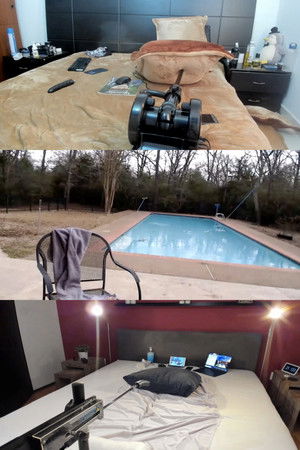
A 'very intellectual' dirty talk on online sex work and a remix of 23-different-sources on the lookout for the answer to 'What happens to violence when you are not looking at it?' In this new work, EMIRHAKIN traces the parabola of performativity and gauges the unequal distances of labor in performance art and webcam performances from the focus point of body politics.
0%
The Weight Of My Name(de)
2025-05-25
2-channel film installation 'Die Last meines Namens', wherein Heydt deals with an unpleasant part of his own family history. Heydt’s great-grandfather was a member of the NSDAP and mayor of the small town of Haselünne in Emsland for almost 10 years during the Third Reich. Based on interviews with his grandfather and research in various archives, Heydt develops a personal perspective on the subject. The film deals with how we construct identity from oral retellings, how we process family histories, and how we can find current and personal points of access to German remembrance culture. At the heart of the work are two conversations with his grandfather Heinrich Heydt, recorded at different points in the research process. In them, the grandfather describes his memories of his father, the time, and the two reflect on the subject and the results of the research.
0%
Homophobe(en)
2018-05-12
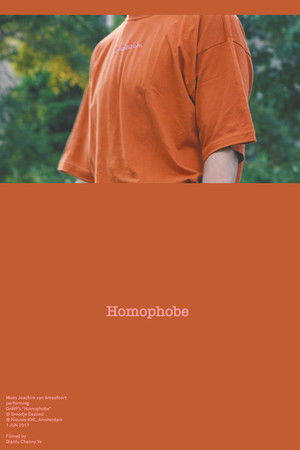
Performance documentation of Mees Joachim's 'Homophobe', a 10 minute live-reenactment of a scene from 'E Kolór Korrá' (2017). A juxtaposition performed as minimally as possible. A destructively interpretive dance, literally shattering bones whilst forcefully dropping on the ground. A pre-cursor to their 'The Scaphoid Fracture' (2017) performance.
0%
Rivers(zh)
2023-03-16
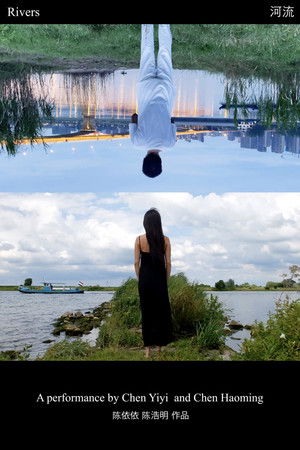
"The river Lek reminded me of the river Xiang in my hometown Changsha. I had not been home for 3 years and one of the connections with home was the poems my dad wrote me every day via WeChat. The rivers seemed equally significant for the people in the Netherlands and in Changsha. They are both a romantic connection and an important symbol of daily trade and industry. In a Wechat session my father and I simultaneously read three pairs of poems we wrote for this occasion, he by the Xiang and I by the Lek. Giving the words to the waters that ultimately will meet somewhere in the ocean. The video shows fragments of the performance which took place at the same time in Changsha and Culemborg in June. The full-length documentation is presented as a dual-screen video installation. The three poems written by me can be found on the page "Writing"."
60%
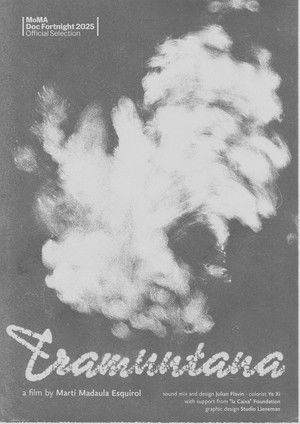
Tramuntana(ca)
2025-02-23
In a remote area of northern Spain, the wind has a name: Tramuntana. Tramuntana takes what it wants—clothes, trees, boats, and the people of the landscape who live with the endless threat of being carried away by its force. This film is a lyrical portrait of this furious wind, woven from the stories passed down by local villagers.
0%
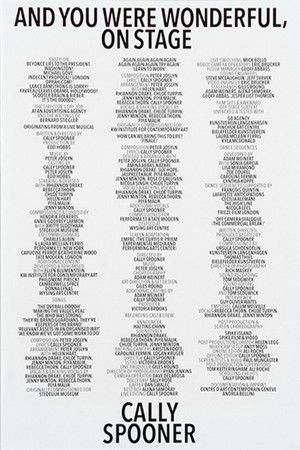
And You Were Wonderful, On Stage(en)
2015-10-15
An immersive film installation by Cally Spooner. In this work, a musical for six continuously rolling cameras, a black box soundstage and its inhabitants, are recorded in a single take. The mechanics of the shoot (cameras, microphones, mixing boards, chromakey screens and crew) remain as present as the performers they capture. Cast and crew become a constant-motion human backdrop, pragmatically recomposing scene-changes through lighting cues, voice, body movement, or continuous shifts of filmic apparatus and props. The semblance of a post-production edit arrives through the organisation and orchestration of bodies on set. Delivered by a chorus line of women, the film gossips about various celebrities, athletes and politicians who have outsourced their performances to different technologies.

82%
Video Letter(ja)
1983-01-01
This remarkable compilation follows an exchange of video letters that took place between Shuji Terayama and Shuntaro Tanikawa in the months immediately preceding Terayama's death. It can be thought of as a home video produced by two preeminent poets and inter-laid with highly abstract philosophizing, slightly aberrant behavior and occasionally flamboyant visuals.
80%
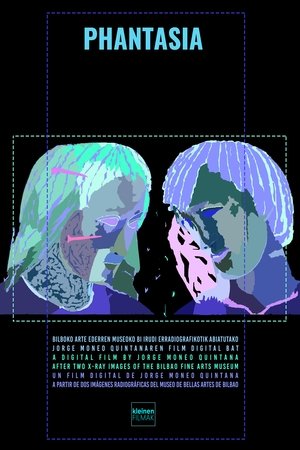
Phantasia(xx)
2024-03-13
X-ray images were invented in 1895, the same year in which the Lumière brothers presented their respective invention in what today is considered to be the first cinema screening. Thus, both cinema and radiography fall within the scopic regime inaugurated by modernity. The use of X-rays on two sculptures from the Bilbao Fine Arts Museum generates images that reveal certain elements of them that would otherwise be invisible to our eyes. These images, despite being generally created for technical or scientific purposes, seem to produce a certain form of 'photogénie': they lend the radiographed objects a new appearance that lies somewhere between the material and the ethereal, endowing them with a vaporous and spectral quality. It is not by chance that physics and phantasmagoria share the term 'spectrum' in their vocabulary.
0%
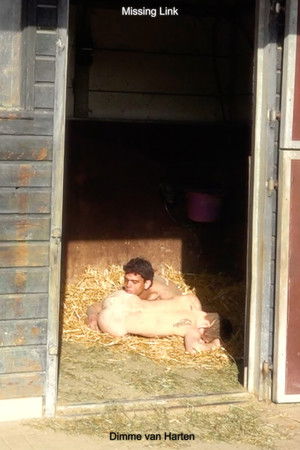
Missing Link(en)
2021-03-24
"Encouraged by a special encounter between myself and an animal, my research into the “humanimal” began. This is a performative exploration reflecting on the place of animals and humans in their changing relationships throughout time. The research spans from topics like the cohabitation of different human species, the prehuman, the posthuman, to domestication and the numerous animal watching webcams found in zoos and online. Missing Link reflects on the intimacy between the species and how it can be expressed through movement here and now. "

90%
We Are A Conversation(en)
We are a conversation is a 2014 documentary directed by Alexis karpouzos and Spyros rasidakis and written by Alexis karpouzos exploring the unity of humanity, featuring poets from around the world, whose lives have been dedicated to explore the mysteries of life and existence.
0%
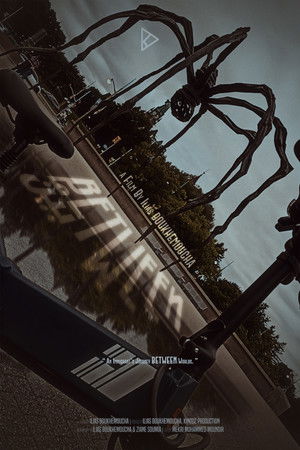
BETWEEN(en)
Initially embarking on an unplanned personal filmmaking project, Ilias Boukhemoucha finds himself drawn to the overlooked corners and marginalized communities within Canadian cities.
100%
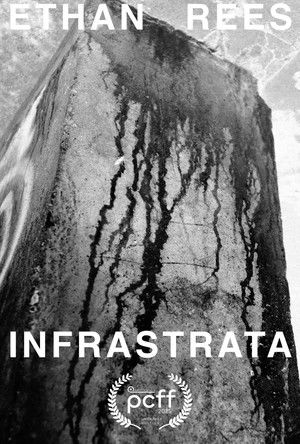
INFRASTRATA(en)
2024-05-09
Amongst the contemplative static shots of decaying architecture weaves an abstract narrative unveiling the life-cycle of a higher perception, too large to perceive. Shot at various sites across south-east England, INFRASTRATA is a study on the concept of super-organisms, and the relationship between structure and nature.
Recommendations Movies

61%
Naqoyqatsi(en)
2002-09-02
A visual montage portrait of our contemporary world dominated by globalized technology and violence.
71%
Blue(en)
1993-08-19
Against a plain, unchanging blue screen, a densely interwoven soundtrack of voices, sound effects and music attempt to convey a portrait of Derek Jarman's experiences with AIDS, both literally and allegorically, together with an exploration of the meanings associated with the colour blue.
67%
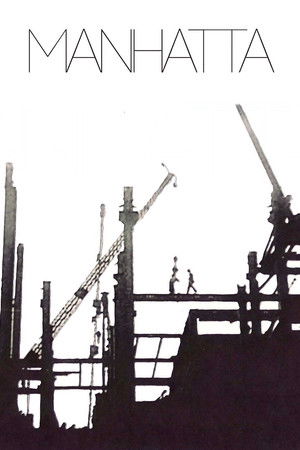
Manhatta(en)
1921-01-01
Morning reveals New York harbor, the wharves, the Brooklyn Bridge. A ferry boat docks, disgorging its huddled mass. People move briskly along Wall St. or stroll more languorously through a cemetery. Ranks of skyscrapers extrude columns of smoke and steam. In plain view. Or framed, as through a balustrade. A crane promotes the city's upward progress, as an ironworker balances on a high beam. A locomotive in a railway yard prepares to depart, while an arriving ocean liner jostles with attentive tugboats. Fading sunlight is reflected in the waters of the harbor. The imagery is interspersed with quotations from Walt Whitman, who is left unnamed.
67%
Frida(en)
2024-03-08
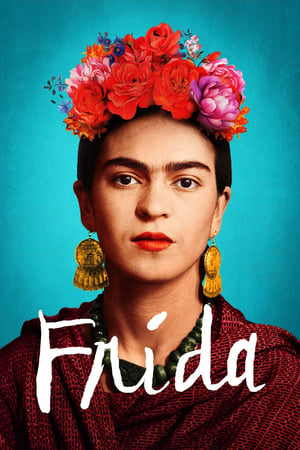
An intimately raw and magical journey through the life, mind, and heart of iconic artist Frida Kahlo. Told through her own words for the very first time — drawn from her diary, revealing letters, essays, and print interviews — and brought vividly to life by lyrical animation inspired by her unforgettable artwork.
70%
Symbiopsychotaxiplasm: Take One(en)
1968-10-28
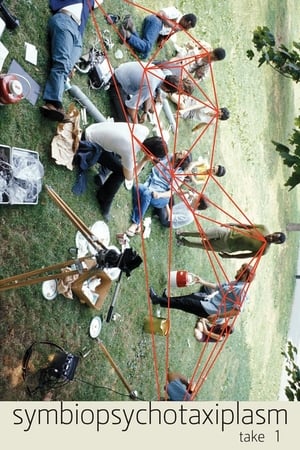
In Manhattan's Central Park, a film crew directed by William Greaves is shooting a screen test with various pairs of actors. It's a confrontation between a couple: he demands to know what's wrong, she challenges his sexual orientation. Cameras shoot the exchange, and another camera records Greaves and his crew. Sometimes we watch the crew discussing this scene, its language, and the process of making a movie. Is there such a thing as natural language? Are all things related to sex? The camera records distractions - a woman rides horseback past them; a garrulous homeless vet who sleeps in the park chats them up. What's the nature of making a movie?
73%
Powaqqatsi(en)
1988-04-29
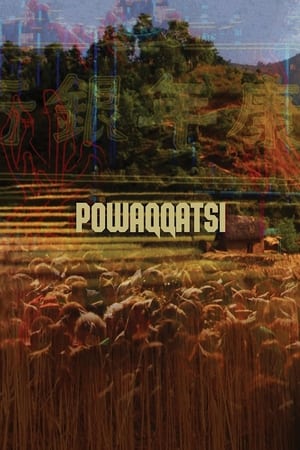
An exploration of technologically developing nations and the effect the transition to Western-style modernization has had on them.


66%
Love, Marilyn(en)
2013-05-30
Using the book 'Fragments', which collects Marilyn Monroe's poems, notes and letters, and with participation from the Arthur Miller and Truman Capote estates who have contributed more material, each of the actresses will embody the legend at various stages in her life.
79%
Koyaanisqatsi(en)
1983-04-27
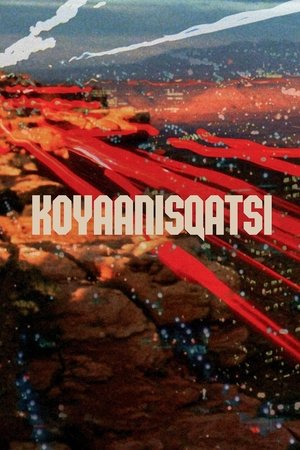
Takes us to locations all around the US and shows us the heavy toll that modern technology is having on humans and the earth. The visual tone poem contains neither dialogue nor a vocalized narration: its tone is set by the juxtaposition of images and the exceptional music by Philip Glass.
69%
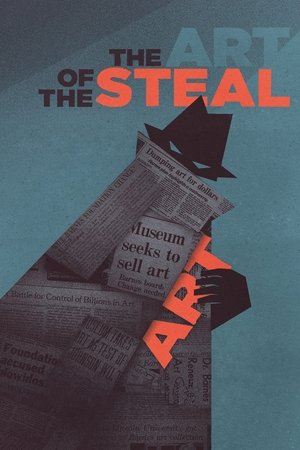
The Art of the Steal(en)
2010-02-26
A gripping tale of intrigue and mystery in the art world, this film traces the history of a collection of Post-Impressionist paintings - worth billions - which became the subject of a power struggle after the death of its owner. Dr. Albert Barnes.
79%
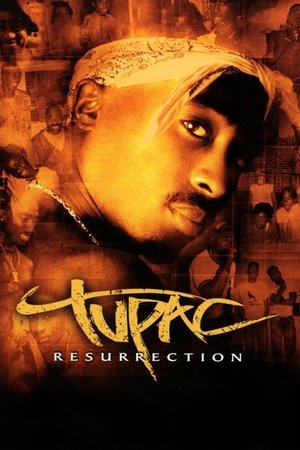
Tupac: Resurrection(en)
2003-11-14
Home movies, photographs, and recited poetry illustrate the life of Tupac Shakur, one of the most beloved, revolutionary, and volatile hip-hop MCs of all time.
78%
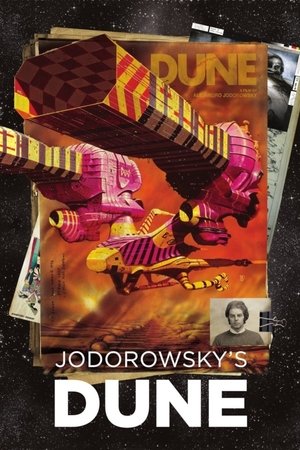
Jodorowsky's Dune(en)
2013-08-30
In 1974, Chilean-French director Alejandro Jodorowsky embarked on the quixotic project of adapting Frank Herbert's influential novel Dune (1969) for the big screen. After investing two years, and millions of dollars, the gigantic project ended in failure; but the artists Jodorowsky brought together to carry it out continued to work together, and ended up laying the foundations for modern science fiction cinema.
81%
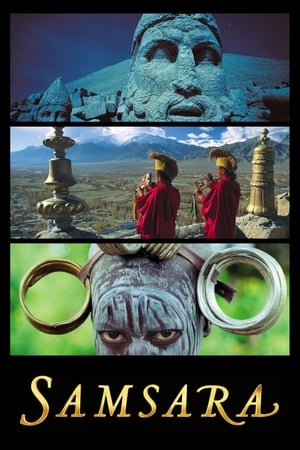
Samsara(en)
2011-09-16
Filmed over nearly five years in twenty-five countries on five continents, and shot on seventy-millimetre film, Samsara transports us to the varied worlds of sacred grounds, disaster zones, industrial complexes, and natural wonders.

80%
My Mom Jayne(en)
2025-06-20
Through deeply personal interviews with her siblings and an examination of the photographs, letters, and belongings left behind, Mariska assembles a new portrait of her mother Jayne Mansfield, an extraordinary and complex woman.
69%
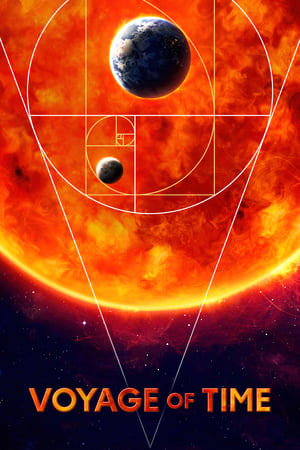
Voyage of Time: The IMAX Experience(en)
2016-10-07
A celebration of the universe, displaying the whole of time, from its start to its final collapse. This film examines all that occurred to prepare the world that stands before us now: science and spirit, birth and death, the grand cosmos and the minute life systems of our planet.
71%
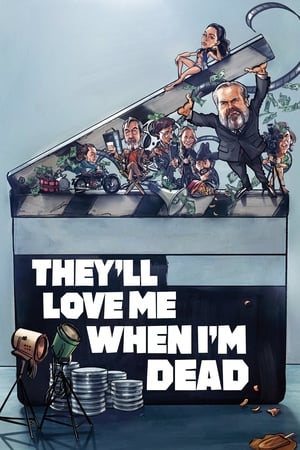
They'll Love Me When I'm Dead(en)
2018-08-31
As his life comes to its end, famous Hollywood director Orson Welles puts it all on the line at the chance for renewed success with the film The Other Side of the Wind.

76%
Finding Vivian Maier(en)
2014-03-21
Vivian Maier's photos were seemingly destined for obscurity, lost among the clutter of the countless objects she'd collected throughout her life. Instead these images have shaken the world of street photography and irrevocably changed the life of the man who brought them to the public eye. This film brings to life the interesting turns and travails of the improbable saga of John Maloof's discovery of Vivian Maier, unravelling this mysterious tale through her documentary films, photographs, odd collections and personal accounts from the people that knew her. What started as a blog to show her work quickly became a viral sensation in the photography world. Photos destined for the trash heap now line gallery exhibitions, a forthcoming book and this documentary film.
64%
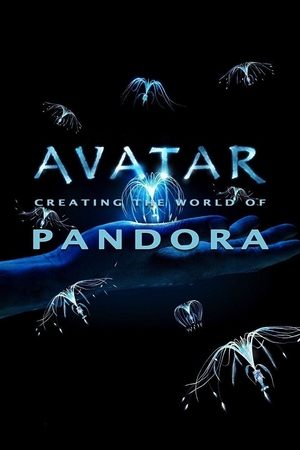
Avatar: Creating the World of Pandora(en)
2010-02-07
The Making-of James Cameron's Avatar. It shows interesting parts of the work on the set.
76%
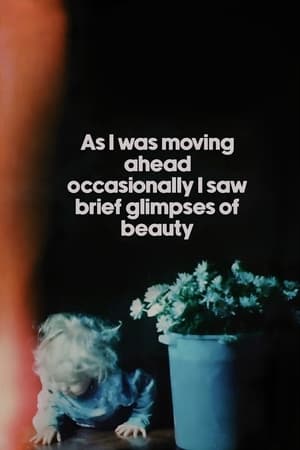
As I Was Moving Ahead, Occasionally I Saw Brief Glimpses of Beauty(en)
2000-11-05
A compilation of over 30 years of private home movie footage shot by Lithuanian-American avant-garde director Jonas Mekas, assembled by Mekas "purely by chance", without concern for chronological order.
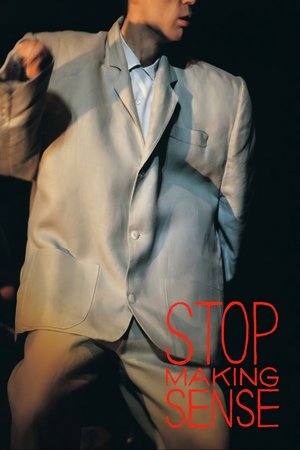
83%
Stop Making Sense(en)
1984-10-19
A concert film documenting Talking Heads at the height of their popularity, on tour for their 1983 album "Speaking in Tongues." The band takes the stage one by one and is joined by a cadre of guest musicians for a career-spanning and cinematic performance that features creative choreography and visuals.