Loading Page
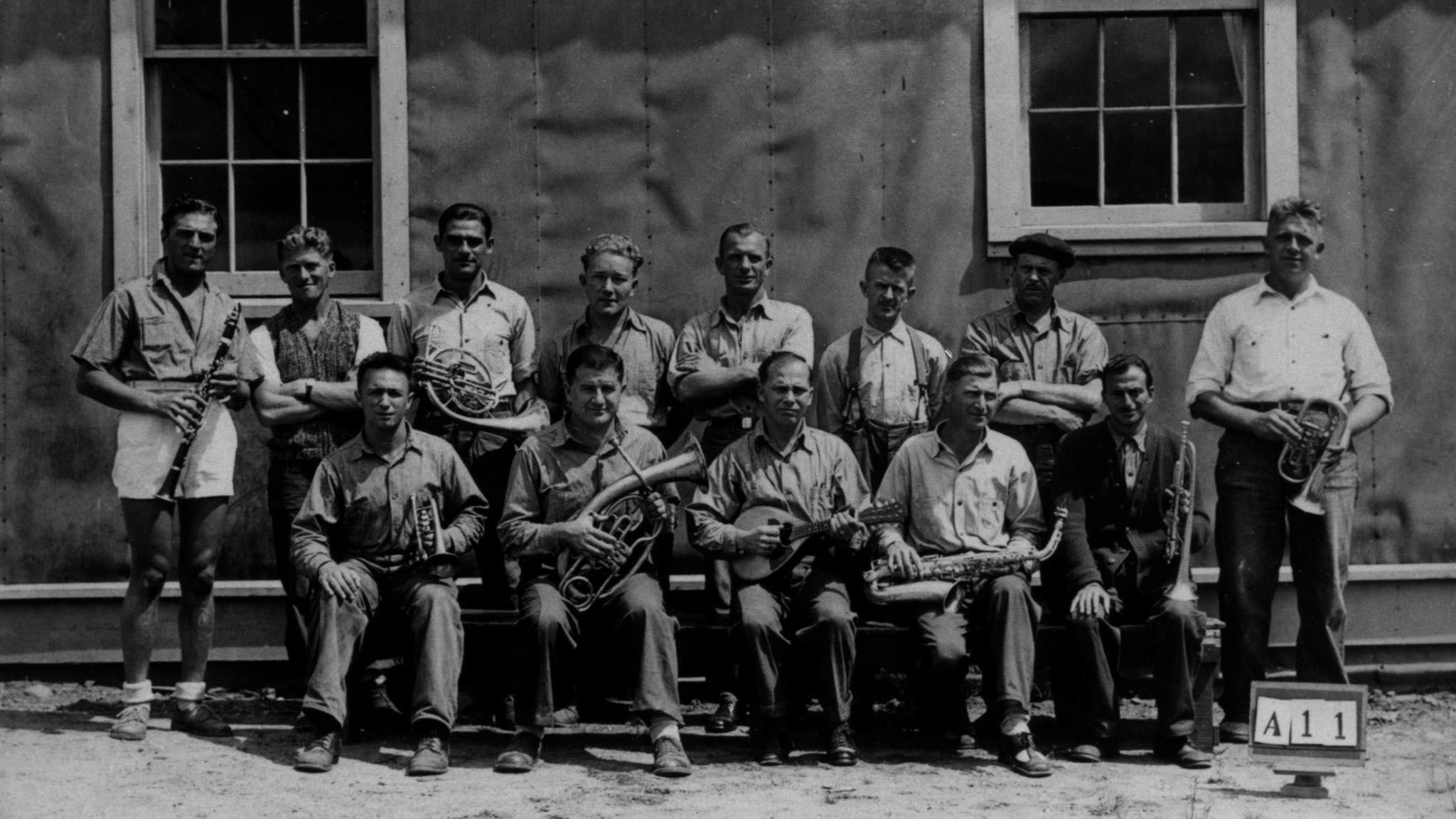
Barbed Wire and Mandolins
Top 1 Billed Cast
Loading Trailer Videos...
Loading Photos
Photo Type :Total items
Similar Movies
39%
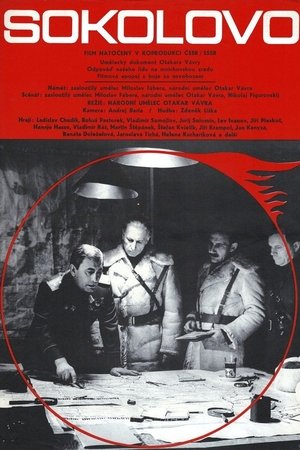
Sokolovo(cs)
1975-05-09
The plot begins in the Soviet Union showing first efforts to establish the Czechoslovak legion in 1942. The film also shows the assassination of Heydrich and the subsequent annihilation of Lidice. The main topis of the film is battles with German troops for Sokolovo.

70%
The Girl with the Instagram(he)
2019-05-01
Nagyvárad, Hungary, 1944. From February to June, Eva Heyman, a 13-year-old Jewish girl, wrote a diary describing the harsh conditions of her life under Nazi occupation. How would she have told her story if she had used Instagram?
76%
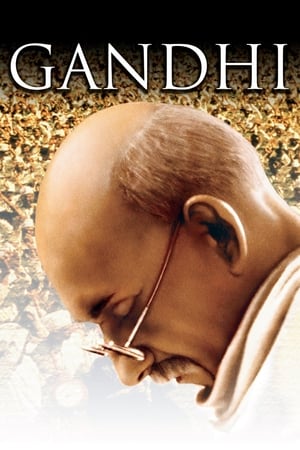
Gandhi(en)
1982-12-01
In the early years of the 20th century, Mohandas K. Gandhi, a British-trained lawyer, forsakes all worldly possessions to take up the cause of Indian independence. Faced with armed resistance from the British government, Gandhi adopts a policy of 'passive resistance', endeavouring to win freedom for his people without resorting to bloodshed.
83%
Night and Fog(fr)
1956-01-29
Filmmaker Alain Resnais documents the atrocities behind the walls of Hitler's concentration camps.
80%
Judgment at Nuremberg(en)
1961-12-18
In 1947, four German judges who served on the bench during the Nazi regime face a military tribunal to answer charges of crimes against humanity. Chief Justice Haywood hears evidence and testimony not only from lead defendant Ernst Janning and his defense attorney Hans Rolfe, but also from the widow of a Nazi general, an idealistic U.S. Army captain and reluctant witness Irene Wallner.

80%
Bella Ciao! - German Soldiers in the Italian Resistance(de)
2025-06-10
When Italy capitulated 1943 and joined the allied forces, some soldiers from the German Wehrmacht also changed sides and joined the Italians in their fight to liberate the country. This film tells the story of Rudolf Jacobs, Walter Fischer and Heinz Brauers, three of the ‘Good Germans’ remembered in Italy for their efforts in fighting the Nazis.
72%
Seven Years in Tibet(en)
1997-09-12
Austrian mountaineer Heinrich Harrer journeys to the Himalayas without his family to head an expedition in 1939. But when World War II breaks out, the arrogant Harrer falls into Allied forces' hands as a prisoner of war. He escapes with a fellow detainee and makes his way to Lhasa, Tibet, where he meets the 14-year-old Dalai Lama, whose friendship ultimately transforms his outlook on life.
78%
The Bridge on the River Kwai(en)
1957-10-11
The classic story of English POWs in Burma forced to build a bridge to aid the war effort of their Japanese captors. British and American intelligence officers conspire to blow up the structure, but Col. Nicholson, the commander who supervised the bridge's construction, has acquired a sense of pride in his creation and tries to foil their plans.
68%
Panfilov's 28 Men(ru)
2016-11-24
USSR, November, 1941. Based on the account by Vasiliy Koroteev this is the story of Panifilov's Twenty-Eight, a group of twenty-eight Red Army soldiers commanded by General Ivan Panfilov, that stopped the advance on Moscow of a column of fifty-four Nazi tanks of the 11th Panzer Division for several days. Though lightly armed they fight tirelessly and defiantly, with uncommon bravery and unwavering dedication, to protect Moscow and their Motherland.
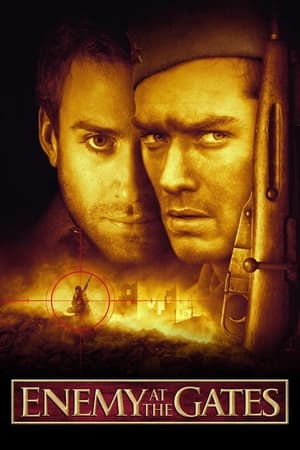
74%
Enemy at the Gates(en)
2001-02-28
A Russian and a German sniper play a game of cat-and-mouse during the Battle of Stalingrad in WWII.
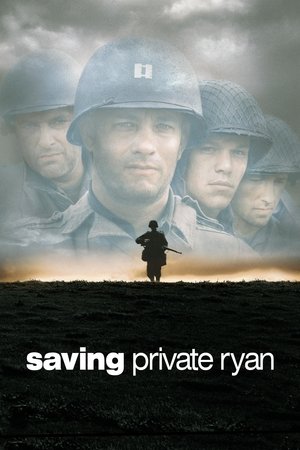
82%
Saving Private Ryan(en)
1998-07-24
As U.S. troops storm the beaches of Normandy, three brothers lie dead on the battlefield, with a fourth trapped behind enemy lines. Ranger captain John Miller and seven men are tasked with penetrating German-held territory and bringing the boy home.
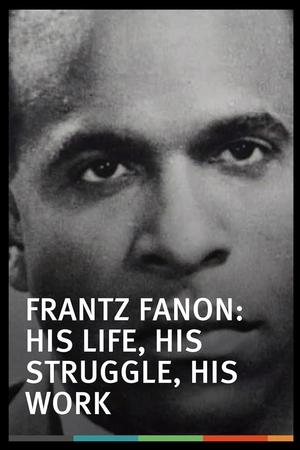
100%
Frantz Fanon: His Life, His Struggle, His Work(fr)
2001-11-30
It is the evocation of a life as brief as it is dense. An encounter with a dazzling thought, that of Frantz Fanon, a psychiatrist of West Indian origin, who will reflect on the alienation of black people. It is the evocation of a man of reflection who refuses to close his eyes, of the man of action who devoted himself body and soul to the liberation struggle of the Algerian people and who will become, through his political commitment, his fight, and his writings, one of the figures of the anti-colonialist struggle. Before being killed at the age of 36 by leukemia, on December 6, 1961. His body was buried by Chadli Bendjedid, who later became Algerian president, in Algeria, at the Chouhadas cemetery (cemetery of war martyrs ). With him, three of his works are buried: “Black Skin, White Masks”, “L’An V De La Révolution Algérien” and “The Wretched of the Earth”.
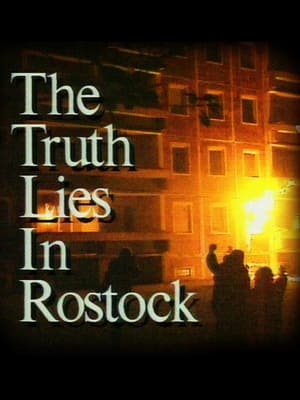
48%
The Truth lies in Rostock(de)
1993-01-01
August 1992, Rostock-Lichtenhagen. The police look on as fascists bomb the Central Reception Center for Refugees (ZAST) and a hostel for Vietnamese contract workers with Molotov cocktails. A montage of video footage shot from the attacked houses, interviews with anti-fascists, the Vietnamese contract workers, the police, bureaucrats, neo-Nazis and local residents. A documentary about the collusion of politics and widespread fear.
0%
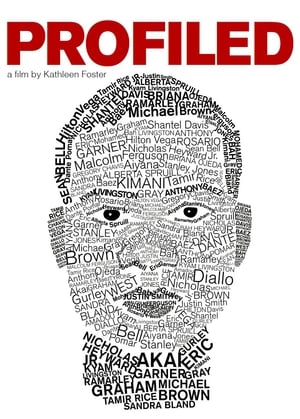
Profiled(en)
2016-01-01
Profiled is a feature length documentary that knits the stories of mothers of Black and Latin unarmed youth murdered by the NYPD into a powerful indictment of racial profiling and police brutality, and places them within a historical context of the roots of racism in the U.S. Driven by anger when their demands for justice are ignored the women transition from grieving parents to activists participating in the grass roots movement now spreading across the country since the much-publicized deaths of Michael Brown and Eric Garner.

0%
Being Seen(en)
2023-07-29
A group of African American students at the University of Arizona reveals the importance of political spaces within Universities in times of intolerance.
59%
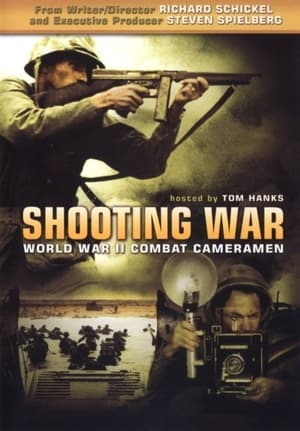
Shooting War(en)
2000-12-07
A remarkable film that takes a special look at the first war to be truly reported and recorded by one of the more unsung heroes of World War II: the combat photographer. Through the unflinching eye of their camera's lenses, these courageous soldiers continually risked their lives in their brave attempts to capture history.
72%
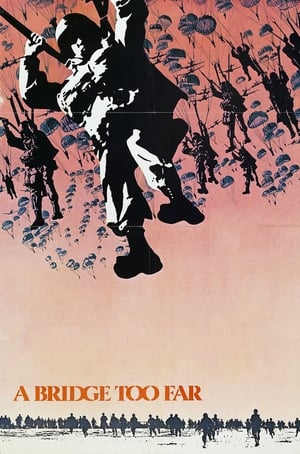
A Bridge Too Far(en)
1977-06-15
The story of Operation Market Garden—a failed attempt by the allies in the latter stages of WWII to end the war quickly by securing three bridges in Holland allowing access over the Rhine into Germany. A combination of poor allied intelligence and the presence of two crack German panzer divisions meant that the final part of this operation (the bridge in Arnhem over the Rhine) was doomed to failure.
62%
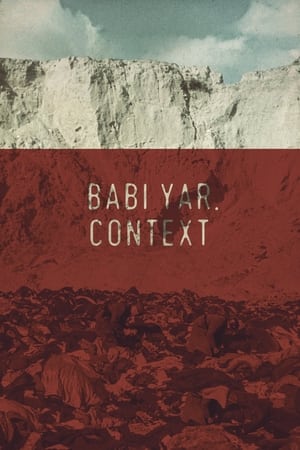
Babi Yar. Context(ru)
2021-11-04
Nazi troops massacre 30,000 Jews over a three-day period in September 1941. Babyn Yar ravine in Kyiv, Ukraine.
65%
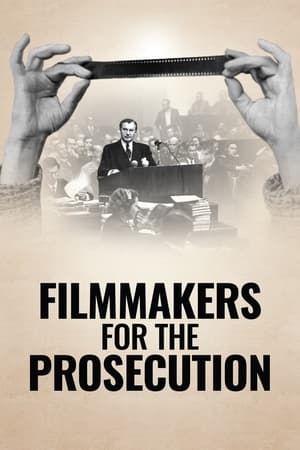
Filmmakers for the Prosecution(fr)
2023-01-27
In 1945, two young American soldiers, brothers Budd and Stuart Schulberg, are commissioned to collect filmed and recorded evidence of the horrors committed by the infamous Third Reich in order to prove Nazi war crimes during the Nuremberg trials (1945-46). The story of the making of Nuremberg: Its Lesson for Today, a paramount historic documentary, released in 1948.
Recommendations Movies
77%
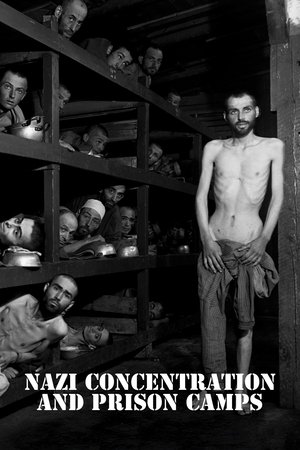
Nazi Concentration Camps(en)
1945-11-29
Produced and presented as evidence at the Nuremberg war crimes trial of Hermann Göring and twenty other Nazi leaders, this film consists primarily of dead and surviving prisoners and of facilities used to kill and torture during the World War II.

76%
Night Will Fall(en)
2014-06-07
When Allied forces liberated the Nazi concentration camps in 1944-45, their terrible discoveries were recorded by army and newsreel cameramen, revealing for the first time the full horror of what had happened. Making use of British, Soviet and American footage, the Ministry of Information’s Sidney Bernstein (later founder of Granada Television) aimed to create a documentary that would provide lasting, undeniable evidence of the Nazis’ unspeakable crimes. He commissioned a wealth of British talent, including editor Stewart McAllister, writer and future cabinet minister Richard Crossman – and, as treatment advisor, his friend Alfred Hitchcock. Yet, despite initial support from the British and US Governments, the film was shelved, and only now, 70 years on, has it been restored and completed by Imperial War Museums under its original title "German Concentration Camps Factual Survey".
60%
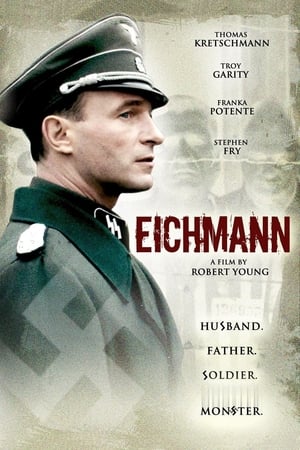
Eichmann(en)
2007-09-22
Based upon the final confession of Adolf Eichmann, made before his execution in Israel, of his role in Hitler's plan for the final solution.
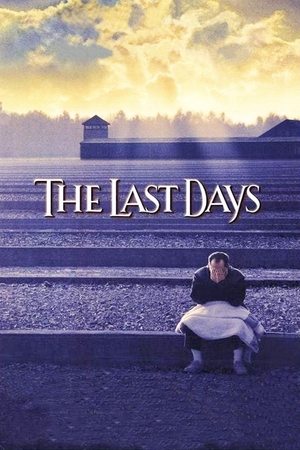
75%
The Last Days(en)
1998-10-23
Five Jewish Hungarians, now US citizens, tell their stories: before March 1944, when Nazis began to exterminate Hungarian Jews, months in concentration camps, and visiting childhood homes more than 50 years later. An historian, a Sonderkommando, a doctor who experimented on Auschwitz prisoners, and US soldiers who were part of the liberation in April 1945.
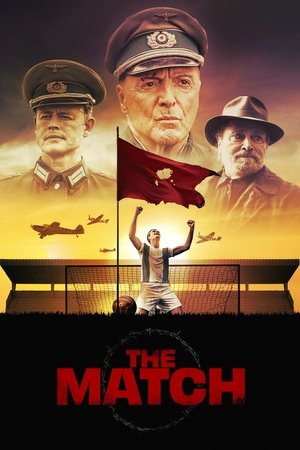
61%
The Match(en)
2021-07-10
Inspired by true events from the spring of 1944 when the Nazis organized a football match between a team of camp inmates and an elite Nazi team on Adolf Hitler's birthday. A match the prisoners are determined to win, no matter what happens.
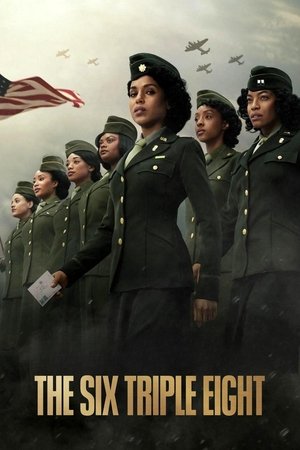
75%
The Six Triple Eight(en)
2024-12-06
During World War II, the US Army's only all-Black, all-women battalion takes on an impossible mission: sorting through a three-year backlog of 17 million pieces of mail that hadn't been delivered to American soldiers and finish within six months.
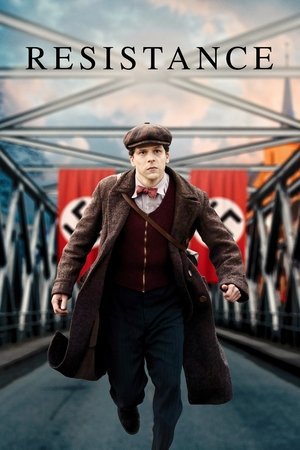
69%
Resistance(en)
2020-03-27
The story of mime Marcel Marceau as he works with a group of Jewish boy scouts and the French Resistance to save the lives of ten thousand orphans during World War II.
86%
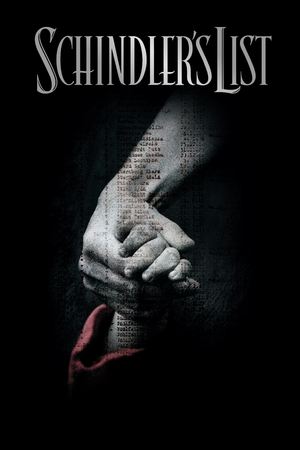
Schindler's List(en)
1993-12-15
The true story of how businessman Oskar Schindler saved over a thousand Jewish lives from the Nazis while they worked as slaves in his factory during World War II.
74%
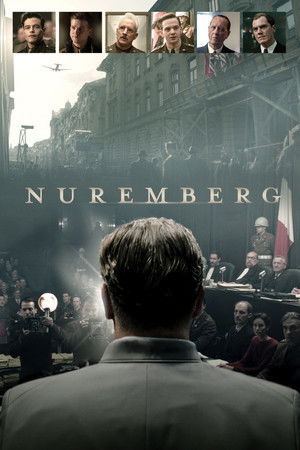
Nuremberg(en)
2025-11-06
In postwar Germany, an American psychiatrist must determine whether Nazi prisoners are fit to go on trial for war crimes, and finds himself in a complex battle of intellect and ethics with Hermann Göring, Hitler's right-hand man.

77%
The Green Book: Guide to Freedom(en)
2019-02-25
In 1936, Victor H. Green (1892-1960) published The Negro Motorist Green Book, a book that was both a travel guide and a survival manual, to help African-Americans navigate safe those regions of the United States where segregation and Jim Crow laws were disgracefully applied.
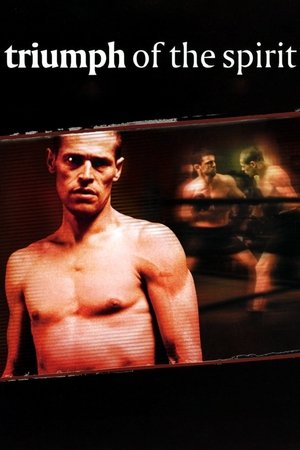
66%
Triumph of the Spirit(en)
1989-12-08
During World War II, Salamo Arouch, a passionate boxer, is arrested and sent to a concentration camp. Soon, he is forced to box against his fellow prisoners for the sake of entertainment.
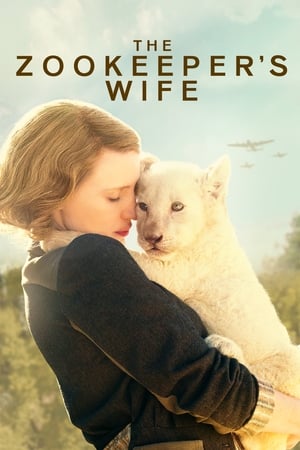
73%
The Zookeeper's Wife(en)
2017-03-24
The account of keepers of the Warsaw Zoo, Jan and Antonina Zabinski, who helped save hundreds of people and animals during the Nazi invasion.

64%
Paradise Road(en)
1997-02-11
A group of English, American, Dutch and Australian women creates a vocal orchestra while being imprisoned in a Japanese POW camp on Sumatra during World War II.
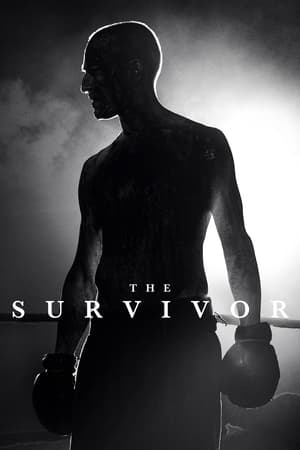
68%
The Survivor(en)
2022-04-07
Harry Haft is a boxer who fought fellow prisoners in the concentration camps to survive. Haunted by the memories and his guilt, he attempts to use high-profile fights against boxing legends like Rocky Marciano as a way to find his first love again.
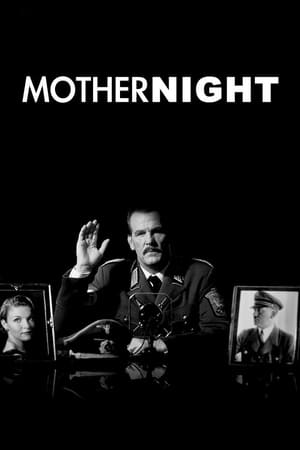
66%
Mother Night(en)
1996-11-01
An American spy behind the lines during WWII serves as a Nazi propagandist, a role he cannot escape in his future life as he can never reveal his real role in the war.
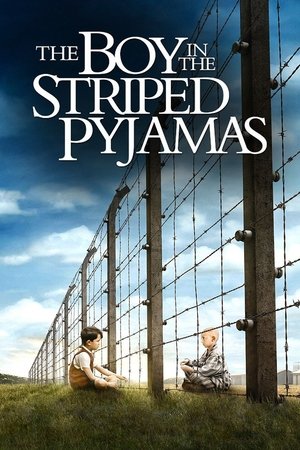
78%
The Boy in the Striped Pyjamas(en)
2008-05-07
When his family moves from their home in Berlin to a strange new house in Poland, young Bruno befriends Shmuel, a boy who lives on the other side of the fence where everyone seems to be wearing striped pajamas. Unaware of Shmuel's fate as a Jewish prisoner or the role his own Nazi father plays in his imprisonment, Bruno embarks on a dangerous journey inside the camp's walls.
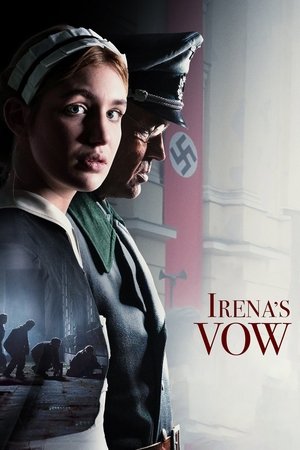
75%
Irena's Vow(en)
2024-04-15
19 year old Irena Gut is promoted to housekeeper in the home of a highly respected Nazi officer in Poland when she finds out that the Jewish ghetto is about to be liquidated. Determined to help twelve Jewish workers, she decides to shelter them in the safest place she can think of – the basement of the German Major's house. Over the next eight months, Irena uses her wit, humour and immense courage to hide her friends as long as possible.