Loading Page
Wake Island: Alamo of the Pacific
Top 5 Billed Cast

Will Lyman
Narrator
Loading Trailer Videos...
Loading Photos
Photo Type :Total items
Similar Movies

70%
The World Under the Bombs, from Guernica to Hiroshima(fr)
2017-01-23
Beginning with Guernica and the Chinese cities of Chongqing and Shanghai in 1937 and ending with the bombing of Hiroshima and Nagasaki in August 1945, World War Two saw a new art of warfare in the form of extensive, worldwide bombing campaigns.

57%
On Our Own Land(sl)
1948-06-10
Set in a Slovenian coastal town in WW2, the film tells a story about villagers who help partisans to get rid of Italian, and later German authorities that ruled the town in the last years of occupation.
52%
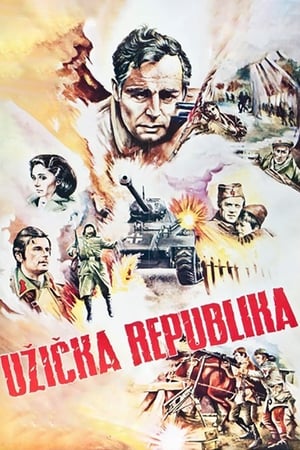
The Republic of Užice(sh)
1974-01-01
In 1941, a few months after German tanks forced Yugoslav Royal Army to capitulate, organized resistance is turning into massive uprising against occupying forces. Partisans, led by the Communist party, manage to chase Germans from huge territory later known as the Uzice Republic. However, forces loyal to King have some other ideas.

56%
The Bold and the Brave(en)
1956-01-04
An assortment of American types come together in the Italian campaign of 1944.

67%
Women of Valor(en)
1986-11-23
A group of American Army nurses are captured by the Japanese in April 1942 and spend three years in a prisoner-of-war camp in Bataan. Lt Margaret Ann Jessup, the head army nurse, survives the camp and testifies against the Japanese in front of the United States Congressional subcommittee years later as a colonel.

60%
The Bread of Love(sv)
1953-10-23
Four Swedish volunteer soldiers are trapped in Russia. In front of them lies the front with enemy outposts and patrols, behind them the enemy minefields. Hope to return to their own lines decreases each day. Corpses of fallen, "dead of cold and hard as iron", forms the macabre landmarks in the winter landscape. Nearby is a burnt Russian village.

0%
Toyo's Camera(en)
2009-04-11
Even though bringing in cameras to the internment camps was prohibited, one man managed to smuggle in his own camera lens and build a camera to document life behind barbed wires, with the help of other craftsmen in the camp. That man was Toyo Miyatake, a successful issei (first generation immigrant) photographer and owner of a photo-shop in the Los Angeles Little Tokyo district, and of one of the many Americans who was interned with his family against his will. With his makeshift camera, Miyatake captured the dire conditions of life in the camps during World War II as well as the resilient spirit of his companions, many of whom were American citizens who went on to fight for their country overseas. Miyatake said, "It is my duty to record the facts, as a photographer, so that this kind of thing should never happen again."

65%
The Notebook(hu)
2013-07-03
In a village on the Hungarian border, two young brothers grow up during war time with their cruel grandmother and must learn every trick of evil to survive in the absurd world of adults.

70%
The Trap(cs)
1950-11-17
The drama from the time of the Nazi occupation begins at the train station, where a transport with German soldiers is passing. The train is stopped due to improvised sabotage by one of the railway workers. Resistance liaison Růžena Kubínová is arrested in a random raid. The cynical councilor Dönnert discovers her false documents and has her brutally interrogated. He suspects that she could contribute to exposing the entire group. He puts a informant, Herta, in her cell.

0%
Untitled Elza Soares Biopic(pt)
A biopic about star Elza Soares, considered one of the greatest samba singers ever and a symbol of the struggle against racism and women discrimination in Brazil.

0%
L'homme qui a fait de Gaulle(fr)
2026-04-13
66%
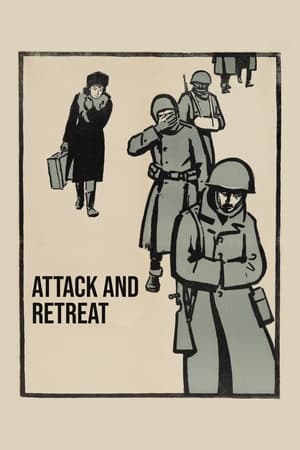
Attack and Retreat(it)
1964-09-16
Chronicle of the unheralded and unsuccessful invasion of the Soviet Union by the Italian army during World War II.

0%
The Natural History of Destruction(de)
2023-03-16
Is it morally acceptable to use the civilian population as yet another tool for waging war? Is it possible to justify death and destruction for the sake of supposedly lofty ideals? The question remains as pertinent today as it was at the beginning of World War II, and it is becoming increasingly urgent to answer, as countless tragedies have been caused by unethical political decisions.
73%
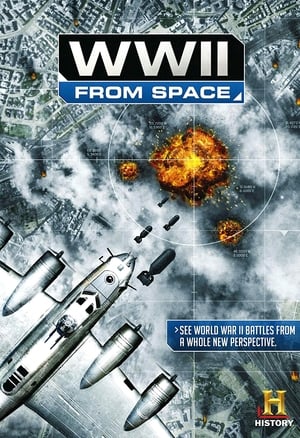
WWII From Space(en)
2012-12-07
WWII from Space delivers World War II in a way you've never experienced it before. This HISTORY special uses an all-seeing CGI eye that offers a satellite view of the conflict, allowing you to experience it in a way that puts key events and tipping points in a global perspective. By re-creating groundbreaking moments that could never have been captured on camera, and by illustrating the importance of simultaneity and the hidden effects of crucial incidents, HISTORY presents the war's monumental moments in a never-before-seen context. And with new information brought to the forefront, you'll better understand how a nation ranked 19th in the world's militaries in 1939 emerged six years later as the planet's only atomic superpower.
86%
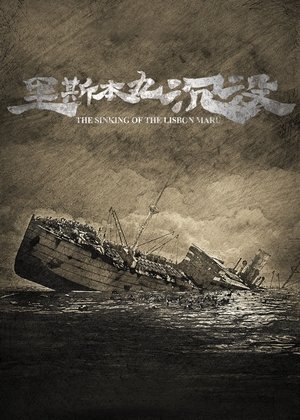
The Sinking of the Lisbon Maru(zh)
2024-08-31
Filmmaker Fang Li and his crew explore exhaustive historical investigation, as far as possible to find the core of the British, American, Japanese and Chinese parties and descendants, trying to infinitely close to the truth of the World War II "Death Ship" — "Lisbon Maru", which is 30 meters under the sea off the East Polar Island in Zhoushan, China.

67%
Syndrome K(en)
2019-10-14
Syndrome K is the true story about a highly contagious, highly fictitious disease created by three Roman Catholic doctors during the holocaust to hide Jews in a Vatican-affiliated hospital.

58%
Clear Skies(ru)
1961-05-20
For many years, Sasha Lvova has been waiting for the return of her lover, pilot Aleksei Astakhov, refusing to believe in his death at the front. And he really returns to her and his son after captivity, but this is a completely different person, rejected by society, expelled from the profession. It is difficult to say how Aleksei’s fate would have been if it hadn’t for Sasha’s love, her ability to survive in the most difficult circumstances.
74%
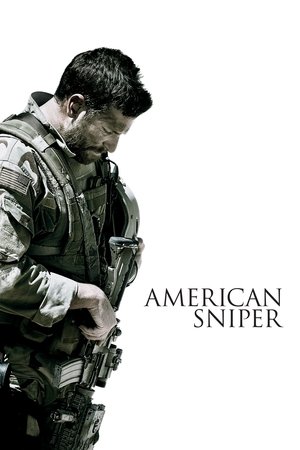
American Sniper(en)
2014-12-25
U.S. Navy SEAL Chris Kyle takes his sole mission—protect his comrades—to heart and becomes one of the most lethal snipers in American history. His pinpoint accuracy not only saves countless lives but also makes him a prime target of insurgents. Despite grave danger and his struggle to be a good husband and father to his family back in the States, Kyle serves four tours of duty in Iraq. However, when he finally returns home, he finds that he cannot leave the war behind.
53%
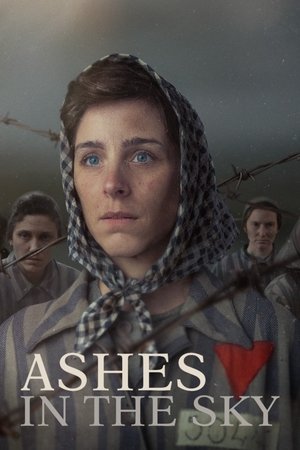
Ashes in the Sky(ca)
2023-04-28
In 1945, at the end of World War II, Neus Català returns to France, where she recalls her life under the Nazi yoke.
Recommendations Movies

72%
Tora! Tora! Tora!(en)
1970-01-26
In the summer of 1941, the United States and Japan seem on the brink of war after constant embargos and failed diplomacy come to no end. "Tora! Tora! Tora!", named after the code words used by the lead Japanese pilot to indicate they had surprised the Americans, covers the days leading up to the attack on Pearl Harbor, which plunged America into the Second World War.
62%
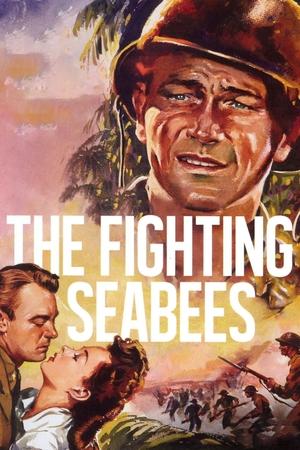
The Fighting Seabees(en)
1944-01-27
Construction workers in World War II in the Pacific are needed to build military sites, but the work is dangerous and they doubt the ability of the Navy to protect them. After a series of attacks by the Japanese, something new is tried, Construction Battalions (CBs=Seabees). The new CBs have to both build and be ready to fight.
64%
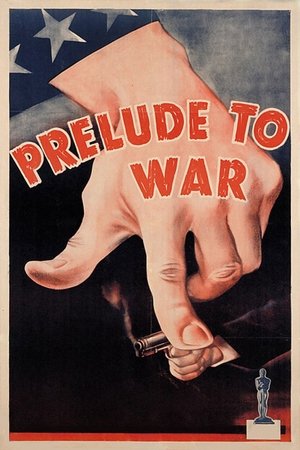
Why We Fight: Prelude to War(en)
1942-05-27
Prelude to War was the first film of Frank Capra's Why We Fight propaganda film series, commissioned by the Pentagon and George C. Marshall. It was made to convince American troops of the necessity of combating the Axis Powers during World War II. This film examines the differences between democratic and fascist states.

69%
The Cruel Sea(en)
1953-02-24
At the start of World War II, Cmdr. Ericson is assigned to convoy escort HMS Compass Rose with inexperienced officers and men just out of training. The winter seas make life miserable enough, but the men must also harden themselves to rescuing survivors of U-Boat attacks, while seldom able to strike back. Traumatic events afloat and ashore create a warm bond between the skipper and his first officer.
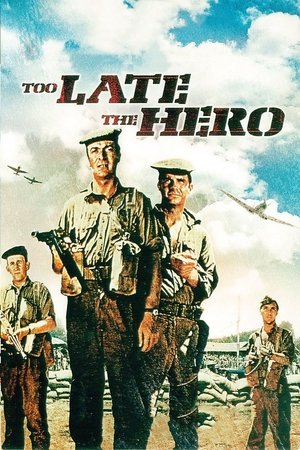
64%
Too Late the Hero(en)
1970-05-20
A WWII film set on a Pacific island. Japanese and allied forces occupy different parts of the island. When a group of British soldiers are sent on a mission behind enemy lines, things don't go exactly to plan. This film differs in that some of the 'heroes' are very reluctant, but they come good when they are pursued by the Japanese who are determined to prevent them returning to base.
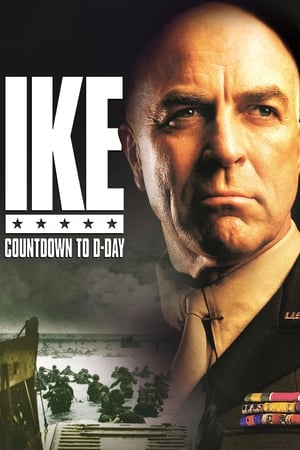
66%
Ike: Countdown to D-Day(en)
2004-05-31
The story of the senior-level preparations for the D-Day invasion on June 6, 1944 from the time of Dwight D. Eisenhower's appointment as the Supreme Allied Commander in Europe, to the establishment of the beachhead in Normandy.

69%
Flags of Our Fathers(en)
2006-10-19
There were five Marines and one Navy Corpsman photographed raising the U.S. flag on Mt. Suribachi by Joe Rosenthal on February 23, 1945. This is the story of three of the six surviving servicemen - John 'Doc' Bradley, Pvt. Rene Gagnon and Pvt. Ira Hayes - who fought in the battle to take Iwo Jima from the Japanese.
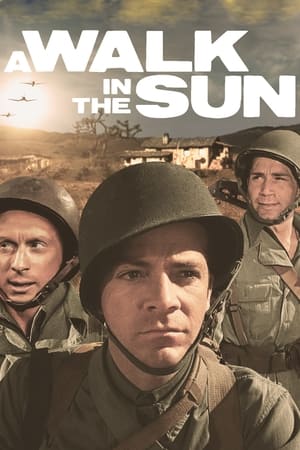
58%
A Walk in the Sun(en)
1945-12-25
In the 1943 invasion of Italy, one American platoon lands, digs in, then makes its way inland to attempt to take a fortified farmhouse, as tension and casualties mount.
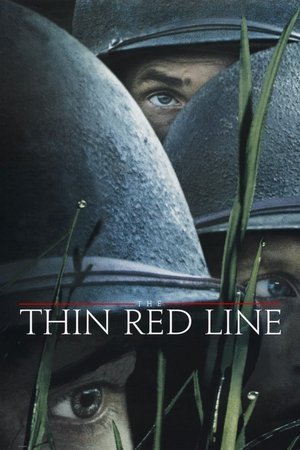
74%
The Thin Red Line(en)
1998-12-23
The story of a group of men, an Army Rifle company called C-for-Charlie, who change, suffer, and ultimately make essential discoveries about themselves during the fierce World War II battle of Guadalcanal. It follows their journey, from the surprise of an unopposed landing, through the bloody and exhausting battles that follow, to the ultimate departure of those who survived.
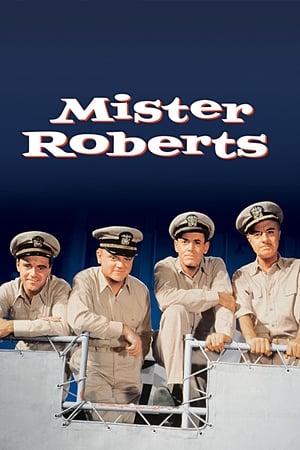
71%
Mister Roberts(en)
1955-07-10
Mr. Roberts is a Navy officer who's yearning for battle but is stuck in the backwaters of World War II on a non-commissioned ship run by the bullying Captain Morton.
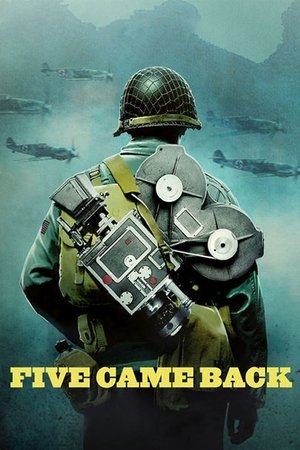
79%
Five Came Back(en)
2017-03-31
The extraordinary story of how Hollywood changed World War II – and how World War II changed Hollywood, through the interwoven experiences of five legendary filmmakers who went to war to serve their country and bring the truth to the American people: John Ford, William Wyler, John Huston, Frank Capra, and George Stevens. Based on Mark Harris’ best-selling book, “Five Came Back: A Story of Hollywood and the Second World War.”

73%
From Here to Eternity(en)
1953-08-28
In 1941 Hawaii, a private is cruelly punished for not boxing on his unit's team, while his captain's wife and second in command are falling in love.
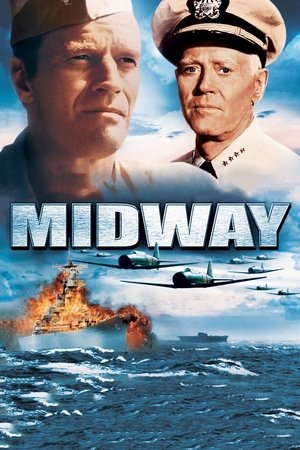
66%
Midway(en)
1976-06-18
This war drama depicts the U.S. and Japanese forces in the naval Battle of Midway, which became a turning point for Americans during World War II.
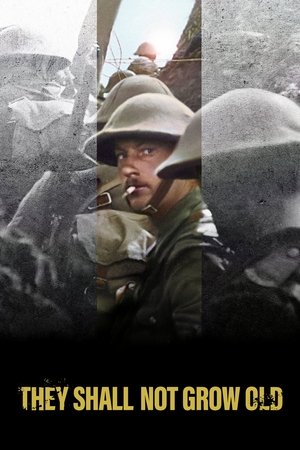
78%
They Shall Not Grow Old(en)
2018-11-09
A documentary about World War I with never-before-seen footage to commemorate the centennial of Armistice Day, and the end of the war.
77%
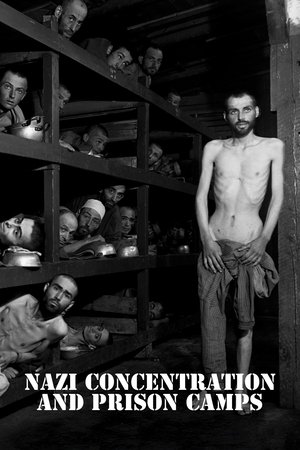
Nazi Concentration Camps(en)
1945-11-29
Produced and presented as evidence at the Nuremberg war crimes trial of Hermann Göring and twenty other Nazi leaders, this film consists primarily of dead and surviving prisoners and of facilities used to kill and torture during the World War II.
60%
Operation Pacific(en)
1951-01-27
During WWII, Duke E. Gifford is second in command of the USS Thunderfish, a submarine which is firing off torpedoes that either explode too early or never explode at all. It's a dilemma that he'll eventually take up personally. Even more personal is his quest to win back his ex-wife, a nurse; but he'll have to win her back from a navy flier who also happens to be his commander's little brother.

63%
MacArthur(en)
1977-07-15
The film portrays MacArthur's life from 1942, before the Battle of Bataan, to 1952, when he was removed from his Korean War command by President Truman for insubordination, and is recounted in flashback as he visits West Point.

61%
The Battle of San Pietro(en)
1945-05-03
This documentary movie is about the battle of San Pietro, a small village in Italy. Over 1,100 US soldiers were killed while trying to take this location, that blocked the way for the Allied forces from the Germans. Preserved by the Academy Film Archive in 2005.
64%
Tobruk(en)
1967-02-07
In September 1942, the German Afrika Korps under Rommel have successfully pushed the Allies back into Egypt. A counter-attack is planned, for which the fuel dumps at Tobruk are a critical impediment. In order to aid the attack, a group of British commandos and German Jews make their way undercover through 800 miles of desert, to destroy the fuel dumps starving the Germans of fuel.
64%
Sands of Iwo Jima(en)
1950-01-01
Haunted by personal demons, Marine Sgt. John Stryker is hated and feared by his men, who see him as a cold-hearted sadist. But when their boots hit the beaches, they begin to understand the reason for Stryker's rigid form of discipline.