Loading Page
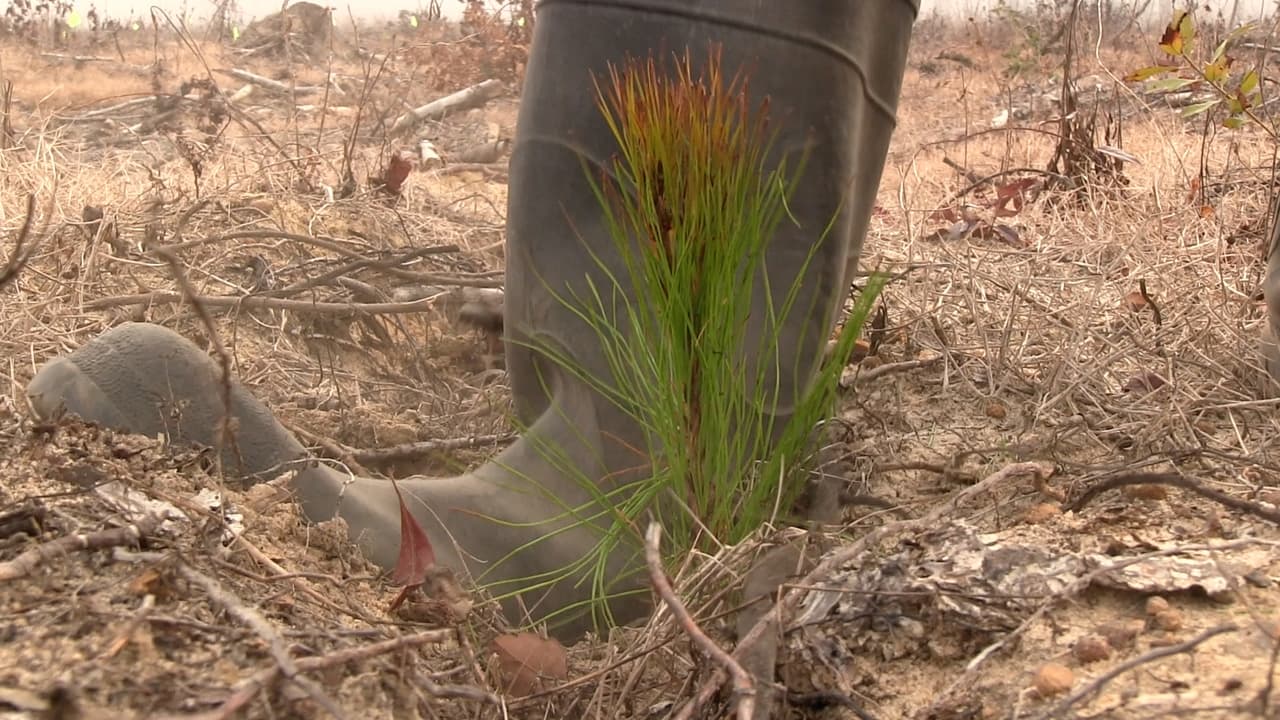

A Thousand Pines(2023)
Status: Released
Date: 2023-09-20
0%
0 Votes
Time: 1h 14m
A look inside the hidden world of tree planting
Overview:
In this tale of labor and family that shines a light on the precarity of temporary work visas, Raymundo Morales leads a crew of workers who have to make the challenging decision to leave their families in rural Mexico to plant commercial pine forests in the United States.
Languages: English, Spanish.
Countries:
United States of America
ProductionCompanies: 

A Thousand Pines Film
Movie: A Thousand Pines
Video Trailer A Thousand Pines
All 1 videos

A Thousand Pines | Official Trailer | Independent Lens | PBS - Trailer
Similar Movies

69%
Atomic Homefront(en)
2017-11-17
Revealing St. Louis, Missouri's atomic past as a uranium processing center for the atomic bomb and the governmental and corporate negligence that lead to the illegal dumping of Manhattan Project radioactive waste throughout North County neighborhoods.

76%
Cowspiracy: The Sustainability Secret(en)
2014-07-01
Follow the shocking, yet humorous, journey of an aspiring environmentalist, as he daringly seeks to find the real solution to the most pressing environmental issues and true path to sustainability.

80%
Elsewhere, Everywhere(fr)
2021-12-01
A computer screen, images from the four corners of the world. We cross borders in one-click while another trip’s story reach us in bits, through text messages, chats, phone conversations, and an immigration office’s questionnaire. It’s the journey of Shahin, a 20-year-old Iranian boy who, fleeing his country alone, lands in Greece, then winds his way to England where he claims asylum.

70%
The Giants(en)
2023-04-20
A portrait of environmental folk hero & gay icon Bob Brown, who took green politics to the center of power. His story is interwoven with the life cycle of the ancient trees he's fighting for.

55%
Money for Bread(de)
1994-01-01
Women from Turkey and Mecklenburg are working together side-by-side at a fish-processing factory in Lübeck. As they work, they share stories about their lives, including their sorrows, griefs, hopes, and dreams, while expressing their longing for home and feelings of being lost in a foreign place.


0%
Escort(nl)
2016-03-10
Young, inexperienced members of the Dutch Boarder Patrol undergo an intensive training on escorting refused asylum seekers to their homeland.

100%
The Sun Queen(en)
2023-04-04
Chemical engineer and inventor Maria Telkes worked for nearly 50 years to harness the power of the sun, designing and building the world's first successful solar-heated modern residence and identifying a new chemical that could store solar heat like a battery. Telkes was undercut and thwarted by her (male) boss and colleagues at MIT, but she persevered. Upon her death in 1995 Telkes held more than 20 patents, and now she is recognized as a visionary pioneer in the field of sustainable energy whose work continues to shape how we power our lives today.

0%
Nurse Unseen(en)
2024-10-04
Explores the little-known history and humanity of the unsung Filipino nurses risking their lives on the front lines of a pandemic, thousands of miles from home.

67%
Youth (Spring)(zh)
2023-11-10
This film was shot between 2014 and 2019 in the town of Zhili, a district of Huzhou City in Zhejiang province, China. Zhili is home to over 18,000 privately-run workshops producing children's clothes, mostly for the domestic market, but some also for export. The workshops employ around 300,000 migrant workers, chiefly from the rural provinces of Yunnan, Guizhou, Anhui, Jiangxi, Henan and Jiangsu.

0%
The Iron Triangle: Willets Point and the Remaking of New York(en)
2017-11-11
Targeted for several failed redevelopment plans dating back to the days of Robert Moses, Willets Point, a gritty area in New York City known as the “Iron Triangle,” is the home of hundreds of immigrant-run, auto repair shops that thrive despite a lack of municipal infrastructure support. During the last year of the Bloomberg Administration, NYC’s government advanced plans for a “dynamic” high-end entertainment district that would completely wipe out this historic industrial core. The year is 2013, and the workers of Willets Point are racing against the clock to forestall their impending eviction. Their story launches an investigation into New York City’s history as the front line of deindustrialization, urban renewal, and gentrification.

0%
Silvicola(en)
2023-04-28
The human impact on forests is explored through breathtaking vistas and poignant vignettes set in Canada's Pacific Northwest. Those who rely on this precious resource highlight the tensions and dilemmas between commodification and conservation.

0%
Deep Time(en)
2015-03-14
Director Noah Hutton returns to the same landowners, state officials, and oil workers he captured at the beginning of the Bakken oil boom six years ago in his 2009 debut documentary feature Crude Independence. A new focus on the relationship of the indigenous peoples of North Dakota to their surging fossil wealth casts the ongoing boom in the context of paleo-cycles, climate change, and the dark ecology of the future.

0%
Poison City(en)
2003-03-09
Dzerzhinsk, a Russian city 240 miles east of Moscow, is considered the most chemically polluted town on Earth. Factories producing industrial chemicals (and in Soviet times, chemical weapons) employ a quarter of the 300,000 residents in a city where life expectancy has fallen to 42-47 years, the death rate is 2.6 times higher than the birth rate, and the men are close to impotence. Reporter Tim Samuels recorded a series of in-depth interviews with the inhabitants of Dzerzhinsk for the Correspondent strand, revealing what life is like for the beleaguered populace.

20%
Guardian(en)
2019-08-06
Guardian chronicles the work of wildlife stewards amid sweeping legislative rollbacks of environmental protections in Canada. Part hermit, part biologist, Guardians live on boats, full-time, in one of the last pristine frontiers of the world to monitor salmon, the backbone of the ecosystem, economy, and culture along British Columbia's coast. But, in an age of science censorship and soaring resource extraction in the form of fracking for oil and natural gas, Guardians and the wildlife they have dedicated their lives to protect are now disappearing.

62%
The Shelter(fr)
2014-08-10
It is winter at an emergency shelter for the homeless in Lausanne. Every night at the door of this little-known basement facility the same entry ritual takes place, resulting in confrontations which can sometimes turn violent. Those on duty at the shelter have the difficult task of “triaging the poor”: the women and children first, then the men. Although the total capacity at the shelter is 100, only 50 “chosen ones” will be admitted inside and granted a warm meal and a bed. The others know it will be a long night.

0%
Amazonia Inc(en)
2019-01-01
This documentary explores an unknown civilization of the Brazilian Amazon, who risk their lives to protect their forest. In order to save the exploitation of the environment by big corporations, they have to create legal institutions.

71%
How to Change the World(en)
2014-12-12
In 1971, a group of friends sail into a nuclear test zone, and their protest captures the world's imagination. Using never before seen archive that brings their extraordinary world to life, How To Change The World is the story of the pioneers who founded Greenpeace and defined the modern green movement.

70%
Detained(sv)
2015-04-10
A documentary from within the Swedish Migration Board's locked repository where people are in custody awaiting forced deportation. Prisoner and guard are in close proximity around the clock. Converses during sleepless nights and playing football during hot summer days. We follow Sophie, 29, who loves her job at the repository, Sami, 20, the young rebel who is locked up but free inside, and Aina, 47, who were separated from her children and kept locked up while the police are stepping up efforts to enforce their expulsion order.