Loading Page
Ozogoche(2023)
Status: Released
Date: 2023-11-09
0%
0 Votes
Time: 1h 17m
Overview:
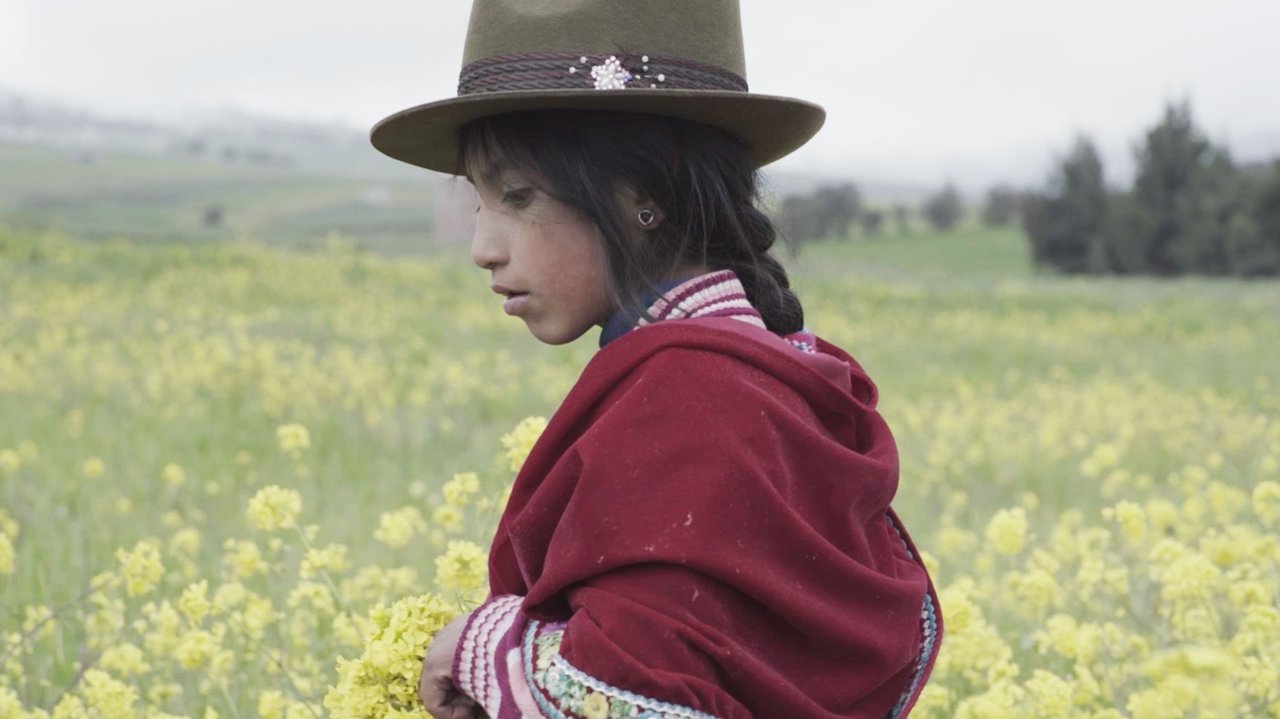
Cuviví is the Ecuadorean indigenous name for the upland sandpiper, a wading bird that has special significance for the communities living around the Ozogoche lakes in the middle of the Andes. Each year, these birds migrate south from North America. Around September they pass the Ozogoche lakes, where large numbers then “commit suicide,” plunging from great heights into the ice-cold water. A girl lives near the lake. Her uncle lives in the US, and she might be heading there herself. In the meantime, she awaits the arrival of the cuvivís, few of which have appeared in recent years. The lakes are drying up.
Languages: Quechua, Spanish.
Countries:
Belgium,
Ecuador,
Qatar
ProductionCompanies: 
Serendipity Films
Movie: Ozogoche
HomePage
Overview
Cuviví is the Ecuadorean indigenous name for the upland sandpiper, a wading bird that has special significance for the communities living around the Ozogoche lakes in the middle of the Andes. Each year, these birds migrate south from North America. Around September they pass the Ozogoche lakes, where large numbers then “commit suicide,” plunging from great heights into the ice-cold water. A girl lives near the lake. Her uncle lives in the US, and she might be heading there herself. In the meantime, she awaits the arrival of the cuvivís, few of which have appeared in recent years. The lakes are drying up.
Release Date
2023-11-09
Average
0
Rating:
0.0 startsTagline
Genres
Languages:
EspañolKeywords
Similar Movies

0%
Attiuk(fr)
1963-07-19
The people of Unamenshipu (La Romaine), an Innu community in the Côte-Nord region of Quebec, are seen but not heard in this richly detailed documentary about the rituals surrounding an Innu caribou hunt. Released in 1960, it’s one of 13 titles in Au Pays de Neufve-France, a series of poetic documentary shorts about life along the St. Lawrence River. Off-camera narration, written by Pierre Perrault, frames the Innu participants through an ethnographic lens. Co-directed by René Bonnière and Perrault, a founding figure of Quebec’s direct cinema movement.


57%
Amazing Journeys(en)
1999-10-15
By land, by air, and by sea, viewers can now experience the struggle that millions of creatures endure in the name of migration as wildlife photographers show just how deeply survival instincts have become ingrained into to the animals of planet Earth. From the monarch butterflies that swarm the highlands of Mexico to the birds who navigate by the stars and the millions of red crabs who make the perilous land journey across Christmas Island, this release offers a look at animal instinct in it's purest form.

62%
Tawai: A Voice from the Forest(en)
2017-09-29
Explorer Bruce Parry visits nomadic tribes in Borneo and the Amazon in hope to better understand humanity's changing relationship with the world around us.

80%
Birds of the Lakes Return(sl)
2018-08-26
An excellent display of how humans can rehabilitate and restore an area where a heavy industry polluted the water so severely that it was unsuitable to sustain any kind of life. A a film showing how birds returned to an environment once devastated by industry. The lakes around the northern Slovenian town of Velenje, placed in the Central Europe, are geographic center of the film. They emerged as the land above the lignite mines subsided and the depressions were filled with water. The mines started operating at the end of the 19th century. In the mid 20th century a power plant was built that caused a severe pollution of the lake waters to the extent of the lakes not being fit for any kind of life. As a consequence many birds moved from these parts. After a long ecological restoration that started in the mid 1980s, life returned to the water. Gradually the birds returned as well, including some there were previously never observed in this area.

60%
Nostalgia for the Lake(es)
2023-04-24
A vision from Limbo, where the canoeist of the eternal lake floats in his boat, between sleep and wakefulness. When he sleeps, he dreams of the everyday of a parallel time. when he wakes up, the same song haunts him again and again. his boat, “ara” (time, in guarani) travels through time like a shooting star.

100%
Swans: Mystery of the Missing(en)
2019-03-01
With narration from Paul McGann, this ground-breaking film sets out to solve one of nature's mysterious phenomena: the Bewick swan's dramatic decline. A pioneering group of scientists and conservationists sets out to discover why we have lost nearly half the Bewick population in the last twenty years. Every year, these majestic birds make one of the world's toughest migrations, across perilous land, sea and skies. Somewhere between the harsh Tundra landscape and the south of England lies the key to their disappearance. We join extreme sportswoman Sacha Dench and award-winning wildlife cameraman Benjamin Sadd, as they follow the swans over 7,000 km, on a journey that pushes both humans and swans to the limits of their endurance. Cutting-edge tracking techonology and innovative filming techniques give privileged insight into the birds' hidden world, providing stunning aerial views and the personal stories of swans, Charlotte, Daisy-Clarke and Leho.

68%
The Seasons(ru)
1975-01-01
The last collaboration of Artavazd Peleshian and cinematographer Mikhail Vartanov is a film-essay about Armenia's shepherds, about the contradiction and the harmony between man and nature, scored to Vivaldi's Four Seasons.

100%
Made in Ethiopia(am)
2024-06-06
When a massive Chinese factory complex attempts a high-stakes expansion in rural Ethiopia, three women in search of prosperity have their faith in industrialization tested to the limit. Filmed over four years with singular access, Made in Ethiopia lifts the curtain on China’s historic but misunderstood impact on Africa, and explores contemporary Ethiopia at a moment of profound crisis. The film was awarded the Jury Special Mention at Tribeca Festival.


93%
Flyways(en)
2023-05-06
Flyways follows endangered migratory shorebirds as they travel their ancient migration routes around the planet. Using nanotechnology and global tracking from the International Space Station, the project will uncover the paths of the world’s greatest, feathered endurance athletes and shine a light on the scientists and international lawyers who are collaborating to save them.

0%
The Accidental Wilderness: Europe's Everglades(de)
2021-11-16
In the middle of the German cultural landscape lies a mysterious water wilderness, a hub for bird migration and home to an amazing range of animals. The documentary shows the European reserve Rieselfelder: majestic landscapes, hidden habitats and unique animal behavior. It tells the extraordinary story of a natural paradise made by humans.

20%
Strength(es)
2021-08-04
In the rugged mountains of Oaxaca, young basketball players Bernabé, Tobías, and Aniceto battle systemic barriers to redefine their futures. Pushed by the demanding leadership of Sergio Zúñiga, they tackle every challenge head-on. With rising star Gustavo and the strategic guidance of trainer Sebastián, these determined athletes prove that grit, teamwork, and the power of dreams can transform not only their lives, but their entire community.

0%
Surviving Columbus(en)
1992-11-16
This Peabody Award-winning documentary from New Mexico PBS looks at the European arrival in the Americas from the perspective of the Pueblo Peoples.

0%
Shipibo Konibo: A Rite of Passage(en)
2005-10-09
In Peruvian Amazonia, for the first time in many years, a Shipibo–Konibo community prepare to perform the Aneshiati ceremony: a time of dance, song, festive clothing, and drink—including the sacred tea ayahuasca.

0%
Bancoco(en)
2023-05-02
A New Yorker journeys to the jungle in the Darien Gap of Panama to reconnect with an indigenous tribe he met and photographed 20 years ago. Their reunion highlights the profound power of photos and the human connection that transcends cultural barriers.