Loading Page

Requiem for Auschwitz - the film(2022)
Status: Released
Date: 2022-08-02
0%
0 Votes
Time: 1h 23m
Overview:
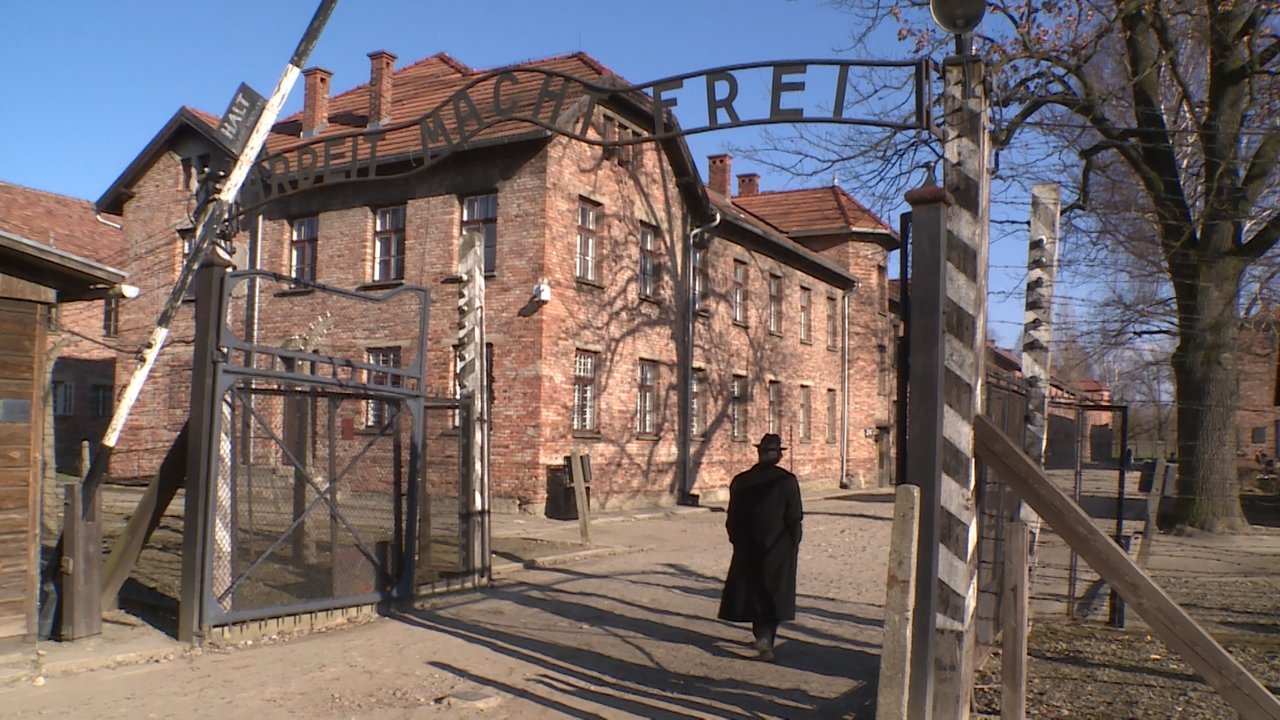
13 years ago, director Bob Entrop made the film A piece of blue in the sky, the first film in the Netherlands that depicted the murder of almost 1 million Sinti and Roma during the Second World War. There is a taboo on what happened during the war, you don't talk about it with anyone and certainly not in front of a camera. Requiem for Auschwitz is a sequel, with the most valuable moments from the first film, supplemented with the grandchildren and the creation and performance of the 'Requiem for Auschwitz' by Sinti composer Roger Moreno Rathgeb by the Sinti and Roma Philharmonic from Frankfurt and a Jewish choir in the Berliner Dom in Berlin, during Holocaust Memorial Day. During his visit to Auschwitz in 2020 with four musicians from the Dutch Accompaniment Orchestra, Roger shows them the places that inspired him.
Languages: Dutch, German.
Countries:
Netherlands
Movie: Requiem for Auschwitz - the film
HomePage
Overview
13 years ago, director Bob Entrop made the film A piece of blue in the sky, the first film in the Netherlands that depicted the murder of almost 1 million Sinti and Roma during the Second World War. There is a taboo on what happened during the war, you don't talk about it with anyone and certainly not in front of a camera. Requiem for Auschwitz is a sequel, with the most valuable moments from the first film, supplemented with the grandchildren and the creation and performance of the 'Requiem for Auschwitz' by Sinti composer Roger Moreno Rathgeb by the Sinti and Roma Philharmonic from Frankfurt and a Jewish choir in the Berliner Dom in Berlin, during Holocaust Memorial Day. During his visit to Auschwitz in 2020 with four musicians from the Dutch Accompaniment Orchestra, Roger shows them the places that inspired him.
Release Date
2022-08-02
Average
0
Rating:
0.0 startsTagline
Genres
Languages:
NederlandsDeutschKeywords
Similar Movies

80%
George Marshall and the American Century(en)
1993-05-14
He built the mightiest army in history and selected its leaders. Eisenhower, MacArthur and Patton all obeyed his commands. George Marshall was the only soldier ever to receive the Nobel Peace Prize.

57%
Golda Maria(fr)
2022-02-09
In 1994, film producer Patrick Sobelman recorded the testimony of his grandmother Golda Maria Tondovska, a Polish Jewish survivor of the Shoah.

0%
Classic Fighter(en)
Classic Fighter – the story of the great piston-engined fighters of World War Two. A tribute to the men who flew them, and to the men and women who guided them and kept them in the air. Made in conjunction with the Imperial War Museum, Duxford, this programme tells the story of these great war planes. Stunning air-to-air flying sequences are intercut with interviews with pilots and aircrew of the British and American air forces. Some of the fighter aircraft featured are the Supermarine Spitfire, the Hawker Hurricane, the Messerschmitt Bf109, the P-47 Thunderbolt and the P-51 Mustang.

45%
Human Lampshade: A Holocaust Mystery(en)
2012-09-29
This story follows one man's quest to uncover the origins and reveal the mysteries of a possible Holocaust artifact some historians now say never existed: lampshades made of human skin. When the flood waters of Hurricane Katrina receded, they left behind a wrecked New Orleans and a strange looking lamp that an illicit dealer claimed was 'made from the skin of Jews.'

0%
The 43 Group: The Unfinished War(en)
2000-09-02
The 43 Group was an English anti-fascist group set up by Jewish ex-servicemen in the immediate wake of World War II when, on their return to London, they encountered British fascist organisations such as Jeffrey Hamm’s “British League of Ex-Servicemen” and later Oswald Mosley’s reformed fascist party, the Union Movement.

23%
Radical Harmonies(en)
2002-06-28
Interviews and performance footage are used to provide an overview of the women's music scene.

80%
Hitlers Menschenhändler: Juden als Austauschware(de)
2011-09-20
The SS chief Heinrich Himmler wanted to exchange Jews against so-called German Reich abroad, against arms sales or for cash - with the express approval of Hitler.

84%
Nuremberg: The Nazis Facing their Crimes(fr)
2006-10-25
The documentary of the Nuremberg War Trials of 21 Nazi dignitaries held after World War II.

90%
Britain's Greatest Pilot: The Extraordinary Story of Captain Winkle Brown(en)
2014-06-01
Captain Eric 'Winkle' Brown recounts his flying experiences, encounters with the Nazis and other adventures leading up to and during the Second World War. Illustrated with archive footage and Captain Brown's own photos.

53%
Safeguarding Military Information(en)
1942-01-16
World War II propaganda short which focuses on the dangers of inadvertent dispersal of military information.

70%
The Half-Life of Genius Physicist Raemer Schreiber(en)
2018-07-17
Our two-hour film highlights the life and career of Dr. Schreiber with respect and clarity. Raemer, his wife Marge, and young daughter Paula would move to the high-desert of New Mexico where he and other brilliant minds would change the world forever.

69%
The Man Who Cracked the Nazi Code: The Story of Alan Turing(fr)
2014-06-06
During the Second World War, the allies' key objective was to crack the German army's encrypted communications code. Without a doubt, the key player in this game was Alan Turing, an interdisciplinary scientist and a long-forgotten hero.

0%
Listen(ja)
2016-05-14
Documentary without audio produced by deaf people. Music is depicted visually with the complete absence of musical instruments or voices. Directed by Makihara Eri and choreographer Dakei. With a diverse lineup including ordinary deaf people with zero acting experience and a choreographer who performs in Japan and abroad, this film pulls out all the tops to give visual expression to music through the physical body. An aging man uses multiple sign language poems to convey the four seasons, and a girl expresses the wind amidst the rustling trees.

68%
The Day Hitler Died(en)
2015-12-18
The story of Hitler’s final hours told by people who were there. This special features exclusive forgotten interviews, believed lost for 65 years, with members of Hitler’s inner circle who were trapped with him in his bunker as the Russians fought to take Berlin. These unique interviews from figures such as the leader of the Hitler Youth Artur Axmann and Hitler’s secretary Traudl Junge, have never before been seen outside Germany. Using rarely seen archive footage and dramatic reconstruction, this special tells the story of Adolf Hitler’s final days in his Berlin bunker.

0%
Digging The Great Escape(en)
2011-11-28
The classic movie "The Great Escape" was based on a real life escape attempt during the second world war. This documentary follows Archaeologists who are trying to find the original tunnels dug by the real prisoners of war who escaped. Some of the surviving prisoners also join the team to assist with the tunnel locations and to describe what it was really like to live that situation. In an effort to understand the technical details of how this feet of ingenuity was achieved, the team recreate some of the equipment used by the prisoners.

75%
Fascism in Colour(en)
2006-01-01
After the World War I, Mussolini's perspective on life is severely altered; once a willful socialist reformer, now obsessed with the idea of power, he founds the National Fascist Party in 1921 and assumes political power in 1922, becoming the Duce, dictator of Italy. His success encourages Hitler to take power in Germany in 1933, opening the dark road to World War II. (Originally released as a two-part miniseries. Includes colorized archival footage.)

80%
June 1940, the Great Chaos(fr)
2010-06-14
From May 10, 1940, France is living one of the worst tragedies of it history. In a few weeks, the country folds, and then collapsed in facing the attack of the Nazi Germany. On June 1940, each day is a tragedy. For the first time, thanks to historic revelations, and to numerous never seen before images and documents and reenacted situations of the time, this film recounts the incredible stories of those men and women trapped in the torment of this great chaos.

0%
Elie Wiesel Goes Home(hu)
1997-02-12
A documentary chronicling the adolescent years of Elie Wiesel and the history of his sufferings. Eliezer was fifteen when Fascism brutally altered his life forever. Fifty years later, he returns to Sighetu Marmatiei, the town where he was born, to walk the painful road of remembrance - but is it possible to speak of the unspeakable? Or does Auschwitz lie beyond the capacity of any human language - the place where words and stories run out?

73%
Dolly Parton: Here I Am(en)
2019-12-25
Dolly Parton leads a moving, musical journey in this documentary that details the people and places who have helped shape her iconic career.

0%
A Company of Heroes(en)
2013-04-02
Easy Company, the 2nd Battalion of the 506th Parachute Infantry Regiment of the 101st Airborne Division, fought their way through Europe, liberated concentration camps, and drank a victory toast in April 1945 at Hitler's hideout. Veterans from Easy Company, along with the families of three deceased others, recount their horrors and victories, bonds they made and the friends they lost.