Loading Page
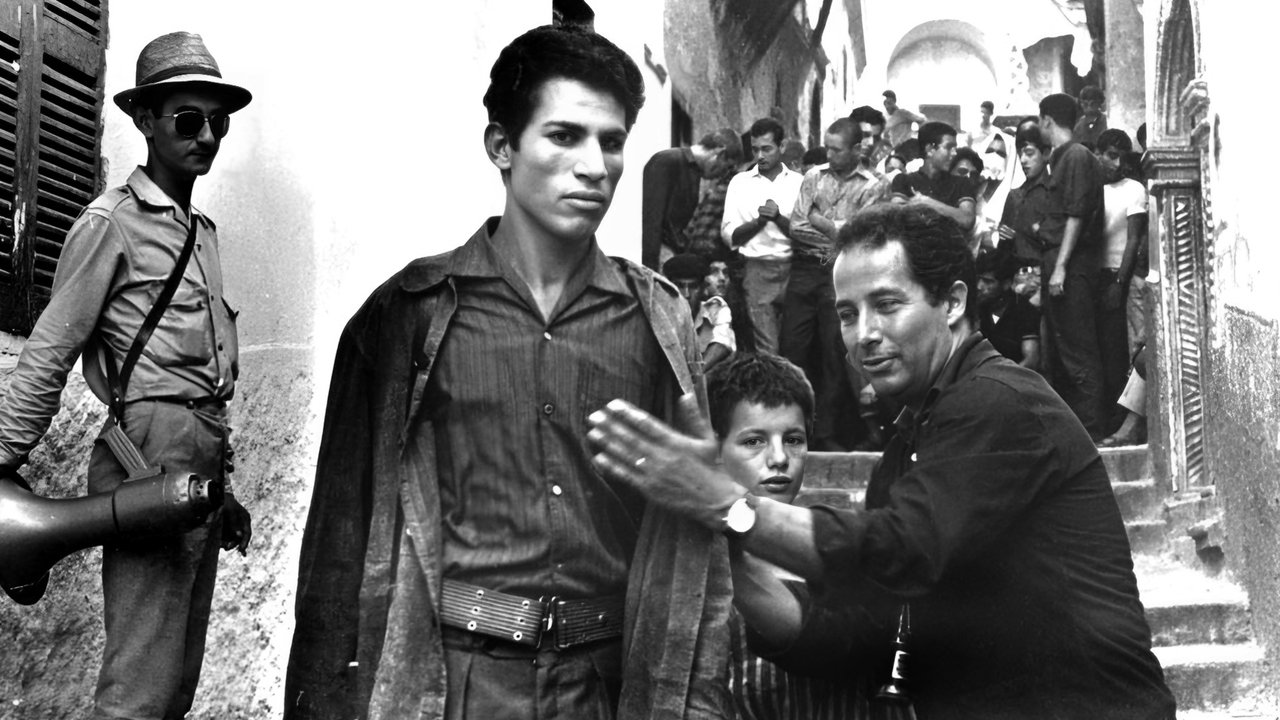

L'Histoire Du Film "La Bataille D'Alger"(2018)
Status: Released
Date: 2018-01-01
100%
1 Votes
Time: 1h 14m
Overview:
More than fifty years after the release of the film “The Battle of Algiers” in theaters in June 1966, director Salim Aggar found, after a search which lasted more than a year and a half, the actors, extras and technicians who worked on the film directed by Gillo Pentecorvo and produced by Yacef Saadi. In this documentary full of anecdotes and stories about the filming of the film, the director found the actress who played the role of Hassiba Ben Bouali, the young 17-year-old actress who played Bouhamidi's bride but especially certain figures important parts of the film who were barely 10 years old at the time of filming and who no one will recognize today. Beyond the important historical aspect of the film, the documentary focused mainly on the social, cinematographic and cultural aspect of the film and its impact on a generation which had just regained independence.
Languages: Arabic, French.
Countries:
Algeria
ProductionCompanies: 
Belvédère Production
Movie: L'Histoire Du Film "La Bataille D'Alger"
Top 9 Billed Cast
Noureddine Brahimi
Self
Fouzia El Kader
Self
Brahim Hadjadj
Ali La Pointe (archive footage)
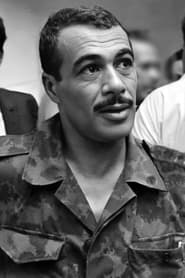
Saadi Yacef
Self
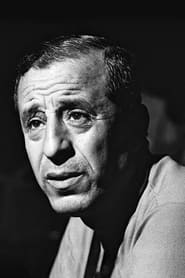
Rouiched
Self (archive footage)

Abderrahmane Brahimi
Le Jeune Marié de la Casbah (archive footage)

Mohamed Ben Kassen
Self (archive footage)
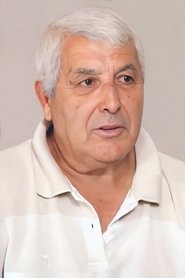
Kamel Djebara
Self
HomePage
Overview
More than fifty years after the release of the film “The Battle of Algiers” in theaters in June 1966, director Salim Aggar found, after a search which lasted more than a year and a half, the actors, extras and technicians who worked on the film directed by Gillo Pentecorvo and produced by Yacef Saadi. In this documentary full of anecdotes and stories about the filming of the film, the director found the actress who played the role of Hassiba Ben Bouali, the young 17-year-old actress who played Bouhamidi's bride but especially certain figures important parts of the film who were barely 10 years old at the time of filming and who no one will recognize today. Beyond the important historical aspect of the film, the documentary focused mainly on the social, cinematographic and cultural aspect of the film and its impact on a generation which had just regained independence.
Release Date
2018-01-01
Average
10
Rating:
5.0 startsTagline
Genres
Languages:
العربيةFrançaisKeywords
Recommendations Movies

65%
Slayers Return(ja)
1996-08-03
Lina Inverse and Naga the White Serpent are back! What begins as a routine bandit-stomping turns into the adventure of a lifetime involving magical golems, an ancient Elven weapon and even someone bent on destroying the world. It's a predicament only Lina and Naga could get themselves in to.

60%
Air Force One Down(en)
2024-02-09
On her first assignment aboard Air Force One, a rookie Secret Service agent faces the ultimate test when terrorists hijack the plane, intent on derailing a pivotal energy deal. With the President's life on the line and a global crisis at stake, her bravery and skills are pushed to the limit in a relentless battle that could change the course of history.

59%
13 Exorcisms(es)
2022-11-04
After participating in a séance, young Laura begins to behave strangely. Alarmed, her parents ask Father Olmedo, one of the few exorcists authorized by the Vatican to intervene in cases of demonic possession, for help.

74%
South Park: Post COVID: The Return of COVID(en)
2021-12-16
If Stan, Kyle and Cartman could just work together, they could go back in time to make sure Covid never happened. But traveling back to the past seems to be the easy answer until they meet Victor Chaos.

70%
SlugTerra: Return of the Elementals(en)
2014-08-02
A new member has joined Eli and the Shane Gang! Junjie, once the protector of the Eastern Caverns, is a master of the slugslinging art of Slug Fu! But even with the power of five slingers, the Shane Gang find themselves in over their heads as they race across The 99 Caverns in search of the Legendary Elemental Slugs. The five Elementals are ancient slugs of great power, and the forbearers of all slugs found in SlugTerra today. In the wrong hands, they could bring Slugterra to the brink of destruction. So when an evil alliance starts hunting down the Elementals, Eli and his friends — old and new — take off in pursuit of the greatest threat their world has ever faced!

73%
Kingdom 2: Far and Away(ja)
2022-07-15
It follows a young man who dreams of becoming a general and Ying Zheng, whose goal is unification.

67%
Narco Sub(en)
2021-01-22
A former U.S. Navy Seal is forced to become the international criminal he once fought against when a powerful and violent drug cartel kidnaps his wife and daughter.

74%
The Witch: Part 2. The Other One(ko)
2022-06-15
A girl wakes up in a huge secret laboratory, then accidentally meets another girl who is trying to protect her house from a gang. The mystery girl overthrows the gang with her unexpected powers, and laboratory staff set out to find her.

62%
1(hu)
2009-11-05
A bookshop renowned for its rare works is mysteriously and filled with copies of a book entitled 1, which doesn't appear to have a publisher or author. The strange almanac describes what happens to humanity in a minute. A police investigation begins and the bookshop staff are placed in solitary confinement by the Bureau for Paranormal Research. As the investigation progresses, the situation becomes more complex and the book becomes increasingly well-known, raising numerous controversies. Plagued by doubts, the protagonist has to face facts: reality only exists in the imagination of individuals.

66%
Sex Appeal(en)
2022-01-14
Avery, a teenager with a tendency towards perfectionism, enlists her friend Larson to help her prepare for her first time with her long-distance boyfriend.

69%
The Crocodiles Strike Back(de)
2010-01-21
New summer adventure of the Crocodiles, who set up their detective skills to find out who is behind the accidents of the factory where Ollie and Mary's parents work , which could mean the closure of the plant, the move of the family and the dissolution of the gang.

66%
The Unholy(en)
2021-03-31
Alice is a young hearing-impaired girl who, after a supposed visitation from the Virgin Mary, is inexplicably able to hear, speak and heal the sick. As word spreads and people from near and far flock to witness her miracles, a disgraced journalist hoping to revive his career visits the small New England town to investigate. When terrifying events begin to happen all around, he starts to question if these phenomena are the works of the Virgin Mary or something much more sinister.

60%
Hypnotic(en)
2021-10-27
A young woman seeking self-improvement enlists the help of a renowned hypnotist but, after a handful of intense sessions, discovers unexpected and deadly consequences.

73%
Return to Dust(zh)
2022-07-08
Humble, unassuming Ma and timid Cao have been cast off by their families and forced into an arranged marriage. They have to combine their strength and build a home to survive. In the face of much adversity, an unexpected bond begins to blossom, as both Ma and Cao, uniting with Earth's cycles, create a haven for themselves in which they can thrive.

62%
Blacklight(en)
2022-02-10
Travis Block is a shadowy Government agent who specializes in removing operatives whose covers have been exposed. He then has to uncover a deadly conspiracy within his own ranks that reaches the highest echelons of power.

66%
The Burning Sea(no)
2021-10-29
An oil platform dramatically goes down on the Norwegian coast, and researchers try to find out what happened when they realize this is just the start of something even more serious.

68%
Obi-Wan Kenobi: A Jedi's Return(en)
2022-09-07
This special explores the return of Obi-Wan Kenobi and Anakin Skywalker to the screen, as well as Ewan McGregor and Hayden Christensen to their classic roles. Director Deborah Chow leads the cast and crew as they create new heroes and villains that live alongside new incarnations of beloved Star Wars characters, and an epic story that dramatically bridges the saga films.

71%
Creation of the Gods I: Kingdom of Storms(zh)
2023-07-15
Based on the most well-known classical fantasy novel of China, Fengshenyanyi, the trilogy is a magnificent eastern high fantasy epic that recreates the prolonged mythical wars between humans, immortals and monsters, which happened more than three thousand years ago.

65%
Jarhead: Law of Return(en)
2019-10-01
Major Ronan Jackson, an accomplished fighter pilot for the Israel Defense Forces and son of a U.S. Senator, is shot down while flying through Syrian airspace. After miraculously surviving the crash, Jackson is taken captive by a group of Hezbollah militiamen. A squad of elite soldiers, led by Gunnery Sergeant Dave Torres, risk their own lives in the hopes of saving an ally they've never met.

69%
Once Upon a Time: The Super Heroes(fr)
2001-12-23
The historical saga of American superheroes. Born in the period between the Great Depression and the World War II to combat the hobgoblins of the modern world, these mutant human beings with superhuman powers colonized the funny papers, radio dramas, television and films, to become a truly national industry in the United States: they gave expression to the fears and obsessions of the twentieth century and bolstered American ideals.
Similar Movies

100%
Our Algeria(ar)
1959-01-01
"Djazaïrouna", produced by the cinema service of the Provisional Government of the Algerian Republic (GPRA), is a montage film intended to inform the international community at the UN in 1959 on the objectives pursued by the Algerian resistance during the war of 'Algeria. Independence in Algeria (1954-1962). In 1959, Djamel-Eddine Chanderli and Mohammed Lakdar-Hamina produced Djazaïrouna (Our Algeria) from images taken by René Vautier and Doctor Pierre Chaulet. This film, completed a little later and will result in the film “The Voice of the People”. This documentary on the history of Algeria through a montage of current events, traces the political and military actions of the A.L.N, the demonstrations of December 1960, and the attack on a fortified French base on the border between Algeria and Tunisia.

66%
Fata Morgana(de)
1972-02-01
Shot under extreme conditions and inspired by Mayan creation theory, the film contemplates the illusion of reality and the possibility of capturing for the camera something which is not there. It is about the mirages of nature—and the nature of mirage.

100%
Cheikh El Hasnaoui, from the White House to the Blue Ocean(fr)
2014-04-10
Cheikh El-Hasnaoui is an Algerian singer who left his country in 1937 without ever setting foot there again. Between 1939 and 1968 he composed most of his repertoire in France. For many years the Algerian cafes of Paris were the stages of his shows. With a handful of artists of his generation, he laid the foundations of modern Algerian song. A fervent defender of women's rights, he claims, as a pioneer, the fight for identity for a plural Algeria. At the end of the Sixties, he ended his artistic career. On July 6, 2002 he died in Saint-Pierre de la Réunion, where he is buried to this day. This 80-minute documentary follows in the footsteps of this extraordinary character. From Kabylia to Saint-Pierre de a Réunion via the Casbah of Algiers and the belly of Paris.

100%
Sawt Echaâb(ar)
1961-01-01
“La Voix du Peuple,” composed of archival photographs by René Vauthier and others, exposes the root causes of the armed conflict of the Algerian resistance. Participating in a war of real images against French colonial propaganda, these images aimed to show the images that the occupier had censored or distorted, by showing the extortions of the French occupation army: torture, arrests and arbitrary executions, napalm bombings, roundabout fires, erasing entire villages from the map, etc. This is what the French media described as a “pacification campaign”.

100%
Gerboise Bleue(fr)
2009-02-11
"Gerboise bleue", the first French atomic test carried out on February 13, 1960 in the Algerian Sahara, is the starting point of France's nuclear power. These are powerful radioactive aerial shots carried out in areas belonging to the French army. Underground tests will follow, even after the independence of Algeria. From 1960 to 1978, 30,000 people were exposed in the Sahara. The French army was recognized recognized nine irradiations. No complaint against the army or the Atomic Energy Commission has resulted. Three requests for a commission of inquiry were rejected by the National Defense Commission. For the first time, the last survivors bear witness to their fight for the recognition of their illnesses, and revealed to themselves in what conditions the shootings took place. The director goes to the zero point of "Gerboise Bleue", forbidden access for 47 years by the Algerian authorities

100%
Abd El-Kader(fr)
2014-01-14
Illustrated with archival photographs, animations and live action, this film explores the history and historical and spiritual heritage of Emir Abd El-Kader. Algerian leader of the 19th century, was admired by Abraham Lincoln and celebrated to this day by the Red Cross as a great humanitarian. Emir Abd el-Kader, the man who challenged the French armies from 1832 to 1847 before creating the bases of a real Algerian state, is today considered by independent Algeria as one of the most outstanding figures. of its history. The nobility of his attitude after his capture and the very effective protection he brought to the Christians of Damascus at the end of his life also earned him great prestige among his former adversaries. A documentary told in dialectal Arabic by the voice of Amazigh Kateb.

100%
Five Directors On The Battle of Algiers(en)
2004-08-01
This 17-minute documentary is featured on the 3-Disc Criterion Collection DVD of The Battle of Algiers (1966), released in 2004. An in-depth look at the Battle of Algiers through the eyes of five established and accomplished filmmakers; Spike Lee, Steven Soderbergh, Oliver Stone, Julian Schnabel and Mira Nair. They discuss how the shots, cinematography, set design, sound and editing directly influenced their own work and how the film's sequences look incredibly realistic, despite the claim that everything in the film was staged .

68%
CHoosing at Twenty(fr)
2017-08-24
Between 1954-1962, one hundred to three hundred young French people refused to participate in the Algerian war. These rebels, soldiers or conscripts were non-violent or anti-colonialists. Some took refuge in Switzerland where Swiss citizens came to their aid, while in France they were condemned as traitors to the country. In 1962, a few months after Independence, Villi Hermann went to a region devastated by war near the Algerian-Moroccan border, to help rebuild a school. In 2016 he returned to Algeria and reunited with his former students. He also met French refractories, now living in France or Switzerland.

90%
À Propos De... L'autre Détail(fr)
1985-09-20
Documentary edited from testimonies on the torture of people who experienced the war. Some witnesses were tortured by Jean-Marie Le Pen. These testimonies will help defend the newspaper Le Canard Enchaîné in court against Jean-Marie Le Pen for defamation. The film was shown in 1985 during the trial and some witnesses also came to support the newspaper. But the 1963 amnesty law protects the politician, prohibiting the use of images that could harm people who served during the Algerian war.

100%
Frantz Fanon, trajectoire d'un révolté(fr)
2021-11-07
Frantz Fanon alone embodies all the issues of French colonial history. Martinican resistance fighter, he enlisted, like millions of colonial soldiers, in the Free Army out of loyalty to France and the idea of freedom that it embodies for him. A writer, he participated in the bubbling life of Saint-Germain with Césaire, Senghor and Sartre, debating tirelessly on the destiny of colonized peoples. As a doctor, he revolutionized the practice of psychiatry, seeking in the relations of domination of colonial societies the foundations of the pathologies of his patients in Blida. Activist, he brings together through his action and his history of him, the anger of peoples crushed by centuries of colonial oppression. But beyond this exceptional journey which makes sensitive the permanence of French colonialism in the Lesser Antilles at the gates of the Algerian desert, he leaves an incomparable body of work which has made him today one of the most studied French authors across the Atlantic.

100%
Die weiße Gefahr(fr)
1971-01-18

85%
Algeria in Flames(ar)
1958-01-02
These are the first images shot in the ALN maquis, camera in hand, at the end of 1956 and in 1957. These war images taken in the Aurès-Nementchas are intended to be the basis of a dialogue between French and Algerians for peace in Algeria, by demonstrating the existence of an armed organization close to the people. Three versions of Algeria in Flames are produced: French, German and Arabic. From the end of the editing, the film circulates without any cuts throughout the world, except in France where the first screening takes place in the occupied Sorbonne in 1968. Certain images of the film have circulated and are found in films, in particular Algerian films. Because of the excitement caused by this film, he was forced to go into hiding for 25 months. After the declaration of independence, he founded the first Algerian Audiovisual Center.

64%
Mariner of the Mountains(fr)
2023-09-28
Filmmaker Karim Aïnouz decides to take a boat, cross the Mediterranean, and embark on his first journey to Algeria. Accompanied by the memory of his mother, Iracema, and his camera, Aïnouz gives a detailed account of the journey to his father’s homeland, interweaving present, past, and future.

100%
They Chose Algeria(fr)
2007-01-01
Many of them participated in the struggle for Algerian independence. There are "those who believed in heaven", priests, Christians committed against torture, friends of the "natives", there are "those who did not believe in it", communist activists, students, progressive intellectuals, others remained in this country because they could not imagine living anywhere other than in this land of all passions. They are European and chose to stay in Algeria after independence, most of them opted for Algerian nationality. The film is another vision of the history of Algeria from the end of the fifties to the present day, told by these Europeans filmed at home, or in the context of their activities, illustrated by unpublished archive documents.

80%
The Lives of Albert Camus(fr)
2020-01-22
Albert Camus died at 46 years old on January 4, 1960, two years after his Nobel Prize in literature. Author of “L'Etranger”, one of the most widely read novels in the world, philosopher of the absurd and of revolt, resistant, journalist, playwright, Albert Camus had an extraordinary destiny. Child of the poor districts of Algiers, tuberculosis patient, orphan of father, son of an illiterate and deaf mother, he tore himself away from his condition thanks to his teacher. French from Algeria, he never ceased to fight for equality with the Arabs and the Kabyle, while fearing the Independence of the FLN. Founded on restored and colorized archives, and first-hand accounts, this documentary attempts to paint the portrait of Camus as he was.

100%
An Unhealed Wound - The Harkis in the Algerian War(fr)
2010-09-20
It's the unforgivable story of the two hundred thousands harkis, the Arabs who fought alongside the French in the bitter Algerian war, from 1954 to 1962. Why did they make that choice? Why were they slaughtered after Algeria's independence? Why were they abandonned by the French government? Some fifty to sixty thousands were saved and transferred in France, often at pitiful conditions. This is for the first time, the story of this tragedy, told in the brilliant style of the authors of "Apocalypse".

100%
They Joined the Front(fr)
2012-01-01
In this film, four key witnesses, who live in Algeria today, as full-fledged Agerians, show us what this colonization was really like, so "beneficial" that they themselves perceived it as the oppression of one people by another. Three of them, who today would be called "pieds noirs," in other words, those Europeans to whom France, the occupying power, gave the best land, taken from the indigenous populations, work, and exclusive rights, not shared by the entire population, lived rather well compared to the majority of the "natives." The fourth was far from all that and lived in Argentina. Annie Steiner, Felix Colozzi, Pierre Chaulet, and Roberto Muniz explain to us what led them to show solidarity with the struggle of the weak, the humiliated, and to risk their freedom and their lives by committing to liberate Algeria.

70%
De Gaulle, the Last King of France(fr)
2017-03-27
Charles de Gaulle, the first president (1958-1969) of the Vth Republic, France’s current system of government, left his mark on the country . He was statesman of action and has been compared to a monarch. This film depicts the general’s personality through the great events of his presidential term, at a time when the world was undergoing considerable changes.


0%
I Exist(ar)
1982-01-02
Composed of three parts, this montage film addresses all aspects relating to the role of women in Algerian society: their ambitions, the role of the State and the help of organizations that were created during the struggle for female emancipation. .