Loading Page


Mining Review 15th Year No. 5(1962)
Status: Released
Date: 1962-01-01
0%
0 Votes
Time: 0h 9m
Overview:
A visit to Peterlee, Co. Durham.
Languages: English.
Countries:
United Kingdom
ProductionCompanies: 
Movie: Mining Review 15th Year No. 5
Video Trailer Mining Review 15th Year No. 5
All 1 videos
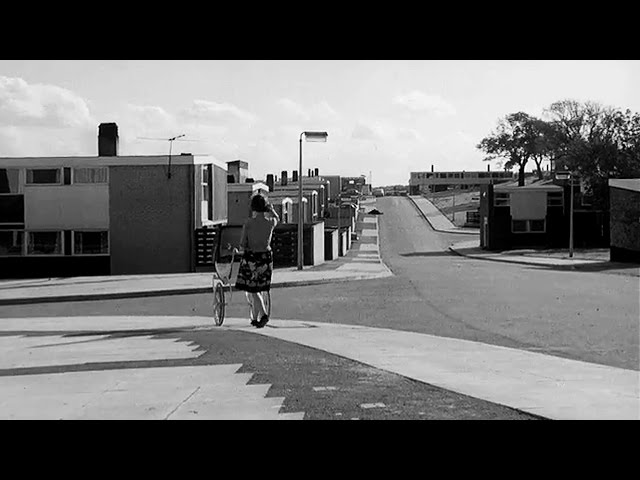
Mining Review 15th Year No. 5 (1962) | Britain on Film - Clip
Similar Movies

0%
Québec...?(fr)
1967-01-01
This short documentary film is a fascinating portrait of urban and rural Quebec in the late 1960s, as the province entered modernity. The collective work produced for the Quebec Ministry of Industry and Commerce calls on several major Quebec figures.

65%
Gold Blooded(en)
2018-02-07
Dakota Fred Hurt, Dustin Hurt and the Richardson brothers battle nature, time, and death itself to strike gold under a huge waterfall. This film documents what Fred and Dustin were up to since they left Discovery's GOLD RUSH, and it's the prequel to Discovery's new show starring this team called GOLD RUSH: WHITE WATER.


0%
Hexenkinder(de)
2020-09-17
The movie recalls children who suffered mental and physical harm both during the last century, particularly in religious orphanages, and during the time of early modernperiod witch-hunts. It shows that the mindsets and behavioural patterns of both time periods are more alike than one might think.

70%
The Wild(en)
2019-05-19
Newly into addiction recovery, an urgent threat emerges to spur filmmaker, Mark Titus back to the Alaskan wilderness - where the people of Bristol Bay and the world's last intact wild salmon runs face devastation if a massive copper mine is constructed.

0%
Kim Il Sung's Children(ko)
2020-06-25
From 1950 to 1953, one hundred thousand children were orphaned by the Korean War. With no resources to mend the wounds, the two sides, North and South, took different paths to find homes and families for the war orphans. While the children of South Korea were sent to Europe and the United States through ‘International Adoption’, the children of North Korea were distributed across Eastern Europe through a method called ‘Commissioned Education’. As a result, more than five thousand children from the North had to spend nearly a decade living in foreign lands across Eastern Europe. This story is a record of their lives, which used to be kept hidden from the rest of the world. There is a key to understanding how North Korea's closed political structure began and how the ‘Juche ideology’ was formed in this documentary movie. Understanding North Korea in the 1950s is an important way to understand North Korea at present.

100%
Second Chance(en)
2013-01-01
Second Chance tells a story of Ukrainian orphaned children and the Canadian volunteers who spend their summers working along side them. The film follows first time volunteer and filmmaker, Adriana Luhovy, as she learns about the children and becomes witness to their strengths and resilience. Converging in Yaremche in the Carpathian Mountains of Ukraine, over 500 orphaned children come together from all over the country. At first quiet and fearful, they learn to trust one another and their counsellors. By countering heartbreaking statistics - 60% of orphaned girls are trafficked within the first year of leaving the orphanage; 50% of boys end up in jail; 10% commit suicide - the volunteers are dedicated to making a difference in the lives of orphaned Ukrainian children.

100%
Bauxita(en)
2023-07-14
Brazil is one of the most dangerous countries for environmentalists. The rural community of Belisário holds the country's second largest bauxite reserve, right below one of the most bio-diverse areas in the world: the Atlantic Forest. The small community was shaken when the beloved Gilberto, a Franciscan Friar, received a death threat followed by the lines: "you've been talking against mining way too much". PT: O Brasil é um dos países mais perigosos do mundo para defensores do meio ambiente. Em Minas Gerais, a comunidade rural de Belisário abriga a segunda maior reserva de bauxita do país, em uma das áreas de maior biodiversidade do mundo: a Mata Atlântica. A tranquilidade do pequeno vilarejo foi abalada quando Frei Gilberto, um franciscano que dedica sua vida à preservação da natureza, recebeu uma ameaça de morte com o seguinte aviso: "você tem falado demais contra a mineração".

0%
Uranium(en)
1990-11-07
Explores the consequences of uranium mining in Canada. Toxic and radioactive waste pose profound, long-term environmental hazards. Miners suffer a substantially increased risk of getting cancer. Most mining occurs on Indigenous People's land, violating their traditional economic and spiritual lives. Given our limited knowledge of the risks associated with uranium mining, why continue?

100%
Children Gone to Poland(ko)
2018-10-31
Tracing the footsteps of North Korean orphans who went to Poland during the Korean War, two women, one from the North and the other from the South, bond through the solidarity of wound and forge together a path toward healing.

80%
Once We Were Pitmen(de)
2023-05-10
Black dust, shrill metallic noises, dark tunnels, muscular bodies – all that is the past. At the end of 2018, extraction of coal throughout Germany came to an end. That same year, the voices of the emerging climate protest movement Fridays for Future grew louder. Against the backdrop of these media and socio-political events, the film follows five miners on their tragic, humorous and heartwarming search for a new role in life.

55%
Circus Rwanda(cs)
2018-10-13
Eliseé survived the Rwandan genocide as a child. Today he leads an orphan acrobat group in a country, which heavily relies on foreign aid. He cares for the orphaned children and wants them to be happy, to have some sense in their lives. Rosta Novák built a worldwide-acclaimed circus group in Prague, where he successfully rules with a firm, paternal hand, but has permanently dark under-eye circles from the workload. The majority of Rwandese think that all people in Europe are fairy rich. On the other hand, many Europeans think that it is necessary to help Africa with everything. What happens, if we merge these two worlds in a film, during the preparation of a joint circus performance? What are the true motivations of our protagonists and what does it tell us about the Africa-Europe relationship? And who actually helps whom, in the end?

80%
Julieta(es)
2006-05-11
The life and times of the mexican pianist Julieta García Rello, as told by her granddaughter.

72%
Ferrum(sv)
1963-01-01
Unconventional portrayal of mining in the Swedish Lapland ore fields, a powerful image and sound symphony that can be experienced both as a documentary and symbolic work.

59%
500 Years(es)
2017-04-06
From a historic genocide trial to the overthrow of a president, the sweeping story of mounting resistance played out in Guatemala’s recent history is told through the actions and perspectives of the majority indigenous Mayan population, who now stand poised to reimagine their society.

0%
Chief Rabbi's Emergency Council(en)
1947-10-10
Poignant postwar appeal for Britain’s Jewry to support orphaned Jewish children rescued from Europe.

55%
City of Children(en)
1949-08-27
This final John Nesbitt's Passing Parade series short looks at a community, Mooseheart, in Illinois that orphaned children call home.

0%
River of Gold(en)
2016-03-26
Narrated by Academy Award winners Sissy Spacek and Herbie Hancock, River of Gold is the disturbing account of a clandestine journey into Peru's Amazon rainforest to uncover the savage unraveling of pristine jungle. What will be the fate of this critical region of priceless biodiversity as these extraordinarily beautiful forests are turned into a hellish wasteland?

0%
All Aboard! New Zealand by Rail, Sea and Land(en)
2020-01-19
Take an epic overland train, boat and car journey through New Zealand’s breathtaking landscapes. The voyage begins in Auckland, but the city soon gives way to rolling pastures, volcanic extremes, tranquil waterways, the snowcapped grandeur of the Southern Alps and the beauty of Fiordland.