Loading Page
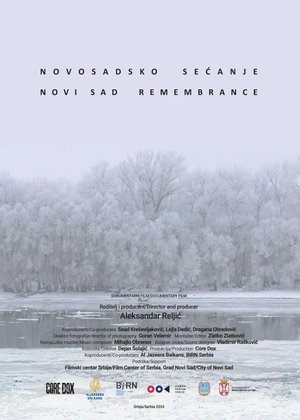
Novi Sad Remembrance(2024)
Status: Released
Date: 2024-05-26
0%
0 Votes
Time: 1h 17m
Overview:
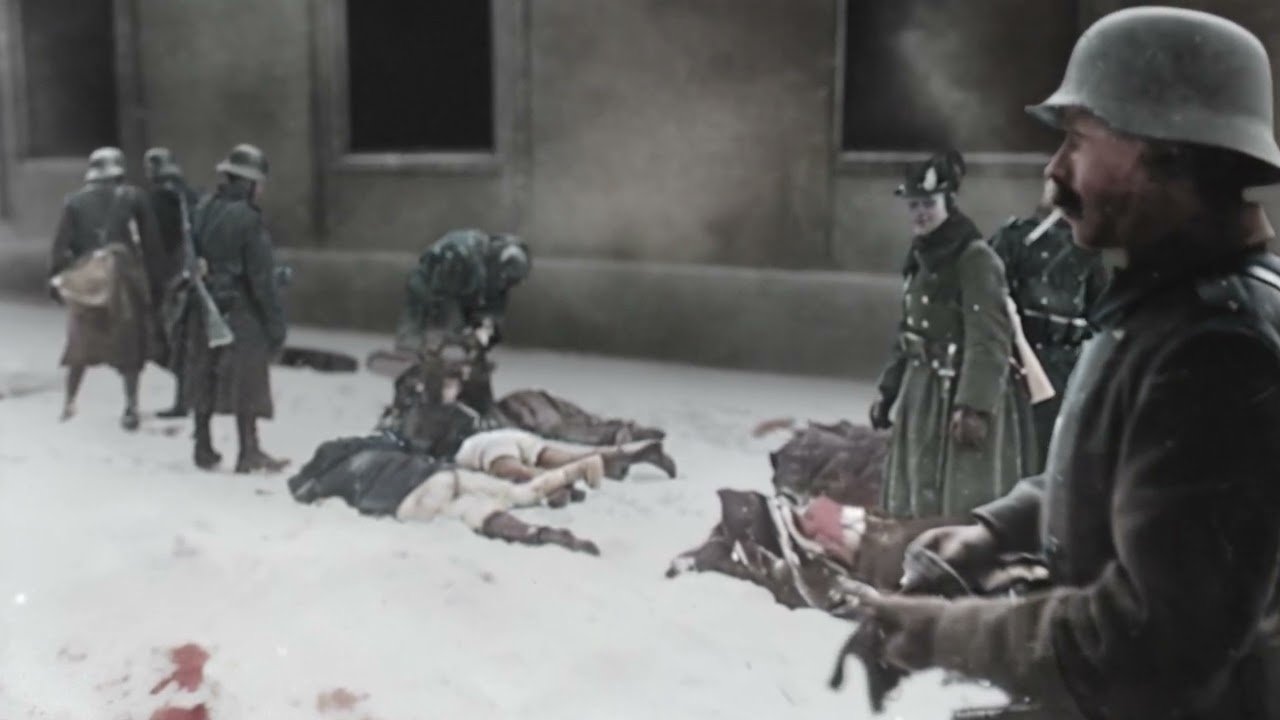
Teodor Kovač, Ivan Ivanji and Marta Flato survived the 1942 pogrom known as the Novi Sad raid, when Hungarian fascists killed more than a thousand people from Novi Sad and dumped their bodies under the ice of the Danube river. Sociology professor Marija Vasić fights against forgetting and teaches students about the Novi Sad raid, while the local authorities erect a controversial monument to innocent victims, and on that list are the names of war criminals who participated in the Novi Sad raid.
Languages: Hungarian, Serbian.
Countries:
Serbia
ProductionCompanies:
Core Dox
Movie: Novi Sad Remembrance
Top 1 Billed Cast
Video Trailer Novi Sad Remembrance
All 1 videos
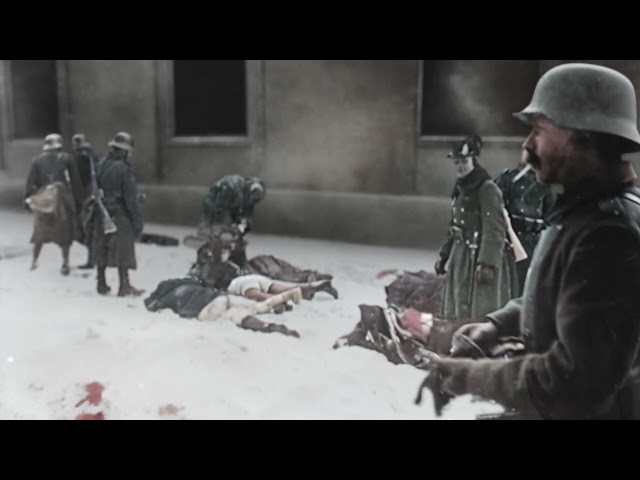
NOVOSADSKO SEĆANJE (NOVI SAD REMEMBRANCE) - TRAILER - Trailer
Similar Movies

45%
Human Lampshade: A Holocaust Mystery(en)
2012-09-29
This story follows one man's quest to uncover the origins and reveal the mysteries of a possible Holocaust artifact some historians now say never existed: lampshades made of human skin. When the flood waters of Hurricane Katrina receded, they left behind a wrecked New Orleans and a strange looking lamp that an illicit dealer claimed was 'made from the skin of Jews.'

57%
Golda Maria(fr)
2022-02-09
In 1994, film producer Patrick Sobelman recorded the testimony of his grandmother Golda Maria Tondovska, a Polish Jewish survivor of the Shoah.

0%
The 43 Group: The Unfinished War(en)
2000-09-02
The 43 Group was an English anti-fascist group set up by Jewish ex-servicemen in the immediate wake of World War II when, on their return to London, they encountered British fascist organisations such as Jeffrey Hamm’s “British League of Ex-Servicemen” and later Oswald Mosley’s reformed fascist party, the Union Movement.

0%
Elie Wiesel Goes Home(hu)
1997-02-12
A documentary chronicling the adolescent years of Elie Wiesel and the history of his sufferings. Eliezer was fifteen when Fascism brutally altered his life forever. Fifty years later, he returns to Sighetu Marmatiei, the town where he was born, to walk the painful road of remembrance - but is it possible to speak of the unspeakable? Or does Auschwitz lie beyond the capacity of any human language - the place where words and stories run out?

80%
Hitlers Menschenhändler: Juden als Austauschware(de)
2011-09-20
The SS chief Heinrich Himmler wanted to exchange Jews against so-called German Reich abroad, against arms sales or for cash - with the express approval of Hitler.

58%
The Dead Nation(ro)
2017-08-25
A documentary-essay which shows Costică Axinte's stunning collection of pictures depicting a Romanian small town in the thirties and forties. The narration, composed mostly from excerpts taken from the diary of a Jewish doctor from the same era, tells the rising of the antisemitism and eventually a harrowing depiction of the Romanian Holocaust.

68%
Warsaw: A City Divided(pl)
2019-05-11
The history of the Warsaw Ghetto (1940-43) as seen from both sides of the wall, its legacy and its memory: new light on a tragic era of division, destruction and mass murder thanks to the testimony of survivors and the discovery of a ten-minute film shot by Polish amateur filmmaker Alfons Ziółkowski in 1941.

75%
Nazi Death Camp: The Great Escape(en)
2014-05-12
The secret Nazi death camp at Sobibor was created solely for the mass extermination of Jews. But on the 14th October 1943, in one of the biggest and most successful prison revolts of WWII, the inmates fought back.

63%
How the Holocaust Began(en)
2023-01-23
Historian James Bulgin reveals the origins of the Holocaust in the German invasion of the Soviet Union, exploring the mass murder, collaboration and experimentation that led to the Final Solution.

42%
Naked Rose(en)
2013-04-24
Among the millions of victims of the Nazi madness during the Second World War, Pierre Seel was charged with homosexuality and imprisoned in the Schirmeck concentration camp. He survived this terrifying experience of torture and humiliation, and after the war he married, had three children, and tried to live a normal life. In 1982, however, he came to terms with his past and his true nature and decided to publicly reveal what he and thousands of other homosexuals branded with the Pink Triangle had undergone during the Nazi regime. Il Rosa Nudo (Naked Rose), inspired by the true story of Pierre Seel, depicts in a theatrical and evocative way the Homocaust, focusing on the scientific theories of SS Physician Carl Peter Værnet for the treatment of homosexuality, which paved the way for the Nazi persecution of gay men.

0%
Chaja & Mimi(de)
2013-06-22
Chaja Florentin and Mimi Frons have been best friends for 83 years. Born and raised in Berlin, they had to escape from the Nazis to Palestine with their families in 1934. They talk about their complicated relationship with Berlin in a Tel Aviv café where they meet everyday. A film about friendship, homeland and identity.

78%
My Italian Secret: The Forgotten Heroes(en)
2014-10-12
MY ITALIAN SECRET tells a heroic story that was all but lost to history, until now. The film recounts how WWII bicycling idol Gino Bartali, physician Giovanni Borromeo and other Italians worked with Jewish leaders and high-ranking officials of the Catholic Church, risking their lives by defying the Nazis to save thousands of Italy’s Jews.

0%
Nana(en)
2018-04-13
Maryla Michalowski-Dyamant, born in Poland, survived Ravensbruck, Malchow, and Auschwitz, where she was the forced translator of the “Angel of Death”, Dr. Mengele. She dedicated her post-war life to publicly speaking of her survival to the young generations, so that it would never be forgotten or repeated. Alice and Serena, her daughter and granddaughter, explore how Maryla’s fight against intolerance can continue today, in a world where survivors are disappearing, and intolerance, racism and antisemitism are on the rise.

0%
Berga: Soldiers of Another War(en)
2003-05-28
During the Battle of the Bulge in the winter of 1944, thousands of American GIs were captured by German forces. Berga: Soldiers of Another War, the final work in the distinguished career of four-time Academy Award-winning documentary filmmaker Charles Guggenheim, is the untold story of 350 American POWs caught in the tragedy of the Holocaust. In blatant violation of the Geneva Convention, the Jewish American soldiers in the 106th Infantry Division, together with those who had "Jewish-sounding" names or who "looked" Jewish, were shipped off to the slave-labor camp at Berga am Elster, a satellite camp of the infamous Buchenwald.

0%
Martha(en)
2020-01-01
Documentary of Daniel Schubert's grandmother, Martha Katz, a Holocaust survivor.

47%
The Pageant(he)
2020-04-25
Every year since 2011, a unique beauty contest has been taking place in Haifa. The contestants are female survivors of the Holocaust. In the midst of this flashy spectacle, their personal traumas remain as deep as ever. There are many things about this contest that are controversial: it is organized by the right Zionist organization, the International Christian Embassy Jerusalem, and the dubious contest itself rises the public indignation of various speakers, including other survivors.

75%
Witnesses(pl)
1987-07-01
On July 4th, 1946, the crowd in Kielce, Poland, slaughtered forty-two Jews and wounded many others. Forty years later, in 1987, Marcel Łoziński visited those places and met some witnesses of the carnage.

80%
The Death Train(fr)
2019-11-23
In Iasi, Romania, from June 28 to July 6, 1941, nearly 15 000 Jews were murdered in the course of a horrifying pogrom. At the time, the programmed extermination of European Jews had not yet began. After the war, the successive communist governments did all they could to ensure the Iasi pogrom would be forgotten. It was not until November of 2004 that Romania recognized for the first time its direct responsibility in the pogrom. All that remains of this massacre are about a hundred photographs taken as souvenirs by german and romanian soldiers, and a few remaining survivors.

73%
Hitler & Stalin: Portrait of Hostility(de)
2009-04-08
A double portrait of two dictators who were thousands of miles apart but were constantly fixated on each other.

0%
Stalin: Man of Steel(en)
2003-01-01
Emmy Awards nominee for "Outstanding Individual Achievement in a Craft: Research: Multi-faceted portrait of the man who succeeded Lenin as the head of the Soviet Union. With a captivating blend of period documents, newly-released information, newsreel and archival footage and interviews with experts, the program examines his rise to power, deconstructs the cult of personality that helped him maintain an iron grip over his vast empire, and analyzes the policies he introduced, including the deadly expansion of the notorious gulags where he banished so many of his countrymen to certain death.