Loading Page
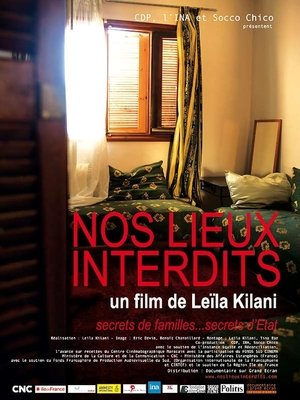
Our Forbidden Places(2009)
Status: Released
Date: 2009-09-30
0%
0 Votes
Time: 1h 43m
Overview:
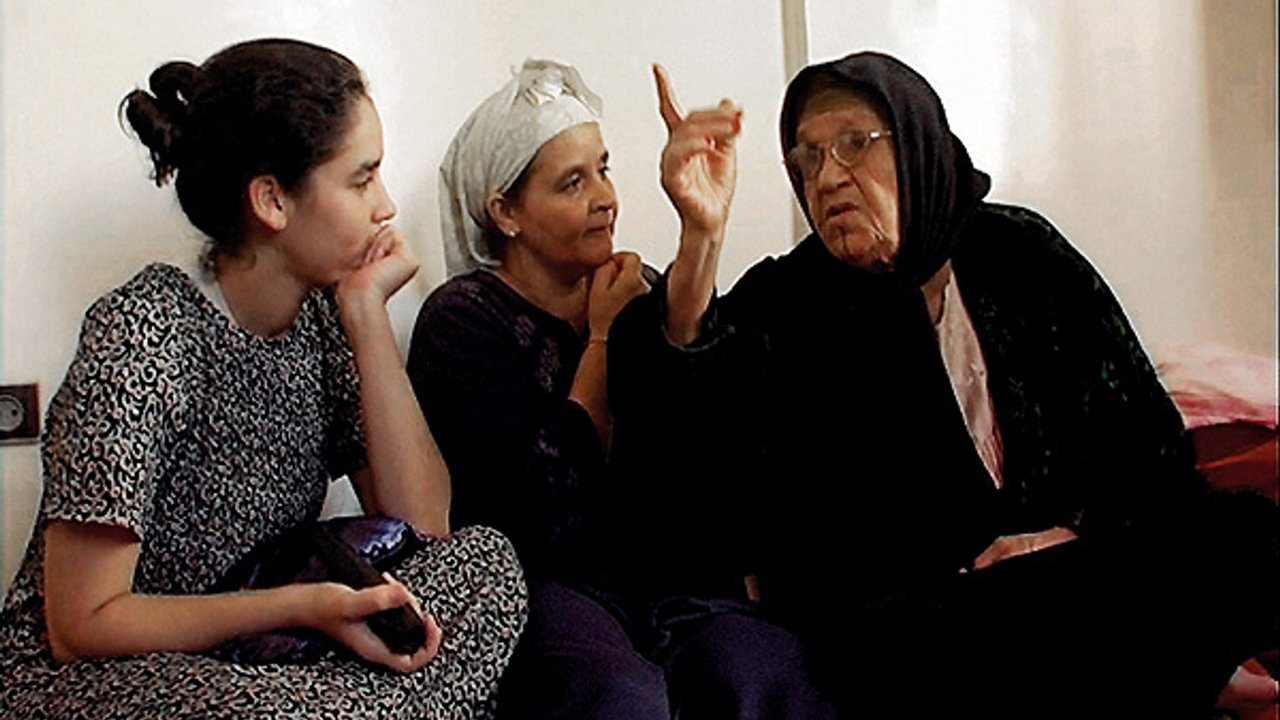
During the oppressive reign of Moroccan King Hassan II in the 70s and 80s (Years of Lead), many dissidents went missing. After the throning of a new king, a truth commission was formed in the 2000's. Families of the missing speak.
Languages: Arabic, French.
Countries:
France,
Morocco
ProductionCompanies: 


Socco Chico
Movie: Our Forbidden Places
HomePage
Overview
During the oppressive reign of Moroccan King Hassan II in the 70s and 80s (Years of Lead), many dissidents went missing. After the throning of a new king, a truth commission was formed in the 2000's. Families of the missing speak.
Release Date
2009-09-30
Average
0
Rating:
0.0 startsTagline
Genres
Languages:
العربيةFrançaisKeywords
Similar Movies

80%
Morocco from Above(fr)
2017-06-21
Yann Arthus-Bertrand flew over Morocco with his cameras and asked the journalist Ali Baddou to write and record the comment.

0%
Khaïma(ar)
2023-03-01

70%
Il trasloco(it)
1991-12-25
It's moving day for the Via Marsili 19th apartment in Bologna, Italy, a former hotbed of the Movement of 1977. While waiting for the movers to finish their job, cultural agitator Franco Bifo Berardi leads us through a decade-long trip down memory lane.


60%
Antelopes(fr)
2020-10-17
'One day, on the Moroccan shores, one hundred and fifty years ago, thousands of antelopes together threw themselves into the sea.' - Marguerite Duras

100%
L'Orientalisme(fr)
2019-08-27
Orientalism is a literary and artistic movement born in Western Europe in the 18th century. Through its scale and popularity, throughout the 19th century, it marked the interest and curiosity of artists and writers for the countries of the West (the Maghreb) or the Levant (the Middle East). Orientalism was born from the fascination of the Ottoman Empire and followed its slow disintegration and the progression of European colonizations. This exotic trend is associated with all the artistic movements of the 19th century, academic, romantic, realistic or even impressionist. It is present in architecture, music, painting, literature, poetry... Picturesque aesthetics, confusing styles, civilizations and eras, orientalism has created numerous clichés and clichés that we still find today in literature or cinema.

55%
Off Sides(cs)
2019-07-18
When the junior ice hockey team from the small town of Náchod, in the Czech Republic, sets off in a bus to Morocco to play the away game in an exchange programme, the players and their coach expect an easy victory and a cultural shock: “bring ear plugs”, the coach suggests them with a touch of undisguised condescendence, so as not to hear the call to prayer early in the morning. Both on and off the ice, Rozálie Kohoutová and Tomáš Bojar’s camera focuses on a few teenagers and their exchanges, simultaneously funny and cruel, in a clumsy English.

0%
Dima Punk(ar)
2019-04-01
Once a Punk, always a Punk? This is the story of Stof whom we followed for 8 years through the popular districts of Casablanca. He pays his independence at a high price when he finds himself arrested.

60%
School of Hope(ar)
2020-12-31
In the vast expanse of desert East of Atlas Mountains in Morocco, seasonal rain and snow once supported livestock, but now the drought seems to never end. Hardly a blade of grass can be seen, and families travel miles on foot to get water from a muddy hole in the ground. Yet the children willingly ride donkeys and bicycles or walk for miles across rocks to a "school of hope" built of clay. Following both the students and the teachers in the Oulad Boukais Tribe's community school for over three years, SCHOOL OF HOPE shows students Mohamed, Miloud, Fatima, and their classmates, responding with childish glee to the school's altruistic young teacher, Mohamed. Each child faces individual obstacles - supporting their aging parents; avoiding restrictions from relatives based on traditional gender roles - while their young teacher makes do in a house with no electricity or water.

0%
Furias(es)
2023-12-13


58%
Hashish(en)
2002-10-30
A small village high up in the mountains of Ketama, Northern Morocco. The life of the people here has been shaped by the drug hashish for centuries. Hashish as daily work, hash as exchange currency, hashish as business, hashish as basis and philosophy of a social system, hashish as medium for dreams and hashish as reason for stagnation.

0%
An American in Tangier(fr)
1993-01-01
Made in the sunset years of Paul Bowles’ life, the film sees the eccentric author and composer reminisce on how he ended up in Morocco.

0%
Crossroads at the Edge of Worlds(en)
2005-01-01
This video research is based on a trip to Morocco in July 2005, during which the director documented irregular migration transiting through Morocco, as well as their control. This geographical project focuses on the main migratory axes: Oujda, entry point for migrants in Morocco; Tangier, from where migrants can try to cross the strait or the fences of Ceuta; Rabat, organization space; and Laayoune, the closest point to the Canaries. The video questions the nature and meaning of these extraterritorial enclaves that structure the Moroccan territory.


80%
Le parcours d'un roi - Le Maroc de Mohammed VI(fr)
2024-10-12
On July 30, 2024, Mohamed VI celebrates the 25th anniversary of his reign in style. Who is this so-called secret monarch? How did he gradually impose his vision and projects?

70%
Forza Italia!(it)
1977-01-01
Much-censored documentary encompassing thirty years of Italian politics under the governance of the Christian Democracy (DC), entirely composed of — occasionally dubbed — archival footage.

68%
Trances(ar)
1982-01-27
A portrait of the groundbreaking Moroccan band Nass El Ghiwane, documenting a series of electrifying live performances in Tunisia, Morocco, and France; on the streets of Casablanca; and in intimate conversations. Storytellers through song and traditional instruments, and with connections to political theatre, the band became a local phenomenon and an international sensation, thanks to their rebellious lyrics and sublime, fully acoustic sound, which draws on Berber rhythms, Malhun sung poetry, and Gnawa dances.

0%
Once ... Agadir(en)
1971-01-01
This short-length documentary takes us to Agadir, a city in Morocco that was struck by an earthquake in 1960. The film, made by an expatriate Moroccan who lost family and friends in the disaster, is a memorial to that tragedy and to the past he left behind when he came to North America. Partly allegorical, it employs varying techniques to offset reality from fantasy sequences.

100%
La Vie sans Brahim(fr)
2003-01-10