Loading Page
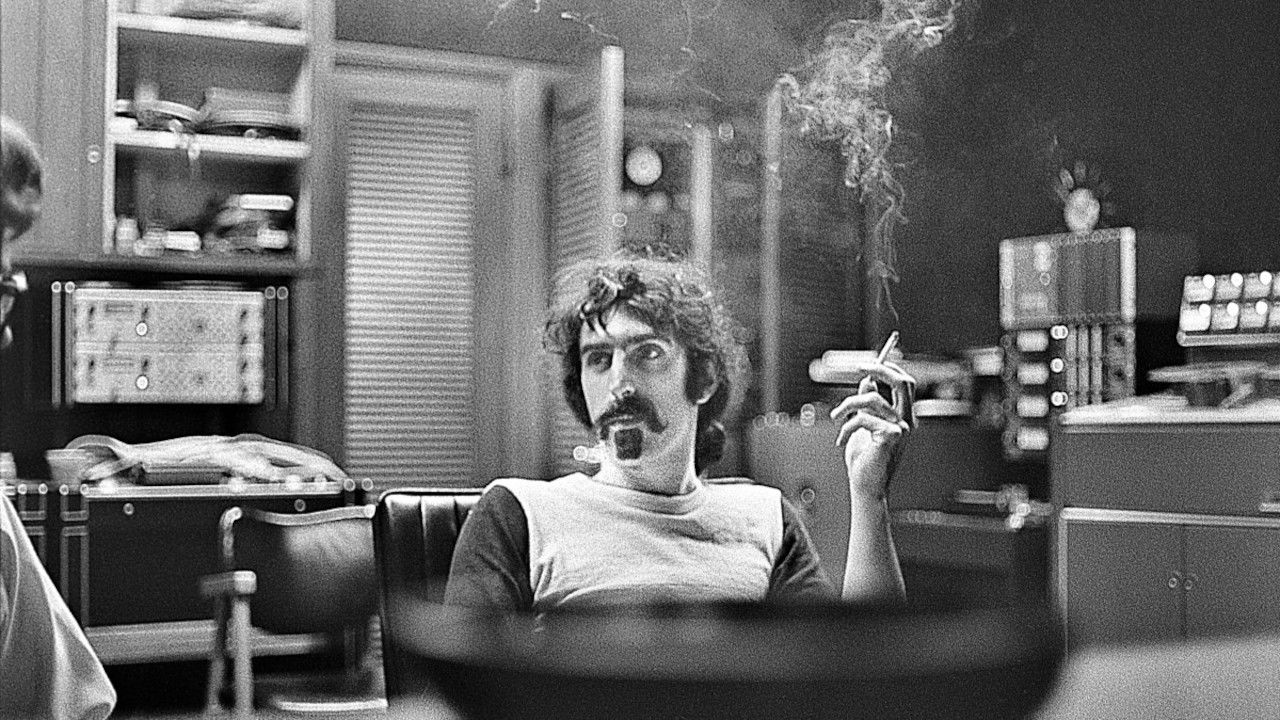
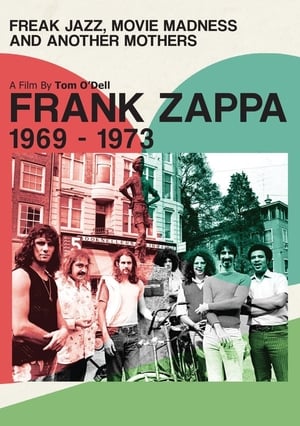
Frank Zappa - Freak Jazz, Movie Madness & Another Mothers(2014)
Status: Released
Date: 2014-10-01
80%
2 Votes
Time: 2h 37m
Overview:
After disbanding the original Mothers of Invention in '69, Frank Zappa unleashed a second incarnation of the band by '70. This film focuses on the sophomore Mothers and this often-overlooked period in Zappa's career. Featuring rare footage, exclusive interviews, and contributions from many who worked with him, which all at once provide for the first film to tackle this phase in the Zappa legend
Languages: English.
Countries:
United States of America
Movie: Frank Zappa - Freak Jazz, Movie Madness & Another Mothers
Top 10 Billed Cast
George Duke
Self

Tony Palmer
Self
Tom Arnold
Self - Narrator
HomePage
Overview
After disbanding the original Mothers of Invention in '69, Frank Zappa unleashed a second incarnation of the band by '70. This film focuses on the sophomore Mothers and this often-overlooked period in Zappa's career. Featuring rare footage, exclusive interviews, and contributions from many who worked with him, which all at once provide for the first film to tackle this phase in the Zappa legend
Release Date
2014-10-01
Average
8
Rating:
4.0 startsTagline
Genres
Languages:
EnglishKeywords
Recommendations Movies

85%
Six Hours: Surviving Typhoon Yolanda(en)
2014-12-23
In the middle of a broadcast about Typhoon Yolanda's initial impact, reporter Jiggy Manicad was faced with the reality that he no longer had communication with his station. They were, for all intents and purposes, stranded in Tacloban. With little option, and his crew started the six hour walk to Alto, where the closest broadcast antenna was to be found. Letting the world know what was happening to was a priority, but they were driven by the need to let their families and friends know they were all still alive. Along the way, they encountered residents and victims of the massive typhoon, and with each step it became increasingly clear just how devastating this storm was. This was a storm that was going to change lives.

50%
The Peasants(az)
1939-12-28
A historical revolutionary film depicting the struggle of peasants and the Baku proletariat against landowners and Musavatists in 1919.


65%
Southern Baptist Sissies(en)
2013-11-18
Southern Baptist Sissies is the live film of the GLAAD Award winning play by Del Shores. Southern Baptist Sissies is the story of four boys who are gay growing up in the Southern Baptist Church and how they each deal differently with the conflict between the teachings of the church and their sexuality.

62%
Box(en)
2021-07-16
The execution was scheduled and the last meal consumed. The coolness of the poisons entering the blood system slowed the heart rate and sent him on the way to Judgement. He had paid for his crime with years on Death Row waiting for this moment and now he would pay for them again as the judgment continued..

35%
Fue El Estado, Fuimos Todos(es)
2019-12-31

70%
At The Movies(lv)
2020-11-06
In one long take lasting nearly an hour and a half, three well-known Latvian actors re-stage scenes from renowned Soviet Latvian movies made under the Riga Film Studio. As they progress from film to film, their re-enactments lead them to discover the undeniably funny personalities and unbelievable circumstances under which these films were made. Blending documentary, theatre and fiction film, this is a comedy about the cinema and the actor, and a heartfelt homage to the Riga Film Studio.


58%
From Meir, to Meir(ar)
2021-06-28
The filmmaker goes to discover Meir the village where her great-grandparents were born, the place her grandparents left, but continued to love. When she goes, she discovers a village that people are trying to leave.

60%
Mutiny! The Last Birthday Party(en)
2008-04-30
When director Heiner Mühlenbrock showed up with his cameras to document the tense April 1983 recording sessions for the final Birthday Party EP, Mutiny!, the group was well beyond the verge of dissolution and barely on speaking terms. Mutiny! was cut at Hansa Ton studios in Berlin.

64%
Motherland(en)
2025-09-12
In an alternate present society where the state frees parents from the burden of raising children, a rule enforcer learns a shocking truth that sparks her rebellion.

60%
Anatomy of a Marriage: My Days with Jean-Marc(fr)
1964-01-31
The story of the couple from the very first meeting to break up told from a view of a man, Jean-Marc. The film shares the same plot with "Françoise ou La vie conjugale", that tells the same story from another perspective.

90%
Post Empire(de)
2023-04-17
Drug courier Sal has the war in him. When he meets the charismatic Sasha, his life goes off the rails and he botches an important coup. They flee together and Sal undergoes an astonishing metamorphosis.

56%
Das Leben ist ein Bauernhof(de)
2012-05-25
6 weeks before her 18th birthday Katharina inherits her mothers farm with all it's problems. At the funeral she meets her two uncles, which she never met before, but turn out to be very helpful.

64%
Alex's War(en)
2022-07-29
Looking past caricature and propaganda to a searching and human character study, Alex's War draws on twenty-five years of Infowars archives, unprecedented personal interviews, and months of backstage access to examine the shattering of our shared national narrative through the rollercoaster career of one of America’s most infamous, charismatic and divisive public figures. Building around Jones’ first ever independent long-form interviews, behind-the-scenes footage from his studio and rallies, and full access to the Infowars archives, acclaimed director Alex Lee Moyer traces the twenty- five year rollercoaster of a career that brings him to the manic election in the winter of 2020—a moment Jones sees not just as the culmination of his lifelong mission, but the decisive point in the fate of humanity.


75%
Cold Snap(en)
2013-08-28
A boy in a forest, trapping animals for a living. The woman next door, planning a fresh start. As a desolate winter sets in, their lives begin to intertwine.

58%
UFC Ultimate Knockouts 3(en)
2004-12-14
1. Robbie Lawler vs. Tiki Ghosn 2. Andrei Arlovski vs. Ian Freeman 3. Chuck Liddell vs. Renato Sobrai 4. Gan McGee vs. Alexandre Dantas 5. Tim Sylvia vs. Ricco Rodriguez 6. David Loiseau vs. Mark Weir 7. Rich Franklin vs. Evan Tanner 8. Wesley Correira vs. Sean Alvarez 9. Falaniko Vitale vs. Matt Lindland 10. Vitor Belfort vs. Marvin Eastman 11. Hermes Franca vs. Caol Uno 12. Josh Thomson vs. Gerald Strebendt 13. Rich Franklin vs. Edwin DeWees 14. Tim Sylvia vs. Gan McGee 15. Andrei Arlovski vs. Vladimir Matyushenko 16. Yves Edwards vs. Nick Agallar 17. Frank Mir vs. Wes Sims 18. Ken Shamrock vs. Kimo
Similar Movies

0%
Man Ray: Prophet of the Avant-Garde(en)
1997-04-09
Man Ray, the master of experimental and fashion photography was also a painter, a filmmaker, a poet, an essayist, a philosopher, and a leader of American modernism. Known for documenting the cultural elite living in France, Man Ray spent much of his time fighting the formal constraints of the visual arts. Ray’s life and art were always provocative, engaging, and challenging.

0%
Discovering Buñuel(en)
2012-01-01
Luis Bunuel, the father of cinematic Surrealism, made his film debut with 'Un Chien Andalou' in 1929 working closely with Salvador Dali. Considered one of the finest and controversial filmmakers with, 'L’Age d’Or' (1930), attacking the church and the middle classes. He won many awards including Best Director at Cannes for 'Los Olvidados' (1950), and the coveted Palme d’Or for 'Viridiana' (1961), which had been banned in his native Spain. His career moved to France with 'The Diary of a Chambermaid' with major stars such as Jeanne Moreau and Catherine Deneuve.

70%
In continuo(it)
1971-01-26
"In continuo" uses slaughterhouse imagery to present the warlike nature of man, first depicting the cleaning and mechanical preparations for the slaughterhouse and then the killing, however, the animal slaughter itself isn’t shown.

38%
60 Seconds of Solitude in Year Zero(en)
2011-12-22
An anthology of one-minute films created by 51 international filmmakers on the theme of the death of cinema. Intended as an ode to 35mm, the film was screened one time only on a purpose-built 20x12 meter public cinema screen in the Port of Tallinn, Estonia, on 22 December 2011. A special projector was constructed for the event which allowed the actual filmstrip to be burnt at the same time as the film was shown.

62%
Panta Rhei(en)
1952-03-08
In 1952, Haanstra made Panta Rhei , another view of Holland through the eyes of a painter and filmmaker. Its poetic images of water, skies and clouds reflect Haanstra's own moods.

50%
Cinnamon(en)
2006-01-20
An experimental film that lifts the veil on the world of African American drag racing.

70%
.TV(en)
2018-01-25
.TV is a found footage essay film: Voicemails left by an anonymous caller from the future guide us to the remote islands of Tuvalu, a place the global media has described as “the first country to disappear due to rising sea levels”. Surrounded by thousands of miles of open water, much of Tuvalu’s revenue comes from its country-code web extension .TV, a popular domain choice among global video-streaming and television industries. The caller describes how heat, digital screens, and distance gave him no choice but to leave his sinking home and escape into cyberspace where rising waters will never reach him.

0%
Lake(en)
2019-12-30
Lake gazes down at a still body of water from a birds-eye view, while a group of artists peacefully float in and out of the frame or work to stay at the surface. As they glide farther away and draw closer together, they reach out in collective queer and desirous exchanges — holding hands, drifting over and under their neighbors, making space, taking care of each other with a casual, gentle intimacy while they come together as individual parts of a whole. The video reflects on notions of togetherness and feminist theorist Silvia Federici’s call to “reconnect what capitalism has divided: our relation with nature, with others, and our bodies.”

55%
Two Museums(de)
2014-01-22
The film juxtaposes/compares two museums: The Museum of Art, Ein Harod, Israel, which Samuel Bickels (1909-1975) built there in 1948, and The Menil Collection in Houston, Texas, built by Renzo Piano (b. 1937) 1986 . The method of natural lighting in Bickels‘s construction was the direct model for Piano, who adopted for his construction at the request of its patroness Dominique de Menil.

81%
Good Morning, Mr. Orwell(en)
1984-01-01
In his book "1984", George Orwell saw the television of the future as a control instrument in the hands of Big Brother. Right at the start of the much-anticipated Orwellian year, Paik and Co. were keen to demonstrate satellite TV's ability to serve positive ends-- Namely, the intercontinental exchange of culture, combining both highbrow and entertainment elements. A live broadcast shared between WNET TV in New York and the Centre Pompidou in Paris, linked up with broadcasters in Germany and South Korea, reached a worldwide audience of over 10 or even 25 million (including the later repeat transmissions).

0%
Everybody's Cage(en)
2015-06-13
In “Everybody’s Cage”, German film artist Sandra Trostel turns John Cage and his approach to art into a tangible fascination, without giving in to explain just a single bit of it.

0%
Blind Bombing, Filmed by a Bat(ja)
2020-04-28
During WWII, the Japanese army developed experimental balloons able to cross the Pacific Ocean and reach the West Coast of North America in 3-6 days. Armed with explosives, they were given the code name fu-go, or fusen bakudan (“fire balloons,” or balloon bombs) in an attempt to instill a culture of fear like that caused by the far more deadly American firebombing of Japanese cities. The U.S. responded by enacting a censorship campaign, requesting newspapers avoid reports of fu-go landings or sightings. Living near the remains of a fu-go launch site in Fukushima Prefecture, Takeuchi mimics their flight take-off using a drone camera, and, traveling to North America, follows their arrival across the shoreline and rural landscapes, using a bat’s echolocation as narrative device to place fu-go and Fukushima as echos across history.

70%
George: The Story of George Maciunas and Fluxus(en)
2018-02-21
In 1961 Lithuanian American artist and impresario George Maciunas established the avant-garde art movement Fluxus. George details the rise of Fluxus following a sensationalized tour of “concerts” in Europe in 1962, and continuing in New York for most of the 1960s and ’70s. During this time Maciunas was converting the dying industrial buildings of Soho into a network of artists’ lofts, creating one of the first official real estate co-ops of artist-owned buildings. Maciunas’s life and legacy—as recounted by artists of his generation, including Yoko Ono and Jonas Mekas—ignited debates that remain pivotal to artists working today.

76%
The Weavers of Nishijin(ja)
1961-12-01
The Weavers of Nishijin captures the process of traditional textile manufacture in Nishijin.

78%
Frank Zappa – Summer '82: When Zappa Came to Sicily(en)
2014-10-05
In the feature documentary, Summer 82 – When Zappa Came to Sicily, filmmaker and Zappa fan Salvo Cuccia tells the behind-the-scenes story of Frank Zappa's star-crossed concert in Palermo, Sicily, the wrap-up to a European tour that ended in public disturbances and police intervention. Cuccia had a ticket to the concert but never made it. Thirty years later, collaborating with Zappa's family, he re-creates the events through a combination of rare concert and backstage footage; photographs; anecdotes from family, band members, and concertgoers; and insights from Zappa biographer and friend Massimo Bassoli. The story is also a personal one, as Cuccia interweaves the story of Zappa's trip to Sicily with his own memories from that summer.

64%
The Hedge Theater(en)
2002-11-17
Filmed in Rome in the 1980s, the work draws on Borromini’s Baroque architecture and Il Sassetta’s St. Martin and the Beggar. Beavers contrasts winter’s subdued light with the verdant growth of spring, constructing a precise montage in which image and sound form a poetic dialogue.


64%
Genesis: Together and Apart(en)
2014-10-04
A feature-length documentary about one of the most successful British bands in rock music. The film recounts their extraordinary musical story, exploring the songwriting and the emotional highs and lows.

