Loading Page


Cousteau: Alaska: Outrage at Valdez(1990)
Status: Released
Date: 1990-03-25
0%
0 Votes
Time: 0h 48m
Overview:
On March 24, 1989, the supertanker Exxon Valdez ran aground in the pristine waters of Alaska's Prince William Sound, spilling 11 million gallons of crude oil. Jean-Michel Cousteau, son of Jacques Cousteau, takes us on a voyage to investigate first-hand the devastating impact of the U.S.'s largest oil spill. Amid the majestic mountains and ice floes of this serene setting, the leaking oil spreads like a virus staining and often killing everything it encounters. Harbor seals, sea otters, and bald eagles fall victim to the tragic accident.
Languages: English.
Countries:
United States of America
ProductionCompanies:
The Cousteau Society
Movie: Cousteau: Alaska: Outrage at Valdez
Top 1 Billed Cast
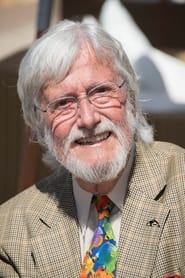
Jean-Michel Cousteau
Himself
HomePage
Overview
On March 24, 1989, the supertanker Exxon Valdez ran aground in the pristine waters of Alaska's Prince William Sound, spilling 11 million gallons of crude oil. Jean-Michel Cousteau, son of Jacques Cousteau, takes us on a voyage to investigate first-hand the devastating impact of the U.S.'s largest oil spill. Amid the majestic mountains and ice floes of this serene setting, the leaking oil spreads like a virus staining and often killing everything it encounters. Harbor seals, sea otters, and bald eagles fall victim to the tragic accident.
Release Date
1990-03-25
Average
0
Rating:
0.0 startsTagline
Genres
Languages:
EnglishKeywords
Similar Movies

60%
Overload: America's Toxic Love Story(en)
2019-10-04
Before starting a family, Soozie Eastman, daughter of an industrial chemical distributor, embarks on a journey to find out the levels of toxins in her body and explores if there is anything she or anyone else can do to change them. She has just learned that hundreds of synthetic toxins are now found in every baby born in America and the government and chemical corporations are doing little to protect citizens and consumers. With guidance from world-renowned physicians and environmental leaders, interviews with scientists and politicians, and stories of everyday Americans, Soozie uncovers how we got to be so overloaded with chemicals and if there is anything we can do to take control of our exposure.

71%
Gasland(en)
2010-01-24
It is happening all across America-rural landowners wake up one day to find a lucrative offer from an energy company wanting to lease their property. Reason? The company hopes to tap into a reservoir dubbed the "Saudi Arabia of natural gas." Halliburton developed a way to get the gas out of the ground-a hydraulic drilling process called "fracking"-and suddenly America finds itself on the precipice of becoming an energy superpower.

76%
The Devil We Know(en)
2018-01-21
Unraveling one of the biggest environmental scandals of our time, a group of citizens in West Virginia take on a powerful corporation after they discover it has knowingly been dumping a toxic chemical — now found in the blood of 99.7% of Americans — into the local drinking water supply.

75%
Chernobyl, Fukushima: Living with the Legacy(fr)
2016-04-26
30 years after the Chernobyl catastrophe and 5 years after Fukushima it is time to see what has been happening in the “exclusion zones” where the radioactivity rate is far above normal.

80%
Des Rives(fr)
2023-04-13

59%
Report from the Aleutians(en)
1943-07-30
A documentary propaganda film produced by the U.S. Army Signal Corps about the Aleutian Islands Campaign during World War II. The film opens with a map showing the strategic importance of the island, and the thrust of the 1942 Japanese offensive into Midway and Dutch Harbor. Nominated for the Academy Award for Best Documentary Feature.

71%
Manufactured Landscapes(en)
2006-09-09
MANUFACTURED LANDSCAPES is the striking new documentary on the world and work of renowned artist Edward Burtynsky. Internationally acclaimed for his large-scale photographs of “manufactured landscapes”—quarries, recycling yards, factories, mines and dams—Burtynsky creates stunningly beautiful art from civilization’s materials and debris.

0%
Poison City(en)
2003-03-09
Dzerzhinsk, a Russian city 240 miles east of Moscow, is considered the most chemically polluted town on Earth. Factories producing industrial chemicals (and in Soviet times, chemical weapons) employ a quarter of the 300,000 residents in a city where life expectancy has fallen to 42-47 years, the death rate is 2.6 times higher than the birth rate, and the men are close to impotence. Reporter Tim Samuels recorded a series of in-depth interviews with the inhabitants of Dzerzhinsk for the Correspondent strand, revealing what life is like for the beleaguered populace.

0%
Rave On for the Avon(en)
2024-04-25
Fall in love with our Avon and the people fighting to protect it, the Bristol way! Rave On For The Avon is a feature-length documentary film that follows campaigners and river lovers through six seasons: their highs and lows, love and loss.

0%
Underdog(en)
2021-09-17
The curiously optimistic tale of Doug Butler—a hardscrabble Vermont dairy farmer who risks losing the only home he’s ever known to chase his dreams of dog mushing in Alaska.

80%
Poisoned Ground: The Tragedy at Love Canal(en)
2024-04-22
Poisoned Ground: The Tragedy at Love Canal tells the dramatic and inspiring story of the ordinary women who fought against overwhelming odds for the health and safety of their families. In the late 1970s, residents of Love Canal, a working-class neighborhood in Niagara Falls, New York, discovered that their homes, schools and playgrounds were built on top of a former chemical waste dump, which was now leaking toxic substances and wreaking havoc on their health. Through interviews with many of the extraordinary housewives turned activists, the film shows how they effectively challenged those in power, forced America to reckon with the human cost of unregulated industry, and created a grassroots movement that galvanized the landmark Superfund Bill.

70%
The Wild(en)
2019-05-19
Newly into addiction recovery, an urgent threat emerges to spur filmmaker, Mark Titus back to the Alaskan wilderness - where the people of Bristol Bay and the world's last intact wild salmon runs face devastation if a massive copper mine is constructed.

57%
Broken Rainbow(en)
1985-05-05
Documentary chronicling the government relocation of 10,000 Navajo Indians in Arizona.


62%
Return to the Wild: The Chris McCandless Story(en)
2014-11-25
Twenty years ago, a young American hiker named Chris McCandless, the accomplished son of successful middle class parents, was found dead in an abandoned bus in the Alaskan wilderness and became the subject of the best-selling book and movie “Into the Wild.” Now, PBS retraces Chris McCandless’ steps to try to piece together why he severed all ties with his past, burnt or gave away all his money, changed his name and headed into the Denali Wilderness. McCandless' own letters, released for the first time, as well as new and surprising interviews, probe the mystery that still lies at the heart of a story that has become part of the American literary canon and compels so many to this day.

0%
Whose Dominion?(en)
2017-05-05
Whose Dominion? The Pollution of Cleveland County takes a very brief look at some of the environmental issues in Cleveland County, N.C.

0%
Poison in the Rockies(en)
1990-01-09
Acid rain, economic development, and a century of mining pollute Rocky Mountain waters.

0%
The Four Corners: A National Sacrifice Area?(en)
1983-11-15
Documents the cultural and ecological impacts of coal stripmining, uranium mining, and oil shale development in Utah, Colorado, New Mexico, and Arizona – homeland of the Hopi and Navajo.

0%
Moving Ice(en)
2024-03-05
Ice has always moved. When glaciation took hold some 34 million years ago, interconnected rivers of ice combined to produce the Earth's vast ice sheets. As temperatures slowly warmed glaciers developed a unique balancing act; advancing and retreating to calibrate their annual winter accumulation against summer melt. Sometimes calving colossal icebergs into the sea. A positive feedback loop that has regulated the movement of ice for millions of years.

69%
Alaska: Spirit of the Wild(en)
1998-09-03
Alaska... Here, in this vast and spectacularly beautiful land teeming with abundant wildlife, discover the "Spirit of the Wild." Experience it in the explosive calving of glaciers, the celestial fires of the Aurora Borealis. Witness it in the thundering stampede of caribou, the beauty of the polar bear and the stealthful, deadly hunt of the wolf pack.