Loading Page
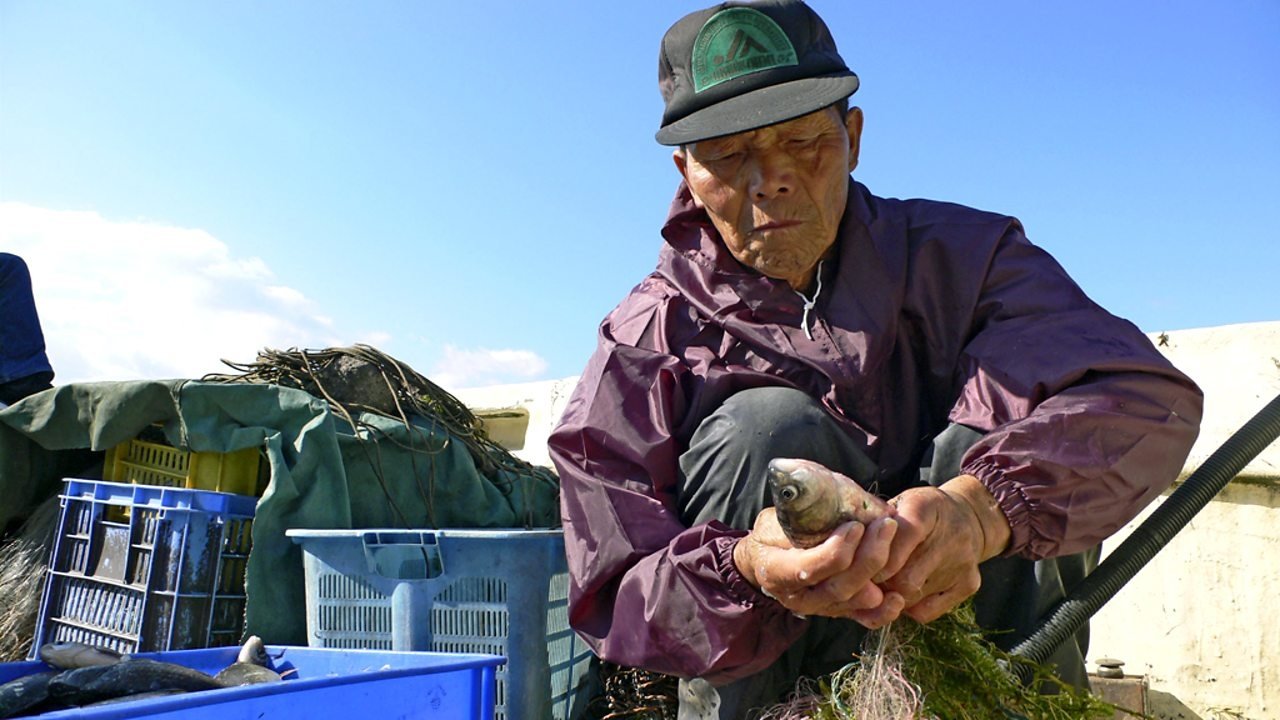

Fish! A Japanese Obsession(2009)
Status: Released
Date: 2009-03-23
0%
0 Votes
Time: 1h 30m
Overview:
Charles Rangeley Wilson, author, journalist and BBC 2's Accidental Angler, travels to Japan to explore the Japanese people's passionate relationship to fish.
Languages: English.
Countries:
United Kingdom
ProductionCompanies: 
Movie: Fish! A Japanese Obsession
Top 1 Billed Cast
HomePage
Overview
Charles Rangeley Wilson, author, journalist and BBC 2's Accidental Angler, travels to Japan to explore the Japanese people's passionate relationship to fish.
Release Date
2009-03-23
Average
0
Rating:
0.0 startsTagline
Genres
Languages:
EnglishKeywords
Similar Movies

71%
Peace(ja)
2010-01-05
What is peace? What is coexistence? And what are the basis for them? PEACE is a visual-essay-like observational documentary, which contemplates these questions by observing the daily lives of people and cats in Okayama city, Japan, where life and death, acceptance and rejection are intermingled.

100%
Last Room(fr)
2011-07-06
Made in Japan, Last Room is both fiction and documentary. The occupants of the love-hotels and capsule-hotels tell their own intimate, dreamlike stories, interspersed with journeys through the archipelago's landscapes. Soon, these personal stories resonate with a collective history: that of Gunkanjima, the abandoned ghost island of Nagasaki, and then that of Japan as a whole.

90%
Battle of Okinawa in Color(en)
2017-06-25
By mid-1945, Hitler is dead and the war has ended in Europe. Halfway around the world, however, the fighting is still going strong on a small island in the Pacific. Okinawa was the site of the last battle of the last great war of the 20th century, with a casualty rate in the tens of thousands. Through it all, military cameramen risked their lives to film the conflict, from brutal land combat to fierce kamikaze attacks at sea. See the footage they captured and experience this intense battle the way the soldiers saw it -- in color.

67%
Cat Nation(en)
2017-07-20
A journey into the unique, often bizarre, world of Japanese cat culture. Cat themed cafes, bars, temples, cat islands, cats with human jobs, cat friendly businesses, and the origins of the iconic beckoning cat statue.

60%
Attack! The Battle for New Britain(en)
1944-06-20
Actual footage by the United States Signal Corps of the landing and attack on Arawe Beach, Cape Glouster, New Britain island in 1943 in the South Pacific theatre of World War Two, and the handicaps of the wild jungle in addition to the Japanese snipers and pill-box emplacements.

10%
Dream Girls(en)
1994-08-17
This film is about Japanese women, escape, glamour and dreams. The Takarazuka Revue is an enormously successful spectacular where the all-women cast create fantasies of erotic love and sensitive men. It is also a world for young girls desperate to do something different with their lives. In return for living a highly disciplined and reclusive existence, they will be adored and envied by many thousands of Japanese women. They will look, act and behave like young men while having no real men in their lives. Dream Girls explores the nature of sexual identity and the contradictory tensions that face young women in Japan today.

0%
Taking Stock(en)
2017-09-09
Using his failed attempts at creating profitable stock footage, a filmmaker reflects on the absurd, mundane and funny side of being trapped inside your own head as an out of work, self-employed freelancer.

78%
Koi(ja)
2019-09-03
There's no definitive separation as long as there is memory'. Since the Tsunami hit the northern part of Japan's coast in 2011, more than 20 thousand people lost their lives, and many others are still missing. As time went by the families of the victims abandoned all hope and stopped looking for their loved ones. However, this is the story of two men that are still fully committed to their respective searching activities. Even though their backgrounds are extremely different, both share a strong force of will and firmly wish to keep alive the memories of the ones that went missing. Perseverance is what pushed an ex-convict to look for redemption by helping the victims' families to find the remains of their loved ones, and perseverance is what brought a bus driver to start to dive in order to search for his wife.

83%
Wild Japan: Snow Monkeys(en)
2014-04-23
In the frigid valleys of Japan's Shiga Highlands, a troop of snow monkeys make their way and raise their families in a complex society of rank and privilege where each knows their place. Their leader is still new to the job and something of a solitary grouch. But one little monkey, innocently unaware of his own lowly social rank, reaches out to this lonely leader, forming a bond with him that manages over time to warm his less than sunny disposition. It is a rare and remarkable gesture that alters both their lives. Changing seasons bring new babies to care for, a profusion of insects and blossoms to eat, family disagreements to squabble over and tragedies to overcome. Mating season brings competition for females, as the days grow shorter and colder in a rush toward winter. But with their now confident leader to guide them and their families to shelter and care for them, this troop of snow monkeys is ready to face the world.

78%
The One Piece Podcast Goes To Japan(en)
2014-03-21
Back in May 2013, The One Piece Podcast managed to run a successful Kickstarter which funded a trip to Japan to film a One Piece documentary like none other. It has been a long road, but the wait is over. “The One Piece Podcast Goes to Japan” features interviews with some of the biggest names in the One Piece franchise, exclusive access to One Piece and Shonen Jump events, and even the thoughts and opinions of fans from around Japan!

71%
The Birth of Saké(ja)
2015-04-16
Through the unrelenting winter in the north of Japan, a small group of workers must brave unusual working conditions to bring to life a 2,000-year-old tradition known as sake. A cinematic documentary, The Birth of Sake is a visually immersive experience of an almost-secret world in which large sacrifices must be made for the survival of a time-honored brew.

56%
The New God(ja)
1999-10-01
After producing several experimental video art pieces, Tsuchiya first came to prominence with A New God, a personal documentary shot on video about his relationship with a right-wing, neo-nationalist punk rock band. Even though Tsuchiya is on the left, he ended up marrying the singer for that band, Karin Amamiya, who has since emerged as a spokesperson for disaffected Japanese youth in the media. The New God won an award at the 1999 Yamagata International Documentary Film Festival.

78%
Tora-san of Goto(ja)
2016-06-18
This documentary film follows for 22 years a nine-member family involved in the manufacturing of Udon in the Goto Islands, Nagasaki prefecture. Mr. Toru Inuzuka called by nickname "Tora-san" is making famous 'Goto Udon' and natural salt on the island on which the depopulation is progressing. Seven children get up at 5 o'clock every morning, helping to make udon, and go to school. Children's help is recorded on the time card, and it is pocket money for children. The film talks about children's growth, marriage, childbirth, homecoming, and parting. The 22 years of familiarity of the family is drawn.

0%
Eyewar(en)
2013-10-15
What threads of history bind Manhattan's Ground Zero to those of Nagasaki and Hiroshima? Or connect sight to truth, games to war, or the silkworm to the drone? What does the United States hold to be the role of science in warfare? How has war historically been waged in Buddhist traditions? These are some of the topics addressed in Eyewar: 80 minutes of found footage which traces the development of the digital image from the maps of the second century to the screens of the twenty-first, and the uses of the field of cybernetics from Japan in the 1940s to Chile in the 1970s and Iraq in the 1990s.

0%
The Secret Life of Geisha(en)
1999-01-01
Documentary about the world of the Japanese geisha. Unattainable by all but the wealthy and powerful, geisha are the ultimate massagers of the male ego. Behind the delicate fan and enigmatic smile can also be found a darker side to the geisha story, including treachery and suicide.


60%
Kochuu(sv)
2003-05-23
A film about modern Japanese architecture, its roots in the Japanese tradition and its impact on the Nordic building-tradition. Winding its way through visions of the future, traditions, nature, concrete, gardens and high-tech, KOCHUU tells us how contemporary Japanese architects strive to unite the ways of modern man with the old philosophies in astounding constructions. Interviews with, and works by, Japanese architects Tadad Ando, Kisho Kurokawa, Toyo Ito and Kazuo Shinohara and Scandinavian architects Sverre Fehn, Kristian Gullichsen and Juhani Pallasmaa.

89%
Life is Fruity(ja)
2017-01-02
90-year-old architect Shuichi Tsubata and his 87-year-old wife Hideko live in Aichi Prefecture. Their garden is bursting with 70 types of vegetables and 50 types of fruits, and they live in harmony with nature.