Loading Page

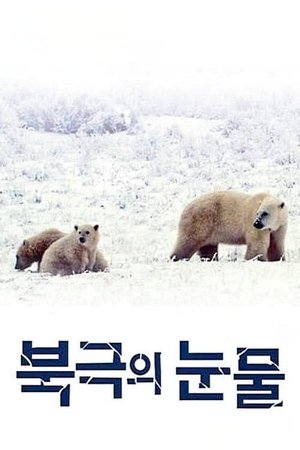
Tears in the Arctic(2009)
Status: Released
Date: 2009-10-15
0%
0 Votes
Overview:
In the Arctic, the sun never sets in the summer while in the winter, this icy, northernmost area is enveloped in darkness. A place where aurora lights cascade from above and exotic creatures live in the bitter cold. However, the ice in the Arctic is melting away today. Tears in the Arctic sheds light on the dire problems that our planet is facing as the inhabitants, wildlife and environment in the Arctic are under siege. The plight of the Inuit is covered to show how the natural way of things may come to a screeching halt with catastrophic consequences for our planet. The changing situation for the wildlife and people who inhabit the Arctic are documented in detail. Are people taking notice of the warning signs of climate change that could lead to disastrous results?
Languages: Korean.
Countries:
South Korea
ProductionCompanies: 
Movie: Tears in the Arctic
Top 1 Billed Cast

안성기
Narration
HomePage
Overview
In the Arctic, the sun never sets in the summer while in the winter, this icy, northernmost area is enveloped in darkness. A place where aurora lights cascade from above and exotic creatures live in the bitter cold. However, the ice in the Arctic is melting away today. Tears in the Arctic sheds light on the dire problems that our planet is facing as the inhabitants, wildlife and environment in the Arctic are under siege. The plight of the Inuit is covered to show how the natural way of things may come to a screeching halt with catastrophic consequences for our planet. The changing situation for the wildlife and people who inhabit the Arctic are documented in detail. Are people taking notice of the warning signs of climate change that could lead to disastrous results?
Release Date
2009-10-15
Average
0
Rating:
0.0 startsTagline
Genres
Languages:
한국어/조선말Keywords
Similar Movies

75%
Camp Century: The Hidden City Beneath the Ice(de)
2020-01-08
How in 1959, during the heat of the Cold War, the government of the United States decided to create a secret military base located in the far north of Greenland: Camp Century, almost a real town with roads and houses, a nuclear plant to provide power and silos to house missiles aimed at the Soviet Union.

100%
Swans: Mystery of the Missing(en)
2019-03-01
With narration from Paul McGann, this ground-breaking film sets out to solve one of nature's mysterious phenomena: the Bewick swan's dramatic decline. A pioneering group of scientists and conservationists sets out to discover why we have lost nearly half the Bewick population in the last twenty years. Every year, these majestic birds make one of the world's toughest migrations, across perilous land, sea and skies. Somewhere between the harsh Tundra landscape and the south of England lies the key to their disappearance. We join extreme sportswoman Sacha Dench and award-winning wildlife cameraman Benjamin Sadd, as they follow the swans over 7,000 km, on a journey that pushes both humans and swans to the limits of their endurance. Cutting-edge tracking techonology and innovative filming techniques give privileged insight into the birds' hidden world, providing stunning aerial views and the personal stories of swans, Charlotte, Daisy-Clarke and Leho.

0%
Arktis - Zwischen Licht und Dunkel(de)
2004-04-24
Arktis is a poetic approach to the bizarre landscape of ice, rock, and water; a journey to the arctic ocean and surroundings, with images and sounds. Seventy one-second scenes of the arctic serve as the original material, which is then transformed in its texture, time lapse, color and light qualities to create a material reminiscent of landscape painting. The sound collage uses fragments from sounds of nature and samples from a piece of music for violin and song, which are also transformed in a manner similar to that of the visual pictures. (Jürgen Reble)

90%
Alaska's Giant Bears(de)
2023-01-17
In Canada and Alaska, the consequences of global warming are being keenly felt by brown bears - but in different ways by different populations. Their survival depends mainly on the quantity of wild salmon available in the region, as it is the fruit of their catch that enables the bears to accumulate fat reserves for the winter. While salmon populations off Canada's Pacific coast continue to decline year after year, in the immense Bristol Bay in western Alaska, as well as on Kodiak Island, they are increasing considerably. The water temperature in the North Pacific is now ideal for salmon development. From Canada to Alaska, the documentary follows different bear populations over a two-year period.

64%
A Reindeer's Journey(fr)
2018-12-21
Narrated by Golden Globe winner, Donald Sutherland, this is the incredible story of Ailo, the little reindeer. This uplifting tale follows the journey of baby Ailo as he navigates his first year of life in the snowy landscapes of a picturesque Lapland. Frail and vulnerable, Ailo must learn to walk, run, leap and hide to ensure he survives the long, treacherous journey with the herd. Ailo’s Journey is an inspirational story, in which a bleak wilderness is warmed by a mother’s endless love as she watches over Ailo in his incredible adventures with other creatures of the Arctic.

82%
The Arctic: 66.5 Degrees North(de)
2023-01-13
The beauty of the Arctic is breathtaking. For as long as we can remember, the Arctic has been associated with inhospitable cold. But the climate is changing, and with it the northern polar region, which begins beyond latitude 66.5 degrees north. Climate change is now happening four times faster north of the Arctic Circle than on the rest of the planet, making the future outlook dire. At the moment it is still possible for polar bears to raise their cubs, but hunting is becoming increasingly difficult on the drastically shrinking pack ice. The disappearance of the ice also affects the marine fauna. The wintry ice bridge between Canada and Greenland is threatened with collapse. The unstoppable melting of the permafrost, which has held the tundra together for thousands of years, is worrying. But the Arctic is still one of the wildest and loveliest regions on earth. A documentary visit to the Arctic - as long as it still exists.

65%
Elementa(en)
2020-07-04
A black-and-white visual meditation of wilderness and the elements. Wildlife filmmaker Richard Sidey returns to the triptych format for a cinematic experience like no other.

0%
Atomfriedhof Arktis(de)
2013-04-23
Until 1992, Russia disposed of radioactive wastewater, radioactive waste and explosive nuclear waste in the Arctic Sea. And the ailing Northern Fleet was sunk here along with a no longer usable nuclear submarine. To this day it lies rusting on the bottom of the Arctic next to two other boats that have sunk in accidents, together with dangerous radioactive nuclear weapons. They form an atomic time bomb, even if official Russian authorities stubbornly deny an acute danger.

60%
Fram – Forward(fi)
2020-09-24
Why do we do incredibly difficult things that have no practical application? Is there a parallel between geographic and artistic exploration? Fram is a documentary and travel film about two friends journeying to the end of the earth, in order to make a dance film in the arctic wilderness of Svalbard. En route, they explore the history of our ideas of the Arctic, along with the grand questions of life, art and our place in the world. Sharing their love of discovering new geographic and artistic frontiers, choreographer-dancer-filmmakers and outdoor enthusiasts Thomas Freundlich and Valtteri Raekallio take the viewer on an engaging journey to a place where few have been and even fewer have danced.

70%
Fullsterkur(en)
2018-08-26
FULLSTERKUR is the third documentary in a collection of films produced by Rogue Fitness, exploring strength culture around the world, connected specifically by the ancient tradition of stone lifting. Nestled at the doorstep of the Arctic Circle, the country of Iceland is uniquely acquainted with the relationship between strength and survival. For hundreds of years, men and women were challenged to overcome harsh weather and endless winter nights by developing their own distinct physical and mental fortitude—passed down from the age of the Vikings, and iconically represented by the lifting of heavy stones. Today, on an island with a population of just over 300,000, a disproportionate number of the world’s greatest strength athletes still call Iceland home.

0%
Arctic Peril(en)
2017-12-19
The world's most pristine and least understood ocean, the Arctic, is under threat from chemical pollutants, plastics and climate change. In the northern regions of Norway, Canada and Russia, you can see evidence of steadily warming Atlantic waters moving further north. This film explores the impact these waters are having on the diversity of organisms and ecosystems that are unique to the Arctic.

76%
Snow Bears(en)
2017-12-26
The enchanting true-to-life tale of polar bear cubs and their mother on a 400-mile journey from their birth den in Svalbard to the pack ice surrounding the North Pole.

86%
The Last Ice(en)
2020-10-24
For centuries, Inuit in the Arctic have lived on and around the frozen ocean. Now, as climate change is rapidly melting the sea ice between Canada and Greenland, the outside world sees unprecedented opportunity. Oil and gas deposits, faster shipping routes, tourism, and fishing all provide financial incentive to exploit the newly opened waters. But for more than 100,000 Inuit, an entire way of life is at stake. Development here threatens to upset the delicate balance between their communities, land, and wildlife. Divided by aggressive colonization and decades of hardship, Inuit in Canada and Greenland are once again coming together, fighting to protect what will remain of their world. The question is, will the world listen?

0%
Midnight Kids(en)
2020-10-19
Utquiagvik is the northernmost city in Alaska, located 555 km beyond the Arctic Circle. This meditative documentary follows its young Inuit inhabitants, who explore the desolate snowy landscape under the midnight sun and transform their home into a vast playground full of melting glaciers and abandoned ships.

0%
Arctic Summer(en)
2021-02-19
ARCTIC SUMMER is a poetic meditation on Tuktoyaktuk, an Indigenous community in the Arctic. The film captures Tuk during one of the last summers before climate change forced Tuk's coastal population to relocate to more habitable land.

74%
Angry Inuk(en)
2016-05-02
With "sealfies" and social media, a new tech-savvy generation of Inuit is wading into the world of activism, using humour and reason to confront aggressive animal rights vitriol and defend their traditional hunting practices. Director Alethea Arnaquq-Baril joins her fellow Inuit activists as they challenge outdated perceptions of Inuit and present themselves to the world as a modern people in dire need of a sustainable economy.


90%
Pythéas, l'astronome voyageur(fr)
2013-11-13

70%
Landscapes at the World's Ends(en)
2010-05-16
A non-verbal visual journey to the polar regions of our planet portrayed through a triptych montage of photography and video. Landscapes at the World's Ends is a multi-dimensional canvas of imagery recorded above the Arctic Circle and below the Antarctic Convergence, viewed through the lens of whom is realistically an alien in this environment, the polar tourist. Filmed during several artist residencies on-board three expedition vessels, New Zealand nature photographer and filmmaker Richard Sidey documents light and time in an effort to share his experiences and the beauty that exists over the frozen seas. Set to an ambient score by Norwegian Arctic based musician, Boreal Taiga, this experimental documentary transports us to the islands of South Georgia, the Antarctic Peninsula, Greenland and Svalbard. Landscapes at the World's Ends is the first film in Sidey's Speechless trilogy, and is followed by Speechless: The Polar Realm (2015) and Elementa (2020).