Loading Page

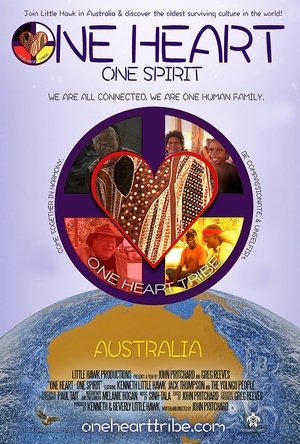
One Heart: One Spirit(2017)
Status: Released
Date: 2017-07-15
0%
0 Votes
Time: 1h 0m
We Are All Connected. We Are One Human Family.
Overview:
An Aboriginal Australian and Native American documentary narrated by award-winning actor Jack Thompson, One Heart-One Spirit tells the story of Kenneth Little Hawk, an elder Micmac/Mohawk performing artist, meeting the oldest surviving culture on the planet: the 40,000 year old Yolngu nation located in northern Australia.
Languages:
Countries:
Australia
ProductionCompanies:
eternal ways
little hawk productions
Movie: One Heart: One Spirit
Top 3 Billed Cast
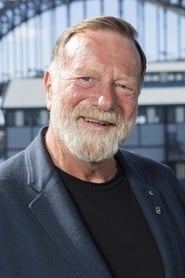
Jack Thompson
Himself
Video Trailer One Heart: One Spirit
All 1 videos

Movie Trailer: ONE HEART-ONE SPIRIT - World Tour Coming Fall 2016-2017 - Trailer
Similar Movies

0%
Todo Cambia(es)
2000-01-01
A documentary that takes an in depth look at a government sanctioned art school in Cuba and its students. Interviews of various artists attending the school allow viewers a glimpse into their personal and professional lives.

0%
Ningwasum(ne)
2022-02-11
Ningwasum follows two time travellers Miksam and Mingsoma, played by Subin Limbu and Shanta Nepali respectively, in the Himalayas weaving indigenous folk stories, culture, climate change and science fiction.

57%
Our People Will Be Healed(en)
2017-09-07
Legendary documentary filmmaker Alanis Obomsawin provides a glimpse of what action-driven decolonization looks like in Norway House, one of Manitoba's largest First Nation communities.

70%
Cholitas(es)
2020-01-24
Five Bolivian indigenous women share one goal: climbing the highest mountain in America.

0%
Nowhere Land(en)
2015-10-17
Documentary about filmmaker Bonnie Ammaaq's memories of life on Baffin Island, where her family moved for eleven years during her childhood from the hamlet of Igloolik to return to the traditional Inuit way of life.

0%
Namatjira Project(en)
2017-09-05
From the remote Australian desert to the opulence of Buckingham Palace - Namatjira Project is the iconic story of the Namatjira family, tracing their quest for justice.

0%
Kainai(en)
1973-01-01
On the Kainai (Blood) First Nations Reserve, near Cardston, Alberta, a hopeful new development in Indigenous enterprise. Once rulers of the western plains, the Bloods live on a 1 300-square-kilometer reserve. Many have lacked gainful employment and now pin their hopes on a pre-fab factory they have built. Will the production line and work and wages fit into their cultural pattern of life? The film shows how it is working and what the owners themselves say about their venture.

0%
In Jesus’ Name: Shattering the Silence of St. Anne's Residential School(en)
2017-06-07
A poignant all-Indigenous English and Cree-English collaborative documentary that breaks long-held silences imposed upon indigenous children who were interned at the notoriously violent St. Anne’s Residential School in Fort Albany First Nation, Ontario. Use of a homemade electric chair at St. Anne's and the incorporation of testimony about student-on-student abuse makes this documentary stand apart from other films about Canadian residential school experiences. This film will serve as an Indigenous historical document wholly authored by Indigenous bodies and voices, those of the Survivors themselves.

75%
Ablaze(en)
2022-05-26
A feature documentary about opera singer Tiriki Onus who finds a 70-year-old silent film believed to be made by his grandfather, Aboriginal leader and filmmaker Bill Onus. As Tiriki travels across the continent and pieces together clues to the film’s origins, he discovers more about Bill, his fight for Aboriginal rights and the price he paid for speaking out.

69%
The Pearl Button(es)
2015-10-15
The ocean contains the history of all humanity. The sea holds all the voices of the earth and those that come from outer space. Water receives impetus from the stars and transmits it to living creatures. Water, the longest border in Chile, also holds the secret of two mysterious buttons which were found on its ocean floor. Chile, with its 2,670 miles of coastline and the largest archipelago in the world, presents a supernatural landscape. In it are volcanoes, mountains and glaciers. In it are the voices of the Patagonian Indigenous people, the first English sailors and also those of its political prisoners. Some say that water has memory. This film shows that it also has a voice.

100%
Two villages, one single walk(gn)
2008-01-01
With no Forest left to hunt and no land to cultivate, the Maby-Guarani depend on the sale of their handcraft to survive. Three young Guarani filmmakers accompany the daily life of two comunities united by the same history, since the first contact with the Europeans until the intense coexistence with today’s White people.

0%
Say My Name(en)
People from different ethnic backgrounds with "difficult" names by Western standards share their experience with moving through the world with an identity that challenges others to simply just say their name. A short social docu-film by Mariam Meliksetyan, “Say My Name” is a meditation on identity, otherness, assimilation, community, and ancestral roots.

0%
Attiuk(fr)
1963-07-19
The people of Unamenshipu (La Romaine), an Innu community in the Côte-Nord region of Quebec, are seen but not heard in this richly detailed documentary about the rituals surrounding an Innu caribou hunt. Released in 1960, it’s one of 13 titles in Au Pays de Neufve-France, a series of poetic documentary shorts about life along the St. Lawrence River. Off-camera narration, written by Pierre Perrault, frames the Innu participants through an ethnographic lens. Co-directed by René Bonnière and Perrault, a founding figure of Quebec’s direct cinema movement.

55%
Our Indians(pt)
1995-01-16
Yndio do Brasil is a collage of hundreds of Brazilian films and films from other countries - features, newsreels and documentaries - that show how the film industry has seen and heard Brazilian indigenous peoples since they were filmed in 1912 for the first time: idealised and prejudiced, religious and militaristic, cruel and magic.

62%
Tawai: A Voice from the Forest(en)
2017-09-29
Explorer Bruce Parry visits nomadic tribes in Borneo and the Amazon in hope to better understand humanity's changing relationship with the world around us.

70%
Gurrumul(en)
2018-04-26
Blind from birth, Dr G Yunupingu found his identity through song and the haunting voice that has already become legend. His debut album introduced Australia to the Songlines and culture of his Elcho Island community, but now Dr G Yunupingu finds himself increasingly torn between city and country, present and past, self and the community to which he owes so much.

80%
Firestarter: The Story of Bangarra(en)
2021-02-18
Taking us through Bangarra Dance Theatre’s spectacular growth, we follow the story of how three young Aboriginal brothers — Stephen, David and Russell Page — turned the newly born dance group into a First Nations cultural powerhouse.

77%
Warrior Women(en)
2018-05-26
Through the figure of Lakota activist and community organizer Madonna Thunder Hawk, this inspiring film traces the untold story of countless Native American women struggling for their people's civil rights. Spanning several decades, Christina D. King and Elizabeth A. Castle's documentary charts Thunder Hawk's lifelong commitment, from her early involvement in the American Indian Movement (AIM), to her pivotal role in the founding of Women of All Red Nations, to her heartening presence at Standing Rock alongside thousands protesting the Dakota Access Pipeline. She passed her dedication and hunger for change to her daughter Marcy, even if that often meant feeling like comrades-in-arms more than mother and child. Through rare archival material—including amazing footage of AIM's occupation of Wounded Knee—and an Indigenous style of circular storytelling, Warrior Women rekindles the memories and legacy of the Red Power movement's matriarchs.

85%
Coming Home(en)
2023-06-30
This documentary reveals the impacts of the Sixties Scoop, a period in which a series of Canadian policies enabled child welfare authorities to take, or “scoop up,” Indigenous children from their families and communities for placement in white foster homes. Explore Indigenous resilience through narrative sovereignty as experienced through the Little Bird series’ Indigenous creatives, cast, crew & community members.

0%
Bakala(en)
2017-09-17
Anindilyakwa man, Steve 'Bakala' Wurramara is afflicted with a profound hereditary neurodegenerative disorder. While modern medicine looks for answers, the stories of an ancient curse and black magic still permeate this remote Aboriginal community in far northern Australia. Bakala enlists the help of his daughter to search for a cure from the traditional bush medicines in the land, desperate to find an answer before she too is diagnosed. As his desperation grows and his disorder takes an ever greater hold, Bakala realises he must fight this ancient curse to unlock the secrets of his Ancestors.