
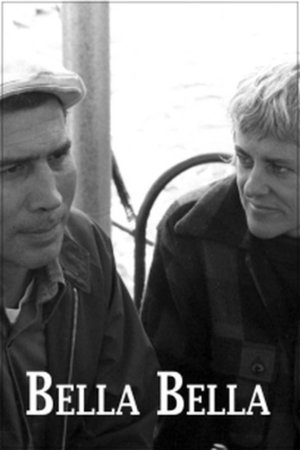
Bella Bella(1975)
This documentary short is an introduction to the Bella Bella (Heiltsuk) of Campbell Island, 500 km North of Vancouver on the Pacific Coast. Since the coming of settlers, these fishing people have watched their ancient Heiltsuk culture and their independence all but disappear. Today, in an energetic attempt to become self-sufficient, they are regaining both - successfully combining economic development with cultural revival.
Movie: Bella Bella
HomePage
Overview
This documentary short is an introduction to the Bella Bella (Heiltsuk) of Campbell Island, 500 km North of Vancouver on the Pacific Coast. Since the coming of settlers, these fishing people have watched their ancient Heiltsuk culture and their independence all but disappear. Today, in an energetic attempt to become self-sufficient, they are regaining both - successfully combining economic development with cultural revival.
Release Date
1975-01-01
Average
0
Rating:
0.0 startsTagline
Genres
Languages:
Keywords
Similar Movies

Tawai: A Voice from the Forest(en)
Explorer Bruce Parry visits nomadic tribes in Borneo and the Amazon in hope to better understand humanity's changing relationship with the world around us.

Kainai(en)
On the Kainai (Blood) First Nations Reserve, near Cardston, Alberta, a hopeful new development in Indigenous enterprise. Once rulers of the western plains, the Bloods live on a 1 300-square-kilometer reserve. Many have lacked gainful employment and now pin their hopes on a pre-fab factory they have built. Will the production line and work and wages fit into their cultural pattern of life? The film shows how it is working and what the owners themselves say about their venture.

Nowhere Land(en)
Documentary about filmmaker Bonnie Ammaaq's memories of life on Baffin Island, where her family moved for eleven years during her childhood from the hamlet of Igloolik to return to the traditional Inuit way of life.

Ningwasum(ne)
Ningwasum follows two time travellers Miksam and Mingsoma, played by Subin Limbu and Shanta Nepali respectively, in the Himalayas weaving indigenous folk stories, culture, climate change and science fiction.

Resident Orca(en)
Resident Orca tells the unfolding story of a captive whale’s fight for survival and freedom. After decades of failed attempts to bring her home, an unlikely partnership between Indigenous matriarchs, a billionaire philanthropist, killer whale experts, and the aquarium’s new owner take on the impossible task of freeing Lolita, captured 53 years ago as a baby, only to spend the rest of her life performing in the smallest killer whale tank in North America. When Lolita falls ill under troubling circumstances, her advocates are faced with a painful question: is it too late to save her?

Deep Roots(en)
Lonnie Kauk’s personal journey to honor his indigenous Yosemite roots, and to connect with his legendary father by repeating his iconic climbs.

Attiuk(fr)
The people of Unamenshipu (La Romaine), an Innu community in the Côte-Nord region of Quebec, are seen but not heard in this richly detailed documentary about the rituals surrounding an Innu caribou hunt. Released in 1960, it’s one of 13 titles in Au Pays de Neufve-France, a series of poetic documentary shorts about life along the St. Lawrence River. Off-camera narration, written by Pierre Perrault, frames the Innu participants through an ethnographic lens. Co-directed by René Bonnière and Perrault, a founding figure of Quebec’s direct cinema movement.

Our Indians(pt)
Yndio do Brasil is a collage of hundreds of Brazilian films and films from other countries - features, newsreels and documentaries - that show how the film industry has seen and heard Brazilian indigenous peoples since they were filmed in 1912 for the first time: idealised and prejudiced, religious and militaristic, cruel and magic.

Two villages, one single walk(gn)
With no Forest left to hunt and no land to cultivate, the Maby-Guarani depend on the sale of their handcraft to survive. Three young Guarani filmmakers accompany the daily life of two comunities united by the same history, since the first contact with the Europeans until the intense coexistence with today’s White people.


The Pearl Button(es)
The ocean contains the history of all humanity. The sea holds all the voices of the earth and those that come from outer space. Water receives impetus from the stars and transmits it to living creatures. Water, the longest border in Chile, also holds the secret of two mysterious buttons which were found on its ocean floor. Chile, with its 2,670 miles of coastline and the largest archipelago in the world, presents a supernatural landscape. In it are volcanoes, mountains and glaciers. In it are the voices of the Patagonian Indigenous people, the first English sailors and also those of its political prisoners. Some say that water has memory. This film shows that it also has a voice.

Warrior Women(en)
Through the figure of Lakota activist and community organizer Madonna Thunder Hawk, this inspiring film traces the untold story of countless Native American women struggling for their people's civil rights. Spanning several decades, Christina D. King and Elizabeth A. Castle's documentary charts Thunder Hawk's lifelong commitment, from her early involvement in the American Indian Movement (AIM), to her pivotal role in the founding of Women of All Red Nations, to her heartening presence at Standing Rock alongside thousands protesting the Dakota Access Pipeline. She passed her dedication and hunger for change to her daughter Marcy, even if that often meant feeling like comrades-in-arms more than mother and child. Through rare archival material—including amazing footage of AIM's occupation of Wounded Knee—and an Indigenous style of circular storytelling, Warrior Women rekindles the memories and legacy of the Red Power movement's matriarchs.

In Jesus’ Name: Shattering the Silence of St. Anne's Residential School(en)
A poignant all-Indigenous English and Cree-English collaborative documentary that breaks long-held silences imposed upon indigenous children who were interned at the notoriously violent St. Anne’s Residential School in Fort Albany First Nation, Ontario. Use of a homemade electric chair at St. Anne's and the incorporation of testimony about student-on-student abuse makes this documentary stand apart from other films about Canadian residential school experiences. This film will serve as an Indigenous historical document wholly authored by Indigenous bodies and voices, those of the Survivors themselves.

Mother's Land(tl)
Waking up in a nightmare before the sunrise of December 30, 2020, the indigenous community of the Tumandok was suddenly surrounded by fear. Panambi features the stories of bright memories of the past and the despair of having now as a mere memory of the future without a trace of justice; how they lived and what they lived for. A decades-long struggle is shot, one in the lens of a mother paralyzed by fear; another from a mother raged and moved by fear—both looking forward to a better tomorrow.

Nose and Tina(en)
Nose and Tina are a couple in love. The film captures the domestic details of their life together and documents their hassles with work, money and the law. The unusual bit: He is employed as a brakeman, and she as a sex worker.

Eami(es)
Eami means ‘forest’ in Ayoreo. It also means ‘world’. The story happens in the Paraguayan Chaco, the territory with the highest deforestation rate in the world. 25,000 hectares of forest are being deforested a month in this territory which would mean an average of 841 hectares a day or 35 hectares per hour. The forest barely lives and this only due to a reserve that the Totobiegosode people achieved in a legal manner. They call Chaidi this place which means ancestral land or the place where we always lived and it is part of the "Ayoreo Totobiegosode Natural and Cultural Heritage". Before this, they had to live through the traumatic situation of leaving the territory behind and surviving a war. It is the story of the Ayoreo Totobiegosode people, told from the point of view of Asoja, a bird-god with the ability to bring an omniscient- temporal gaze, who becomes the narrator of this story developed in a crossing between documentary and fiction.

Standing Alone(en)
Pete Standing Alone is a Blood Indian who, as a young man, was more at home in the White man's culture than his own. Confronted with the realization that his children knew very little about their origins, he became determined to pass down to them the customs and traditions of his ancestors. This film is the powerful biographical study of a 25-year span in Pete's life, from his early days as an oil-rig roughneck, rodeo rider and cowboy, to the present as an Indian concerned with preserving his tribe's spiritual heritage in the face of an energy-oriented industrial age.

Through These Eyes(en)
An American elementary school program from the 1970s, Man: A Course of Study (MACOS), looked to the Inuit of the Canadian Arctic to help students see their own society in a new way. At its core was The Netsilik Film Series, an acclaimed benchmark of visual anthropology from the National Film Board that captured a year in the life of an Inuit family, reconstructing an ancient culture on the cusp of contact with the outside world. But the graphic images of the Netsilik people created a clash of values that tore rifts in communities across the U.S. and revealed a fragile relationship between politics and education. A fiery national debate ensued between academic and conservative forces. hrough These Eyes looks back at the high stakes of this controversial curriculum. Decades later, as American influence continues to affect cultures worldwide, the story of MACOS resonates strongly.


The Good Canadian(en)
The world knows the image of the good Canadian. But what if there was a dark secret behind a national identity? THE GOOD CANADIAN exposes the truth behind the idea of a True North strong and free. In this unflinching and eye-opening documentary, directors Leena Minifie and David Paperny move us through the corridors of systemic inequity, from the Indian Act to residential schools, to modern-day family separation. Fusing shocking footage with detailed interviews with experts, advocates, whistleblowers and politicians, THE GOOD CANADIAN challenges national myth-making, while offering Canadians the chance to forge a new identity from the truth.