Loading Page

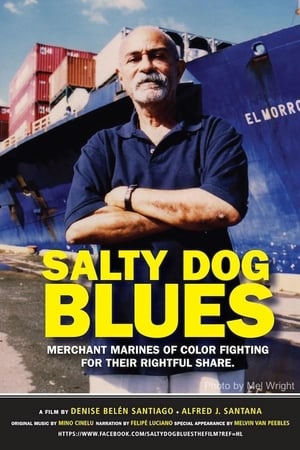
Salty Dog Blues(2012)
Status: Released
Date: 2012-01-01
0%
0 Votes
Time: 0h 52m
Overview:
The film looks at men and women of color in the U.S. Merchant Marine from 1938-1975. Through chronicling the lives of these men and women who, with a median age of 82, are beset with a host of life-threatening illnesses, the movie tells how they navigated issues of racism, disparities in the workplace, gender and familial relations.
Languages: Spanish, English.
Countries:
United States of America
ProductionCompanies:
Third World Newsreel
Movie: Salty Dog Blues
Top 2 Billed Cast
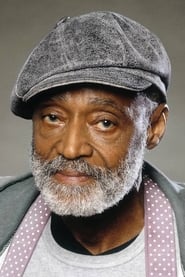
Melvin Van Peebles
Self (Interviewee)

Felipe Luciano
Narrator
Video Trailer Salty Dog Blues
All 1 videos

SALTY DOG BLUES (Trailer) - Trailer
Similar Movies

72%
Crip Camp: A Disability Revolution(en)
2020-03-25
Down the road from Woodstock in the early 1970s, a revolution blossomed in a ramshackle summer camp for disabled teenagers, transforming their young lives and igniting a landmark movement.

67%
Be Water(en)
2020-01-25
In 1971, after being rejected by Hollywood, Bruce Lee returned to his parents’ homeland of Hong Kong to complete four iconic films. Charting his struggles between two worlds, this portrait explores questions of identity and representation through the use of rare archival footage, interviews with loved ones and Bruce’s own writings.

69%
Coded Bias(en)
2020-11-11
Exploring the fallout of MIT Media Lab researcher Joy Buolamwini's startling discovery that facial recognition does not see dark-skinned faces accurately, and her journey to push for the first-ever legislation in the U.S. to govern against bias in the algorithms that impact us all.

64%
Foster(en)
2018-06-14
With one in eight American children suffering a confirmed case of neglect or abuse by age 18, there are currently more than 400,000 children in foster care in the U.S., a number that continues to grow each year. Drawing on unprecedented access, FOSTER explores the often-misunderstood world of foster care through compelling stories from the Los Angeles County Department of Children and Family Services, the largest county child welfare agency in the country.

76%
Ernest Cole: Lost and Found(fr)
2024-11-22
More than 60,000 of Ernest Cole’s 35mm film negatives were inexplicably discovered in a bank vault in Stockholm, Sweden. Most considered these forever lost, especially the thousands of pictures he shot in the U.S. Told through Cole’s own writings, the stories of those closest to him, and the lens of his uncompromising work, the film is a reintroduction of a pivotal Black artist to a new generation and will unravel the mystery of his missing negatives.

0%
Lost Boys: Belfast's Missing Children(en)
2023-10-21
During the winter of 1969, young boys started to disappear off the streets of Belfast, never to be seen again.

0%
The World of Nat King Cole(en)
2004-06-15
Combining rare original archive footage, home movies and authored by 40 intimate interviews with friends and celebrity fans this feature length film charts Nat "King" Cole's battle with racist 50’s America to become a superstar. An intimate portrait, it’s filled with music and accompanied the release of the album of the same name.

65%
CzechMate: In Search of Jiří Menzel(cs)
2018-09-16
An epic exploration of the Czechoslovak New Wave cinema of the 1960s and 70s, structured around a series of conversations with one of its most acclaimed exponents - Closely Observed Trains director Jiří Menzel.

66%
The Swamp(en)
2020-08-04
A look behind the curtain of Washington politics following three "renegade" Republican Congressmen as they bring libertarian and conservative zeal to champion the President’s call to “drain the swamp.”

50%
Les Révoltés(fr)
2019-01-09
In May 1968, workers, students and young people rise up against the morality and power of the establishment. Faculties and factories are under occupation. Barricades are erected. Paving slabs are launched. Words give way to actions. This is the confrontation. These images bear witness to the men and women who, in their indignancy, march towards their revolution. 50 years ago, as part of our ARC collective, we filmed the uprising of May and June 1968. Out of this material and scenes borrowed from our other filmmaker friends, we created this film.

62%
Am I Racist?(en)
2024-09-13
Matt Walsh goes deep undercover in the world of diversity, equity, and inclusion. Prepare to be shocked by how far race hustlers will go and how much further Matt Walsh will go to expose the grift, uncovering absurdities that will leave you laughing.

72%
What You Gonna Do When the World's on Fire?(en)
2019-08-16
Summer 2017, a string of brutal police killings of young African American men has sent shockwaves throughout the country. A Black community in the American South tries to cope with the lingering effects of the past and navigate their place in a country that is not on their side. Meanwhile, the Black Panthers prepare a large-scale protest against police brutality.

70%
Propaganda: Engineering Consent(fr)
2018-05-29
How can the masses be controlled? Apparently, the American publicist Edward L. Bernays (1891-1995), a pioneer in the field of propaganda and public relations, knew the answer to such a key question. The amazing story of the master of manipulation and the creation of the engineering of consent; a frightening true story about advertising, lies and charlatans.

90%
Israel Palestine on Swedish TV 1958-1989(sv)
2024-10-04
Archival film maestro Göran Hugo Olsson has assembled—from a vast catalogue of footage in the vaults of Sweden’s national television service SVT—accounts of the Israeli-Palestinian conflict as witnessed and represented by Swedish journalists. Stories of the beginning of the Israeli state interwoven with the Palestinian struggle for independence. News coverage with Yasser Arafat and interviews with Israeli foreign minister Abba Eban during a visit to Sweden unseen since first broadcast. From the tenth anniversary of Israel’s founding to the First Intifada, perspectives and encounters with statesmen, civilians, revolutionaries, and intellectuals tell the story from myriad angles of an evolving media landscape, revivifying a history of the ongoing conflict.

70%
One to One: John & Yoko(en)
2025-04-11
An exploration of the seminal and transformative 18 months that one of music’s most famous couples — John Lennon and Yoko Ono — spent living in Greenwich Village, New York City, in the early 1970s.


50%
Crosby, Stills, Nash & Young: Fifty by Four - Half a Century of CSNY(en)
2014-02-18
The incredible story of Crosby, Stills, Nash & Young, featuring exclusive interviews, rare performance footage and more. This is CSNY's story, a journey of breakthroughs, breakdowns, break-ups and incredible music. Featuring exclusive interviews, seldom-seen footage, classic and rare performances, and contributions from those who worked closely with CSNY across the years.

65%
Stamped from the Beginning(en)
2023-11-10
Using innovative animation and expert insights, this documentary based on Ibram X. Kendi's bestseller explores the history of racist ideas in America.

65%
American Chaos(en)
2018-09-14
A documentary focused on the 2016 United States presidential election and then-candidate Donald Trump's supporters.

90%
1940: Taking over French Cinema(fr)
2019-05-19
Paris, 1940. German occupation forces create a new film production company, Continental, and put Alfred Greven – producer, cinephile, and opportunistic businessman – in charge. During the occupation, under Joseph Goebbels’s orders, Greven hires the best artists and technicians of French cinema to produce successful, highly entertaining films, which are also strategically devoid of propaganda. Simultaneously, he takes advantage of the confiscation of Jewish property to purchase film theaters, studios and laboratories, in order to control the whole production line. His goal: to create a European Hollywood. Among the thirty feature films thus produced under the auspices of Continental, several are, to this day, considered classics of French cinema.