Loading Page

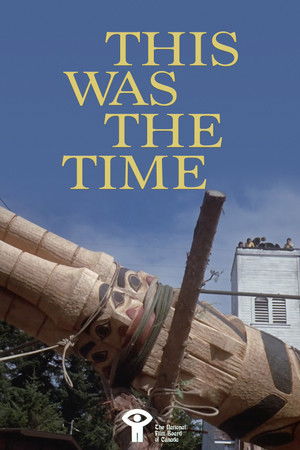
This Was the Time(1970)
Status: Released
Date: 1970-01-01
0%
0 Votes
Time: 0h 16m
Overview:
When Masset, a Haida village in Haida Gwaii (formerly known as the Queen Charlotte Islands), held a potlatch, it seemed as if the past grandeur of the people had returned. This is a colourful recreation of Indigenous life that faded more than two generations ago when the great totems were toppled by the missionaries and the costly potlatch was forbidden by law. The film shows how one village lived again the old glory, with singing, dancing, feasting, and the raising of a towering totem as a lasting reminder of what once was.
Languages: English.
Countries:
Canada
ProductionCompanies: 
Movie: This Was the Time
Top 5 Billed Cast
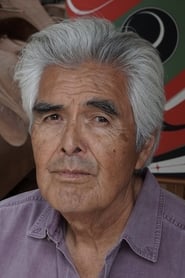
Robert Davidson
Self (uncredited)

Florence Davidson
Self (uncredited)
HomePage
Overview
When Masset, a Haida village in Haida Gwaii (formerly known as the Queen Charlotte Islands), held a potlatch, it seemed as if the past grandeur of the people had returned. This is a colourful recreation of Indigenous life that faded more than two generations ago when the great totems were toppled by the missionaries and the costly potlatch was forbidden by law. The film shows how one village lived again the old glory, with singing, dancing, feasting, and the raising of a towering totem as a lasting reminder of what once was.
Release Date
1970-01-01
Average
0
Rating:
0.0 startsTagline
Genres
Languages:
EnglishKeywords
Similar Movies

0%
Ningwasum(ne)
2022-02-11
Ningwasum follows two time travellers Miksam and Mingsoma, played by Subin Limbu and Shanta Nepali respectively, in the Himalayas weaving indigenous folk stories, culture, climate change and science fiction.

57%
Our People Will Be Healed(en)
2017-09-07
Legendary documentary filmmaker Alanis Obomsawin provides a glimpse of what action-driven decolonization looks like in Norway House, one of Manitoba's largest First Nation communities.

70%
Cholitas(es)
2020-01-24
Five Bolivian indigenous women share one goal: climbing the highest mountain in America.

80%
Coast Modern(en)
2012-10-11
A core group of architects embraced the West Coast from Vancouver to LA with its particular geography and values and left behind a legacy of inspired dwellings. Today, architects celebrate the influence established by their predecessors.

0%
Nowhere Land(en)
2015-10-17
Documentary about filmmaker Bonnie Ammaaq's memories of life on Baffin Island, where her family moved for eleven years during her childhood from the hamlet of Igloolik to return to the traditional Inuit way of life.

0%
Kainai(en)
1973-01-01
On the Kainai (Blood) First Nations Reserve, near Cardston, Alberta, a hopeful new development in Indigenous enterprise. Once rulers of the western plains, the Bloods live on a 1 300-square-kilometer reserve. Many have lacked gainful employment and now pin their hopes on a pre-fab factory they have built. Will the production line and work and wages fit into their cultural pattern of life? The film shows how it is working and what the owners themselves say about their venture.

0%
In Jesus’ Name: Shattering the Silence of St. Anne's Residential School(en)
2017-06-07
A poignant all-Indigenous English and Cree-English collaborative documentary that breaks long-held silences imposed upon indigenous children who were interned at the notoriously violent St. Anne’s Residential School in Fort Albany First Nation, Ontario. Use of a homemade electric chair at St. Anne's and the incorporation of testimony about student-on-student abuse makes this documentary stand apart from other films about Canadian residential school experiences. This film will serve as an Indigenous historical document wholly authored by Indigenous bodies and voices, those of the Survivors themselves.

69%
The Pearl Button(es)
2015-10-15
The ocean contains the history of all humanity. The sea holds all the voices of the earth and those that come from outer space. Water receives impetus from the stars and transmits it to living creatures. Water, the longest border in Chile, also holds the secret of two mysterious buttons which were found on its ocean floor. Chile, with its 2,670 miles of coastline and the largest archipelago in the world, presents a supernatural landscape. In it are volcanoes, mountains and glaciers. In it are the voices of the Patagonian Indigenous people, the first English sailors and also those of its political prisoners. Some say that water has memory. This film shows that it also has a voice.

100%
Two villages, one single walk(gn)
2008-01-01
With no Forest left to hunt and no land to cultivate, the Maby-Guarani depend on the sale of their handcraft to survive. Three young Guarani filmmakers accompany the daily life of two comunities united by the same history, since the first contact with the Europeans until the intense coexistence with today’s White people.

77%
The Alpinist(en)
2021-02-07
Marc-André Leclerc, an exceptional climber, has made solo his religion and ice his homeland. When filmmaker Peter Mortimer begins his film, he places his camera at the base of a British Columbia cliff and waits patiently for the star climber to come down to answer his questions. Marc André, a little uncomfortable, prefers to return to the depths of the forest where he lives in a tent with his girlfriend Brette Harrington. In the heart of winter, Peter films vertiginous solos on fragile ice. He tries to make appointments with the climber who is never there and does not seem really concerned by this camera pointed at him "For me, it would not be a solo if there was someone else" . Marc-André is thus, the "pure light" of the mountaineers of his time, which marvel Barry Blanchard, Alex Honnold or Reinhold Messner, interviewed in the film. An event film for an extraordinary character.

0%
Beautiful Lennard Island(en)
1977-01-01

83%
Invasion(en)
2020-05-01
In this era of “reconciliation”, Indigenous land is still being taken at gunpoint. Unist’ot’en Camp, Gidimt’en checkpoint and the larger Wet’suwet’en Nation are standing up to the Canadian government and corporations who continue colonial violence against Indigenous people. The Unist’ot’en Camp has been a beacon of resistance for nearly 10 years. It is a healing space for Indigenous people and settlers alike, and an active example of decolonization. The violence, environmental destruction, and disregard for human rights following TC Energy (formerly TransCanada) / Coastal GasLink’s interim injunction has been devastating to bear, but this fight is far from over.

0%
Attiuk(fr)
1963-07-19
The people of Unamenshipu (La Romaine), an Innu community in the Côte-Nord region of Quebec, are seen but not heard in this richly detailed documentary about the rituals surrounding an Innu caribou hunt. Released in 1960, it’s one of 13 titles in Au Pays de Neufve-France, a series of poetic documentary shorts about life along the St. Lawrence River. Off-camera narration, written by Pierre Perrault, frames the Innu participants through an ethnographic lens. Co-directed by René Bonnière and Perrault, a founding figure of Quebec’s direct cinema movement.

55%
Our Indians(pt)
1995-01-16
Yndio do Brasil is a collage of hundreds of Brazilian films and films from other countries - features, newsreels and documentaries - that show how the film industry has seen and heard Brazilian indigenous peoples since they were filmed in 1912 for the first time: idealised and prejudiced, religious and militaristic, cruel and magic.

62%
Tawai: A Voice from the Forest(en)
2017-09-29
Explorer Bruce Parry visits nomadic tribes in Borneo and the Amazon in hope to better understand humanity's changing relationship with the world around us.

0%
Tracing Roots(en)
2014-10-01
A new documentary that follows master Haida weaver Delores Churchill on a journey to replicate a spruce root hat discovered with the Long Ago Person Found. The 300-year-old traveler was discovered in British Columbia and DNA testing discovered living descendants in Canada and Alaska. Her search crosses cultures and borders, and involves artists, scholars and scientists. The project raises questions about understanding and interpreting ownership, knowledge and connection.

0%
Silvicola(en)
2023-04-28
The human impact on forests is explored through breathtaking vistas and poignant vignettes set in Canada's Pacific Northwest. Those who rely on this precious resource highlight the tensions and dilemmas between commodification and conservation.

0%
Warrior Boyz(en)
2008-01-01
To date, more than a hundred young men from the South Asian community have died in gang-related violence in Metro Vancouver. Gangs are a reality of urban life, yet behind the body count and the headlines, a far different battle is being waged. Educators and parents are taking action against gang violence. Director Baljit Sangra's documentary Warrior Boyz takes an unflinching look at the root causes of gang violence, and offers real solutions and a hard-fought hope for the future.

77%
Warrior Women(en)
2018-05-26
Through the figure of Lakota activist and community organizer Madonna Thunder Hawk, this inspiring film traces the untold story of countless Native American women struggling for their people's civil rights. Spanning several decades, Christina D. King and Elizabeth A. Castle's documentary charts Thunder Hawk's lifelong commitment, from her early involvement in the American Indian Movement (AIM), to her pivotal role in the founding of Women of All Red Nations, to her heartening presence at Standing Rock alongside thousands protesting the Dakota Access Pipeline. She passed her dedication and hunger for change to her daughter Marcy, even if that often meant feeling like comrades-in-arms more than mother and child. Through rare archival material—including amazing footage of AIM's occupation of Wounded Knee—and an Indigenous style of circular storytelling, Warrior Women rekindles the memories and legacy of the Red Power movement's matriarchs.

85%
Coming Home(en)
2023-06-30
This documentary reveals the impacts of the Sixties Scoop, a period in which a series of Canadian policies enabled child welfare authorities to take, or “scoop up,” Indigenous children from their families and communities for placement in white foster homes. Explore Indigenous resilience through narrative sovereignty as experienced through the Little Bird series’ Indigenous creatives, cast, crew & community members.